















For many parents, hearing their baby’s heartbeat for the first time is magical. But imagine seeing your baby yawn, stretch, or even suck their thumb while still in the womb. That’s exactly what a 4D ultrasound offers. It is a moving, real-time view of your little one’s world, complete with adorable facial expressions and sweet little gestures.
Unlike the old-school 2D ultrasounds or the inanimate 3D scans, a 4D ultrasound is more like having a personal movie night with your baby. It’s more than a medical visit; it’s an experience that many expectant families hold dear forever.
But here’s the big question every curious parent wants answered: When is the best time to get a 4D ultrasound for the clearest, most memorable images? In this article, we’ll guide you through everything you need to know to perfectly time your session and make the most of this special experience.
Read More: Managing Pregnancy Discomfort: Tips for Easing Common Aches and Pains
What Is a 4D Ultrasound? Understanding the Basics
To know when to book your scan, it’s useful to know what a 4D ultrasound is and how it compares to others.
- 2D ultrasound is the traditional medical scan based on sound waves that creates two-dimensional, black-and-white images of your baby. It’s a diagnostic scan and is generally used to track growth, identify abnormalities, and assess fetal development.
- 3D ultrasound provides depth to those pictures, presenting you with a still, life-like image of your baby’s face or body in three dimensions.
- 4D ultrasound goes one step further. It’s actually 3D in action, taking ongoing video of your baby wriggling around inside your womb in real-time.
While 4D scans will sometimes pick up on abnormalities, they are generally non-diagnostic and performed for bonding and keepsake reasons. Imagine them as your baby’s first movie.
When to Get the Clearest 4D Ultrasound Images

Timing is of the essence while getting a 4D ultrasound. Schedule too early, and your baby’s features may not be developed yet. Schedule too late, and they may be too squished inside the womb for proper images.
The Sweet Spot: 26 to 32 Weeks
Most ultrasound clinics and experts agree that the optimal time for a 4D scan is between 26 to 32 weeks of pregnancy. This is the best because:
- Fetal Development: Your baby now has sufficient fat underneath the skin to provide those kissable cheeks with their plump shape.
- Amniotic Fluid Level: Lots of fluid still in the womb, which keeps sound waves traveling well and provides your baby with space to move.
- Space in the Uterus: The baby is still not too large, so their face is more apt to be in front of the camera rather than against the uterine wall or placenta.
Week-by-Week Breakdown:
Here’s how image quality typically changes week by week:
- 24–26 weeks: Baby’s entire body may be recorded in a single view, but facial features may remain slightly angular or immature.
- 26–28 weeks: The face is more defined. There is normally sufficient space and fluid to achieve lovely, clear images.
- 28–30 weeks: The so-called golden period. Baby is plump, mobile, and preferably positioned for clear images and lovely smiles.
- 31–32 weeks: You might still be able to get good pictures, particularly of the face, but movement will be limited because of less room.
Beyond 32 weeks, the baby might drop further into the pelvis or push against the uterine wall, which can make the image unclear.
Read More: Natural Remedies for Common Pregnancy Symptoms
What Affects Image Quality During a 4D Ultrasound?
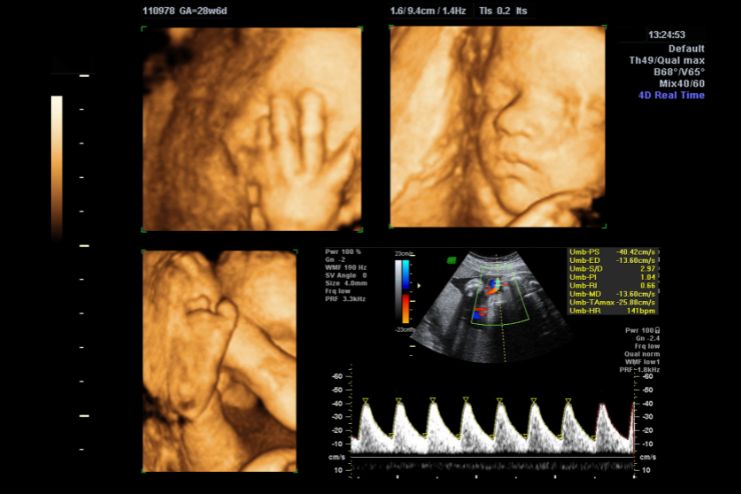
Even if you schedule your appointment at the ideal time, a couple of other things can impact how crisp your ultrasound pictures turn out:
Baby’s Position:
If your baby is facing your back or has their face turned toward the placenta or uterine wall, it can be difficult to get a clean and clear shot.
Babies also enjoy covering up their faces with their hands or feet—sweet, but not so great for pictures!
Amniotic Fluid Levels:
Clear, well-lit images require an adequate amount of amniotic fluid around the baby’s face.
Low fluid levels can reduce visibility and cause distortion.
Mother’s Hydration:
Staying well-hydrated in the days leading up to your scan can improve amniotic fluid levels and enhance image clarity.
Aim to drink at least 8–10 glasses of water daily for a few days before your appointment.
Placenta Location and Body Type:
Anterior placenta (when the placenta is in front of the uterus) may occasionally interfere with facial shots.
Just like maternal abdominal tissue and other parts of the anatomy, other factors can affect how well the ultrasound waves penetrate.
How to Prepare for the Best 4D Ultrasound Experience
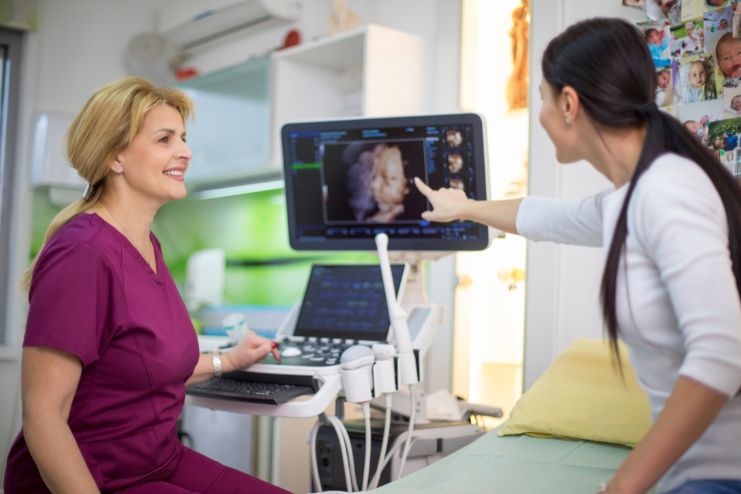
To increase your chances of obtaining Instagram-worthy photos, the following are tried-and-tested tips to follow before a 4D scan:
- Begin Hydrating Early:
Start drinking lots of water at least 2–3 days prior to your scan. This will keep your amniotic fluid levels at an optimal level, which is essential for good-quality images.
- Eat a Light Snack Before Your Visit:
Having a light, healthy snack or having a glass of juice around 30 minutes before your scan might motivate your baby to become active. Natural sugar can get the baby moving, so the session will be more active.
- Pick the Right Time of Day:
Book your appointment for a time when your baby is usually active. For many moms, this is mid-morning or early evening.
- Wear Comfortable Clothing:
You’ll need to expose your belly during the scan, so two-piece outfits work best for easy access.
- Stay Relaxed:
A relaxed, stress-free setting makes it more comfortable for you and your baby to have fun during the session. Don’t hesitate to ask questions to your technician or take a brief stroll if the baby isn’t positioned in the best way at first.
Read More: Natural Remedies for Common Pregnancy Symptoms
What You’ll See on the Scan (And What You Might Not)

With favorable conditions, you may see:
- Your baby’s facial expressions, such as smiling, frowning, or yawning
- Thumb sucking, hiccuping, or stretching
- Soft movements such as waving or kicking
These moments are usually amazing for expectant mothers and fathers, offering a lovely glimpse into their baby’s personality even before birth.
Limitations to Keep In Mind:
When your baby is curled up, sleeping, or turned away, getting clear views of the face might not be possible.
- The umbilical cord or arm may cover the face.
- In a few instances, technicians will suggest rescheduling the session for better results.
- Reputable clinics will provide a free re-scan if the first try doesn’t provide good images.
Is a 4D Ultrasound Safe? Here’s What Experts Say
The use of ultrasound for non-diagnostic reasons is what prompts safety concerns to some parents, so here’s everything you need to know:
- Diagnostic ultrasound is safe, as stated by the American College of Obstetricians and Gynecologists (ACOG) and the U.S. Food & Drug Administration (FDA), if done by trained technicians on the right equipment.
- As per the FDA, 4D ultrasounds use the same sound wave technology as 2D scans, and therefore, the exposure levels are the same.
Important Safety Recommendations:
- Avoid places without medical supervision or stretching sessions too long.
- Follow the ALARA Principle. As Low As Reasonably Achievable. Keep the scan time short to reduce any possible risk.
- Always opt for a certified sonographer or clinic for both safety and quality.
3D or 4D? What’s Best For You
Still undecided whether to go for 3D, 4D, or both? Here’s what to do:
3D: Picture Perfect:
- Provides a lovely still photo of your baby’s face.
- Perfect for framing or showing to friends and family.
- A bit cheaper than 4D sessions.
4D: Motion Magic:
- Allows you to view your baby’s movements in real-time.
- Excellent for bonding, particularly for dads or siblings who do not feel the baby kick.
- Gets moments such as smiles, frowns, and yawns in a more active manner.
Most clinics provide bundled packages with both 3D stills and a 4D video clip. That way, you have the best of everything without having to decide.
Conclusion: Seizing Memories Before They’re Born

The period between 28 and 30 weeks is usually the ideal time to have a 4D ultrasound, offering you the greatest opportunity for clear, heart-melting shots of your baby’s face, personality, and movements.
By being hydrated, timing it right, and selecting a well-established clinic, you can make your ultrasound appointment an endearing experience. Just keep in mind: no two babies sit the same way, and that unpredictability is where the magic comes in.
Because ultimately, a 4D scan isn’t merely a video—it’s a memento of love in action. One that lets you see your baby’s first stretch, first yawn, perhaps even that first smile…before they ever take their first breath in the outside world.
- https://www.narayanahealth.org/blog/benefits-of-3d-4d-scans-during-pregnancy
- https://www.cdc.gov/radiation-health/safety/alara.html
- https://www.fda.gov/radiation-emitting-products/medical-imaging/ultrasound-imaging
- https://www.acog.org/clinical/clinical-guidance/committee-opinion/articles/2017/10/guidelines-for-diagnostic-imaging-during-pregnancy-and-lactation
- https://samyukthascans.com/blog/how-do-i-prepare-for-a-4d-ultrasound
- https://ultrasoundcare.com.au/pregnancy-ultrasounds/fetal-growth-scan-24-42-weeks
- https://pmc.ncbi.nlm.nih.gov/articles/PMC3239390
In this Article