














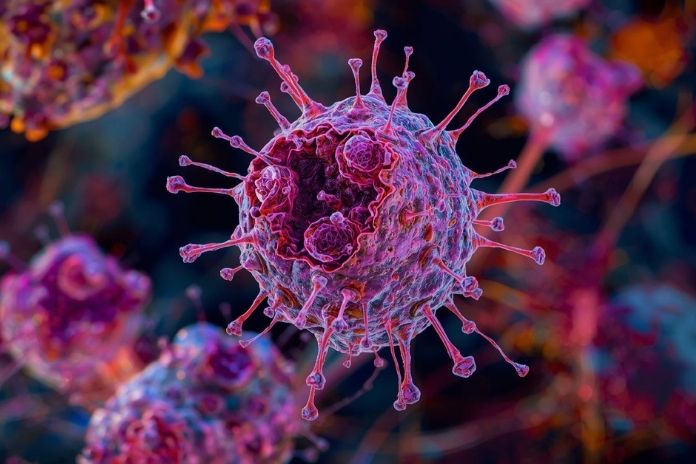
Hairy Cell Leukemia (HCL) is a rare type of slow-growing blood cancer that affects the body’s B-cells, which are a kind of white blood cell that helps fight infections. It’s called “hairy cell” leukemia because the abnormal B-cells look like they have tiny hair-like projections when seen under a microscope. Because it often progresses slowly, many people don’t have symptoms at first, and it can be discovered by accident in routine blood tests.
HCL is chronic but highly treatable with modern therapies, and many patients live long lives after treatment. In the United States, only about 600-800 people are diagnosed each year, and it is more common in middle-aged adults, especially men.
Symptoms may include feeling tired or weak, frequent infections, easy bruising or bleeding, unexplained weight loss, feeling full after eating small meals (due to an enlarged spleen), and swollen lymph nodes.
Doctors diagnose HCL by reviewing symptoms, performing a physical exam, and conducting tests such as complete blood counts, blood smears, and bone marrow biopsies to identify the characteristic abnormal cells.
Read more to clearly understand the concept, its definition, key features, causes, symptoms, and much more in detail.
Read More: Can Tattoos Cause Cancer?
What Happens in the Body with Hairy Cell Leukemia?

Hairy Cell Leukemia is a rare, slow-growing blood cancer that affects infection-fighting B-cells. It develops quietly, often over years, causing gradual changes in blood counts, immunity, and organ function before noticeable symptoms appear.
Understanding What Is Hairy Cell Leukemia
To understand hairy cell leukemia, it helps to know how blood cells normally work. Hairy Cell Leukemia (HCL) is a rare, slow-growing cancer that affects B-cells, a type of white blood cell responsible for fighting infections. In HCL, these B-cells become abnormal and develop tiny hair-like projections, visible under a microscope.
Instead of dying naturally, these cells survive longer and slowly multiply. Over time, they accumulate in the bone marrow, blood, spleen, and sometimes the liver and lymph nodes, disrupting normal body functions.
The exact cause(s) of hairy cell leukemia are still not fully understood. Doctors believe genetic changes in B-cells play a role, but they are not linked to lifestyle habits or passed directly from parent to child. Because the disease progresses slowly, many people may not notice symptoms right away.
How It Affects Blood, Immunity, and Organs
As hairy cells crowd the bone marrow, they interfere with the production of healthy blood cells. This leads to hairy cell leukemia symptoms, such as fatigue and weakness due to low red blood cell levels, frequent infections due to reduced white blood cell levels, and easy bruising or bleeding caused by low platelet levels.
Another common problem is an enlarged spleen, which can cause abdominal discomfort, a feeling of fullness after eating small amounts, or bloating.
The disease’s slow progression means symptoms often develop gradually over months or even years. Some people are diagnosed before symptoms appear during routine blood tests. This leads to the question, how is hairy cell leukemia diagnosed?
Doctors usually rely on blood tests showing low blood counts, examination of blood cells under a microscope, and sometimes a bone marrow biopsy to confirm the presence of hairy cells.
Dr. Rafael Fonseca, Hematologist & Chief Innovation Officer at Mayo Clinic said, “Hairy cell leukemia begins when B cells develop changes in their DNA that tell the B cells to make a lot more B cells that don’t work right … These cells crowd out healthy blood cells in the bone marrow and other organs, leading to symptoms like frequent infections, easy bruising and fatigue.”
Although HCL is a chronic condition, it responds very well to modern treatments. With proper care, most people experience long periods of remission and maintain a good quality of life.
Read More: 7 Comfort Items for Cancer Patients Undergoing Chemotherapy
Symptoms of Hairy Cell Leukemia
Hairy Cell Leukemia, also known as HCL leukemia, is a slow-growing blood cancer. Because it develops gradually, many signs of hairy cell leukemia appear slowly and may be mistaken for everyday health problems. Symptoms mainly result from low blood counts and organ enlargement, such as the spleen.
1. Symptoms Caused by Low Blood Counts (Pancytopenia)
In HCL leukemia, abnormal B-cells crowd the bone marrow, reducing the production of healthy blood cells. This leads to several common symptoms:
- Persistent fatigue and weakness, even after rest, due to low red blood cells
- Frequent or recurring infections occur because white blood cells are reduced
- Easy bruising, bleeding gums, or nosebleeds from low platelet levels
- Shortness of breath during mild physical activity
- Pale skin or dizziness in some individuals
These are often the earliest signs of hairy cell leukemia that patients notice.
2. Symptoms Related to Enlarged Spleen (Splenomegaly)
Hairy cells often collect in the spleen, causing it to enlarge over time. This may result in:
- Pain or pressure under the left ribs
- Feeling full quickly after eating small amounts (early satiety)
- Abdominal bloating or discomfort
- Reduced appetite and unintended weight loss
An enlarged spleen can also worsen low blood counts by trapping healthy blood cells.
3. General or Systemic Symptoms
Some symptoms affect the whole body and develop slowly:
- Unexplained weight loss
- Low-grade or recurring fevers
- Night sweats, especially during sleep
- Chronic exhaustion that doesn’t improve with rest
These systemic signs are common in long-standing HCL leukemia.
4. Rare or Less Common Symptoms
Although less frequent, some people may experience:
- Bone or joint pain
- Repeated infections that don’t respond well to treatment
- Swelling of lymph nodes in rare cases
Because many symptoms overlap with other illnesses, proper medical testing is essential for diagnosing and managing Hairy Cell Leukemia.
Read More: Tailoring Workouts for Health and Energy to Overcome Cancer
What Causes Hairy Cell Leukemia?

Hairy Cell Leukemia (HCL leukemia) is a rare blood cancer that develops when a type of white blood cell called a B-cell undergoes abnormal changes and starts multiplying uncontrollably.
While doctors do not yet know all the causes of hairy cell leukemia, research has identified a key genetic change that plays a significant role in the disease.
1. Genetic Mutation (BRAF V600E Mutation)
In most people with Hairy Cell Leukemia, scientists find a specific genetic change known as the BRAF V600E mutation. This mutation affects the BRAF gene, which usually helps regulate how cells grow and divide.
When this gene mutates, it becomes overactive and sends constant signals to B-cells, causing them to grow and survive longer than they should. As a result, abnormal “hairy” cells slowly build up in the bone marrow, blood, and spleen.
The BRAF V600E mutation is central to diagnosing classic HCL and has also led to effective targeted treatments.
2. Hairy Cell Leukemia Risk Factors
Although the genetic mutation drives the disease, certain hairy cell leukemia risk factors are linked with a higher chance of developing HCL leukemia:
- Age: Most people are diagnosed between 40 and 60 years old
- Sex: Hairy Cell Leukemia is more common in men
- Environmental exposure: Some studies suggest possible links with long-term exposure to chemicals, farming work, or herbicides such as Agent Orange, though evidence remains mixed
- Family history: HCL is not considered hereditary, and no strong family pattern has been identified
These risk factors increase the likelihood but do not guarantee disease development.
3. What Does Not Cause HCL
It is important to clarify that Hairy Cell Leukemia:
- It is not caused by lifestyle choices such as diet, exercise, or stress
- It is not contagious
- It is not linked to smoking or everyday habits
Understanding what causes and does not cause HCL leukemia helps reduce fear and misinformation while guiding appropriate diagnosis and treatment.
Read More: Simple Home Changes for the Health of Cancer Patients
How Hairy Cell Leukemia Is Diagnosed

Hairy Cell Leukemia (HCL) is a rare form of B-cell leukemia, and diagnosing it requires a careful, step-by-step approach.
Because symptoms often develop slowly and can resemble other blood disorders, doctors rely on a combination of laboratory tests, genetic studies, and imaging to reach an accurate diagnosis.
1. Initial Blood Tests
Diagnosis often begins with blood tests for hairy cell leukemia, especially a complete blood count (CBC). This test typically reveals pancytopenia, meaning low levels of red blood cells, white blood cells, and platelets. These abnormalities explain common symptoms such as fatigue, frequent infections, and easy bruising.
A peripheral blood smear may also be examined under a microscope. In some cases, doctors can see abnormal B-cells with fine, hair-like projections. This unusual appearance, along with low blood counts, raises suspicion for Hairy Cell Leukemia compared to other blood cancers.
2. Bone Marrow Biopsy
A bone marrow biopsy is essential to confirm the diagnosis. During this procedure, a small sample of bone marrow is taken, usually from the hip bone. In HCL, the marrow often shows heavy infiltration by hairy cells, which crowd out normal blood-forming cells.
Doctors may encounter a “dry tap,” in which little or no marrow fluid can be withdrawn due to fibrosis (scarring). Specialized marrow testing identifies characteristic markers such as CD11c, CD25, and CD103, which are typical of classic Hairy Cell Leukemia.
3. Flow Cytometry
Flow cytometry is a highly detailed laboratory test used to analyze proteins on the surface of blood or bone marrow cells. In Hairy Cell Leukemia, this test helps identify a distinct pattern of surface markers found on hairy cells. These markers confirm that the abnormal cells are B-cells and help differentiate HCL from other forms of B-cell leukemia.
Flow cytometry is especially useful for distinguishing classic Hairy Cell Leukemia from HCL-variant, which behaves differently and may respond to different treatments. Because of its precision, this test plays a crucial role in ensuring the correct diagnosis.
4. Genetic Testing
Genetic testing is commonly performed to detect the BRAF V600E mutation, which is present in more than 90% of cases of classic Hairy Cell Leukemia. Detecting this mutation provides strong confirmation of the diagnosis.
Beyond diagnosis, genetic testing also helps guide treatment decisions. Some modern therapies are explicitly designed to target cells with the BRAF V600E mutation, making this test necessary for personalized treatment planning and long-term disease management.
“Hairy cell leukemia is an uncommon diagnosis and can occasionally be mimicked by other B cell cancers,” says Smilow Cancer Hospital oncologist Scott Huntington, MD, MPH, MSc. “We now have excellent molecular testing—as in BRAF mutation testing—that not only helps with making the diagnosis, but can also inform treatment selection.”
He said, “Fortunately, available treatments for hairy cell leukemia are highly effective, and the selection of the optimal therapy for a given patient requires discussion of individual preferences and potential side effects.”
5. Imaging Tests
Imaging tests such as ultrasound or CT scans may be used to evaluate the size of the spleen, which is often enlarged in people with Hairy Cell Leukemia. An enlarged spleen can contribute to abdominal discomfort and worsening blood counts.
These imaging studies are not always required, but are helpful when symptoms suggest complications or when doctors need to assess disease extent before or after treatment. Imaging also helps rule out other causes of abdominal symptoms and monitor the response to therapy over time.
Read More: Diet and Lifestyle Tips After Cancer Diagnosis
How Doctors Differentiate Hairy Cell Leukemia from Similar Conditions

Hairy Cell Leukemia (HCL) can resemble other B-cell leukemias and lymphomas, so doctors carefully examine symptoms, cell markers, and genetic mutations to distinguish it. Correct identification is vital because treatment and prognosis differ.
Hairy Cell Leukemia Variant (HCL-v)
- HCL-v is a rare subtype that progresses faster than classic HCL.
- Unlike classic HCL, HCL-v usually lacks the BRAF V600E mutation, which is present in over 90% of classic cases.
- Cell surface markers differ: HCL-v often lacks CD25 but still expresses CD11c and CD103.
- Patients may have higher white blood cell counts and more pronounced splenomegaly, with symptoms such as abdominal discomfort, fullness under the left ribs, or bloating.
- Because HCL-v responds differently to standard treatments, early identification is critical.
Chronic Lymphocytic Leukemia (CLL)
- CLL involves the slow accumulation of small, mature B-cells in the blood and bone marrow.
- CLL cells do not have the hairy projections characteristic of classic HCL.
- Characteristic markers include CD5 and CD23, which are absent in classic HCL.
- The BRAF V600E mutation is rarely found in CLL.
- Pancytopenia is usually less severe in early stages, and significant spleen enlargement is uncommon initially.
Other Similar Lymphomas
- Splenic Marginal Zone Lymphoma (SMZL): Often has lymph node involvement and specific genetic features, but less pronounced hairy cells. Some splenomegaly symptoms may be present.
- Lymphoplasmacytic Lymphoma (LPL): Frequently produces abnormal antibodies and may cause hyperviscosity. It lacks classic HCL markers and the BRAF mutation.
Key Takeaways
- Classic HCL shows hairy cells, BRAF V600E mutation, CD11c, CD25, CD103, and commonly pancytopenia.
- Distinguishing HCL from HCL-v, CLL, SMZL, or LPL is essential because treatment differs.
- Doctors use blood tests, bone marrow biopsies, flow cytometry, and genetic testing to ensure accurate diagnosis.
Read More: Top 7 Nutritional Supplements for Cancer Recovery
When to See a Doctor

Hairy Cell Leukemia (HCL) often develops slowly, and early symptoms can be mild. However, certain signs mean it’s essential to seek medical attention promptly.
Persistent Fatigue, Unexplained Bruising, or Recurrent Infections
If you feel constantly tired or weak without a clear reason, notice easy bruising or bleeding, or suffer from frequent infections, it may indicate low blood counts (pancytopenia).
Doctors may recommend further tests, including a bone marrow biopsy, to check for abnormal B-cells. Early evaluation can help detect HCL before complications develop.
Fullness or Swelling Under the Ribs
An enlarged spleen is common in HCL. You might feel fullness, swelling, or discomfort under the left ribs, or notice abdominal bloating. These splenomegaly symptoms suggest abnormal cell buildup and warrant medical assessment.
Abnormal Blood Results from Routine Tests
Sometimes HCL is discovered during routine blood tests that show low red blood cell, white blood cell, or platelet counts. Even if you feel well, abnormal results may lead your doctor to recommend a bone marrow biopsy for a definitive diagnosis.
Symptoms That Persist Longer Than a Few Weeks
Any persistent or unexplained symptoms, such as fatigue, infections, or bruising lasting more than a few weeks, should be discussed with a doctor. Early diagnosis improves treatment success and helps manage complications.
Read More: Cancer Fighting Recipe with Nutrient-Packed Meals
Outlook After Diagnosis

Hairy Cell Leukemia (HCL) is a slow-growing blood cancer. While it can cause symptoms like fatigue, infections, and spleen enlargement, the prognosis is generally very good with proper treatment.
High Treatability and Long Remissions
- HCL is considered highly treatable.
- Many patients achieve long-lasting remissions, sometimes lasting years after initial therapy.
- Even patients diagnosed later in life can respond well, thanks to modern treatments.
Modern Therapies and Excellent Outcomes
- Common first-line therapies include cladribine and pentostatin, which effectively target abnormal B-cells.
- Rituximab, an antibody therapy, is often used alone or with chemotherapy.
- In patients with the BRAF V600E mutation, targeted BRAF inhibitors provide excellent results.
- With these therapies, survival rates are very high, and many patients can expect near-normal life expectancy.
Ongoing Monitoring
- Even during remission, doctors usually continue monitoring blood counts and bone marrow to detect any early signs of relapse.
- Regular check-ups help ensure that treatment remains effective and complications are managed promptly.
Overall, while Hairy Cell Leukemia requires careful management, modern therapies and monitoring make the outlook very positive, with many patients living long, healthy lives.
Read More: Leukemia – Causes, Symptoms, and Treatment
Conclusion — Early Detection Makes a Big Difference
Hairy Cell Leukemia (HCL) is a rare but manageable blood cancer, and early detection can significantly improve outcomes. Recognizing key symptoms, such as persistent fatigue, frequent infections, easy bruising, and splenomegaly, including fullness or swelling under the ribs, helps patients seek medical care sooner.
Routine blood tests often reveal pancytopenia, which can alert doctors to potential issues even before symptoms become severe. Confirmatory tests, including bone marrow biopsy, flow cytometry, and genetic testing for mutations such as BRAF V600E, enable precise diagnosis and guide targeted therapies.
Advances in treatment with medications such as cladribine, pentostatin, rituximab, and BRAF inhibitors have significantly improved remission rates and long-term survival. Even after successful therapy, ongoing monitoring ensures that any relapse is detected early, maintaining patient health.
Understanding the disease, its signs, and available diagnostic tools empowers patients to act quickly, giving them the best chance for effective treatment and a long, fulfilling life. Early awareness and timely care make HCL highly treatable.
References
- Hairy cell leukemia treatment. (2025, April 23). Cancer.gov.
- Hairy cell leukemia: MedlinePlus Medical Encyclopedia. (n.d.).
- Hairy cell leukemia – Symptoms and causes. (n.d.). Mayo Clinic.
- Hairy cell leukaemia | Lymphoma Action. (n.d.). Lymphoma Action.
- Hairy cell leukemia. (2025, June 26). Cleveland Clinic.
- Lambertson, A. (2022, January 7). Hairy cell leukemia: An overview for new patients — Hairy Cell Leukemia Foundation. Hairy Cell Leukemia Foundation.
- Leukaemia Foundation. (2025, November 7). Hairy cell leukaemia (HCL) | Leukaemia Foundation. The Leukaemia Foundation.
- Leukemia Research Foundation. (2023, December 11). Hairy Cell Leukemia — Leukemia Research Foundation.
- Janus, A., & Robak, T. (2022). Hairy cell leukemia. In Leukemia (pp. 33–52).
- Hairy cell leukemia – Diagnosis and treatment – Mayo Clinic. (n.d.).
- Hołyńska-Iwan, I., Szewczyk-Golec, K., Maćkowiak, K., & Jankowiak, M. (2024). Hairy cell leukemia – etiopathogenesis, diagnosis and modern therapeutic approach. Biochemia Medica, 34(2), 197–209.
- Paillassa, J., Maitre, E., Boudjerra, N. B., Madani, A., Benlakhal, R., Matthes, T., Van Den Neste, E., Cailly, L., Inchiappa, L., Bekadja, M. A., Tomowiak, C., & Troussard, X. (2024). Recommendations for the Management of Patients with Hairy-Cell Leukemia and Hairy-Cell Leukemia-like Disorders: A Work by French-Speaking Experts and French Innovative Leukemia Organization (FILO) Group. Cancers, 16(12), 2185.
- Rudolf-Oliveira, R. C. M., Pirolli, M. M., De Souza, F. S., Michels, J., & Santos-Silva, M. C. (2015). Hairy cell leukemia variant: the importance of differential diagnosis. Revista Brasileira De Hematologia E Hemoterapia, 37(2), 132–135.
- How long will I live with hairy cell leukemia? (2023, September 28). HealthTree for Hairy Cell Leukemia.
- Cancer Research UK. (n.d.). Survival for hairy cell leukaemia.
- News-Medical. (2023, July 10). Hairy cell leukemia prognosis.
In this Article