














Estrogen withdrawal anxiety refers to anxiety symptoms that appear or worsen when estrogen levels drop quickly, such as before a period, after childbirth, during perimenopause or menopause, or after stopping hormonal birth control.
This experience is biologically driven, not “all in your head,” and usually follows a pattern tied to hormonal shifts rather than random daily stress.
Introduction: When Hormone Drops Feel Like “Out‑of‑Nowhere” Anxiety
- Estrogen affects neurotransmitters that help regulate mood, stress responses, and sleep, so steep declines can trigger anxiety, agitation, or even panic‑like sensations in some women.
- Anxiety often appears during PMS, after having a baby, or in perimenopause, but many women do not realize that hormone changes are a major driver when their lives otherwise seem “normal.”
- Recognizing estrogen withdrawal anxiety can reduce self‑blame, make it easier to track patterns, and highlight when medical or mental‑health support may be needed.
“In women with past perimenopausal depression responsive to hormone therapy, the recurrence of depressive symptoms during blinded hormone withdrawal suggests that normal changes in ovarian estradiol secretion can trigger an abnormal behavioral state.”
– Dr. Peter J. Schmidt, Chief, Reproductive Endocrine Research, NIMH
What Is Estrogen Withdrawal Anxiety?
- Estrogen withdrawal anxiety is a non‑clinical term for anxiety symptoms linked to falling or fluctuating estrogen levels during reproductive transitions such as PMS, postpartum, and menopause.
- Unlike generalized anxiety disorder, which tends to be more constant, hormone‑sensitive anxiety usually appears or worsens in predictable windows like the late luteal phase, postpartum months, or midlife.
- Because the trigger is internal, symptoms can feel as if they come “out of nowhere,” which can be frightening when there is no obvious external stressor to blame.
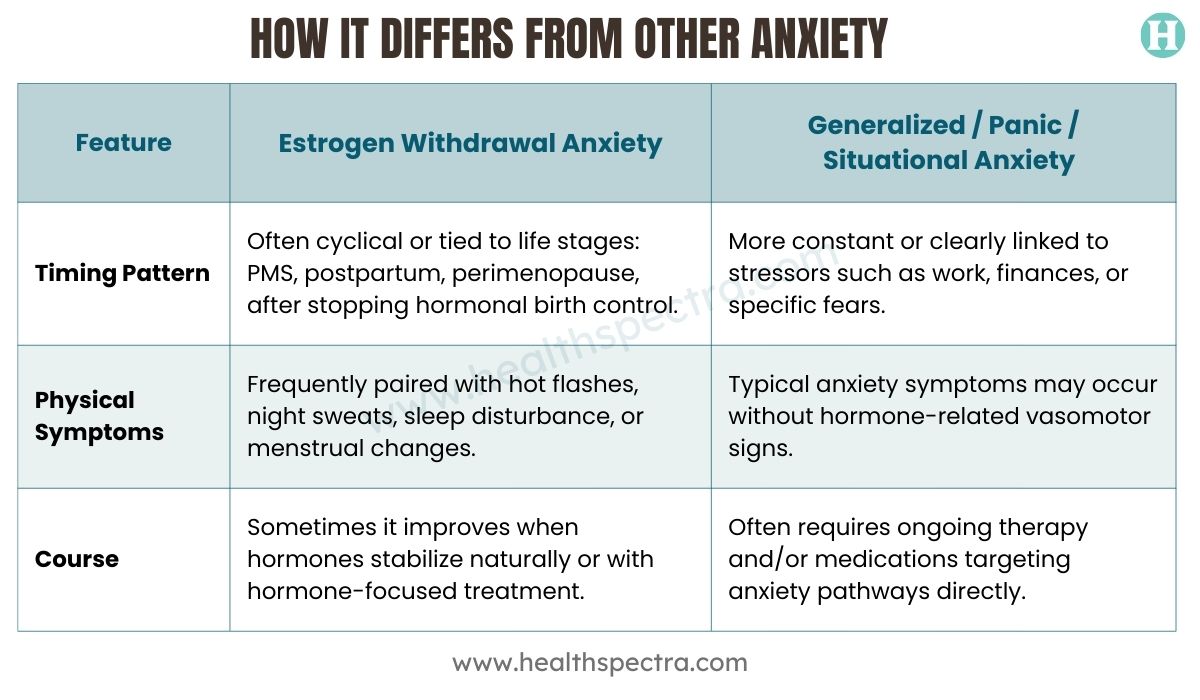 Many women live with both an underlying anxiety disorder and hormone‑sensitive spikes, which is why a careful medical evaluation is important.
Read More: Poop Anxiety: Why It Happens and How to Overcome It
When Estrogen Levels Commonly Drop
In the late luteal phase before a period, estrogen and progesterone fall sharply; in sensitive women, this triggers PMDD or pronounced anxiety and mood shifts.
During the postpartum period, estrogen rises to high levels in pregnancy, then crashes after birth, raising the risk of anxiety and depression in the early weeks and months.
Perimenopause and menopause bring large, erratic estrogen shifts during the menopausal transition, with studies showing higher rates of anxiety and depressive symptoms.
Discontinuing hormonal birth control like pills, implants, or injections removes synthetic hormones, allowing natural cycles to restart and temporarily worsening anxiety for some women.
After ovary removal (oophorectomy) or ovarian-suppressing treatments, abrupt estrogen withdrawal leads to mood and anxiety symptoms akin to surgical menopause.
Why Estrogen Affects Anxiety
Estrogen and the Brain
Estrogen helps regulate key neurotransmitters like serotonin, Gamma-Aminobutyric Acid(GABA), and dopamine, which stabilize mood, promote calm, and support reward processing. When levels drop or fluctuate rapidly, serotonin signaling and GABA’s calming effects weaken, making the brain more prone to anxiety, irritability, and low mood.
Estrogen also bolsters brain regions involved in emotion regulation, such as the prefrontal cortex and limbic system. In susceptible women, its withdrawal disrupts this emotional balance.
Estrogen Withdrawal and the Stress Response
Estrogen interacts with the body’s stress system, including cortisol; declining levels may heighten reactivity to everyday stressors. Research in perimenopausal and postpartum depression shows estradiol changes can alter frontolimbic networks involved in stress, fear, and mood regulation.
For some women, this triggers a stronger “fight or flight” response, with racing heart, shakiness, or a sense of impending doom, even without real stress.
Read More: Is Your Home Too Loud? How Constant Noise Pollution Impacts Sleep and Anxiety
Common Symptoms of Estrogen Withdrawal Anxiety
- Excessive worry, rumination, or feeling “on edge,” especially around known hormonal shifts.
- Panic‑like sensations such as heart palpitations, shortness of breath, chest tightness, or hot flashes that can feel indistinguishable from a panic attack.
- Restlessness, irritability, or agitation that often occurs alongside night sweats, hot flashes, or disrupted sleep.
- Sleep problems, including difficulty falling asleep, staying asleep, or waking early with a racing mind.
- Mood swings, teary-eyed, or emotional sensitivity paired with brain fog or trouble concentrating.
These symptoms can be mild and brief or intense and ongoing; the overall pattern and impact on daily life matter more than any single symptom.
How Estrogen Withdrawal Anxiety Feels Different
Symptoms of hormone-related anxiety often follow cyclical or time-linked patterns, such as spiking reliably in the days before a period, during the first postpartum year, or throughout perimenopause. This distinguishes it from purely situational anxiety.
These symptoms commonly pair with other hormone-driven issues like hot flashes, night sweats, vaginal dryness, or irregular periods. Many women experience significant relief as estrogen levels stabilize or through treatments like hormone therapy, though individual responses vary widely.
How Long Does Estrogen Withdrawal Anxiety Last?
- Short‑term fluctuations, such as the premenstrual phase or the first months after stopping birth control, may cause anxiety that improves as the menstrual cycle and hormones stabilize over weeks to months.
- Larger transitions like perimenopause or surgical menopause can cause fluctuating symptoms that last several years, with intensity influenced by baseline mental health, stress levels, and sleep quality.
- Clinical studies show that only some women develop significant mood changes during estradiol withdrawal, emphasizing that individual sensitivity plays a major role.
Read More: Health Anxiety vs. Healthy Living: Finding the Balance
What May Help: Daily Habits that Ease Estrogen Withdrawal
Lifestyle and Nervous System Support
- Keep a consistent sleep schedule when possible; sleep disruption is common during hormone shifts and tends to worsen anxiety.
- Gentle movement such as walking, yoga, stretching, or low‑impact cardio can help regulate stress hormones and support mood without over‑exertion.
- Stress‑reduction practices, including deep breathing, mindfulness, or short relaxation exercises, can calm the fight‑or‑flight response and build resilience during hormonal fluctuations.
Nutrition and Hormone‑Sensitive Choices
- Eating balanced meals with protein, fiber, and healthy fats can help stabilize blood sugar, which may reduce anxiety spikes and energy crashes.
- Many women notice they are more sensitive to caffeine and alcohol around PMS, postpartum, or perimenopause; cutting back or shifting intake earlier in the day may lessen jitters and sleep disruption.
- Nutrients like B‑complex vitamins, magnesium, and omega‑3 fatty acids are being studied for their role in supporting neurotransmitter function and mood, but they should complement, not replace, professional treatment.
Mental Health Strategies That Help

- Tracking symptoms against your menstrual cycle, postpartum weeks, or menopausal stage can help identify hormone‑linked patterns and distinguish them from other triggers.
- Cognitive behavioral techniques, challenging catastrophic thoughts, practicing relaxation skills, and gradually facing feared situations are effective for anxiety and can be timed around predictable hormone shifts.
- Validation and psychoeducation matter: understanding that biology plays a role can reduce shame, increase self‑compassion, and make it easier to seek support rather than trying to push through alone.
Read More: 5-4-3-2-1 Coping Technique for Anxiety: How It Works
Medical Treatment Options
Hormone‑Based Approaches
For some perimenopausal or recently postmenopausal women, estrogen‑based hormone therapy may modestly reduce anxiety, particularly when used to treat hot flashes and sleep disturbance.
Decisions about hormone therapy depend on age, time since menopause, and personal or family history, for example, cardiovascular disease or breast cancer, and should be made with a clinician experienced in menopause care.
Non‑Hormonal Options
Evidence-based treatments include psychotherapy (especially cognitive behavioral therapy) and medications like SSRIs or SNRIs, which support mood stability across hormonal transitions.
Some non-hormonal medications address both anxiety and vasomotor symptoms like hot flashes, complemented by lifestyle changes and sleep-focused strategies. Individualized care ensures the best approach for each woman’s symptoms and health profile.
When to See a Doctor
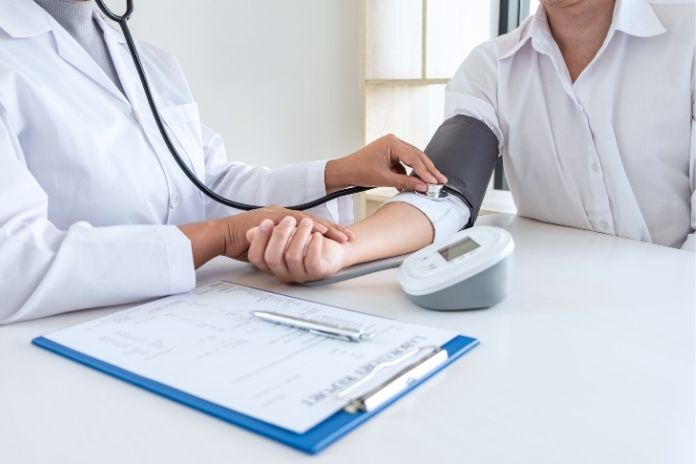
- Talk with a healthcare professional if anxiety is frequent, worsening, or interfering with work, relationships, caregiving, or sleep.
- Seek urgent care if anxiety comes with severe mood changes, thoughts of self‑harm, chest pain, or sudden neurological symptoms such as weakness or confusion.
- If your symptoms consistently cluster around your menstrual cycle, postpartum period, or menopausal transition, discuss the timing and possible role of hormone changes; hormone‑sensitive anxiety deserves the same attention as any other mental health condition.
Read More: Why Are Women More Prone to Anxiety Than Men?
Final Takeaway
- Estrogen withdrawal anxiety describes anxiety symptoms linked to falling estrogen levels during times like PMS, postpartum, perimenopause, or after stopping birth control.
- These transitions can disrupt serotonin, GABA, dopamine, and the stress system, making some women more vulnerable to worry, panic‑like sensations, and mood swings.
- Monitoring patterns, supporting sleep, movement, and nutrition, and using mental‑health strategies can ease symptoms, while hormone‑based and non‑hormonal treatments provide additional options when needed.
- If anxiety feels persistent or life‑disrupting, working with a healthcare professional can help uncover hormone‑related factors and create a personalized plan so you do not have to manage hormonal anxiety alone.
References
- Frey, B. N., Skapek, M., & Soares, C. N. (2021). Estrogen withdrawal increases postpartum anxiety via oxytocin signaling dysfunction in the nucleus accumbens. Biological Psychiatry, 89(8), 751–763. ncbi.nlm.nih+1
- Schleper, N. R., & Rasgon, N. L. (2015). Effects of estradiol withdrawal on mood in women with past perimenopausal depression: A randomized clinical trial. JAMA Psychiatry, 72(7), 714–722. jamanetwork
- Berman, C. M., Freeman, E. W., & Sammel, M. D. (2003). Effects of estradiol withdrawal on mood in women with past perimenopausal depression: A randomized clinical trial. Archives of General Psychiatry, 60(9), 897–904. pmc.ncbi.nlm.nih
- Gordon, J. L., Rubinow, D. R., Eisenlohr-Moul, T. A., Leserman, J., & Girdler, S. S. (2018). Estradiol variability, stressful life events, and the emergence of depressive symptoms during midlife among women. JAMA Psychiatry, 76(6), 588–596.
- Li, Y., & Xu, M. (2022). Sex hormone fluctuation and increased female risk for depression during reproductive experiences. Frontiers in Neuroscience, 16, Article 9715398. ncbi.nlm.nih
- Meltzer-Brody, S., Kroll-Desrosiers, A. R., Schmid, M. J., & Girdler, S. S. (2022). Hormonal agents for the treatment of depression associated with pregnancy or reproductive transitions. American Journal of Psychiatry, 179(10), 723–735. pmc.ncbi.nlm.nih
- Amin, Z., Gueorguieva, R., Cappiello, A., Czarkowski, K. A., Stiklus, S., Anderson, G. M., Malison, R. T., & Epperson, C. N. (2004). The role of estrogen in mood disorders in women. Primary Psychiatry, 11(8), 33–38. pubmed.ncbi.nlm.nih
- Eisenlohr-Moul, T. A., Rubinow, D. R., Schiller, C. E., Johnson, J. L., Leserman, J., & Girdler, S. S. (2023). Estradiol withdrawal following a hormone-simulated pregnancy induces irritability-like behavior in female rats. Psychoneuroendocrinology, 149, Article 106004. pmc.ncbi.nlm.nih
- Bale, T. L., & Epperson, C. N. (2015). Sex differences and stress across the lifespan. Nature Neuroscience, 18(10), 1413–1420. ncbi.nlm.nih
- McLean, C. P., Asnaani, A., Litz, B. T., & Hofmann, S. G. (2017). Anxiety disorders among women: A female lifespan approach. Focus (American Psychiatric Publishing), 15(2), 164–171. ncbi.nlm.nih
- Gordon, J. L., Girdler, S. S., Meltzer-Brody, S. E., Stika, C. S., Thurston, R. C., Buxton, O. M., Brooks, M. M., Pennell, P. B., Conry, J., Spatz, D. L., Eng, H. F., Rubinow, D. R., & Eisenlohr-Moul, T. A. (2023). Estradiol fluctuations during the menopausal transition are a risk factor for depressive symptoms. Psychoneuroendocrinology, 149, Article 106006. pmc.ncbi.nlm.nih
- Xu, X., Zhang, Y., & Wang, Y. (2021). Estrogen attenuates physical and psychological stress-induced anxiety-like behaviors. Pharmacology Biochemistry and Behavior, 204, Article 173162. pmc.ncbi.nlm.nih
- Eisenlohr-Moul, T. A., Girdler, S. S., Schmalenberger, K. M., Johnson, J. L., Carver, C. S., Rubinow, D. R., & Matuszewich, L. (2019). Estradiol fluctuation, sensitivity to stress, and depressive symptoms in perimenopausal women. Psychoneuroendocrinology, 105, 1–9. ncbi.nlm.nih
- Smith, J. W., Chu, H., Hoffman, A., Zhu, Y., & Deisseroth, K. (2016). Estrogen withdrawal produces an anxiety-like phenotype in female mice. Biological Psychiatry, 80(1), 23–32. pubmed.ncbi.nlm.nih
- Albert, K. M., & Newhouse, P. A. (2019). Estrogen, stress, and depression: Cognitive and biological interactions. Annual Review of Clinical Psychology, 15, 399–423. pmc.ncbi.nlm.nih
In this Article