

















Finding one thick, dark hair on your chin, neck, chest, or even around your stomach can feel oddly unsettling. It’s not pain. It’s not even a rash. But it triggers a very specific thought: “Where did this come from?”
And honestly, most people experience this at some point. A random dark hair appearing is extremely common, and in most cases, it’s harmless. You might even find an errant hair on your chin. “Initially horrifying, yes,” says Dr. Margaret E. Wierman, an endocrinologist, “but all perfectly normal.”
The key is not the hair itself. It’s the pattern, frequency, and what else is happening in your body.
Let’s break it down properly, without panic and without generic internet answers.
What Are “Random Dark Hairs”?
Not all body hair is the same.
1. Fine vellus hair vs coarse terminal hair
Most of the hair on your face and body is vellus hair, soft, light, and almost invisible. But the darker, thicker ones are called terminal hairs. Terminal hairs are coarser, more pigmented, more noticeable, and usually influenced by hormones or follicle sensitivity.
So when people say “random dark hairs,” they usually mean one or two terminal hairs appearing in a place that normally has fine hair.
2. Why a single dark hair can appear suddenly
It often feels sudden, but usually:
- The hair was growing slowly for weeks
- It only became visible once it reached the surface
- You noticed it because it looks different
Hair growth is quiet until it isn’t.
3. Why they’re noticed more than lighter hairs
A single dark strand stands out because:
- It catches light differently
- It feels rougher to touch
- It contrasts with the surrounding skin
That’s why one hair can feel like a big issue, even when it’s biologically minor.
The Hair Growth Cycle and Pigmentation
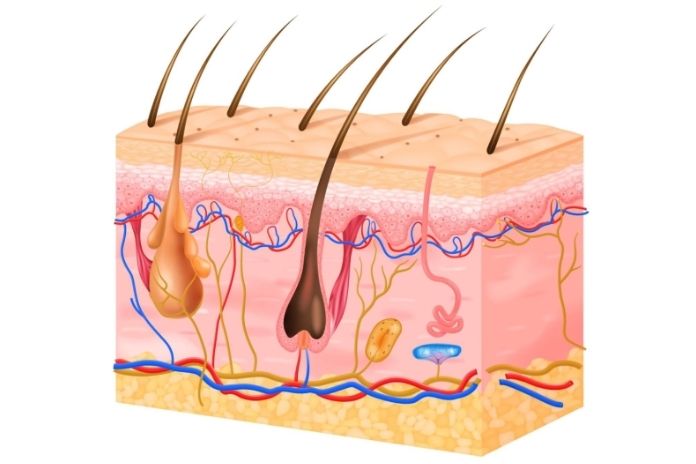
Hair follicles don’t behave in a constant way. They cycle.
1. The three phases: anagen, catagen, telogen
- Anagen: active growth
- Catagen: transition phase
- Telogen: resting/shedding phase
Different follicles are in different phases at different times. So one follicle may suddenly “activate” while others stay quiet.
2. How pigmentation changes over time
Melanin production inside the follicle can change with age, hormones, genetics, and inflammation. So the follicle may start producing a darker strand even if it didn’t before.
3. Why do some follicles produce darker hair unexpectedly
Here’s a less talked-about point: Follicles are not identical. Some have higher androgen (male hormone) receptors. Some respond more strongly to tiny hormonal shifts.
Meaning: Even with normal hormone levels, one follicle can “overreact.” That’s why random black hairs often happen without disease.
Common, Harmless Causes of Random Dark Hairs
1. Genetics and Natural Variation
The most boring but most common reason is genetics. Some people simply have follicles that are more sensitive to hormonal signals. This can happen even if hormone levels are normal.
If your mother, aunt, or siblings have occasional chin or facial hair, chances are you may also see them. The body is not symmetrical or perfectly consistent. A few “odd hairs” are part of natural variation.
2. Aging and Hormonal Shifts
As we grow older, hormones shift slowly, even without any disease.
In women, estrogen gradually reduces after the late 30s and especially around menopause. When estrogen drops, androgen effects become slightly stronger.
In men, testosterone also changes with age, sometimes affecting hair distribution. So random dark hairs can become more noticeable with time, even if nothing is medically wrong.
It’s not always “high testosterone.” Sometimes it’s simply a matter of changing hormone ratios.
Hormonal Factors That Can Trigger Dark Hair Growth

1. Androgens and Hair Follicle Sensitivity
Androgens (such as testosterone and dihydrotestosterone, or DHT) influence hair follicles. But here’s what most blogs miss: Sensitivity matters more than hormone level.
Two people can have the same testosterone level, but one develops coarse hair because their follicles are more responsive. That’s why random dark hairs can appear even with “normal blood tests.”
2. Polycystic Ovary Syndrome (PCOS)
PCOS (excess production of male hormones in females) becomes relevant when hair growth is not random anymore. Dark hair growth becomes hirsutism when it appears in patterns on the chin, jawline, upper lip, chest, and lower abdomen.
Other symptoms often accompany irregular periods, acne, weight changes, and scalp hair thinning. PCOS is not diagnosed from one hair. It is diagnosed from a broader hormonal pattern.
Why Random Dark Hairs Often Appear on the Face
Certain facial zones are simply more androgen-sensitive. Common areas include the chin, jawline, upper lip, and sideburns. These areas have higher androgen receptor density and follicles that convert testosterone into DHT more actively
That’s why facial hair in women is often linked to local follicle behavior, not just hormones.
There’s also a more local explanation that surprises people. Hair can grow from moles or raised skin lesions because the follicles there are already active. “Typically, moles that are raised up from the skin and have been present on your body for some time will have hair growth,” says dermatologist Dr. Sara Greer. This kind of hair growth is usually benign and reflects the skin’s structure, not a hormonal problem.
1. Does plucking cause more hair growth?
No. Plucking never creates new follicles. But it can feel like more hair because regrowth is blunt, not tapered; the hair appears darker; and you start checking more often.
So it becomes a visibility issue, never a growth explosion.
Medications and Medical Conditions That Can Affect Hair Growth

Some medications can trigger coarse hair growth, including:
- Anabolic steroids (man-made version of testosterone)
- Testosterone-containing treatments
- Some seizure medications
- Certain immunosuppressants
Medical conditions that can contribute to dark hair include thyroid dysfunction, adrenal disorders, and rare androgen-secreting tumors.
Most people do not have these serious causes, but medication review is worth doing if changes are sudden.
Sudden Increase in Dark Hairs: When to Pay Attention
Random dark hairs are normal. But sudden dark hair growth across multiple areas is different.
Pay attention if you notice:
- Rapid progression over months
- Spreading beyond one area
- Coarse hair growth in male-pattern zones
- Acne flare-ups
- Irregular cycles
- Voice deepening
- Increased muscle changes
Hair growth is sometimes a visible clue to internal hormone shifts. Not dangerous always, but worth checking.
Are Random Dark Hairs a Sign of a Serious Condition?
In most cases: No. One or two random black hairs are usually benign.
Red flags that justify testing include new widespread hirsutism, fast onset, symptoms of androgen excess, menstrual disruption, as well as hair growth with other endocrine signs.
A single hair is never a disease. A pattern might be.
How Doctors Evaluate Excess or Concerning Hair Growth
Doctors look at:
1. Symptom history
When did it start? Is it increasing? Any menstrual changes? Any medication triggers?
2. Pattern assessment
Random vs. male-pattern distribution matters.
3. Hormone testing (if indicated)
Possible lab tests include checking testosterone, dehydroepiandrosterone sulfate (DHEAS), LH/FSH (leuteinizing and follicle-stimulating hormone) ratio, and thyroid levels
4. Imaging or referrals
Rarely, pelvic ultrasound or adrenal imaging is needed. Most cases never reach that stage.
Read More: 45 Home Remedies for Hair Growth That Actually Help
Managing Random Dark Hairs
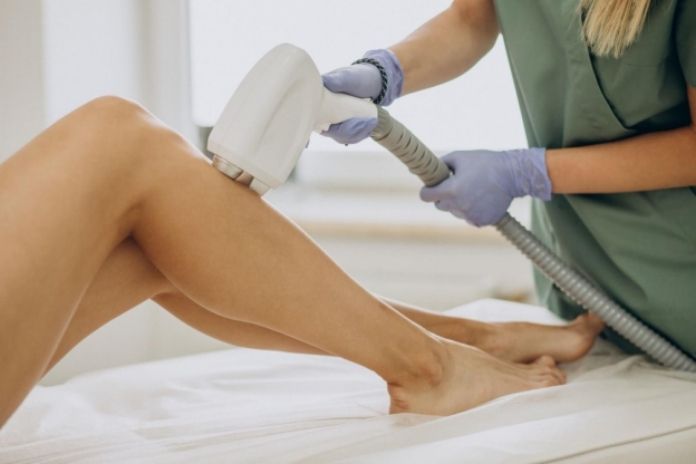
If it’s occasional and stable, management is mostly cosmetic. Options include plucking (carefully), shaving (safe, doesn’t worsen growth), waxing, laser hair reduction, and electrolysis for single stubborn follicles
Long-term approaches depend on the cause:
- Hormonal treatment for PCOS-related problem
- Medication adjustment if a drug-induced problem
- Addressing endocrine imbalance if present
Treatment works best when it matches the underlying trigger.
Read More: Can Chia Seed Oil Help You Grow Your Hair Faster?
What You Should Avoid Doing
Some common mistakes:
- Overplucking the same area repeatedly
- Using harsh depilatory creams on sensitive facial skin
- Self-diagnosing PCOS based only on one hair
- Panic-testing hormones without symptoms
Hair alone is rarely the full story.
Read More: Hair Removal Creams: Are They Safe for Sensitive Skin?
Final Thoughts
Occasional random dark hairs are one of those quietly common human experiences. In most people, they are simply part of hormonal sensitivity, genetics, or aging. The body does not produce hair in perfect patterns. But sudden or widespread changes deserve medical evaluation.
Your body is not “malfunctioning” because one follicle decided to behave differently. Sometimes, biology is just uneven like that.
- Random dark hairs often come from follicle sensitivity, not disease.
- One thick strand is usually harmless, especially when there are no other symptoms
- Hormonal shifts with age can quietly change hair texture in certain areas
- Medical research still lacks clear prediction models for why specific follicles suddenly change behavior.
- Sudden widespread hair growth needs attention because the pattern matters more than single hairs.
FAQs
1. What causes random dark hairs to suddenly appear?
Usually, a follicle entering a new growth cycle or producing more pigment suddenly appears; it is often harmless.
2. Are random dark hairs a sign of hormonal imbalance?
Not always. One or two hairs are common even with normal hormones.
3. Does plucking make hair grow back thicker?
No, but regrowth can look darker because it is blunt-tipped.
4. When should I worry about sudden dark hair growth?
If it spreads quickly or comes with acne, irregular periods, or voice changes.
5. What doctor should I see for facial hair in women?
A dermatologist or endocrinologist if hair growth is increasing or patterned.
In this Article