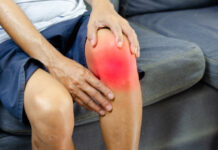











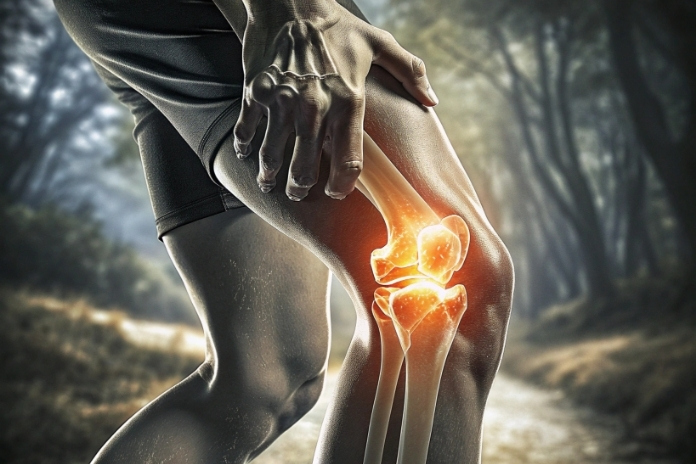
Your knees will have a tiny quantity of fluid when they are healthy. Your knee joint will move more easily and painlessly thanks to the lubricating properties of that fluid. However, extra fluid can occasionally build up in and around your knee joint. In addition to feeling painful, your knee may appear bigger, puffier, or swollen.
Knee effusion, or water on the knee, is a common term used to describe knee swelling. An illness, an injury, or prolonged joint use could bring it on. Regardless of the source, knee joint swelling is abnormal and can reduce knee function and flexibility. Additionally, it may cause pain and make it difficult to stand and move normally.
Everything you need to know about water on the knee will be covered in this article, including its underlying causes, warning signs, diagnostic techniques, and efficient treatment choices. To preserve long-term joint health and protect your knees, we’ll also cover preventive measures.
Read More: Why Your Knees Hurt When Climbing Stairs (Even if You’re Young)
What Is Water on the Knee?
Your body’s natural defense mechanisms are what cause water to accumulate on your knee.
When you injure your knee joint, your body produces more joint fluid to cushion and lubricate it, which can cause discomfort and inflammation.
The excess fluid results in:
- Swelling in the knees
- Tightness
- Pain
- Sensitivity
- Redness
- Warmth
- The joint is complex to move
- Fever
- Sensation that the joint is heavy
You will be unable to put any pressure on the knees. The extra fluid in the knee may limit your mobility and make it uncomfortable to squat, kneel, or go up or down the stairs.
Common Causes of Water on the Knee
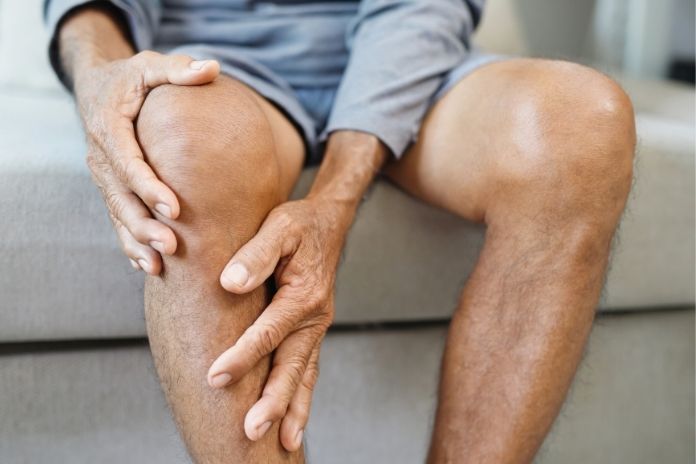
A swollen knee can result from a variety of factors. Traumatic injuries, illnesses, and other disorders are among them. Excess joint fluid can build up in your knee if any part of it is damaged. The following conditions can result in fluid accumulation in and around the knee joint:
Knee Injury: Trauma to the meniscus, articular cartilage, ligaments, tendons, bursae, or knee bones can cause pain and swelling in the knee. Severe injuries can cause considerable edema, warmth, stiffness, and bruising, as increased blood flow into the knee joint increases the risk of injury.
Knee Osteoarthritis: Swelling in the knee may result from the degeneration or disintegration of the knee joint’s cartilage and an excess of joint fluid. Pain results from swelling in the knee due to osteoarthritis. According to medical professionals, knee swelling is more common in patients with osteoarthritis and significant knee pain.
Bursitis: The human body has bursae, microscopic thin sacs filled with fluid. These slick, cushion-like sacs reduce friction between the bone and the surrounding soft tissues, including muscle and skin. Two of the knee’s eleven bursae are particularly susceptible to bursitis. Bursitis results from inflammation or irritation of these knee bursae.
Gout: Gout can result from elevated blood uric acid levels. Microscopic uric acid crystals may build up in and around the joints if your kidneys are unable to filter the excess uric acid you produce adequately.
Pseudogout: This type of arthritis typically causes abrupt, excruciating joint swelling. Days or weeks may pass between episodes. Although it is less common, it can cause small crystals to build up in a joint, much like gout.
Baker’s Cyst: Fluid accumulates in this type of bump or sac located behind the knee. It results in a tightness and a bulge. A knee injury or an ailment similar to arthritis may cause this syndrome. A baker’s cyst develops when the popliteal bursa, a sac at the rear of the knee, fills with too much fluid. Baker’s cysts are sometimes known as popliteal cysts.
Septic Arthritis: This painful illness affects the tissues and fluids of the joints. The fragile lining surrounding the knee joint can be penetrated by various bacteria, viruses, and fungi, leading to an infection and the accumulation of pus. A penetrating injury, like an animal bite or trauma, can also introduce germs straight into the joint, resulting in septic arthritis. In addition to severe pain and fever, it may result in knee swelling.
Tumor: A benign or malignant tumor may occasionally be the cause of a swollen knee. When a tumor develops in or close to a joint, it can cause discomfort, stiffness, and inflammation, which can limit the range of motion.
A swollen knee is typically an indication of a joint problem.
“Typically, knee swelling doesn’t occur without something underlying,” says Adam Driesman, MD, an orthopedic surgeon with the Connecticut Orthopaedic Institute at St. Vincent’s Medical Center.
Read More: How to Protect Your Knees During Workouts: Tips Every Active Person Should Know
Symptoms of Water on the Knee
Typical signs and indicators include:
Swelling: You may notice a noticeable increase in the skin surrounding your kneecap, especially when comparing the affected knee to the other one.
Stiffness: You may not be able to fully bend or straighten your leg if your knee joint has excess fluid.
Pain: Your knee may become so painful that you are unable to bear weight on it, depending on what caused the fluid buildup.
How Doctors Diagnose Water on the Knee
A history and physical examination will likely be the first step performed by your healthcare providers. Then, tests will be required to determine the cause of your knee swelling.
Imaging Tests
The purpose of the imaging tests is to localize the problem. Tests include:
- X-ray:An X-ray may show arthritis and rule out fractures or dislocations of the bones.
- Ultrasound:This test uses sound waves to evaluate tendons and ligaments.
- MRI:Radio waves and a very strong magnetic field in an MRI reveal injuries to the tendons, ligaments, and other tissues that X-rays cannot show.
Joint Aspiration (arthrocentesis)
A doctor uses a needle to extract fluid from your knee and then examines this fluid for:
- Blood, which could be due to injury or bleeding problems.
- Bacteria that could be the cause of an infection.
- These are crystals that are typical of pseudogout or gout.
Treatment Options for Water on the Knee
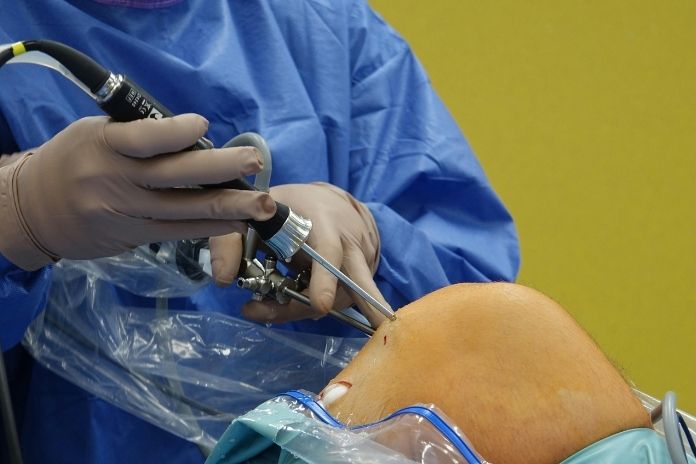
The management and treatment of your knee joint effusion depend on its etiology. The swelling usually resolves when the underlying cause of the knee joint is addressed. However, not every cause of knee effusion can be treated. Many people find that treatment entails controlling their symptoms rather than getting rid of them. Healthcare professionals can treat your swollen joint in several ways. Among the examples are:
- Antibioticsaid in the treatment of infections. Your doctor may recommend antibiotics if you have septic arthritis, which is an infection of the knee joint.
- During an arthrocentesis, your doctor will remove the synovial fluid from your inflamed joint. For testing, they might send it to a lab. Tests can detect bacteria, proteins, specific blood cells, glucose, or other signs of different illnesses.
- Colchicineis used to treat gout. It relieves joint effusion, discomfort, and inflammation.
- Steroidshelp block substances that cause inflammation. Inflammation can lead to joint effusion, and arthritis can lead to inflammation. Doctors inject some steroids directly into your knee joint, while you ingest others.
When you need therapy for a swollen joint, contact your healthcare professional. They can assist you in determining the most effective course of action for your joint effusion.
Read More: Top 5 Orthopedic Knee Pillows to Alleviate Discomfort and Improve Sleep
Home Remedies and Self-Care Tips
Home treatments for water on the knee can provide significant relief and support in the comfort of your own home, but it never hurts to consult your physician if you have persistent symptoms.
Rest and Elevation: If the effusion results from overuse or injury, rest is one of the primary methods of decreasing fluid in the knee joint. It implies changing activities and possibly even ambulating with support, such as crutches or a cane. Elevating the leg at rest also helps minimize knee swelling. Elevating the leg above heart level, preferably with the knee straight, can draw the fluid out of the knee.
Cold Treatment: Applying ice packs can help reduce swelling and pain. Apply in 20-minute intervals, consistently placing a thin layer of cloth between your skin and the cold.
Knee Strapping: A knee strap may help stabilize and aid healing in certain instances. A strap for the knee can be helpful if the effusion results from a ligament injury, for example. Consult your physician before attempting strapping or a pad to determine whether it is the best way to relieve fluid in the knee.
Cortisone Injections: When there is effusion due to either a developing injury or edema, cortisone injections are frequently used in conjunction with the Aspiration (draining of the fluid) methods of treatment, since these produce pain relief and reduce swelling.
Heat Treatment: You can alternate cold and heat treatments for ten to twenty minutes if the injury or swelling occurred more than 72 hours ago. It is best to alternate heat and cold therapies to gain the benefits of both. Heat alone will decrease pain but also cause swelling.
Try Therapeutic Exercises: A series of physical exercises designed to reduce fluid in the knee joints is another potential method for treating the condition. If the cause of the effusion was an injury and you have to regain the strength and mobility of the part injured, your physician may suggest this method of treatment.
You and your healthcare professional will work together to determine the specific exercises based on your injury type. Consult your therapist to obtain a set of therapeutic knee exercises tailored to your condition.
When to See a Doctor
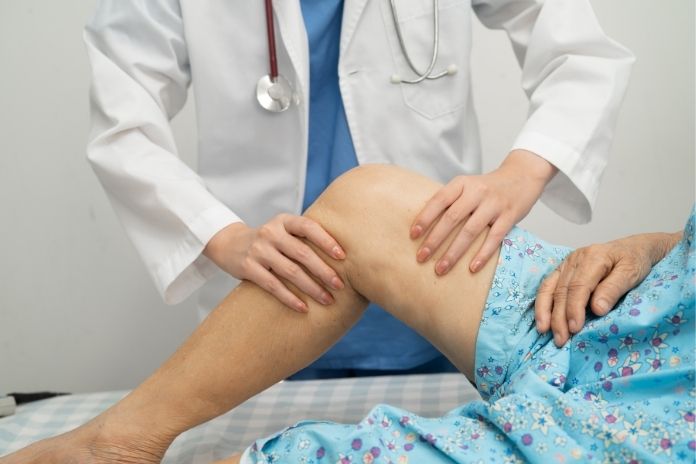
If you’re treating the fluid on your knee at home and the pain and swelling worsen, call a doctor. If your knee is red or feels hotter than the other knee, it is wise to see your doctor immediately, because these symptoms may be related to infection.
Additionally, you should consult a medical professional right away if you have a decreased range of motion, are unable to move your knee, are unable to put weight on your knee, or suspect that you may have a broken bone or torn ligament.
Read More: 11 Energizing Squat Alternatives for Bad Knees
How to Prevent Water on the Knee
While you cannot always avoid injury, you can reduce the risk of excessive fluid buildup in the knee.
- Steer clear of abrupt motions that could injure your knee, such as abrupt direction changes.
- Make sure you see your doctor regularly and address all your underlying illnesses appropriately.
- Maintain a healthy weight and reduce knee strain by engaging in low-impact activities such as swimming, biking, and walking.
Read More: 5 Effective Knee Strengthening Exercises
Conclusion
While “water on the knee,” or knee effusion, can be limiting and uncomfortable, understanding its underlying causes is crucial for effective treatment. The reason may be an injury, arthritis, an infection, or overuse, and prompt examination and treatment can help the healing process and also prevent complications. Signs that can help the individual identify knee effusion are warmth, tenderness, stiffness, and swelling.
Home remedies and self-care measures can aid in the healing process and help maintain joint health. Still, a medical examination will be necessary if the condition becomes severe and persistent.
You can reduce pain, increase mobility, and maintain knee strength and flexibility for years to come by combining medical advice with a careful lifestyle choice.
References
- https://www.bannerhealth.com/healthcareblog/teach-me/why-you-might-have-fluid-on-the-knee-and-how-to-treat-it
- https://orthoneuro.com/water-on-the-knee/
- https://www.everydayhealth.com/orthopedic-conditions/how-to-reduce-fluid-in-the-knee/
- https://redefinehealthcare.com/what-causes-a-swollen-knee-water-on-the-knee/
- https://www.mayoclinic.org/diseases-conditions/swollen-knee/symptoms-causes/syc-20378129
- https://www.briankanzmd.com/knee-effusion-orthopaedic-surgeon-san-antonio-tx.html
- https://www.aafp.org/pubs/afp/issues/2000/0415/p2391.html
- https://my.clevelandclinic.org/health/symptoms/21908-joint-effusion
- https://orthotoc.com/home-remedies-for-knee-pain/
- https://www.medicinenet.com/how_do_you_treat_a_knee_effusion/article.htm
- https://stvincents.org/about-us/news-press/news-detail?articleId=56009
- https://hartfordhealthcare.org/find-a-doctor/physician-detail?id=0035b00003rll5AAAQ
In this Article