












A strong core is far more than just an aesthetic goal—it’s the foundation of your body’s stability, posture, and injury prevention. Your abdominal muscles are among your body’s hardest workers, supporting virtually every movement you make throughout the day.
Think of your core as your body’s natural weight belt. These muscles in your midsection power countless daily activities: reaching for items on high shelves, twisting to look behind you while driving, bending to tie your shoes, and maintaining balance while walking on uneven surfaces. A strong core doesn’t just make you look good—it makes life easier and safer.
Core strengthening exercises target the muscles surrounding your pelvis, back, and abdomen, creating a stable foundation that makes physical activities more efficient and reduces your risk of injury. Whether you’re carrying groceries, playing with your children, or pursuing athletic goals, a strong core ensures smoother, safer movement.
Let’s explore how to build your core strength one day at a time with exercises that require just minutes of your day but deliver lasting benefits.
Read More: Best Cardio Exercises for Daily Fat Burning
Why Core Strengthening Matters More Than You Think
Beyond the Six-Pack: Understanding Your True Core
Your core is like the central link in a chain connecting your upper and lower body. Every movement you make—whether sweeping the floor or serving a tennis ball—either originates from or passes through your core. When this central link is weak or inflexible, it creates a ripple effect that compromises the function of your arms and legs, robbing your movements of power and efficiency.
According to Dr. Wendi Weimar, head of Auburn University’s Sports Biomechanics Laboratory, many people “don’t have a strong grasp of which muscles are ‘core’ muscles.” This misconception leads to ineffective workout routines that target only the superficial abdominal muscles while neglecting the deep stabilizing muscles that truly matter.
Your abs are just one component of your core system. As Sarah Walls, personal trainer and owner of Strength & Performance Exercise, Inc. (SAPT) explains, true core strengthening “is equal to some abs training, but it also involves learning to stabilize your core muscles.”
The Real Benefits of Daily Core Work
A strong core delivers benefits that extend far beyond appearance:
- Injury Prevention: Protects your lower back and reduces strain during daily activities
- Better Posture: Supports proper spinal alignment throughout the day
- Enhanced Athletic Performance: Improves power transfer and stability in sports
- Functional Strength: Makes everyday tasks easier and safer
- Balance and Stability: Reduces fall risk and improves coordination
5 Essential Daily Core Exercises
1. Plank Variations: The Ultimate Core Foundation
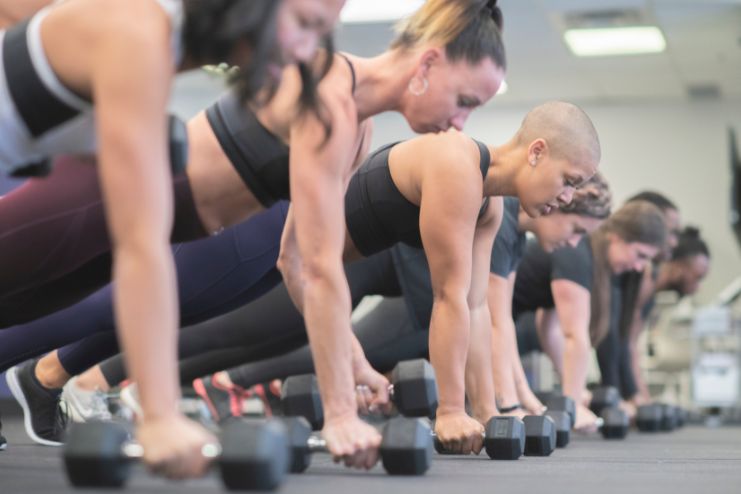
Planks are widely considered the gold standard for core strengthening. Unlike crunches or sit-ups, planks place less stress on your spine and hip flexors while delivering superior results. As exercise physiologist Katie Lawton, MEd, explains, “A plank is when you hold your body in a straight position and in-line position like a plank of wood.”
The beauty of planks lies in their efficiency—they strengthen your arms, shoulders, glutes, and hamstrings simultaneously while building rock-solid core stability.
Standard Forearm Plank:
- Lie face down with your forearms flat on the floor, elbows directly under your shoulders
- Press through your forearms and toes to lift your body off the ground
- Keep your body in a straight line from head to heels—no sagging hips or raised buttocks
- Hold for 20-30 seconds initially, building up to 60 seconds or more
- Focus on breathing steadily throughout the hold
Side Plank:
- Lie on your side with your forearm on the floor, elbow under your shoulder
- Stack your feet and lift your hips to create a straight line from head to feet
- Place your free hand on your hip or extend it toward the ceiling
- Hold for 15-30 seconds per side, building endurance over time
Read More: Daily Stretching Exercises for Flexibility and Mobility
2. Crunches and Sit-ups: Classic Core Builders
While often confused, crunches and sit-ups are distinct exercises that both effectively target your rectus abdominis—the “six-pack” muscle that forms the top layer of your core.
As Peloton instructor Logan Aldridge explains, “A crunch is done by flexing your stomach muscles to fold your torso and spine in, while a sit-up brings your entire torso from lying flat to an upright sitting position.”
Proper Crunch Technique:
- Lie on your back with knees bent and feet flat on the floor
- Place your hands behind your head without interlacing fingers
- Engage your core and lift your shoulder blades off the ground
- Focus on curling your ribs toward your pelvis, not just lifting your head
- Lower slowly and repeat for 10-15 repetitions
Benefits: Both exercises primarily target the rectus abdominis with what physical therapist Tanner Neuberger calls “an upper-hunch bias,” making them excellent for building the front wall of your core.
3. Leg Raises: Target Your Lower Core
Leg raises are the secret weapon for developing lower abdominal strength and hip flexor power. These exercises specifically target the often-neglected lower portion of your rectus abdominis while building functional strength that translates to better posture and reduced lower back pain.
Why Leg Raises Matter:
- Core Development: Effectively work both upper and lower rectus abdominis
- Hip Flexor Strength: Build power for athletic performance and daily movement
- Posture Support: Strengthen muscles that influence pelvic positioning
- Back Pain Prevention: Address one of the most common ailments worldwide
Basic Leg Raise:
- Lie flat on your back with arms at your sides for stability
- Keep your legs straight and slowly lift them to 90 degrees
- Lower them slowly without letting your feet touch the ground
- Maintain tension in your core throughout the entire movement
- Start with 8-10 repetitions, building up gradually
4. Russian Twists: Build Rotational Power
The Russian twist is a dynamic exercise that develops rotational strength—a crucial component often missing from traditional ab routines. This movement mimics the rotational patterns used in sports and daily activities, making it exceptionally functional.
Why Russian Twists Are Essential:
- Rotational Strength: Develops power for sports and daily twisting movements
- Deep Core Activation: Engages the deepest stabilizing muscles
- Functional Movement: Translates directly to real-world activities
- Versatility: Can be performed with body weight or added resistance
Proper Russian Twist Form:
- Sit with knees bent and feet flat on the floor
- Lean back slightly to engage your core, keeping your chest up
- Lift your feet off the ground for added challenge (optional)
- Rotate your torso from side to side in a controlled manner
- Add weight (medicine ball, dumbbell) as you progress
Read More: 6 Chair Exercises to Target and Tone Thigh Fat Without Leaving Your Seat
5. Mountain Climbers: Dynamic Full-Body Core Work
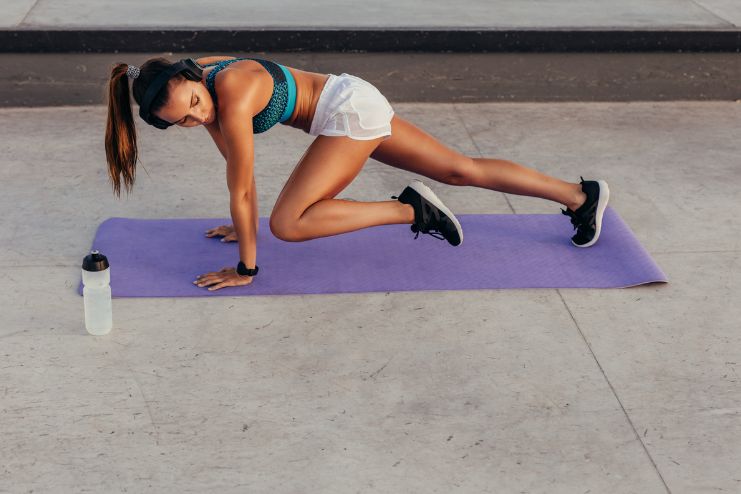
Mountain climbers combine cardiovascular conditioning with intense core strengthening, making them one of the most efficient exercises you can perform. This explosive movement targets multiple muscle groups while building the kind of dynamic core stability needed for real-world activities.
Full-Body Benefits:
- Cardiovascular Fitness: Elevates heart rate for calorie burning
- Core Strength: Challenges stability in a dynamic movement pattern
- Upper Body: Engages shoulders, arms, and chest in the plank position
- Lower Body: Activates glutes, hamstrings, quadriceps, and calves
- Agility: Improves coordination and quick movement patterns
Mountain Climber Technique:
- Start in a high plank position with hands directly under shoulders
- Keep your core tight and body in a straight line
- Drive one knee toward your chest, then quickly switch legs
- Maintain the plank position while alternating legs rapidly
- Start with 15-20 seconds, building to 30-45 seconds
Creating Your Daily Core Routine
The 10-Minute Solution
Building core strength doesn’t require hours at the gym. A focused 10-15 minute daily routine can deliver remarkable results when performed consistently. Here’s how to structure your approach:
Beginner Routine (10 minutes):
- Forearm Plank: 2 sets of 20-30 seconds
- Crunches: 2 sets of 10-12 reps
- Leg Raises: 2 sets of 8-10 reps
- Russian Twists: 2 sets of 15-20 reps (each side)
- Mountain Climbers: 2 sets of 15-20 seconds
Intermediate Routine (12-15 minutes):
- Add side planks and increase hold times
- Include plank variations
- Add resistance to Russian twists
- Increase the mountain climber duration
Progressive Overload: The Key to Continued Growth
To avoid plateaus and continue building strength, you must progressively challenge your muscles:
Ways to Progress:
- Increase Duration: Hold planks longer, add more repetitions
- Add Resistance: Use weights, resistance bands, or weighted vests
- Advanced Variations: Move from basic to more challenging exercise versions
- Increase Frequency: Add extra sets or additional workout days
Form Over Speed: Quality Matters
Every repetition should be performed with deliberate control and proper form. Moving slowly and intentionally not only maximizes muscle activation but also prevents injury and ensures you’re targeting the right muscles.
Key Form Principles:
- Focus on controlled movements rather than speed
- Maintain proper breathing throughout each exercise
- Keep your core engaged even during rest periods
- Listen to your body and stop if you feel sharp pain
Read More: Isometric vs. Dynamic Exercises – Which One Is Better for Strength?
Making It Sustainable: Tips for Long-Term Success
Start Small, Think Big
The key to lasting success is consistency, not intensity. Begin with just 5-10 minutes daily and gradually build up. It’s better to do a short workout every day than an intense session once a week.
Find Your Perfect Time
Whether it’s first thing in the morning to energize your day or in the evening to unwind, choose a time that works with your schedule and stick to it. Consistency in timing helps establish the habit more quickly.
Track Your Progress
Keep a simple log of your workouts—note how long you held your planks, how many repetitions you completed, or any new exercises you tried. Seeing your progress on paper is incredibly motivating.
Listen to Your Body
Some muscle soreness is normal, especially when starting out, but sharp pain is not. Allow for rest days when needed, and don’t hesitate to modify exercises if something doesn’t feel right.
Conclusion
Daily core strengthening is one of the most efficient investments you can make in your overall health and fitness. A strong core supports virtually every movement your body makes, from routine daily tasks to athletic pursuits and everything in between.
The beauty of core training lies in its simplicity and accessibility. These exercises require no special equipment, minimal space, and just minutes of your day. Yet the benefits—improved posture, reduced injury risk, better balance, and enhanced functional strength—impact every aspect of your physical well-being.
Remember, building core strength is a journey, not a destination. Start with the basics, focus on proper form, and gradually increase the challenge as your strength improves. With consistency and patience, you’ll develop the strong, stable core that serves as the foundation for a healthier, more active life.
Your core works for you all day, every day. Isn’t it time you returned the favor with just 10-15 minutes of focused attention? Start today, and discover how a stronger core can transform not just how you look, but how you move through life.
References
- https://www.verywellfit.com/30-minute-abs-workout-6890353
- https://www.mayoclinic.org/healthy-lifestyle/fitness/in-depth/core-strength/art-20546851
- https://www.health.harvard.edu/healthbeat/the-real-world-benefits-of-strengthening-your-core
- https://www.healthline.com/health/core-strength-more-important-than-muscular-arms#benefits
- https://www.rei.com/learn/expert-advice/best-core-workouts.html
- https://www.healthline.com/health/14-plank-variations-your-core-will-thank-you-for-later
- https://health.clevelandclinic.org/plank-exercise-benefits
- https://www.healthline.com/health/fitness-exercise/sit-ups-vs-crunches#crunches
- https://www.nike.com/a/sit-ups-crunches-muscles-worked
- https://www.onepeloton.com/instructors/pelo_logo
- https://www.athletico.com/
- https://www.realsimple.com/leg-lifts-8550437
- https://www.endomondo.com/training/benefits-of-leg-raises
- https://www.healthline.com/health/russian-twist#precautions
- https://laymansfitness.com/hub/how-to-do-russian-twists
- https://learn.athleanx.com/articles/abs-for-men/how-to-do-mountain-climbers
- https://www.hingehealth.com/resources/articles/mountain-climbers/
In this Article