













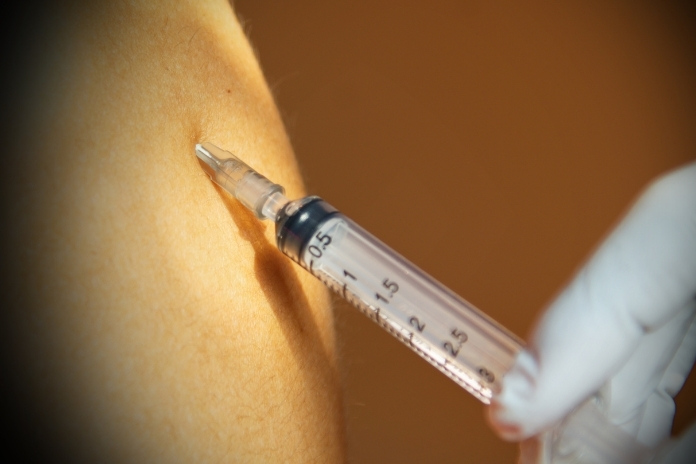
Most of us love tanned bodies and long for the summer tan. As many believe, glowing tan is seen as a symbol of health, beauty, and confidence. Traditionally, you’d have to spend hours in the sun or step into a tanning bed to get that bronze shade. However, these methods might come with certain risks. These can lead to premature aging and an increased chance of skin cancer. That’s why, when “tanning injections” became popular online, they caught the attention of people looking for a shortcut.
These shots, typically sold under the names Melanotan I and Melanotan II, promise a tan without hours of sunbathing. They’re highly promoted on tanning websites and social media sites as the new beauty secret. But the question everyone wants answered is: Do the shots work, and are they safe?
In this article, we will understand more closely how tanning injections are believed to work, what dangers actually lie in them, and expert opinions about these injections. We will also discuss safer alternatives to explore before reaching for that syringe.
Read More: If Sunscreen Is So Good for Your Skin, Why Do So Many People Still Skip It?
What Are Tanning Injections?

Tanning shots are man-made versions of hormones your own body produces naturally. When you’re outside, usually, your skin secretes a hormone known as alpha-melanocyte-stimulating hormone (α-MSH). The α-MSH hormone tells your pigment cells (called melanocytes) to make more melanin, the pigment that tans your skin darker.
Scientists tried to copy the above natural process in the lab. They created Melanotan I and Melanotan II, which are synthetic hormones that mimic the effect of α-MSH. Injected just under the skin, they’re supposed to “turn on” your pigment cells and make your skin darker.
The surprise? These substances are not licensed by the U.S. Food and Drug Administration (FDA) or authorities in the UK, Europe, or Australia as cosmetic tanning solutions. However, they’re being distributed online and marketed as “research chemicals” to evade the law. Since they’re unregulated, the vial contents are untrustworthy, at times with contaminants or incorrect dosages.
So the theory is sound, but the reality is much less reassuring.
How Do Tanning Injections Work?
It sounds simple: get an injection, wait a couple of days, and your skin darkens. But what’s happening in your body?
- Stimulating pigment cells: When injected, Melanotan binds to receptors on your melanocytes. These receptors tell the cells to produce melanin, darkening the skin.
- Overestimating tanning with decreased sun: Consumers will report that they need less sun to tan, as the starting point of melanin production is at a higher level.
- Other results include that Melanotan II can also trigger other receptors in the body. Therefore, some consumers may note variations in hunger, blood pressure, or even sex drive.
It’s also important to note that it has not yet been attempted in extensive, long-term clinical trials. What that means is that we have no idea yet how the hormone will affect other systems in the body, or what the risks will be in the long run. Some of the reported side effects include nausea, headaches, and changes in moles—an issue that particularly concerns doctors and gives them pause.
Claimed Benefits
Why would people risk injecting something unregulated? Because the proposed benefits are so tempting. These include:
- A faster, deeper tan: The users describe their skin as tanning more quickly and staying tanned for longer periods than with sun exposure alone.
- Decreased sun time: With melanin already boosted, the users report not needing to spend hours tanning, which they feel restricts UV damage.
- Additional benefits: Many Melanotan II users report feeling less hungry due to appetite suppression, sudden weight loss, as well as increased sexual arousal.
But here’s the truth: almost all of these claims are not so solid. They are grounded in personal experience online, not in scientific studies. And yes, your skin can be a shade or two darker, but at the expense of introducing into your body a highly concentrated, untested drug with much more far-reaching effects than altering the color of your skin.
Side Effects and Risks
As far as tanning injections are concerned, the risks are more reported than the benefits. Doctors warn against the short-term and long-term effects.
Short-Term Side Effects:
- Vomiting and nausea: The majority of users become ill for a few minutes following injection.
- Flushing and headaches: The hormone may cause the blood vessels to dilate, resulting in a hot, flushed face and pounding headaches.
- Injection-site complications: Redness, swelling, abscesses, and sometimes infection are common because these injections are often given in a non-medical setting.
- Spontaneous erections: Melanotan II has caused some men to experience painful, prolonged erections (a condition called priapism).
These side effects are severe enough, but they’re just the beginning.
Long-Term Risks:
The long-term risks can have complications, and this is where it gets scary. These side effects include:
- Mole changes: Individuals have reported darkening, enlarging, or altering their moles. Dermatologists are concerned that this raises the risk of melanoma (skin cancer).
- Possible link to cancer: So far, studies have not proven a direct link to cancer, but artificially activating pigment cells can potentially promote cancerous growth as a result of tanning injections.
- Hormonal side effects: Since melanotan works on other receptors, it will interfere with appetite, blood pressure, and even kidney function.
- Unknown dangers: Since there aren’t any long-term studies, we have no idea what constant exposure over the years can do to the body.

Regulatory Issues:
The second flag is that tanning injections are being sold on an unregulated market. That is:
- No quality control, as you can’t know what’s actually inside the vial.
- Illegal sales are common, as in the US, UK, and most other countries, it’s against the law to sell melanotan for tanning.
- High risk of contamination has been shown in the laboratory testing of web products that have unlisted ingredients.
In short, tanning injections are like injecting a mystery chemical into your body and crossing your fingers.
Read More: Top After-Sun Lotions: Soothe & Hydrate Sun-Damaged Skin
What the Doctors Say

Dermatologists agree on this one: tanning injections are unsafe.
Dr Emma Wedgeworth, consultant dermatologist and British Skin Foundation spokesperson, explains.“Melanotan II stimulates pigment cells, known as melanocytes, to produce more pigment. Melanocytes are the cells that serious skin cancers, melanomas, develop from,” explains Dr Wedgeworth. “The concern is that if you overstimulate melanocytes, particularly in someone who has an underlying tendency to skin cancer, you could increase the risk of melanoma developing. In addition, melanotan II often goes along with other risky sun-seeking behaviour such as sunbed usage,” Dr Wedgeworth says.
Medical centers like the FDA in the United States and the MHRA in the United Kingdom have issued warnings against these melanotan products in plain language. Specifically, they demand that any product sold as a tanning injection is not tested, could be contaminated, and is unsafe.
Doctors recommend that you stick with safer, tried-and-true tanning methods like lotions or sprays if you want a sun-kissed look.
Safer Alternatives to Tanning Injections
If a sun-kissed glow is your wish, you can have it without risking your health. Here are healthy, dermatologist-approved options:
- Sunless tanning sprays and lotions. They include DHA (dihydroxyacetone), which reacts with the outer layer of your skin to create a temporary tan. It does not penetrate very deep into your skin and has no contact with your cells.
- Professional spray tans. These are done in salons, which provide an even look compared with products for use at home.
- Makeup and bronzers, a quick, safe, and easy thing to wipe off. Perfect for parties.
- Gentle sun exposure with SPF. If you are going outside in the sun, always wear sunscreen on your skin. A gradual tan is safer than inducing melanin formation through injection.
- Vitamin D supplements, if sun exposure is mostly for vitamin D, supplements can safely fulfill that requirement without UV damage.
When you compare spray tans with injections, the disparity is clear: spray tans are safe, regulated, and short-lived, while injections are unsafe and unpredictable.
Read More: Sun Safety Tips: Protecting Skin Health to Prevent Cancer
FAQs
- Are tanning injections legal in America?
No. The FDA has not approved Melanotan I or II. To sell them for tanning in America is illegal.
- Do tanning injections cause skin cancer?
There is not sufficient evidence to prove they cause cancer directly, but mole changes and the way Melanotan stimulates pigment cells raise concern that there could be a risk.
- For how long are tanning injections effective?
Effects last for weeks, according to users, but fade when you stop injecting. Because products are not regulated, effects are very varied.
- Is Melanotan II safe?
No. It comes with more side effects than Melanotan I, including nausea, priapism, and even instances of kidney damage.
Conclusion
The temptation of tanning injections is so good. We all wish for a speedy, long-lasting tan without tedious hours in the sun. But look closer, and the dangers are simply too real. From temporary side effects like nausea and flushing to long-term cancer risks, these illegal injections are nothing to fool around with.
Doctors and health agencies are unequivocal: tanning injections are not safe. To get a bronzed look, try safer means like self-tanning lotions, sprays, or bronzers. Your skin’s health is worth far more than a temporary glow.
Remember to consult a dermatologist before going ahead with any cosmetic treatment.
With tanning injections, the advice is simple: stay away and stay safe.
References
- https://www.hpra.ie/safety-information/safety-notices/article/reminder-of-serious-health-risks-with-melanotan-2-self-tan-products
- https://www.cancerresearchuk.org/about-cancer/causes-of-cancer/sun-uv-and-cancer/fake-tan-and-melanotan-injections
- https://pmc.ncbi.nlm.nih.gov/articles/PMC8998143/
- https://pmc.ncbi.nlm.nih.gov/articles/PMC6388891/
- https://www.cancerresearchuk.org/about-cancer/causes-of-cancer/sun-uv-and-cancer/fake-tan-and-melanotan-injections
- https://www.unsw.edu.au/newsroom/news/2023/01/what-is-melanotan-ii—the-drug-that-the-tga-urges-consumers-to-
- https://www.yourhormones.info/hormones/melanocyte-stimulating-hormone/
In this Article