














Walking is one of the simplest and most underrated workouts. It requires no equipment, it’s joint-friendly, and it can be done virtually anywhere. For many people, it’s the first step toward better health, literally.
Regular walking can improve heart health, boost mood, and even sharpen focus. But here’s the thing: if you’ve ever wished you could walk faster, cover more distance without tiring, or finish a stroll without feeling stiff and achy, you might be missing a crucial piece of the puzzle: strength training.
Strength training doesn’t just build bigger muscles; it builds better movement. When your legs, core, and even upper body are stronger, every step becomes smoother and more efficient. Strong muscles absorb impact, protect your joints, and keep your posture upright instead of slouched. That means fewer aches, lower risk of injury, and a stride that feels lighter and more powerful.
The bonus? Muscle strength also boosts your metabolism, helping you burn more calories even while walking at the same pace. Endurance improves, energy levels rise, and suddenly your daily walk isn’t just a routine; it becomes a true fitness tool.
Think of it this way: walking is the practice, but strength training is the foundation that supports it. By adding just a handful of smart exercises, you can turn an ordinary walk into a safer, stronger, and more rewarding workout for the long run.
Why Strength Training Helps Walkers
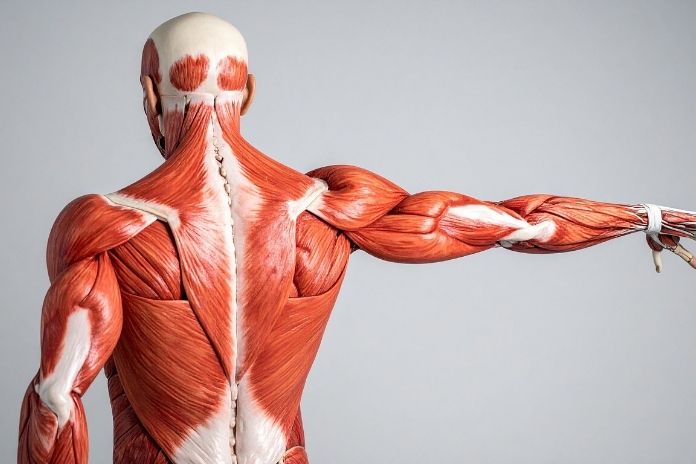
Walking is repetitive, step after step, your body cycles through the same movement pattern. That repetition might feel effortless, but over time, it can place stress on your knees, hips, ankles, and lower back.
If your muscles aren’t strong enough to share the load, your joints end up doing more of the work. That’s where strength training steps in. Think of it as insurance: it builds the muscular support system that absorbs impact, keeps your stride efficient, and helps your body stay aligned mile after mile. Benefits Backed by Science:
Muscle Support for Joints
When your quadriceps, hamstrings, and calves are strong, they act like shock absorbers. Instead of every step jarring your knees, your muscles take the hit and protect the joint. Research backs this up: a 2024 meta-analysis in Arthritis Care & Research found that resistance exercise improves pain and physical function in knee osteoarthritis, and prior trials show it can boost walking performance too. Translation: stronger muscles mean happier joints.
Posture & Stride Efficiency
Walking doesn’t just use your legs; it’s a whole-body movement. A weak core or rounded shoulders can throw off your posture, making each step less efficient. Strength training your core and upper body helps keep you tall, shoulders back, and lungs open. The payoff? Better breathing, smoother arm swing, and more energy conserved with every stride.
Endurance Boost
It’s not just about lasting longer; it’s about lasting stronger. According to the American Heart Association, combining resistance training with aerobic activity leads to greater cardiovascular fitness than cardio alone. Stronger muscles delay fatigue, which means you can walk farther or faster without feeling drained. In simple terms: the stronger your body, the longer your battery lasts.
Injury Prevention
One of the biggest walking frustrations is experiencing nagging aches that won’t go away, such as shin splints, IT band syndrome, or sore hips. Often, these issues stem from weak stabilizing muscles. Strengthening your glutes, hips, and hamstrings adds stability to the pelvis and knees, reducing the risk of overuse injuries that come from thousands of repeated steps.
Walking outdoors is one of the most accessible and versatile types of exercise. “Walking is a great way to get the recommended 150 minutes of moderate-intensity exercise per week, and workouts can be adjusted to fit any fitness level,” says Dr. Lauren Elson, medical editor of the Harvard Special Health Report Walking for Health.
In other words, if walking is the road trip, strength training is the tune-up that keeps the car running smoothly. One makes you move; the other makes sure you can keep moving.
Read More: Monday Motivation: Full-Body Strength Training Routine
Best Strength Exercises for Walking Power
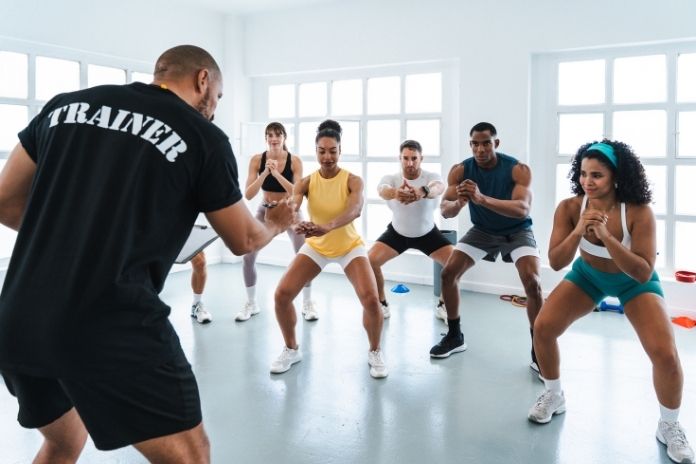
Walking looks simple, but powerful walking comes from strong, balanced muscles. Think of it as fine-tuning your stride engine, legs for drive, core for stability, and arms for rhythm. Here’s a structured breakdown of the best exercises to boost walking performance.
Lower Body: Your Walking Engine
- Squats
- Why: Build glutes, quads, and hips, key to stride power and knee support.
- How: Stand with feet shoulder-width apart. Lower as if sitting into a chair, then return to standing.
- Tip: Keep knees aligned with toes and chest tall.
- Lunges
- Why: Train single-leg strength and stability, closely mimicking walking mechanics.
- How: Step forward, bend both knees to 90 degrees, push back to start.
- Modification: Hold a wall or chair for balance.
- Step-Ups
- Why: Directly simulates walking uphill or climbing stairs.
- How: Step onto a sturdy bench or step, drive through the heel, then return.
- Tip: Alternate legs each rep for balance.
- Calf Raises
- Why: Strengthen push-off power and ankle stability for smoother strides.
- How: Stand on a flat surface or step, rise onto toes, lower slowly.
- Progression: Try single-leg raises to make it tougher.
Core & Stability: Your Walking Support System
- Planks
- Why: Builds core endurance, helping you stay upright and avoid slouching.
- How: Hold body in a straight line on elbows and toes.
- Progression: Try side planks for obliques and hip stability.
- Bird-Dog
- Why: Improves balance, coordination, and spinal stability.
- How: On hands and knees, extend opposite arm and leg, hold, then switch.
- Tip: Keep hips level, avoid twisting.
- Side Leg Raises
- Why: Strengthen hip abductors, which prevent knees from collapsing inward.
- How: Lie on your side, lift your top leg slowly, and lower with control.
- Progression: Add a resistance band around thighs for extra challenge.
Upper Body: Your Walking Rhythm
- Rows (Dumbbell or Resistance Band)
- Why: Strengthen the upper back for arm swing and posture.
- How: Hinge slightly forward, pull the weight or band toward your chest, and squeeze your shoulder blades.
- Tip: Avoid shrugging your shoulders up.
- Shoulder Press
- Why: Build shoulder and upper-back strength to keep posture tall.
- How: Press dumbbells overhead, lower with control.
- Bodyweight Option: Wall push-ups or towel rows if you don’t have equipment.
Pro Tip: Balance Strength with Mobility. Strong muscles need mobility to work efficiently. Stretch your calves, hamstrings, and hip flexors after walks or strength sessions. This keeps your stride fluid instead of stiff.
Sample Weekly Routine
- 2–3 strength sessions per week (non-consecutive days).
- Mix 2 lower body, 2 core, and 1–2 upper body moves per session.
- Keep reps in the 8–12 range for strength and control.
Strong legs drive your stride, a solid core keeps you upright, and an active upper body adds rhythm. Strength training isn’t just extra; it’s the foundation for walking farther, faster, and pain-free.
Read More: Daily Dumbbell Routines for Strength Training at Home
Sample Strength + Walking Routine
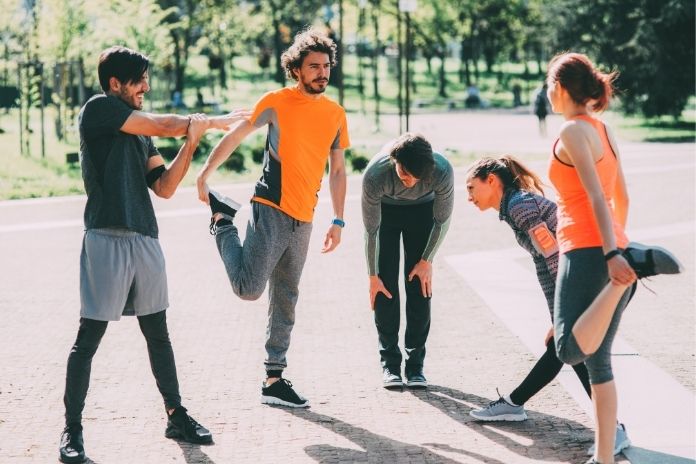
The goal is to combine strength training with walking so your muscles not only move you forward but also support endurance and power.
1. Warm-Up (5 minutes)
Get your body moving and joints ready.
- Option 1: Brisk walk.
- Option 2: Light marching in place.
- Add-on: A few arm circles and ankle rolls for mobility.
2. Strength Circuit (2 Rounds)
Perform each exercise in order, then repeat the circuit once more. Rest 30–60 seconds between moves if needed.
- Squats – 10 reps. Builds glutes, quads, and hips for strong strides.
- Step-Ups – 10 reps each leg. Simulates walking uphill and trains single-leg power.
- Calf Raises – 12 reps. Strengthens push-off for smoother forward motion.
- Plank – Hold 20 seconds. Engages core muscles to support posture.
- Bird-Dog – 10 reps each side. Improves balance, coordination, and spinal stability.
- Rows (Dumbbells or Resistance Band) – 12 reps. Builds upper-back strength to keep shoulders upright and arm swing efficient.
3. Main Walk (20–30 minutes)
Put your strength to work.
- Walk at a moderate to brisk pace (you can talk, but not sing).
- If outdoors, include a hill or stairs for a natural challenge.
- Indoors? Use a treadmill with an incline or pick up the pace in short intervals.
4. Cool-Down & Stretch (5 minutes)
Slow down your pace, then stretch the key walking muscles. Hold each stretch for 20–30 seconds.
- Hamstrings (back of thighs)
- Calves (lower legs)
- Hips/hip flexors (front of thighs and hips)
Weekly Plan
- Do this routine 2–3 times per week on non-consecutive days.
- On other days, enjoy easy to moderate walks or light mobility work.
This simple but balanced sequence primes your muscles with strength first, then uses walking as endurance training. Within weeks, you’ll notice better stride power, smoother rhythm, and less fatigue.
Read More: How to Structure Your Strength Training Program for Optimal Results
Safety Tips for Beginners

Pairing strength training with walking is a smart way to build endurance and power, but beginners should take it step by step. Here are the essentials:
1. Start with Bodyweight
Before picking up weights, nail the basics.
- Practice squats, lunges, planks, and calf raises using just your body.
- Focus on smooth, controlled movement rather than rushing.
2. Focus on Form
Good technique is non-negotiable.
- Keep knees aligned in squats and lunges.
- Engage your core during planks and bird-dogs.
- Avoid slouching during rows and presses.
Remember: one perfect rep is better than ten sloppy ones.
3. Progress Gradually
Build strength over time, not overnight.
- Increase reps (e.g., from 10 calf raises to 15).
- Then add sets or rounds.
- Finally, introduce light dumbbells or resistance bands once form feels solid.
4. Schedule Recovery
Muscles get stronger during rest, not just training.
- Leave at least 1–2 days between strength sessions.
- Active recovery, such as gentle walking or stretching, helps improve circulation and reduce soreness.
5. Listen to Your Body
Your body sends clear signals if something’s off.
- Mild soreness = muscles adapting (normal).
- Sharp or persistent pain = stop and reassess.
If discomfort doesn’t ease with rest, get it checked.
ACSM advises beginners to start light and increase gradually. Their guidelines recommend adding resistance training 2–3 days per week, alongside aerobic activities such as walking, and gradually increasing intensity and volume to reduce the risk.
Bottom line: start simple, move well, rest enough, and build slowly. That’s how you set a safe foundation for strength and walking power.
Mistakes to Avoid in Strength + Walking Training
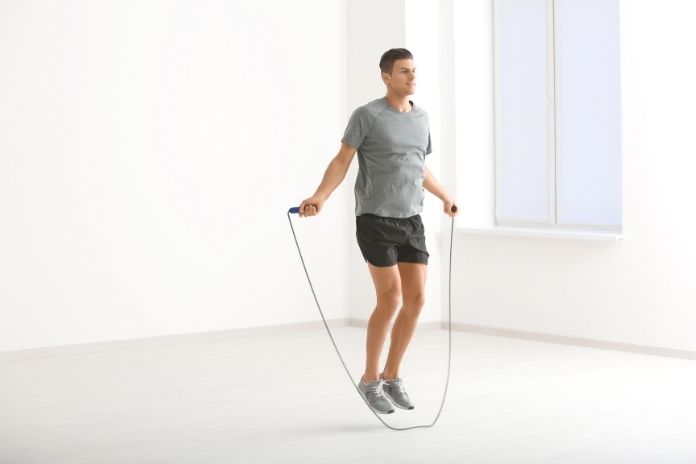
Even the best plan can backfire if common mistakes creep in. Beginners often underestimate how small errors, like rushing reps or skipping rest, can stall progress or even cause injuries. Here are the pitfalls to watch out for:
1. Skipping the Warm-Up
Going straight into squats or brisk walking with cold muscles increases the risk of strains.
- Why it matters: Warm-ups improve blood flow, joint mobility, and muscle readiness.
- Better approach: Spend 5 minutes marching in place, doing arm circles, or a light walk before starting strength work.
2. Poor Form Over Reps
Chasing numbers often leads to sloppy technique.
- Why it matters: Bad mechanics put extra stress on knees, hips, and back.
- Better approach: Focus on alignment, knees over toes in squats, steady hips in bird-dogs, and controlled breathing throughout.
3. Holding Your Breath
It’s common to tense up and forget to breathe during strength moves.
- Why it matters: Holding your breath raises blood pressure and limits oxygen supply.
- Better approach: Exhale during the effort (e.g., standing up from a squat) and inhale during the easier phase.
4. Overtraining
Walking every day plus daily strength sessions might feel productive, but your body needs recovery.
- Why it matters: Without rest, muscles don’t repair and fatigue builds up, leading to plateaus or injuries.
- Better approach: Limit strength training to 2–3 sessions per week with at least one rest day in between.
5. Relying on Momentum
Swinging weights or bouncing through moves may feel easier, but it cheats your muscles.
- Why it matters: Momentum reduces muscle engagement and increases strain on joints.
- Better approach: Move slowly and with control, focusing on muscle tension, not speed.
6. Ignoring Mobility and Stretching
Strength without flexibility shortens your stride and stiffens your posture.
- Why it matters: Tight hips and calves reduce walking efficiency and can cause pain.
- Better approach: Stretch calves, hamstrings, and hip flexors after every session.
7. Comparing Progress to Others
Everyone’s body adapts differently. Comparing can push you into unsafe progressions.
- Why it matters: Rushing leads to burnout or injury.
- Better approach: Track your own improvements, whether that’s an extra plank hold, smoother step-ups, or a longer walk without fatigue.
Avoiding these mistakes makes your training safer, smoother, and far more effective. Think long game: steady progress beats quick fixes every time.
Read More: 10 Best Overhead Press Alternatives You Can Practice
Progression and Tracking: Building Strength Over Time

Strength training and walking are most effective when you treat them as a journey, not a one-off routine. The key is progressive overload, challenging your body a little more each week so it adapts and grows stronger.
- Reps and Sets: Start with the lower end (8–10 squats, for example). Once those feel easy and your form is solid, increase to 12–15 reps. After that, add a third round of your strength circuit.
- Resistance: When bodyweight alone feels too light, introduce dumbbells, a resistance band, or even a weighted backpack. Progress doesn’t have to be dramatic; a couple of kilos can make a big difference.
- Walking Intensity: If your baseline walk is 20 minutes at a moderate pace, aim for 25 minutes, or include intervals where you walk briskly for one minute, then recover for two. Adding a hill, stairs, or treadmill incline is another safe way to challenge endurance.
- Tracking Progress: Keep a simple log, date, exercises, reps, walk duration, and how you felt. Over weeks, you’ll see patterns emerge. Maybe your plank time doubles, or that hill climb feels easier. These small wins prove the system works and keep motivation high.
“Start slow… gradually increase over time, that’s really the key. For strength training, we really want you to get a good foundation…” – Dr. Edward Laskowski, Mayo Clinic Sports Medicine.
The bottom line: build slowly, celebrate progress, and never jump ahead just to “do more.” Steady improvement is what builds lasting walking power.
Conclusion
Walking is one of the most natural movements we do, but when you pair it with strength training, it transforms from a simple habit into a lifelong fitness strategy. Every step becomes more than just forward motion; it becomes a reflection of stronger glutes powering your stride, a stable core protecting your spine, and resilient muscles absorbing impact instead of your joints.
This combination doesn’t just help you cover more ground; it helps you do it with confidence, efficiency, and far less risk of pain or injury. Over time, your daily walk evolves into something bigger than exercise; it becomes a foundation for mobility, independence, and health that carries you through the years.
Here’s the real takeaway: you don’t need marathon gym sessions or fancy machines. Just two to three short, focused strength sessions a week, squats, planks, step-ups, calf raises, done with good form and steady progression, can completely change the way your body feels on every walk. Think of it as a small investment with massive returns: stronger muscles, healthier joints, faster recovery, and longer-lasting energy.
So the next time you lace up your shoes, don’t just head out the door, prime your body first. Add a few squats, a plank, or some step-ups to fire up your muscles. Over weeks and months, you’ll feel the difference: lighter strides, steadier posture, and a level of endurance that makes even long walks feel effortless.
Walking will always be simple. Strength training makes it powerful. Together, they’re not just exercise; they’re your ticket to moving better, aging stronger, and living with more freedom in every step.
Try adding strength moves before your next walk; your future self will thank you for it.
References
- https://xcelfitness.com/why-strength-training-is-essential-alongside-walking/
- https://www.youtube.com/watch?v=JzjOoTI_Gu0
- https://trifocusfitnessacademy.co.za/personal-fitness-training-blog/why-you-should-combine-weight-training-with-walks/
- https://emoha.com/blogs/fitness/17-strength-training-exercise-for-walkers
- https://www.mayoclinic.org/healthy-lifestyle/fitness/in-depth/strength-training/art-20046670
- http://www.cnn.com/2010/HEALTH/11/23/weights.plus.walking/index.html
- https://www.health.harvard.edu/staying-healthy/strength-training-builds-more-than-muscles
- https://www.nhs.uk/live-well/exercise/walking-for-health/
- https://healthtalk.unchealthcare.org/walk-to-build-strength-and-endurance-one-step-at-a-time/
- https://pmc.ncbi.nlm.nih.gov/articles/PMC6240935/
In this Article