












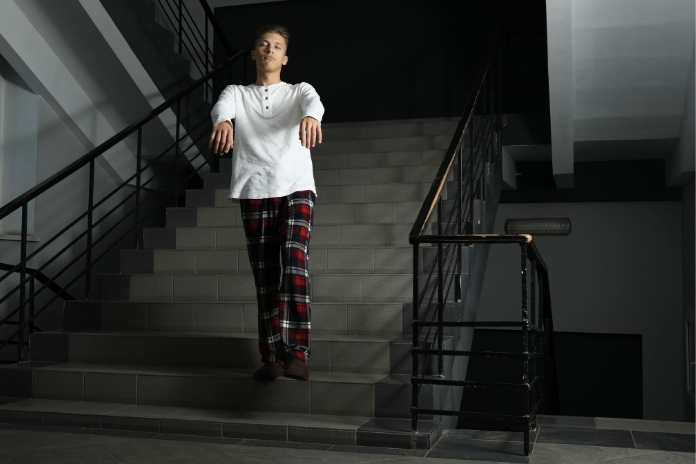
A behavior disorder called sleepwalking, formerly known as somnambulism, starts during deep sleep and causes people to move or engage in other complex activities while still largely unconscious. It is more prevalent in children than in adults, and it is more likely to happen if a person has a family history of the disorder, sleeps poorly, or frequently wakes up at night.
Sleepwalking is linked to poor sleep and daytime sleepiness, and accidents during these episodes might result in injuries. Many people may not require active therapy, although a variety of therapeutic alternatives may be helpful when episodes are more frequent or severe.
This article will guide you through everything you need to know about sleepwalking. We’ll look at its typical causes, triggers, identifiable symptoms, and significant risk factors.
Read More: Sleep Solutions for Everyone: Family-Friendly Tips for Better Rest
What Happens During Sleepwalking?
Sleepwalking is more than just walking, despite the name. Symptoms of sleepwalking include:
- Harmless — similar to sitting up
- Possibly hazardous — like going outside
- Inappropriate, like urinating inside a closet after opening the door
The most visible sign of sleepwalking is getting out of bed and moving around while still asleep. However, young people who sleepwalk may also:
- Chat while they’re asleep
- It is challenging to awaken
- Appear in a daze
- Act awkwardly
- Not react when someone speaks to them
- Sitting upright in bed, they perform repetitive movements like scratching their eyes or fussing with their clothing
Additionally, although sleepwalkers’ eyes are open, their vision is not as clear as it is when they are awake. They frequently believe they are in various rooms of the house or in a completely different location.
They most likely won’t remember ever having sleepwalked after an episode.
“Sleepwalking in and of itself is not harmful, and kids outgrow it,” says UNC Health neurologist and sleep medicine physician Nathan Walker, MD.
Causes and Triggers of Sleepwalking

Experts classify sleepwalking as a parasomnia — an undesirable event or action that occurs during sleep — and categorize it as a disorder involving arousal. It means it occurs during N3 sleep, the deepest stage of non-REM (NREM) sleep. Sleepwalking may also be seen with sleep terrors, another NREM sleep disorder.
Typical sleepwalking causes and triggers include:
Lack of sleep: Episodes of sleepwalking may occur due to insufficient or poor-quality sleep.
Family history: People are more likely to experience sleepwalking if a family member sleepwalks, showing that heredity plays a role.
Anxiety and stress: Major lifestyle changes or an excess of stress increase the likelihood of sleepwalking.
Fever or Illness: Illness can produce episodes and changes in sleep patterns, particularly in children.
Underlying sleep problem: Disorders such as restless legs syndrome, sleep apnea, or other sleep conditions can increase the risk.
Drugs or medication: Alcohol, sedatives, and other sleeping aids may produce sleepwalking.
Unusual sleep schedules: Sleepwalking episodes can occur with sleep cycle disruptions, such as frequent travel or changes in bedtime.
Sleepwalking usually occurs during deep sleep in the early part of the night, when the body can move, but the brain is not fully awake.
Read More: Sleep Anxiety: Causes, Risks, Prevention – Everything you need to Know!
Signs and Symptoms — Recognising Sleepwalking
The majority of sleepwalkers get up and move around while they’re asleep, as the term implies. However, there are other things you can do while you sleep. Typically, sleepwalking includes some or all of the following characteristics:
Partial waking: You start to move but don’t completely awaken.
Time: It usually occurs within the first two or three hours after falling asleep.
Lack of coordination: You move awkwardly, clumsily, or gangly.
Limited awareness: You don’t fully comprehend what’s going on around you or your physical surroundings. Even when your eyes are open, you cannot respond to objects that are in your line of sight.
Memory loss: You can’t recall your sleepwalking activities.
Limited complicated abilities: For instance, you might not be able to unlock a door because you lack the necessary coordination and problem-solving skills.
Dream-acting: You may perform actions that correspond with a dream you’re experiencing. People occasionally chat while they sleep or urinate in unexpected places.
Sleep eating: You might consume foods you wouldn’t normally eat, such as high-carb foods or inedible items. Food that has been half-cooked or completely cooked may be found in the kitchen or in your bed, and the calories you ingest while you sleep could cause you to gain weight.
Although most people who sleepwalk are unable to perform complex tasks, this isn’t always the case. Rarely, those who were sleepwalking were even able to cook or drive. Additionally, being sleep-deprived before the sleepwalking episode, especially when going more than 24 hours without sleep, increases the likelihood of engaging in complex activities during sleepwalking.
Risks and When Sleepwalking Becomes Dangerous
A person may be more susceptible to sleepwalking or experience an episode of sleepwalking due to several potential risk factors, such as:
Sleep deprivation: Individuals who experience sleepwalking are more likely to do so when they are sleep deprived. Additionally, those who are sleep-deprived can perform increasingly complex tasks while asleep.
Other sleep disorders: Sleepwalking may be more common if you have another sleep disorder, such as sleep apnea. The way those disorders impact your sleep pattern may be the reason for this.
Alcohol: Consuming alcohol right before bed may have an impact on your quality of sleep. It includes setting off an episode of sleepwalking.
Mental health: Studies show that a higher risk of sleepwalking is associated with worry, stress, childhood trauma, and post-traumatic stress disorder (PTSD).
Thyroid disorders: Although it is uncommon, sleepwalking can be brought on by hyperthyroidism, or excessive thyroid activity.
Brain-related disorders: When the brainstem is affected by degenerative conditions such as Parkinson’s disease, sleepwalking may occur. Developmental disorders such as the uncommon Smith-Magenis syndrome can also cause sleepwalking.
Environmental triggers for those who are more vulnerable: If you’re prone to sleepwalking, things like illness, a fever, a full bladder, or loud noises can trigger it.
Read More: Sleep Disorders: Understanding Their Impact on Mental and Physical Health
How to Make Your Sleep Environment Safer

Because sleepwalking episodes may involve wandering, leaving the house, or even engaging in risky behavior, safety is an important consideration. The following recommendations may help prevent injuries from sleepwalking:
Secure doors and windows: To prevent children from wandering out into the street at night, install childproof locks on entrance doors or alarms on doors leading out of the house.
Reduce hazards: Remove rugs, sharp objects, and other items that may pose hazards from the floor area.
Do not use bunk beds: Falls from ceilings are dreadful, especially for children; however, bunk beds or “loft” beds frequently result in exactly such experiences.
Secure keys and other dangerous objects: Knives, keys, and other hazardous items must be secured to prevent harm.
Install safety gates: Especially at stairways and other potentially dangerous locations in the house.
Consider alarms: They may notify you if a sleepwalker attempts to escape from the room.
Awareness among bed partners and family members: Educate them about sleepwalking so they can help provide evidence of the disorder.
In case of sleepwalking, gently return the sleepwalker to bed rather than attempting to wake them, to avoid confusion or agitation.
Treatment and When to See a Specialist

If sleepwalking episodes are particularly severe, frequent, or pose a safety risk, it is essential to consult a doctor. There are a variety of treatments available for sleepwalking, including:
Consultation with a sleep specialist: After obtaining a complete past medical history, a full workup for underlying sleep-related disorders, if appropriate, a sleep study (polysomnography) is performed on a subject in an overnight sleep research laboratory.
Cognitive behavioral therapy (CBT): Behavioral therapy can help with anxiety, stress, and other related issues.
Scheduled awakening: Frequent sleepwalking episodes can be avoided by waking the person before their regular bedtime.
Medication: Doctors sometimes prescribe medication for sleepwalking, but they reserve it for the most severe cases.
● When to See a Specialist:
Typically, sleepwalking doesn’t require treatment unless the episodes:
- Are really consistent
- Make your child drowsy during the day
- Entails risky actions
Consult your physician if your child hasn’t outgrown sleepwalking by the time they are in their early teens, if it occurs frequently, or if it creates issues.
Doctors may suggest timed waking as a treatment for children who frequently sleepwalk. It can help prevent sleepwalking by gently waking the youngster a little earlier than they often do. In rare cases, physicians may recommend medication to promote sleep.
Read More: Why Do You Laugh in Your Sleep? Causes, Sleep Science & When to Worry
Conclusion
By understanding the causes of sleepwalking, you will begin to gain insight and control over episodes that might seem mysterious from the outside, as the body moves while the mind is mostly asleep. It is just a phase that many kids go through as their sleep systems build up. Others, particularly adults, may experience episodes as an indication of more serious triggers, including stress, changes in lifestyle, or underlying neurological or sleep disorders.
Awareness is key. Noticing trends, refining sleep practice, and establishing a safe environment often yield visible results. Likewise, an evaluation and testing by a sleep specialist may yield critical information through proper assessment and testing when episodes become fearful, frequent, or confused.
FAQs
Why do I sleepwalk only occasionally?
You may occasionally sleepwalk, and while it isn’t common, factors such as stress, sleep deprivation, or certain medications often cause it.
Can adults start sleepwalking for the first time?
Sleepwalking may occur in adults for the first time and is often associated with stress, lack of sleep, other underlying diseases, or certain drugs. Adult sleepwalking should be discussed with a physician to establish the cause, as it is more common in children and usually resolves.
Is waking a sleepwalker harmful?
Waking a sleepwalker is not always dangerous, but it is better to avoid it. Gently returning the sleepwalker to bed causes less confusion and disorientation.
Can medication stop sleepwalking?
Indeed, there are medications to help control sleepwalking in adults. Still, they should ordinarily be used as a last resort, when all other means are exhausted, or where there is great danger to the sleepwalker. In some cases, sleeping medicines such as short-acting sedatives may help reduce the frequency of sleepwalking.
How does alcohol affect sleepwalking?
Alcohol may cause sleep walking or may increase it, as found primarily in persons already predisposed to attacks of sleep walking or who are sleep deficient.
Are there exercises or habits that can help prevent sleepwalking?
Yes, you can reduce the frequency of sleepwalking episodes by lowering stress levels, identifying and avoiding triggers, and practicing good sleep habits. Good sleep habits include getting up and going to bed at the same time each day, establishing a wind-down routine before bed, and keeping the bedroom dark, quiet, and cool.
References
- Cleveland Clinic. (2023, October 13). Sleepwalking (somnambulism): Causes, symptoms & treatments
- Eric Suni (2025, July 25). Sleepwalking: What is somnambulism? Sleep Foundation
- Mayo Clinic Staff. (2024, June 4). Sleepwalking — Symptoms & causes
- Medically reviewed by: Yamini Durani, MD. (reviewed: September 2023). Sleepwalking. Nemours Foundation
- UNC Health. (2025, July 16). How to help a sleepwalker
- American Academy of Sleep Medicine. (2013, February 28). Adult sleepwalking is serious condition that impacts health-related quality of life
In this Article