














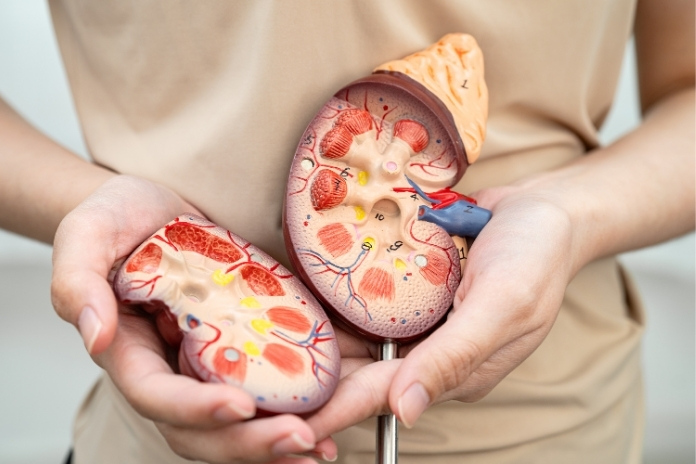
In the PKD (polycystic kidney disease), a genetic kidney condition, many clusters of fluid-filled cysts that gradually form inside the kidneys. The kidneys may sustain harm if there are too many cysts or if they enlarge. Kidney failure can result from PKD cysts gradually replacing a large portion of the kidneys.
About 600,000 Americans suffer from PKD, the fourth most common cause of kidney failure. The condition affects men and women equally. It causes about 5% of renal failures. Cysts are spherical sacs filled with fluid. But they’re not cancer. The size of cysts varies in PKD. But they have the potential to go really big. An excessive number or size of cysts can negatively affect kidney health.
The pancreas, liver, and other organs may develop cysts is a result of polycystic kidney disease. Serious side effects from the illness might include renal failure and high blood pressure.
Individuals with PKD can preserve their kidney function and achieve better long-term outcomes by undergoing early detection, close monitoring, and appropriate treatment.
Read More: Life After a Kidney Transplant: What to Expect in the First Year and Beyond
PKD Basics—Types and How It Affects the Kidneys
- PKD that is autosomal dominant (Also known as ADPKD or PKD)
Parents pass on this type of illness to their children through dominant inheritance. That is, a single copy of the faulty gene can cause the disease. Although symptoms can start earlier, even in childhood, they often appear between the ages of 30 and 40. Among the types of polycystic kidney disease, ADPKD occurs most frequently. Actually, ADPKD accounts for over 90% of all PKD cases.
- Autosomal recessive or infantile PKD (Also known as ARPKD)
Parents hand down this type of sickness to their children through recessive inheritance. Even in the womb, symptoms may start in the first few months of life. In the first few months of life, it is frequently deadly, advances quickly, and tends to be highly serious. This kind of ARPKD is relatively uncommon—one person out of every 25,000 experiences it.
- Cystic kidney disease acquired (Also known as ACKD)
The association of ACKD with dialysis and renal failure is common since it can occur in damaged and scarred kidneys over a prolonged time. Approximately 90% of patients who have undergone dialysis for 5 years will develop ACKD. Seeing blood in the urine often prompts people with ACKD to seek medical care. Urine becomes discolored as a result of the cysts bleeding into the urinary system.
“These cysts can become very large and very numerous, and the kidneys grow along with them. Some of these people will have kidneys the size of footballs or even larger, whereas a normal kidney is usually about the size of a fist.” Dr. Amy Mottl, MD, MPH
Early Signs of Polycystic Kidney Disease You Shouldn’t Ignore

The majority of people don’t start having symptoms until they are between the ages of 30 and 40. About 25% of people with PKD have a cardiac condition known as a “floppy valve,” which can cause chest discomfort and fluttering or pounding. These issues can sometimes serve as an initial warning sign of PKD, although they typically disappear naturally.
The most prevalent PKD symptom is elevated blood pressure. On rare occasions, people may have headaches associated with hypertension, or their physicians may identify hypertension during a standard physical examination. It is crucial to address excessive blood pressure since it might lead to renal damage. High blood pressure medication may slow down or even prevent renal failure.
- Side or back ache
- An expansion of the abdomen’s size
- Pee with blood in it
- Frequent infections in the kidneys or bladder
Read More: Kidney Stones in Women: Why They’re Often Misdiagnosed as UTIs
How PKD Is Diagnosed
If you have polycystic kidney disease, there are certain diagnostic tests that can reveal both the number and the size of the kidney cysts, as well as how healthy your kidney tissue remains. Tests consist of:
MRI. Radio waves and magnetic fields display images of your kidneys as you lie within a large cylinder. Doctors usually perform this test to measure how much damage PKD has done to the kidneys, and in some cases, the liver or pancreas as well. Total kidney volume may be measured with an MRI, giving medical specialists further information about your condition.
Ultrasound. The process involves placing a wand-like device, known as a transducer, against the body. It emits waves of sound that return to the transducer. The sound waves are converted into pictures of your kidneys by a computer.
CT Scan. You are lying on a table that enters a large, doughnut-shaped apparatus. The gadget displays pictures of your kidneys using X-ray photons.
Treatment Options—What Actually Helps

PKD has no known cure. To understand more about PKD and identify possible remedies, doctors are still researching the disorder.
The purpose of treating PKD is to:
- Control your symptoms
- Lower the possibility of problems
- Reduce the disease’s rate of progression
Treatments for PKD will last a lifetime; however, they may alter as your illness worsens.
Options for treatment include:
Changes in Lifestyle
- Enhancing your general health may lower your risk of problems or slow the progression of PKD.
- Your physician could advise you to:
- Manage chronic conditions: If you have diabetes or high blood pressure, see a doctor for routine treatment.
- Stay away from drinks like coffee and drink lots of simple water.
- Eat well – Consume a diet rich in fruits and vegetables. The abundance of potassium in them plays a crucial role in maintaining blood pressure balance. Reducing the amount of salt in processed meals and shakers also lowers blood pressure.
- Exercise: On most days of the week, try to get in at least 30 minutes of moderate-intensity exercise.
- Get at least 7-8 hours of sleep per night and take action to control your stress.
- Cut back on alcohol consumption: Women should only have one drink per day, and men should not have more than two.
- Give up smoking – If you use marijuana or cigarettes, give up smoking.
Medication for PKD
- A drug called tolvaptan can slow down ADPKD. To find out if this drug is suitable for you, see your doctor.
- Additionally, your physician could suggest:
- Medications that lower blood pressure to reduce the risk of renal failure.
- Diabetes medications that reduce blood sugar levels.
- Diuretics to control your body’s fluid balance.
- Painkillers to control discomfort.
- Daily Habits to Protect Your Kidneys
Read More: Kidney-Approved Mediterranean Chicken Bake: Flavorful & Healthful
Polycystic kidney disease self-care
Your physician or other healthcare provider will discuss the best course of action for managing this disease. Follow your doctor’s advice. PKD self-care recommendations often consist of:
- Making dietary changes might help control specific symptoms. Reducing sodium, protein, cholesterol (fats), and caffeine are a few examples of dietary adjustments. Make nutritional adjustments only after consulting your physician or dietician. Your test findings will determine what you should eat.
- Adopting good, healthy lifestyle choices, such as maintaining a weight that is suitable for your height and build, and engaging in regular, moderate physical exercise. Doctors highly recommend that you abstain from smoking.
- Avoiding non-steroidal anti-inflammatory medicines (NSAIDs): NSAIDs can impair kidney function, so don’t use them without a doctor’s prescription.
- If you have enlarged kidneys, liver, spleen, or abdomen, stay away from contact sports. A powerful hit to the abdomen may cause damage to the organs involved.
When to See a Doctor—Urgent vs. Routine

In addition to primary care, you may need the guidance of a nephrologist skilled in handling PKD cases. Together, you and your healthcare provider may select the best course of action for you.
Making optimal treatment decisions requires collaboration between you and your healthcare provider. Start a conversation by using these questions. Writing down your questions ahead of time and bringing the list to your appointment can be very helpful. You’ll be able to maximize your time together if you do this.
- Do I have PKD?
- What kind of PKD am I?
- Are there any other organs affected by my PKD?
- Is there a cure for my PKD?
- What alternatives do I have for treatment?
- How much time will the course of therapy last?
Get in touch with a medical professional immediately if you have PKD and are:
- Acquiring edema, or swollen legs, ankles, or feet.
- Experiencing an ache in my chest.
- Out of breath.
- Unable to urinate.
Read More: Kidney Stones: Types, Causes, Symptoms, and Diet
Conclusion
PKD extends beyond being a kidney illness; it requires continuous care, timely medical attention, and ongoing patient education throughout one’s life. Individuals and families are better prepared for seeking timely medical intervention when they understand the types of PKD, the early warning signs, and the extra-renal manifestations.
Blood pressure management, close follow-up, and maintaining positive daily habits can help maximize kidney function for many years and may slow disease progression. There is optimism for improved outcomes from medical advances, including medications that reduce cyst growth in some individuals, as well as lifestyle interventions.
Above all, early diagnosis and ongoing engagement with medical professionals can dramatically alter typical outcomes.
References
- https://www.kidney.org/kidney-topics/polycystic-kidney-disease
- https://www.mayoclinic.org/diseases-conditions/polycystic-kidney-disease/symptoms-causes/syc-20352820
- https://www.kidneyfund.org/all-about-kidneys/types-kidney-diseases/polycystic-kidney-disease
- https://www.upmc.com/services/kidney-disease/conditions/polycystic-kidney-disease
- https://my.clevelandclinic.org/health/diseases/5791-polycystic-kidney-disease
- https://academic.oup.com/ndt/article/40/2/227/7726729
- https://www.mayoclinic.org/diseases-conditions/polycystic-kidney-disease/diagnosis-treatment/drc-20352825
- https://www.niddk.nih.gov/health-information/kidney-disease/chronic-kidney-disease-ckd/prevention
- https://www.rush.edu/news/6-ways-keep-your-kidneys-healthy
- https://www.uptodate.com/contents/polycystic-kidney-disease-beyond-the-basics/print
- https://www.stlouischildrens.org/conditions-treatments/polycystic-kidney-disease-pkd
- https://www.betterhealth.vic.gov.au/health/conditionsandtreatments/kidneys-polycystic-kidney-disease-pkd
- https://www.med.unc.edu/medicine/news/chairs-corner/podcast/polycystic-kidney-disease-pkd-with-dr-amy-mottl/
- https://www.med.unc.edu/medicine/nephrology-hypertension/people/amy-mottl-md-mph/
In this Article