







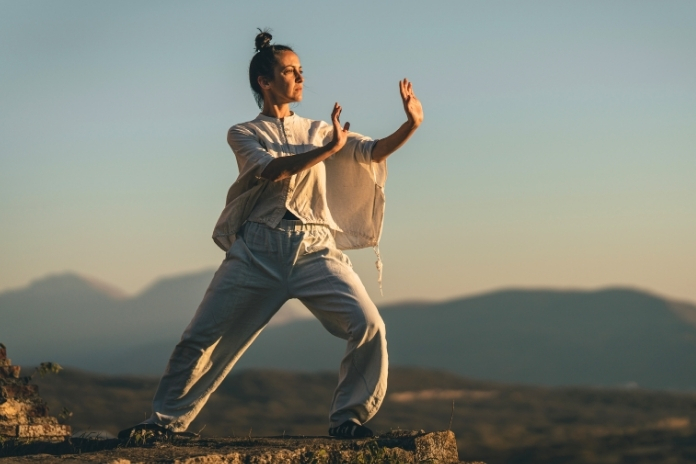
Imagine a practice so serene yet powerful that it can slow your breath, calm your racing thoughts, and strengthen your body, all without ever breaking a sweat. That’s the transformative potential of Tai Chi. This centuries-old martial art has evolved into a globally embraced wellness practice, offering a gentle yet profound way to align your body and mind.
Rooted in Chinese philosophy and internal energy work (Qi Gong), Tai Chi emphasizes the mind-body connection, a dynamic interplay where movement becomes meditation, and muscle meets mindfulness. Unlike high-impact exercise routines, Tai Chi isn’t about intensity; it’s about intention. The movements are slow, deliberate, and graceful, creating space for stillness, awareness, and quiet strength.
Recent research from Harvard Medical School and the Cleveland Clinic confirms that Tai Chi has wide-reaching benefits. From improving balance and flexibility to reducing anxiety and stress hormones, the impact of this gentle practice goes far beyond the physical. Whether you’re young or aging gracefully, athletic or sedentary, Tai Chi offers a holistic path to inner harmony and outer balance.
Understanding Tai Chi: Ancient Wisdom for Modern Wellness
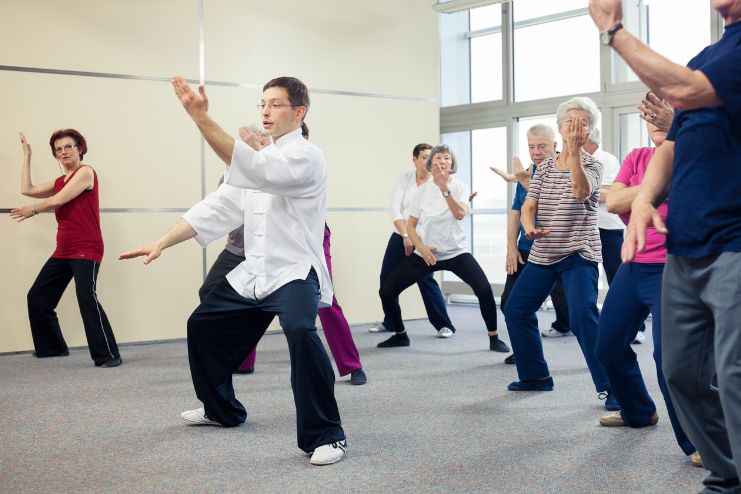
Tai Chi, short for Tai Chi Chuan, originates from ancient China, with roots in martial arts, Taoist philosophy, and energy cultivation through Qi (life force). What began as a self-defense art has evolved into a meditative movement practice found in parks, clinics, and studios worldwide.
Its foundational philosophy revolves around yin and yang, opposing yet complementary forces working in harmony.
The Fundamentals of Tai Chi
At the core of Tai Chi is the combination of slow, flowing movements synchronized with controlled breathing. These movements are not just for physical strength; they are designed to foster mindfulness and create a deep awareness of the present moment. Here’s how Tai Chi stands out as a unique practice:
- Slow, Flowing Movements: Unlike high-intensity workouts, Tai Chi is all about deliberate, gentle motions that build strength and flexibility over time.
- Mindful Breathing: The breathing techniques in Tai Chi are integral, helping practitioners to stay focused and calm while promoting a sense of inner peace.
- Balance and Harmony: The practice emphasizes the equilibrium of the yin and yang forces, which translates into physical balance, emotional stability, and mental clarity.
Scientific evidence supports its use as a therapeutic modality for improving coordination, lowering blood pressure, easing joint pain, and enhancing mood.
A 2023 systematic review found Tai Chi to be effective in reducing symptoms of anxiety and depression while enhancing cognitive performance in older adults.
The Unique Benefits of Tai Chi:
- Physical Health: Tai Chi helps improve flexibility, coordination, and posture while building strength through gentle resistance. The slow, controlled movements enhance proprioception, your body’s awareness of its position in space, which is crucial for preventing falls and maintaining mobility as we age.
- Mental Well-being: The focus on mindfulness and breathing helps reduce stress, promote mental clarity, and improve concentration. Regular practice has been shown to lower cortisol levels and activate the parasympathetic nervous system, our body’s natural relaxation response.
- Emotional Balance: By encouraging relaxation and emotional regulation, Tai Chi fosters a sense of peace and stability in daily life. The meditative aspects help practitioners develop resilience and emotional intelligence.
According to Dr. Helen Lavretsky, a psychiatrist and researcher at UCLA specializing in integrative mental health, “those practicing Tai Chi were found to have a higher chance of achieving remission and demonstrated less severe symptoms and markers of stress, as well as improvements in cognitive functioning”.
Opening Meditation
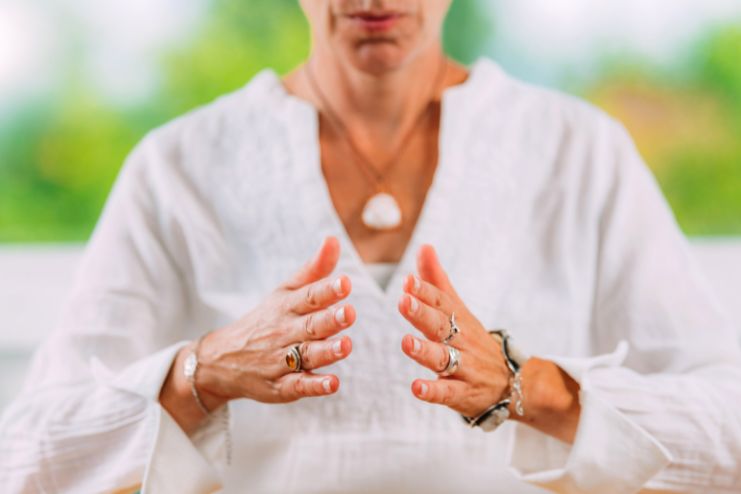
In Tai Chi, meditation isn’t a separate practice; it’s woven into every movement. However, starting with a dedicated opening meditation helps ground the body and focus the mind before engaging in dynamic flow. This practice fosters a calm baseline and prepares the nervous system to shift into a parasympathetic state, essential for stress recovery and mindfulness.
How to Practice Opening Meditation
The meditation that marks the beginning of a Tai Chi practice isn’t just a passive moment of stillness. It’s a mindful, active process that aligns the mind and body. Here’s how it works:
- Posture and Focus:
- Stand with feet shoulder-width apart.
- Slightly bend the knees and soften the shoulders.
- Let your arms hang loosely at your sides.
- Close your eyes or gently gaze downward.
- Inhale deeply through your nose and exhale through your mouth, slowly and fully.
- With each breath, imagine your body becoming heavy and rooted to the ground.
- Allow thoughts to drift away as you focus on your breath and internal sensations.
- Breathing Techniques: Deep, purposeful breathing is central to the meditation. Each breath flows in sync with the body’s subtle movements, establishing a steady rhythm and promoting a sense of calm.
Read More: 5-Minute Morning Meditation to Start Your Day Calm and Focused
Horse Stance: Building Your Foundation
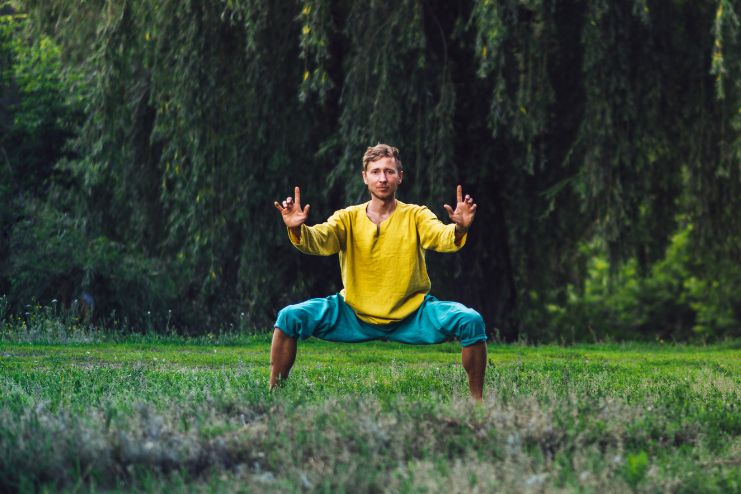
The Horse Stance serves as the cornerstone of Tai Chi practice, providing the stable foundation from which all other movements flow. Though it appears deceptively simple—just standing with feet apart—this fundamental posture builds the leg strength, balance, and mental fortitude essential for advanced Tai Chi practice. Master this stance, and you master the art of finding power in stillness.
The Philosophy Behind Horse Stance: Horse Stance embodies the Taoist principle of being rooted yet flexible, strong yet relaxed. Like a horse standing calmly but ready to move, this posture teaches you to cultivate inner strength without tension. The stance represents the balance between yin and yang, the stability of earth energy rising through your legs while maintaining the lightness needed for fluid movement.
How to Practice Horse Stance: To develop a strong and stable Horse Stance that supports your entire Tai Chi practice, focus on proper alignment and gradual progression. Here’s your step-by-step guide:
- Foot Positioning: Stand with feet parallel and slightly wider than shoulder-width apart. Your toes should point straight ahead, creating a stable base that distributes your weight evenly across both feet.
- Knee Alignment: Bend your knees slightly, keeping them aligned over your toes. The depth of your stance can be adjusted based on your strength and flexibility—beginners should start shallow and gradually deepen over time.
- Spine and Posture: Keep your spine naturally straight, as if a string is gently pulling the crown of your head toward the ceiling. Your shoulders should be relaxed and dropped, with arms hanging naturally at your sides.
- Weight Distribution: Distribute your weight equally between both feet, maintaining a 50/50 balance. Feel your connection to the earth through your entire foot, not just your heels or toes.
- Breathing Pattern: Breathe naturally and deeply, allowing your breath to settle into your lower abdomen (dantian). This deep breathing helps you maintain the stance with less effort while building internal energy.
Benefits of Horse Stance: A study published in The Journals of Gerontology found that a 6-month Tai Chi program was effective in decreasing the number of falls and improving functional balance and physical performance in older adults aged 70 years or older.
Horse Stance offers profound benefits that extend far beyond physical conditioning:
- Leg Strength and Stability: The sustained muscle engagement strengthens your quadriceps, glutes, and calves while improving overall lower body stability and endurance.
- Mental Discipline: Holding the stance requires patience and mental focus, developing the concentration and mindfulness that are essential for all Tai Chi practice.
- Energy Cultivation: The stance helps you connect with and build your internal energy (qi), teaching you to generate power from your foundation rather than relying on upper body tension.
Cloud Hands: Harmonizing Movement and Breath

One of the most recognized movements in Tai Chi, Cloud Hands teaches how to harmonize the arms, breath, and body. It appears simple but requires deep focus and control, making it a moving meditation in its own right. This exercise embodies the flowing nature of Tai Chi, where each movement transitions seamlessly into the next.
The Philosophy Behind Cloud Hands: Cloud Hands represents the Taoist concept of wu wei, or effortless action. Like clouds drifting across the sky, your movements should feel natural and unforced. The exercise teaches you to move with the minimum effort necessary while maintaining grace and control.
How to Practice Cloud Hands: To perform the Cloud Hands exercise with elegance and awareness, start by finding a relaxed posture and focusing on your body’s alignment. Here’s a step-by-step guide:
- Relaxed Stance: Begin with a relaxed stance, ensuring that your knees are slightly bent to maintain a natural flow of movement. This will help you perform the exercise with ease and stability.
- Deep Breathing: Take a deep, steady breath, grounding yourself in the moment. As you begin the circular arm movement, inhale deeply and exhale as you transfer your weight between your feet.
- Breath and Movement Synchronization: The key to performing Cloud Hands gracefully is syncing your breath with the motion of your body. This synchronization helps cultivate a sense of calm awareness and creates a rhythmic, harmonious flow.
- Circular Arm Movement: The arms move in continuous, circular motions, as if mimicking the slow, graceful movement of clouds in the sky.
- Weight Shifting: Practitioners shift their weight from one foot to the other, enhancing the flow of the movement. This weight shift happens in perfect harmony with the arm motions, creating a seamless connection between the body’s actions.
Benefits of Cloud Hands: According to Bournemouth University research, repetitive fluid movements like Cloud Hands can retrain motor patterns, reduce muscle tension, and increase body awareness.
Cloud Hands isn’t just about physical movement; it offers a range of benefits for both the body and the mind:
- Improved Physical Flexibility: The continuous, flowing movements of Cloud Hands help to increase flexibility and improve the coordination of the body.
- Mind-Body Connection: The integration of breath and motion fosters a deep connection between the mind and body, promoting relaxation and mental clarity.
- Peaceful Awareness: Practicing Cloud Hands can lead to a state of calm, helping to reduce stress and enhance focus in daily life.
White Crane Spreads Wings: Embodying Grace and Balance
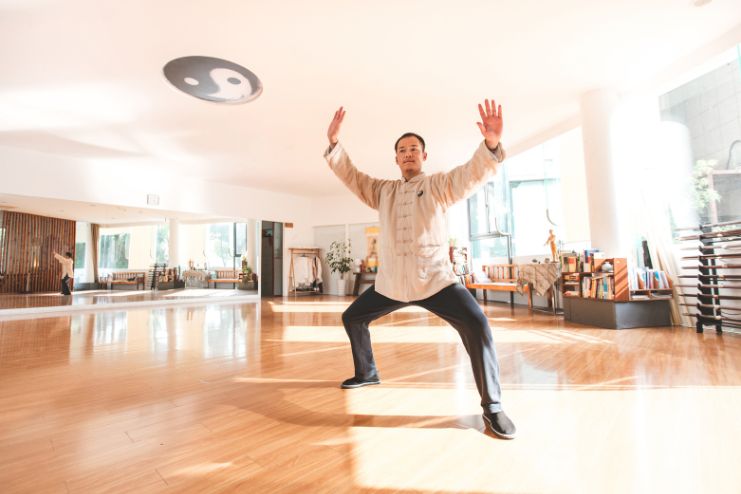
White Crane Spreads Wings captures the essence of Tai Chi’s flowing elegance while challenging your balance and coordination. This beautiful posture, found in virtually every Tai Chi form, teaches you to find stability in asymmetry and grace in stillness. Like a crane poised by the water’s edge, you learn to embody patience, focus, and the readiness to move with purpose.
The Philosophy Behind White Crane Spreads Wings: This posture reflects the Taoist teaching of finding balance through complementary opposites. The crane symbolizes longevity, wisdom, and the ability to remain centered while adapting to changing circumstances. The pose teaches you to embrace the dynamic balance between substantial and insubstantial, grounded and light, stillness and potential movement.
How to Practice White Crane Spreads Wings: To master this elegant posture with proper alignment and mindful awareness, focus on the interplay between your upper and lower body. Here’s your detailed approach:
- Starting Position: Begin from a natural standing position, then shift your weight gradually to your right leg, making it your substantial (weighted) leg. Your left leg becomes insubstantial, with the ball of your foot lightly touching the ground.
- Arm Positioning: Raise your right hand to about forehead height with the palm facing outward, as if gently pressing against an invisible wall. Lower your left hand to waist height with the palm facing downward, creating the distinctive wing-like asymmetry.
- Postural Alignment: Keep your supporting leg slightly bent, never locked. Your spine remains naturally erect, and your shoulders stay relaxed despite the raised arm. The key is maintaining structure without tension.
- Balance and Breathing: Find your center of gravity over your supporting leg while breathing deeply and naturally. The pose requires sustained concentration, making it an excellent moving meditation.
- Transitional Awareness: Practice shifting smoothly into and out of the posture, as the transitions are as important as the static hold in developing true Tai Chi skill.
Benefits of White Crane Spreads Wings: Research published in Frontiers in Public Health demonstrates that Tai Chi is effective in preventing falls among older adults and improving balance through systematic review and meta-analysis of randomized controlled trials.
This graceful posture offers comprehensive benefits for both physical and mental well-being:
- Dynamic Balance Training: The asymmetrical weight distribution challenges your proprioception and strengthens your supporting leg while improving overall balance and stability.
- Coordination and Integration: The contrasting arm positions develop upper and lower body coordination while cultivating the fluid, integrated movement quality that characterizes advanced Tai Chi practice.
- Mindful Concentration: Maintaining the posture requires sustained focus and present-moment awareness, helping to calm the mind and develop the mental clarity essential for stress reduction and daily life challenges.
Golden Rooster Stands on One Leg
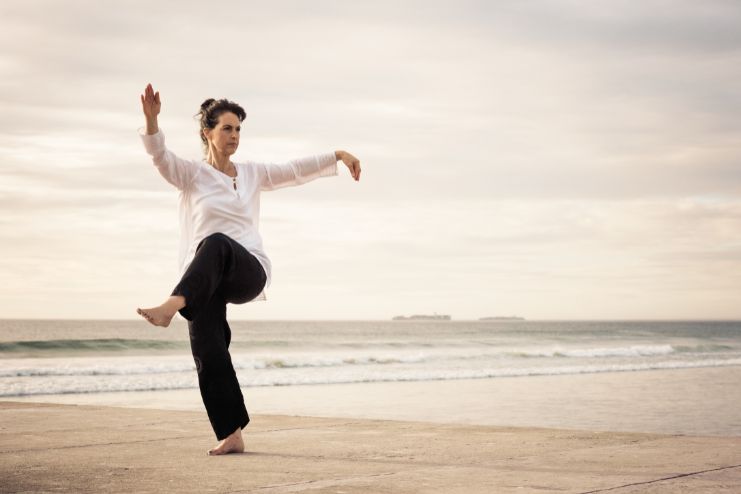
One of the most iconic postures in Tai Chi, the Golden Rooster Stands on One Leg challenges both physical balance and mental concentration. This posture isn’t just about standing on one leg—it’s about finding stability, grace, and inner calm while in a challenging position.
The Legend of the Golden Rooster: In Chinese culture, the rooster symbolizes courage, vigilance, and the ability to maintain alertness while remaining calm. The golden rooster, in particular, represents the perfect balance between strength and serenity. This pose invites you to embody these qualities.
How to Practice Golden Rooster Stands on One Leg: Mastering the Golden Rooster Stands on One Leg requires practice and patience. Here are some tips for improving your posture and stability:
- Start Slowly: Begin by practicing the pose for a few seconds at a time. As your strength and balance improve, you can gradually increase the duration.
- Use Props for Support: If you’re a beginner, you can use a chair or wall for light support as you build confidence and strength in your posture.
- Focus on Posture and Alignment: Keep your back straight and your posture aligned. Avoid leaning or slouching, as this can throw off your balance.
- Breathe Mindfully: Keep your breath deep and steady. Deep breathing helps relax the body and enhances focus, making it easier to maintain the stance.
- Ground Yourself with a Relaxed, Firm Stance: Start by standing with your feet shoulder-width apart. Position your standing leg with even weight distribution, feeling the ground beneath you. A strong, grounded base is essential for stability.
- Engage Your Core Muscles: To maintain balance, gently activate your core muscles. This helps stabilize your body and gives you the control needed to stay steady in the pose.
- Focus Your Eyes on a Fixed Point: Find a focal point in front of you and focus your eyes on it. This concentration helps maintain balance and strengthens your mental focus, essential elements of Tai Chi practice.
- Lift the Opposite Leg with Control: Slowly and steadily raise the other leg in front of you. Move in a controlled manner, without rushing the movement, and avoid any jerky motions. The goal is smooth, deliberate movement.
Benefits of the Golden Rooster Stands on One Leg
The Golden Rooster posture is more than just a balance exercise; it offers a range of physical and mental benefits that contribute to a deeper practice of Tai Chi. Here are some of the key advantages:
- Improved Balance: The posture strengthens the standing leg and enhances overall body stability. It helps develop the coordination needed for better balance, both in Tai Chi and in daily life.
- Mental Focus and Clarity: By concentrating on a fixed point, the Golden Rooster encourages mental clarity. This enhances mindfulness and attention, which are central to the Tai Chi experience.
- Core Strength: The engagement of core muscles promotes better posture and balance, reinforcing physical stability.
Closing Meditation
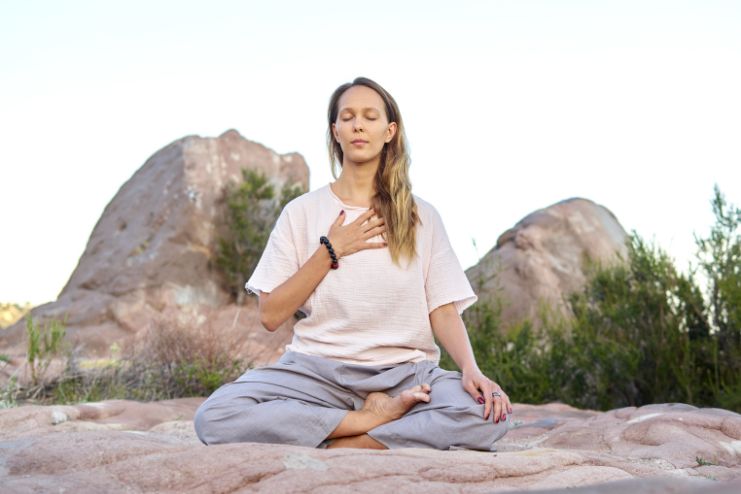
The ending meditation serves as the final gateway to fully integrating the peace and awareness nurtured throughout your Tai Chi session. This practice provides an opportunity to slow down, reflect, and acknowledge the harmonious balance achieved during your practice.
The Importance of Closure:
Just as a piece of music needs a proper ending, your Tai Chi practice benefits from a mindful conclusion. The closing meditation helps your nervous system transition from the focused activity of practice back to the awareness needed for daily life, while preserving the benefits you’ve cultivated.
How to Practice Closing Meditation:
- Return to a Comfortable, Grounded Position: Find a relaxed stance that feels centered, whether standing or seated. Focus on your feet or legs, grounding yourself in the moment.
- Focus on Your Breathing: Take slow, deep breaths to reconnect with your body. Focus on the rhythm of your breath as you inhale and exhale, allowing it to soothe and calm your mind.
- Reflect on Your Experience: Use this moment to acknowledge your practice. Appreciate the movements, the awareness, and the clarity you’ve cultivated. Recognize how Tai Chi has helped you create balance, not just physically but also mentally.
- Express Gratitude: Consider expressing thanks for the session you’ve completed, whether silently or aloud. This act of gratitude reinforces the positive effects Tai Chi has on your well-being.
Benefits of Closing Meditation:
The ending meditation is more than just a conclusion to your Tai Chi session; it’s an essential part of the practice that offers various benefits:
- Mental Clarity: It helps clear the mind, releasing any accumulated tension or thoughts, allowing you to leave the practice with a sense of calm and focus.
- Inner Peace: This moment of stillness provides a deep sense of tranquility, enhancing the calming effects of Tai Chi and offering a peaceful conclusion to the practice.
- Renewed Vitality: The quiet reflection allows practitioners to absorb the benefits of their practice, leaving them with a feeling of rejuvenated energy and a more balanced state of mind.
According to Dr. Paul Lam, founder of the Tai Chi Association of Australia, when you’re inhaling (storing energy), think of taking in the life energy-oxygen– into your body. When you deliver energy or force, you exhale. This can be applied to almost all tai chi movements since they are, in essence, alternating opening and closing movements.
Conclusion
Tai Chi is far more than a form of light exercise—it is an invitation to reconnect with yourself. In a world of overstimulation, it’s a quiet refuge where body and mind can synchronize through breath and movement. Whether you embrace Tai Chi for its physical rewards—improved strength, balance, and flexibility—or its transformative mental benefits, the practice offers a long-term path toward stability, resilience, and calm clarity.
If you’re new to Tai Chi, begin slowly. Choose one or two movements, such as Cloud Hands or Horse Stance, and practice them for a few minutes each day. Master the foundational stability of Horse Stance before progressing to the flowing coordination of White Crane Spreads Wings. Each posture builds upon the last, creating a comprehensive practice that grows with your abilities. If you’re already familiar with these basics, deepen your awareness by refining your meditative focus or exploring the subtle transitions between movements.
Now it’s your turn—step into stillness, breathe with awareness, and give yourself the gift of harmony. Let these fundamental postures become your daily ritual for movement, mindfulness, and mastery of self.
From the grounding strength of Horse Stance to the graceful flow of Cloud Hands, each practice session is an opportunity to cultivate the balance and presence that Tai Chi offers to all who embrace its gentle wisdom.
References
- https://www.health.harvard.edu/staying-healthy/the-health-benefits-of-tai-chi
- https://health.clevelandclinic.org/the-health-benefits-of-tai-chi
- https://www.ncbi.nlm.nih.gov/pmc/articles/PMC9844554/
- https://www.bournemouth.ac.uk/news/2020-02-17/opinion-tai-chi-health-benefits-what-research-says
- https://www.ncbi.nlm.nih.gov/pmc/articles/PMC9983368/
- https://pubmed.ncbi.nlm.nih.gov/28661865/
- https://www.sciencedirect.com/science/article/pii/S2950307824000778
- https://taichiforhealthinstitute.org/history-of-tai-chi-2/
- https://taichicoloradosprings.com/tai-chi-definition-and-history/
- https://www.utc.edu/arts-and-sciences/social-cultural-and-justice-studies/anthropology/wheelchair-tai-chi-chuan-program/story
- https://www.mindful.org/three-ways-meditation-boosts-your-focus/
- https://students.dartmouth.edu/wellness-center/wellness-mindfulness/mindfulness-meditation/guided-recordings/mindfulness-meditation
- https://cloudhandstaichi.net/what-is-tai-chi/
- https://www.televeda.com/posts/free-online-tai-chi-classes-adults-seniors
- http://www.bluegrasstaichi.org/Meditation/1st-StandLikeATree/tabid/129/Default.aspx
- https://www.frontiersin.org/articles/10.3389/fnhum.2018.00174/full
- https://thetaichinotebook.com/2016/05/13/wave-hands-like-clouds/
- https://news.va.gov/101185/live-whole-health-114-tai-chi-seated-cloud-hands/
- http://www.rayhayward.com/2016/03/golden-rooster-part-1-benefits.html
- https://mindbodyphysicaltherapy.wordpress.com/2010/10/13/tai-chi-golden-rooster-stands-on-one-leg/
- https://dversepoets.com/2016/04/28/golden-rooster-stands-on-one-leg/
- https://niood.com/tai-chi-and-mind-body-connection-uniting-body-mind-and-spirit-through-movement/
- https://growmindfulness.com/tai-chi-and-the-mind-body-connection/
- https://www.ncbi.nlm.nih.gov/pmc/articles/PMC9983368/
In this Article