













When most people think of a heart attack, they picture a dramatic scene, someone clutching their chest in pain, gasping for air. But the truth is, heart trouble doesn’t always look like that. Sometimes, the only warning sign is a strange, persistent ache in your left arm. No chest pain. No obvious distress. Just a nagging heaviness or discomfort that’s easy to brush off.
Here’s the thing: left arm pain can be a silent signal from your heart, even when everything else seems normal. It’s one of those symptoms that often gets misread, especially in women, older adults, and people with diabetes, who are more likely to experience subtle or atypical signs of cardiac distress. That’s what makes it dangerous.
This article breaks down what that pain might mean, when it’s worth a second thought. When it’s likely a muscle strain, and when it could be something far more serious, a warning you don’t want to ignore.
Can Left Arm Pain Be a Sign of Heart Trouble Without Chest Pain?

Yes, and it’s more common than most people think.
We’re taught to expect the dramatic: crushing chest pain, a hand to the heart, and an immediate collapse. But heart attacks don’t always announce themselves so loudly. In many cases, particularly among women and older adults, they show up with subtler, easily dismissed symptoms, like pain or discomfort in the left arm.
This is called referred pain, and it happens because the nerves that carry signals from the heart also connect with areas like the arm, jaw, neck, and upper back. So, when the heart is in distress, the brain can interpret the pain as coming from one of these connected regions instead of the chest.
“Although men and women can experience chest pressure that feels like an elephant sitting across the chest, women can experience a heart attack without chest pressure,” said Nieca Goldberg, M.D., medical director for the Joan H. Tisch Center for Women’s Health at NYU’s Langone Medical Center and an American Heart Association volunteer.
“Instead, they may experience shortness of breath, pressure or pain in the lower chest or upper abdomen, dizziness, lightheadedness or fainting, upper back pressure, or extreme fatigue.”
Why does this happen more often in certain people? Here’s the breakdown:
- Women are more likely to experience “atypical” heart attack symptoms, including arm or jaw pain, nausea, fatigue, and lightheadedness, often without any chest discomfort at all.
- Older adults may have different nerve signaling or diminished pain perception, which can alter how symptoms are felt or reported.
- People with diabetes are at particular risk for “silent” heart attacks due to nerve damage (diabetic neuropathy), which can blunt or distort the usual warning signs.
A 2012 study in Circulation confirmed just how common this is: 42% of women and 31% of men who suffered heart attacks reported no chest pain whatsoever. In many of those cases, pain in the arms, back, or jaw took center stage.
The takeaway? Left arm pain isn’t something to ignore, even if your chest feels perfectly fine. Especially if you’re in one of the groups above, it could be your body’s quiet way of asking for urgent help.
Read More: Is Jaw Pain a Sign of a Heart Attack? Left Side vs. Right Side Explained
How Heart-Related Arm Pain Feels (And When to Worry)

Not all arm pain is created equal. The kind that signals a heart issue tends to feel different from, say, a pulled muscle or pinched nerve.
Heart-related arm pain is usually:
- Dull, heavy, or squeezing, not sharp or stabbing.
- Radiating, often starting in the chest or upper back and spreading to the left shoulder, upper arm, or even forearm.
- Triggered by activity or stress, then easing with rest.
- Hard to localize, it may feel deep, achy, or like “pressure” rather than surface-level pain.
It’s often accompanied by a vague sense of discomfort or “something’s not right,” rather than outright agony. That makes it easier to brush off, and it is far more dangerous if ignored.
Red Flag Symptoms to Watch Closely
If your arm pain shows up alongside any of the following, take it seriously; these are classic signs of Acute Coronary Syndrome (ACS), which includes heart attacks and unstable angina:
- Shortness of breath, especially if it comes on suddenly or at rest.
- Nausea, lightheadedness, or faintness.
- Cold sweats, clammy skin, or feeling unusually pale.
- Pain that radiates to the jaw, neck, upper back, or both arms.
- Unexplained fatigue, especially in women.
This combination, even without chest pain, is enough to warrant immediate medical attention.
“The sudden onset of ANY of those symptoms could be a sign of reduced blood flow to the heart muscle,” warns cardiologist Dr. Martha Gulati, president-elect of the American Society for Preventive Cardiology and chair of the writing committee for the new Chest Pain Guideline, published jointly by The American Heart Association and the American College of Cardiology.
Bottom line: If you feel off and your left arm is aching in a way that’s hard to explain, don’t talk yourself out of seeking help. Minutes matter.
Read More: How to Detect Silent Heart Attacks and Reduce Your Risk
Other (Non-Heart-Related) Causes of Left Arm Pain

While heart issues deserve serious attention, not every case of left arm pain points to a cardiac event. In fact, many causes are musculoskeletal or neurological and less dangerous, though still worth understanding and addressing.
Let’s break down the most common non-cardiac culprits:
1. Muscle Strain or Overuse
This is the most frequent cause, especially if you’ve recently lifted something heavy, worked out, or slept in an awkward position.
- How it feels: Dull, sore, or achy pain that’s localized to one area of the arm or shoulder.
- What makes it better: Rest, gentle stretching, massage, or applying ice/heat.
- What it’s missing: No chest discomfort, no shortness of breath, and no systemic symptoms like nausea or sweating.
2. Pinched Nerve (Cervical Radiculopathy)
This happens when a nerve exiting your spine gets compressed, often due to a herniated disc or arthritis in the neck.
- How it feels: Sharp, burning, or electric-like pain that shoots from the neck into the arm.
- Extras: Tingling, numbness, or weakness in the fingers or hand.
- Trigger points: Turning your head or looking down may worsen the pain.
3. Rotator Cuff Injury or Shoulder Impingement
Shoulder issues can mimic arm pain, especially if the pain radiates from the upper arm.
- How it feels: Achy pain in the shoulder and upper arm, worse with overhead movements or lying on that side.
- Causes: Repetitive motion (like lifting, throwing) or a specific injury.
- Movement-dependent: Unlike cardiac pain, this worsens with arm motion.
4. Tendinitis or Bursitis
These involve inflammation around tendons or fluid-filled sacs (bursae) near the joints, often in the shoulder.
- How it feels: Gradual onset of soreness that worsens with certain motions (like reaching behind you or lifting your arm).
- Touch sensitivity: The area may feel tender or swollen.
- Timeframe: Usually develops over days or weeks, not suddenly.
5. Anxiety or Panic Attacks
Surprisingly, emotional stress can cause real physical symptoms, and they can look and feel alarmingly like heart trouble.
- How it feels: A vague ache or tightness in the arm, often paired with a racing heart, shortness of breath, dizziness, chest discomfort, or a sense of doom.
- What sets it apart: Comes on suddenly during emotional stress or panic, and usually subsides once anxiety reduces.
- Important: While anxiety can mimic cardiac symptoms, it’s critical not to self-diagnose, especially if you’re unsure.
Left arm pain doesn’t always mean you’re having a heart attack, but it’s also not something to ignore. If you can clearly connect the pain to an injury, poor posture, or overuse, it’s likely not cardiac. But if there’s any doubt, especially if other symptoms are present, don’t wait. Get checked.
Read More: 10 Warning Signs A Month Before Heart Attack – Stay Alert!
How to Tell the Difference Between Cardiac and Non-Cardiac Arm Pain
Distinguishing between heart-related and musculoskeletal causes isn’t always straightforward, but certain patterns can help:
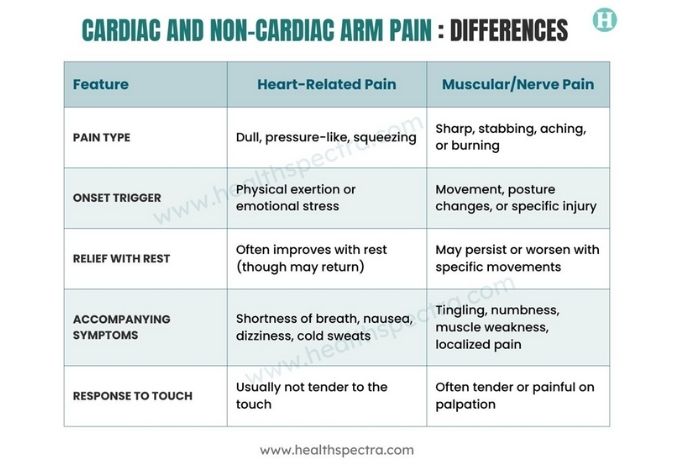 Remember: the absence of chest pain does not rule out heart involvement, especially when other warning signs are present.
When to Seek Medical Help for Left Arm Pain

Not all arm pain means you’re having a heart attack. But if you’re second-guessing it, that’s your signal to pay attention. Heart-related symptoms can be subtle, especially in women, older adults, or people with diabetes. So when in doubt, act.
Call Emergency Services (911) Immediately If:
- The arm pain is sudden, severe, or doesn’t have an obvious explanation (like lifting something heavy).
- It’s accompanied by shortness of breath, nausea, cold sweats, or dizziness.
- You feel tightness or discomfort in the jaw, upper back, or neck along with arm pain.
- You have existing risk factors for heart disease, such as:
- High blood pressure
- High cholesterol
- Diabetes
- Smoking
- Obesity
- Family history of heart disease
- A sedentary lifestyle
Here’s the thing: Don’t wait to be “sure” it’s a heart attack. According to the American Heart Association, fast action, calling 911 and getting to a hospital, significantly improves survival and reduces long-term heart damage. Minutes matter.
What Happens at the Hospital
Once you arrive at the ER with unexplained or suspicious arm pain, the goal is to quickly figure out whether your heart is involved. You won’t be left sitting around; cardiac symptoms move you to the front of the line. Common diagnostic tests include:
- Electrocardiogram (ECG or EKG)
- Quick, painless, and crucial.
- Records your heart’s electrical activity to spot abnormal rhythms, reduced blood flow, or a full-blown heart attack.
- Cardiac Blood Tests (Troponin Levels)
- Troponin is a protein released when the heart muscle is damaged.
- Elevated levels strongly suggest a heart attack, and levels are monitored over hours to track progression.
- Chest X-Ray
- Helps rule out non-cardiac causes like pneumonia, aortic dissection, or lung issues that might mimic heart-related pain.
- CT Angiogram or Coronary Angiography (if needed)
- If early tests are unclear, advanced imaging helps visualize arteries and spot blockages.
What If It’s Not Your Heart?
Doctors will also evaluate for musculoskeletal, neurological, or digestive causes, depending on your symptoms. That might include:
- Physical exam: Checking muscle strength, joint movement, or signs of inflammation.
- Neurological tests: Assessing nerve function in the neck, shoulder, and arm.
- Referral to specialists: You might be sent to a cardiologist (if your heart’s the concern), or an orthopedist/neurologist if a pinched nerve, rotator cuff injury, or spinal issue is suspected.
If something feels off, especially if you’re at risk for heart disease, don’t brush it off or wait for chest pain to confirm your fears. Pain in the left arm, when paired with systemic symptoms or risk factors, deserves urgent attention. The worst-case scenario isn’t calling 911 for nothing. It’s not calling when it actually mattered.
Final Thoughts
Left arm pain without chest discomfort might seem harmless, but it can sometimes be your body’s quiet alarm bell. Not all heart issues come with dramatic symptoms, especially in women, older adults, and people with conditions like diabetes. For them, a dull ache or strange tingling in the arm might be the only sign something’s wrong. And when it comes to heart health, subtle doesn’t mean safe.
If your arm pain is persistent, unexplained, or accompanied by other symptoms like fatigue, shortness of breath, lightheadedness, or nausea, don’t brush it off. Even if it’s not your heart, a proper evaluation is still essential.
Arm pain can stem from pinched nerves, overuse injuries, or joint problems, all of which deserve attention and care. Your doctor can help pinpoint the cause, offer relief, and keep your health from spiraling into bigger issues.
Bottom line: your body whispers before it screams. Don’t wait for the scream.
References
- https://www.medicalnewstoday.com/articles/left-arm-pain-but-no-chest-pain
- https://mainephysicaltherapy.com/10-possible-causes-of-left-arm-pain-that-dont-involve-a-heart-attack/
- https://nortonhealthcare.com/news/left-arm-pain-heart-attack/
- https://www.medicalnewstoday.com/articles/317652
- https://www.heart.org/en/about-us/heart-attack-and-stroke-symptoms
- https://www.michiganmedicine.org/health-lab/when-chest-pain-isnt-heart-attack
- https://www.medicalnewstoday.com/articles/317652
- https://nortonhealthcare.com/news/left-arm-pain-heart-attack/
- https://www.heart.org/en/about-us/heart-attack-and-stroke-symptoms
- https://www.mayoclinic.org/symptoms/arm-pain/basics/when-to-see-doctor/sym-20050870
- https://www.nhs.uk/conditions/heart-attack/symptoms/
- https://blog.ochsner.org/articles/is-your-arm-pain-a-sign-of-a-heart-attack/
- https://www.medicalnewstoday.com/articles/left-arm-pain-and-numbess
In this Article