













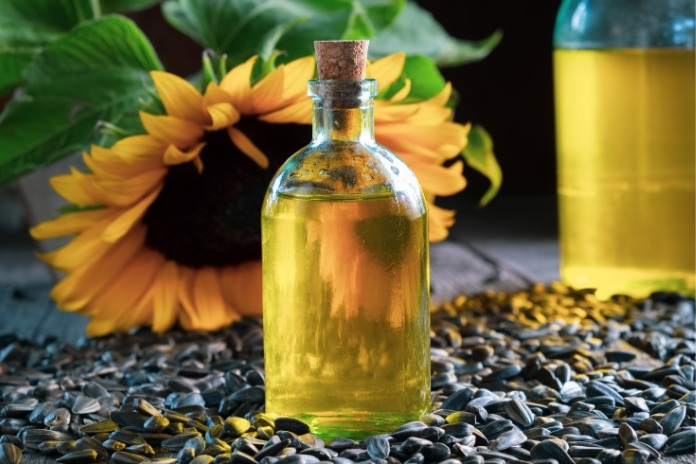
Many of us pay less attention to the type of oil we use for cooking every day. During grocery shopping, most of us grab any oil type kept in the aisle. But have you wondered that not all oils are created the same? Today, let’s talk about widely used sunflower oil and understand if it really benefits us.
Sunflower oil has its place in practically every home, all over the world. It’s cheap, easily available, and has a neutral taste; plus, it handles heat well, making it a popular choice for deep-frying and baking, or just cooking on any day.
On the surface, it seems like one of the healthier choices: low in saturated fat, high in unsaturated fat, and full of vitamin E. But nutrition science rarely works that way. Despite its widespread use, there are often topics related to the use of sunflower oil on heart health, inflammation, and metabolism.
So, is sunflower oil really healthy? Let’s take a closer look at what research shows-from its nutrition profile and health benefits to its potential drawbacks, and how to choose the right kind for your cooking needs. Read the article to know all about it!
Read More: 17 Benefits of Sunflower Seeds for Better Health, Skin, and Hair
What Is Sunflower Oil and What’s in It?
Sunflower oil is produced from the seeds of the Helianthus annuus plant. It mainly has unsaturated fats, both monounsaturated and polyunsaturated, while the amount of saturated fat is very low.
Nutritional Highlights:
Fat composition:
- Monounsaturated fats (oleic acid) are linked to improved heart health and better heat stability.
- Polyunsaturated fats, linoleic acid, an omega-6 fatty acid-cell membrane structure, and hormone production. Saturated fats are present in smaller amounts.
- Sunflower oil has natural vitamin E (α-tocopherol), which acts as an antioxidant that protects cells from oxidative stress. It also maintains immune health and regulates skin repair.
Different Types of Sunflower Oil:
As mentioned, not all sunflower oils are the same. Their differences mainly come from the fatty acid profile:
- High-linoleic sunflower oil: The traditional variety is high in omega-6 fatty acids (PUFAs).
- Mid-oleic sunflower oil: This type makes it a more balanced blend of MUFAs and PUFAs.
- High-oleic sunflower oil: Comprises mainly monounsaturated fats, with up to 80% oleic acid; thus, more suitable for high-heat cooking and most likely good for the heart.
Potential Health Benefits Backed by Research

Here are a few potential health benefits of including sunflower oil in your diet:
Heart and Cholesterol Effects
Replacing saturated fats, like butter or palm oil, with unsaturated fats, such as those present in sunflower oil, improves lipid balance. Diets high in unsaturated fats are shown to reduce LDL or “bad” cholesterol while maintaining or slightly increasing HDL or “good” cholesterol.
High-oleic sunflower oil seems to be more heart-friendly. It is not as prone to oxidation and has been shown to improve cardiovascular markers, especially when substituted for animal fat or refined carbohydrates.
The U.S. Food and Drug Administration also recognizes that oils containing high levels of oleic acid, like high-oleic sunflower oil, may lower the risk of coronary heart disease when used in place of saturated fat in the diet.
Antioxidant and Nutrient Benefits
Sunflower oil is one of the richest dietary sources of vitamin E, a nutrient that neutralizes free radicals and supports overall cellular health. Regular intake of vitamin E through diet may improve skin elasticity, promote wound healing, and support immune function.
Some studies suggest that linoleic acid, one of the omega-6 fatty acids in sunflower oil, may have a role in glucose metabolism and promote insulin sensitivity while being consumed in moderation within a balanced diet.
Additionally, sunflower oil provides small amounts of various plant-derived compounds like phytosterols that help maintain good cholesterol levels.
“It does have some health benefits with unsaturated fats and vitamin E,” Antonette Hardie, R.D.N., L.D., a nutritionist at The Ohio State University Wexner Medical Center Hardie says about using sunflower oil.
Read More: The Best (and Worst) Cooking Oils for Hormonal Balance and Fertility
Key Caveats and What the Research Warns About
Sunflower oil, although beneficial, has certain drawbacks too. These include:
Omega-6 Overload and Inflammation Concerns
Probably the most controversial and highlighted issue related to sunflower oil is its very high content of omega-6 fatty acids. While omega-6 fats are essential, consuming them in excess, especially without sufficient omega-3s-may disturb the fatty acid balance in the body. This might lead to increased inflammation.
Nevertheless, the link between omega-6 intake and chronic inflammation in human beings is not conclusive. Many population studies show that moderate intake of omega-6 fats-especially from natural sources, such as sunflower oil-does not raise disease risk if balanced with adequate omega-3s from foods such as fish, chia, or flaxseed.
Type and Processing Matter
Another major factor is the type of sunflower oil used.
- High-oleic varieties tend to be more heat-stable, resistant to oxidation, and retain more nutrients during cooking.
- Conventional high-linoleic oils can oxidize more easily when exposed to high temperatures, especially after multiple uses.
- Such refined and repeatedly heated products can produce harmful byproducts like aldehydes that may have negative effects on health.
The use of cold-pressed or minimally processed versions is usually safer.
Limitations of the Evidence:
Much of the research into sunflower oil’s effects, however, is either short-term or focused on specific oil varieties. And, often, the health impact is related to the broader diet, meaning the benefits seen in studies are from replacing unhealthy fats rather than from the oil alone.
How to Choose and Use Sunflower Oil Wisely

If you wish to make the most out of sunflower oil is quality, moderation, and balance. Here are a few smarter ways to use sunflower oil smartly in your cooking:
- Opt for high-oleic sunflower oil, as it is higher in heart-healthy MUFAs and more heat-resistant.
- Opt for cold-pressed or expeller-pressed oils. Doing this will help to retain more nutrients and antioxidants compared to heavily refined versions.
- Don’t overheat the oil. Even high-oleic oil has a smoke point; once crossed, it can break down and form potentially damaging compounds.
- Don’t reuse oil, as each heat cycle increases oxidation and the formation of toxins.
- Balance your fats by combining sunflower oil use with omega-3-rich foods like salmon, walnuts, or flaxseeds to maintain a healthy ratio.
- Try to have proper storage. The oil must be stored in a cool, dark place and tightly sealed to avoid rancidity.
Practical Takeaway — When Sunflower Oil Makes Sense and When to Consider Alternatives

When Using Sunflower Oil Makes Sense:
- You’re replacing saturated-fat-rich options like butter, ghee, or palm oil with an unsaturated alternative.
- You need an oil of neutral flavor for sautéing, roasting, or frying lightly. Sunflower oil is best in all these cases.
- You can have the high-oleic or cold-pressed variety that is well-stored and used within its shelf life.
When to Consider Alternatives:
- Your diet already includes a lot of omega-6 fats and a limited intake of omega-3.
- You do a lot of deep-frying, or fry and then reuse the same oil. This increases the risk of oxidation if sunflower oil is reused/reheated.
- You prefer oils with stronger clinical backing for heart and metabolic health. In this case, you can use oils such as extra-virgin olive oil or avocado oil.
Read More: Cooking for Heart Health: Delicious Recipes to Lower Cholesterol
The Bottom Line
Sunflower oil can absolutely be part of a healthy, balanced diet. It especially helps when used as a replacement for saturated fats and when you choose the right type (preferably high-oleic). It offers valuable nutrients like vitamin E and healthy fats, but its benefits depend on how you use it, how much you use, and what the rest of your diet looks like.
In other words, sunflower oil is not a superfood, nor is it a villain. It’s a useful cooking fat that can support health when used judiciously and balanced with other nutrient-dense oils and omega-3 sources.
FAQs
Is all sunflower oil the same?
No. There are different varieties: high-linoleic, mid-oleic, and high-oleic, with different fatty acid contents and stabilities. High-oleic is considered the healthiest and most heat-stable oil.
Can I use sunflower oil for high-heat frying?
Yes, but only refined or high-oleic sunflower oil should be used for any high-heat purpose. Cold-pressed oils are best when used for low-heat cooking or salad dressings.
Does sunflower oil cause inflammation?
Not directly. The issue is with the balance between omega-6 and omega-3 fatty acids. Sufficient intake of omega-3 prevents the possible inflammatory response.
How much sunflower oil is safe daily?
There is no strict limit, but it is all about being moderate. About 1-2 tablespoons per day, taken within your total fat intake, is generally reasonable.
Is sunflower oil healthier than olive or canola oil?
Each oil has its distinctive benefits: sunflower oil is neutral and rich in vitamin E; olive oil has more proven heart protection; and canola oil provides a better omega-6 to omega-3 ratio. Which you choose depends on your cooking style and the overall balance of your diet.
In this Article