














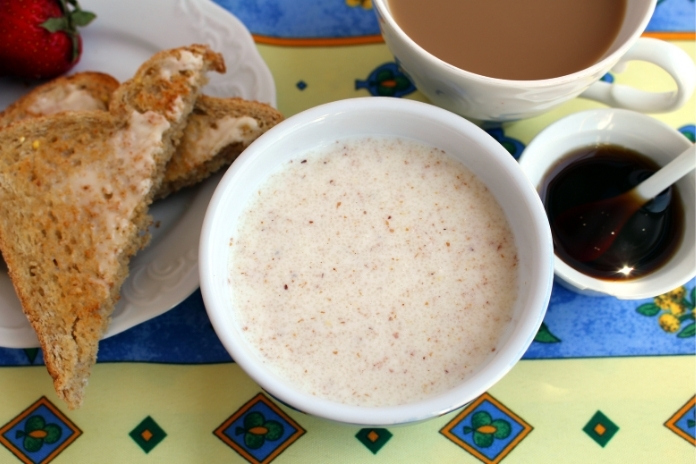
Few breakfasts bring back memories. And one of those is a warm bowl of Cream of Wheat. Smooth, comforting, and simple to make, this traditional hot cereal has been served at breakfast for over a century. But in this age of whole grains and high-protein diets, many people may ask: “Is Cream of Wheat good for you, or is it just another refined carb?” The answer is simple, and let’s understand it in detail.
In this article, let’s take a look at the nutrition behind Cream of Wheat, its pros and cons, and how to make this healthy bowl a popular breakfast food.
What is Cream of Wheat? (Ingredients and Preparation)
Cream of Wheat is a kind of hot cereal based on farina, a fine wheat product made from the endosperm of wheat. When you cook it in milk or water, it is a smooth, pudding-like porridge that is not very flavorful and is very easy on the stomach.
Cream of Wheat is often fortified with iron, calcium, and the B vitamins such as folate, riboflavin, and niacin, making it more nutrient-dense than plain refined wheat. It became popular in the late 20th century when people were concerned about deficiencies in vitamins and minerals. It is still included in breakfast cereals today and is a good source of vitamins and minerals.
There are several types available to consumers:
- Original Cream of Wheat: The traditional version is prepared on the stovetop.
- Instant Cream of Wheat: Quick-cooking packets meant for convenience but are often higher in added sugars and/or sodium.
- Whole-grain Cream of Wheat: A product that is made with the entire wheat kernel, providing higher fiber and a lower glycemic index.
It’s also important to differentiate these options from other hot cereals:
- Cream of Wheat vs. Grits: Grits are made from ground corn, while Cream of Wheat is made from wheat.
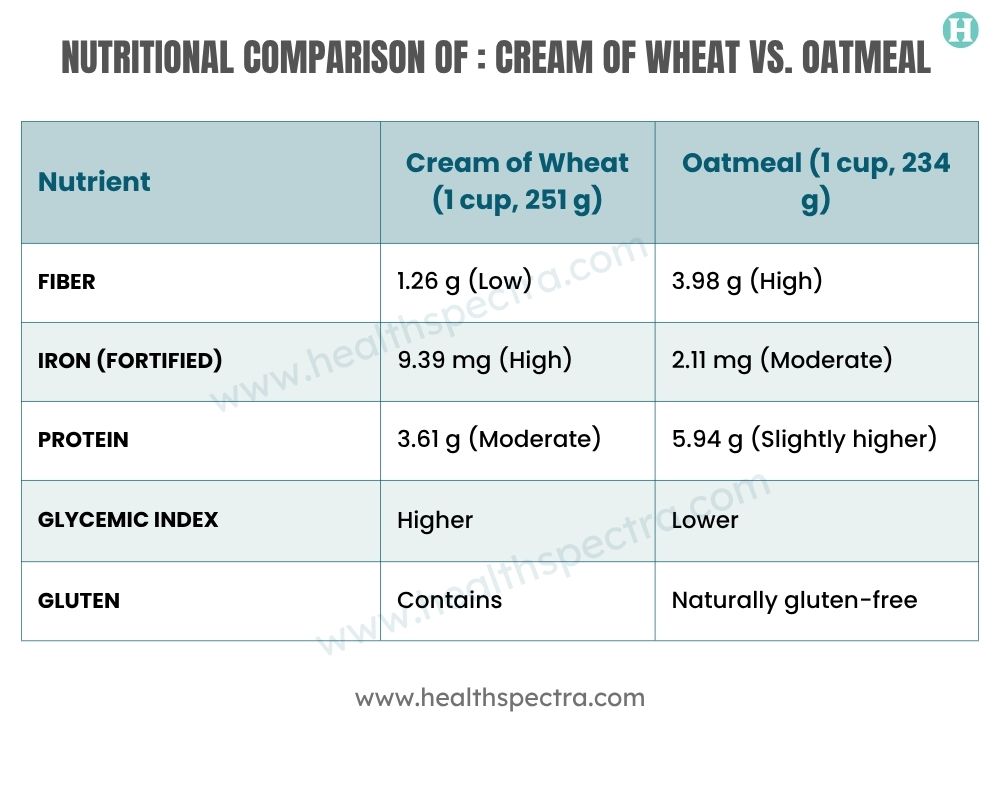
- Cream of Wheat vs. Oatmeal: Oatmeal is made from rolled or steel-cut oats, both of which contain more fiber and have a chewier texture.
Cream of Wheat Nutrition Facts (Per 1-Cup Cooked Serving)

Macronutrient breakdown for Cream of Wheat (instant, prepared with water) per 100 grams is as follows:
- Carbohydrates:1 g
- Protein:8 g
- Fat:2 g
- Water:4 g
- Other components:4 g
While it is low in fat and is cholesterol-free, the cereal is primarily carbohydrate-based, and consuming it on its own may boost blood sugar. The fortified minerals, especially iron and folate, can be nutritionally beneficial to certain groups, such as vegetarians, growing children, and pregnant women.
Health Benefits of Cream of Wheat
While Cream of Wheat may be underrated compared to oatmeal or quinoa, it offers health benefits that make it a good option to be included in a diet:
1. Good Source of Iron:
Cream of Wheat is known for having iron as one of its significant nutrients. Some fortified varieties can contribute nearly half of your daily recommended iron needs with one serving. This may be particularly helpful in the following cases:
- People who are vegetarian or vegan may be iron-deficient from a lack of animal protein.
- Women of childbearing age who need additional iron intake to offset menstrual losses of blood and nutrition.
- Children and older adults who need additional iron for energy and red blood cell generation.
2. Gentle on Digestion:
Cream of Wheat has a smooth consistency and is very easy to digest. It is often suggested for people recovering from an illness, or issues with their teeth, or who have had gastrointestinal discomfort. In part, it is often suggested as part of a bland diet because it is a soft, mild food, and does not irritate the stomach lining.
3. Good Source of Energy-Promoting Nutrients:
Cream of Wheat, especially for fortified varieties, contains B vitamins that include thiamine, niacin, riboflavin, and folate, as well as several minerals, which are all important to:
- Convert food into energy
- Helps brain and nerve functions.
- Ensure healthy red blood cells
These nutrients indeed make it a solid breakfast option for kids and adults who want energy to sustain them throughout the morning.
4. Versatile and Customizable:
Cream of Wheat is like a blank canvas for various nutritious toppings. You can make it indulgent or healthy depending on how you top it.
- Add your favorite fruit (such as bananas, berries, or apples) for fiber and natural sweetness.
- Add nuts or seeds (almonds, flax, chia) for healthy fats.
- Add protein sources (Greek yogurt, protein powder, nut butter) to create a balanced breakfast.
- Use milk or plant-based milk instead of water for creaminess and calcium.
This versatility makes it easy to fit into various dietary preferences.
Read More: Is Shredded Wheat Healthy? Pros, Cons, and How It Fits Into a Balanced Diet
Is Cream of Wheat Good for Weight Loss?
On its own, Cream of Wheat is low in fat and moderate in calories, making it a good food for weight-watchers. This is true only if topped smartly. Since it is mostly a refined carb, it digests quickly and will not keep you full long without textures and toppings.
Ways to make it weight-loss friendly
- Control portion sizes and stick to one cup cooked and no second helpings
- Adding fiber and protein, such as chia seeds, flaxseed, or Greek yogurt, can make it filling
- Control added sugar to prevent spikes later.
- Look for whole-grain Cream of Wheat as whole-grain varieties digest more slowly and can help with hunger management.
- When paired with toppings in moderation, Cream of Wheat can make an easy, satisfying, low-calorie breakfast that may support weight loss.
Potential Drawbacks of Cream of Wheat
Despite its benefits, there are some things to keep in mind when consuming Cream of Wheat each day:
1. Made with Refined Grains:
Most conventional Cream of Wheat is made with refined grains. Therefore it is stripped of the bran and germ, i.e., the parts that contain fiber and micronutrients. Therefore, you may find that it has a higher glycemic index and less filling effect. If you are concerned about blood sugar levels, you should try to choose a whole-grain farina instead.
2. Contains Gluten:
Farina contains gluten because it is made from wheat. Therefore, anyone who has celiac disease, gluten sensitivity, or a wheat allergy should avoid Cream of Wheat altogether or choose gluten-free alternatives like buckwheat or quinoa porridge.
3. Flavored/Instant Packets May Contain Additives:
Flavored varieties of Cream of Wheat may contain salting and additional flavoring, or sauces/butters, which could eliminate any of its nutrient advantages, as well as add significant calories and sodium.
4. Low Source of Fiber:
With only about 1 gram of fiber per serving, this option is not the best for those looking for a high-fiber breakfast. Because of the low fiber source, it will be digested rapidly, which could cause hunger shortly after consumption.
Read More: Quinoa vs. Couscous: Nutrition, Health Benefits, and Which One’s Better for You?
How to Make Cream of Wheat Healthier

If you’re looking to transform Cream of Wheat from a simple carbohydrate-based meal to a meal packed with nutrients, it isn’t difficult with a few minor tweaks:
- Choose whole-grain or unflavored options, as these have more fiber and less sugar.
- Add protein powder, milk, or Greek yogurt for better nutrition.
- Consider cutting up fruits, nuts, and seeds or other toppings to create texture and fiber.
- Rather than adding sugar, think about cinnamon, nut butter, or vanilla.
- Make it plant-based. Use milk alternatives like fortified soy, almond, or oat milk for additional calcium and vitamin D.
For a complete meal, think about the following:
Cook Cream of Wheat in milk, add chia, and top with blueberries and almond butter.
Cream of Wheat vs. Oatmeal — Which Is Healthier?
Verdict:
After comparing Cream of Wheat with oatmeal, we see that oatmeal is an excellent source of fiber and helps regulate blood sugar. However, Cream of Wheat has certain limitations, such as iron fortification and stomach discomfort.
If you enjoy creamier oatmeal and don’t have gluten sensitivity or gluten intolerance, Cream of Wheat can be a good option, particularly if your main focus is nutrition. However, if you’re monitoring cholesterol or blood sugar, oatmeal may be a better option.
Read More: Millet vs. Oatmeal for Breakfast: Which Is Healthier for You?
Who Should Avoid or Limit Cream of Wheat
Though Cream of Wheat is a generally healthier option, it might not suit a few. Here is the list of people who must limit or avoid Cream of Wheat:
- People with celiac disease or gluten intolerance, as it may contain gluten, it is not safe even in tiny amounts.
- People with diabetes or metabolic issues might prefer whole grains. As a whole grain option would be better and limit portion size.
- For adults or those on a high-fiber diet, oats, quinoa, or barley would be a better nutritional add-in.
- Anyone with hypertension or watching sodium or sugar levels must avoid the flavored instant packets of Cream of Wheat.
Frequently Asked Questions about Cream of Wheat
- Is Cream of Wheat healthier than oatmeal?
Not really, oatmeal has more fiber, whereas Cream of Wheat has more iron. Depending on your dietary needs, either can be used healthily.
- Is Cream of Wheat okay for diabetics?
A whole grain and unflavored Cream of Wheat can factor into a diabetic meal plan, but use either protein or healthy fats to balance out the meal.
- Does Cream of Wheat have gluten?
Yes, it’s made from wheat, so it’s not gluten-free.
- Can you have Cream of Wheat every day?
Yes, just vary your grains. Mix your grains by rotating with oats, millet, or quinoa to get a variety of nutrients.
- Is instant Cream of Wheat good for you?
Plain instant Cream of Wheat is fine, but avoid instant flavored packets which comprises sugar plus salt.
- What can I add to Cream of Wheat to make it more nutritious?
You can add Peanut butter, banana slices, or also top it with nuts, berries, or seeds.
Final Thoughts
As a whole, Cream of Wheat is not just comfort food; it is a versatile, nutrient-rich hot cereal that will warm you up and provide energy when prepared wisely.
Although it doesn’t have as much fiber as oatmeal, Cream of Wheat can still fit in as a versatile breakfast for many individuals due to its iron content and that it is easy to digest. You can choose whole-grain, unflavored varieties for the best results and weight management.
It surely deserves a spot in your balanced diet!
References
- https://www.medicinenet.com/is_cream_of_wheat_healthier_than_oatmeal/article.htm
- https://creamofwheat.com/recipes/
- https://foodstruct.com/food/cream-of-wheat
- https://wheatvelocity.com/cream-of-wheat-nutrition-how-to-make-better-eat/
- https://www.vinmec.com/eng/blog/is-cream-of-wheat-good-for-health-en
In this Article