














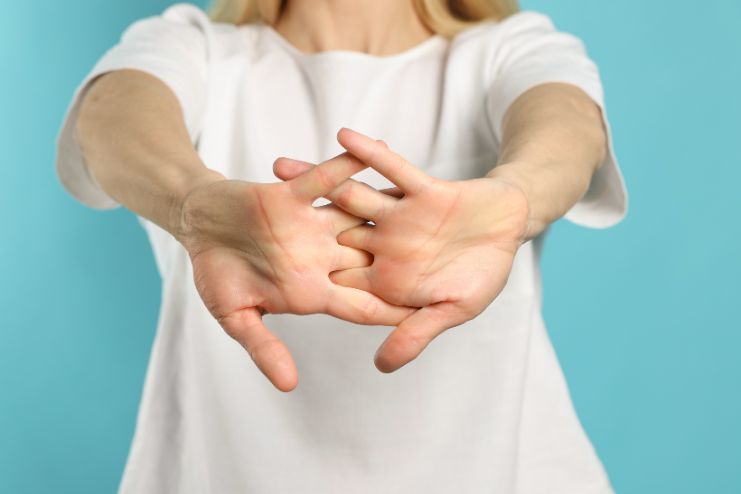
Cracking your joints is so common. We do it most of the time, don’t we? You’ve probably done it without even thinking—interlocked your fingers and stretched your arms out until your knuckles popped, or twisted your neck just enough to hear that satisfying crack. Aah! That crack just makes it so much better and relaxing. While some people find it relaxing, others cringe at the sound. Either way, joint cracking is a common human habit. But behind every pop, there’s a question that’s nagged for generations: Is cracking your joints bad for you?
This article helps us learn the science of joint cracking—what’s happening when joints pop, whether it’s linked to arthritis or long-term harm, and when it might mean something more serious.
We’ll look at the benefits people claim and understand what medical experts say. If you’ve ever wondered whether that satisfying crack is harmless or harmful, read on.
Read More: Collagen vs. Gelatin – Which One Should You Take for Skin & Joints?
What Happens When You Crack a Joint?
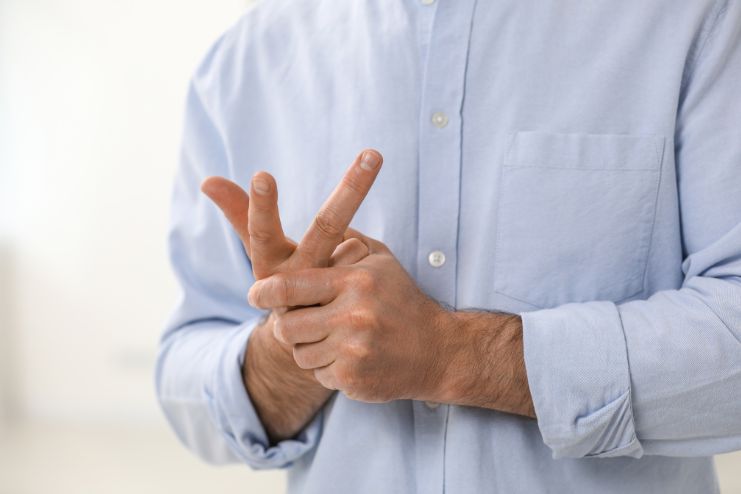
That cracking you hear is not your bones rubbing against each other. Rather, it’s the result of a process known as cavitation, which involves the fluid within your joints—synovial fluid.
Synovial fluid keeps your joints lubricated and helps in easy movement between bones. When you stretch or pull a joint (such as your fingers or neck), you expand the space in the joint. This reduces pressure in the synovial fluid, and dissolved gases (predominantly carbon dioxide) then creates a bubble.
This explanation was visually confirmed through MRI and ultrasound research—most notably in a 2015 study by Dr. Greg Kawchuk, which captured real-time bubble formation during the process.
Interestingly, once a joint has been cracked, it usually won’t crack again for 15 to 30 minutes—the amount of time it takes for gases to redistribute into the fluid. This is referred to as the refractory period.
So, to summarize: joint cracking is a pressure-based, fluid-mediated process. No bones are rubbing or snapping, which is why most people find it painless.
Is Joint Cracking Linked to Arthritis?
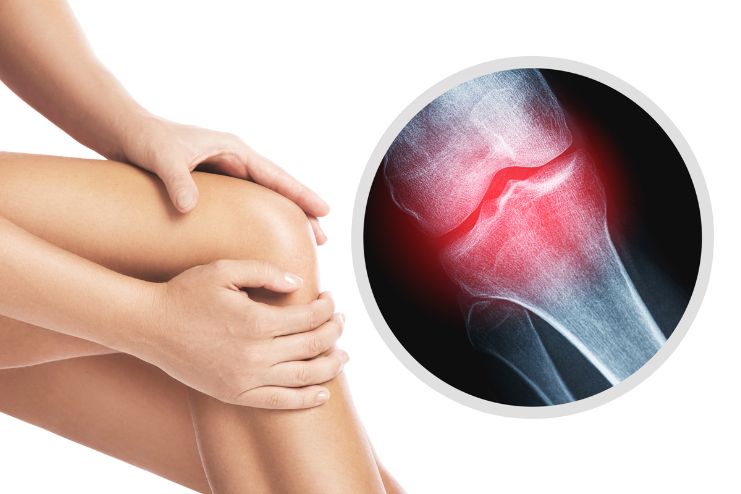
For years, individuals have said that cracking your knuckles or joints can contribute to arthritis. But science refutes that assumption.
Dr. Donald Unger is perhaps best known for one of the most popular pieces of evidence when he spent more than 50 years cracking the knuckles on his left hand twice daily while not touching his right hand at all. When he analyzed the findings, there was no difference in how arthritis had developed in either hand. His research earned him an Ig Nobel Prize in 2009.
A 2011 report in the Journal of the American Board of Family Medicine that included more than 200 subjects showed no relationship between knuckle cracking and arthritis. Likewise, specialists from places such as Johns Hopkins and Cedars-Sinai believe that they don’t have data suggesting repeated joint popping results in osteoarthritis or rheumatoid arthritis.
In short, though joint cracking is highly entrenched in popular culture, there is no scientific connection between joint cracking and arthritis.
Read More: 7 Tips to Protect Your Joints and Prevent Osteoarthritis Progression
When Cracking Might Be a Problem
Although harmless cracking usually is pain-free, joint popping occasionally can be a sign of a problem, particularly if it is accompanied by pain or other symptoms. These are signs that are worthy of closer examination:
- Pain or inflammation after or during cracking
- Recurrent heat or redness near a joint
- Joint instability or a feeling of giving way
- Crackling or grating noises with pain
- Locking of the joint or restriction in the range of motion
These may be signs of underlying issues such as damage to ligaments, wearing of cartilage, bursitis, or even precursory changes of arthritis. If you experience any of them, it is best to check with a doctor or orthopedic specialist.
Benefits People Report from Joint Cracking

Although the science claims that it’s not medically required, numerous individuals have reported feeling relieved after joint cracking. Some of the most frequently mentioned advantages are:
- Temporary Tension Relief: The act of popping and stretching can alleviate the sense of stiffness.
- Psychological Satisfaction: Similar to popping bubble wrap, the sound and sensation of a joint crack can be strangely satisfying and soothing.
- Range of Motion Increases: After cracking, most people notice they are “looser” or more limber in that joint, although this is usually fleeting.
Licensed manipulations (such as chiropractic joint adjustments) commonly depend on the same cavitation phenomenon to relieve transient symptoms.
Can Frequent Cracking Cause Long-Term Harm?
For the most part, habitual joint cracking will not result in structural damage, particularly if it’s not painful. But there are some significant qualifiers:
- Excessively forceful cracking, especially of the neck or spine, can stress ligaments and adjacent soft tissue.
- Regular knuckle cracking has been seen in some research to cause mild swelling of the soft tissue or decreased grip strength, but this is not conclusively agreed upon.
- Untrained manipulation of the spine—such as rotating your own back or neck—can be hazardous and may lead to nerve irritation or vertebral problems over time.
Bottom line: If cracking is painless and gentle, it’s probably safe. But forceful or repeated cracking of the spine should be avoided.
Read More: Top 5 Orthopedic Knee Pillows to Alleviate Discomfort and Improve Sleep
What Experts Say About Self-Manipulation vs Chiropractic Adjustments

There is a huge difference between cracking your joints and a chiropractic adjustment from a trained practitioner.
Chiropractors use precise, controlled movements to align individual joints, generally following a diagnosis of musculoskeletal dysfunction. Chiropractic adjustments are designed to better align, reduce pain, and increase motion—and they’re applied in a secure, systematic manner.
Self-manipulation, on the other hand, is typically random and uncontrolled. You can’t necessarily be addressing the joint that needs the most relief, and in trying, you might be repeatedly over-stressing other joints.
If you’re having routine stiffness, tension, or pain that compels you to crack your back, neck, or other joints regularly, it is advisable to seek the services of a physical therapist or chiropractor instead of doing it yourself.
Should You Stop Cracking Your Joints?

If you’re cracking your joints every now and then and you’re not feeling any pain, swelling, or functional restriction, there’s no need to desist. The habit is generally harmless for most individuals.
But you should change your mind if:
- Cracking is painful, inflammatory, or stiff
- You’re doing it repetitively or compulsively, particularly in the neck or spine
- You experience decreased range of motion or joint instability
These may be signs of underlying joint dysfunction or soft tissue issues that need medical evaluation.
In these situations, see your primary care physician, rheumatologist, or physical therapist to eliminate structural causes.
Final Takeaway
Knuckle cracking is a frequent, generally benign habit. The sound comes from gas bubbles developing in your synovial fluid, not bones grinding or joints degenerating. In spite of widespread myths, cracking your knuckles won’t lead to arthritis.
All the same, if your cracking is accompanied by pain, swelling, locking, or other concerning symptoms, it could be an indicator of something more serious. Similarly, forceful or repetitive self-adjustment, particularly in the neck and back, may cause strain or harm in the long run.
The best strategy? Listen to your body. Occasional painless joint cracking is okay—but if it becomes compulsive or hurts, see a pro. Like most health-related things, moderation and awareness are the key.
References
- https://www.cedars-sinai.org/health-library/diseases-and-conditions/r/rheumatoid-arthritis.html
- https://www.jabfm.org/content/jabfp/24/2/169.full.pdf
- https://www.bbc.co.uk/programmes/articles/4yHxWLGSyNrXmx1gfYd45f2/will-cracking-my-knuckles-give-me-arthritis
- https://www.ncbi.nlm.nih.gov/books/NBK537114/
- https://drsinghphysiocare.com/what-is-joint-cracking/
In this Article