















Toxic masculinity has been shown to contribute negatively to men’s mental health. It is an attitude that hinders the expression of emotions and healthy ways of coping. Allowing men to adopt flexible versions of masculinity can have positive effects on their mood and overall well-being.
This research shows that many males are raised with the idea that a real man will not cry, that a male needs to “man up,” or that a male simply needs to “deal with it himself.” Such common expressions that seem like positives may actually have a silent effect of deteriorating the mental health of males.
- Toxic masculinity refers to rigid, toxic, and damaging notions of the way men are supposed to think, feel, and act, and not to masculinity.
- These values include the repression of emotions, unconditional self-reliance, power, and risk-taking, which have been associated with depression, anxiety, drug use, and suicide.
- The rate at which males take their own lives is estimated to be about four times that of women. Moreover, the male role has been identified as one contributing factor.
- Changing negative expectations and embracing emotional awareness, connection, and seeking help can make a big difference in improving mental health in men.
What Is Toxic Masculinity?
Toxic masculinity refers to a set of damaging behaviors and beliefs that men are pushed to adopt in order to appear tough, unemotional, dominant, and in control. It never suggests that it is wrong to be masculine. Rather, “toxic masculinity” refers to an extreme, rigid version of masculinity.
Typical toxic standards include:
- Repressing emotions like sadness, fear, or vulnerability
- Being strong while maintaining silence and not seeking help
- Prioritizing dominance, control, or aggression over cooperation
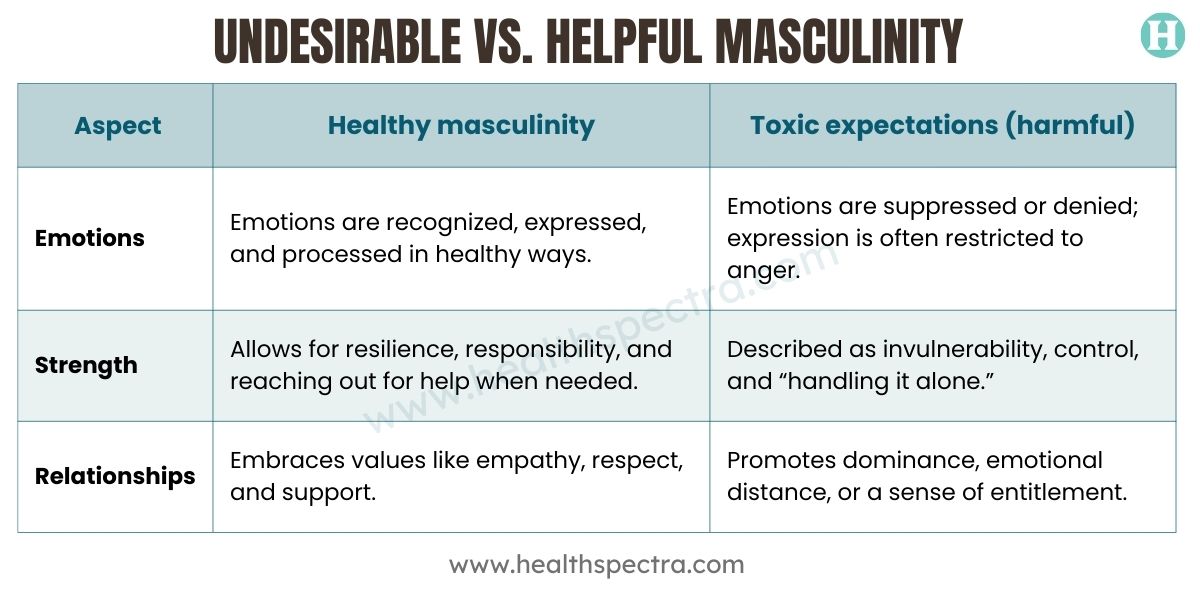 Healthier forms of masculinity encompass a normal spectrum of feelings and relationships, while toxic forms of masculinity penalize men for being human.
“The term ‘toxic masculinity’ is fundamentally flawed. It has no basis in science and it’s really problematic. There are many facets of manhood that, when applied incorrectly, are toxic, but they are toxic behaviours, not toxic traits,” says Dr. Zac Seidler, a clinical psychologist, researcher, and leading men’s mental health expert.
How Toxic Masculinity Develops
These behaviors seldom manifest suddenly because they are learned and reinforced over time.
Major contributors are:
Childhood Socialization: Alcohol and drugs often serve to numb feelings of shame, fear, or sadness deemed unacceptable to express. This self-medication worsens mental health, heightens accident risks, and elevates addiction potential.
Cultural Messages About Manhood: Media, sports culture, and peer groups may glorify stoicism, dominance, and risk-taking as hallmarks of a “real man.” Males falling short of these ideals often face bullying or exclusion to enforce conformity.
Reinforcement by Institutions: Work environments and certain subcultures reinforce long hours, emotional disengagement, and competitiveness, while stigmatizing vulnerability and mental health concerns. Over time, these beliefs embed deeply, leaving many men feeling guilty or weak for seeking help or support.
Read More: Mental Health Matters: Breaking the Stigma for Men
The Impact of Toxic Masculinity on Mental Health

Emotional repression
Boys and men are often discouraged from feeling or expressing sadness, fear, or confusion and are instead steered toward anger or emotional numbing. Research links expectations of “emotional control” and restrictive emotionality with elevated levels of depression, anxiety, and poorer relationship quality in men.
The consequences of bottling up emotions in the long run may be:
- Chronic tension, irritability, and difficulty relaxing
- Difficulty identifying and naming feelings, which makes them harder to manage
- Emotional numbness can damage relationships and quality of life
Increased Risk For Depression
In men, depression can look different from the stereotype of constant sadness. It may show up as irritability, anger, withdrawal, workaholism, or substance use instead.
Toxic masculine ideals can contribute to:
- Viewing problems with emotion regulation as personal weaknesses or failures
- Motivating men to “push through” difficult times rather than seeking care
- Reinforcing unhealthy coping strategies, like numbing feelings with alcohol, drugs, or overwork
Greater Suicide Risk
Across the world and in the United States, more men die from suicide than women. In the United States, men account for roughly 79% of suicide deaths and die by suicide at about four times the rate of women.
Studies show that:
- Men who strongly endorse traditional male norms of behavior and identity are more likely to die from suicide than those who do not.
- Difficulty expressing distress, unwillingness to seek help, and preference for more lethal methods are factors that increase suicide risk.
Reluctance To Seek Help
Conventional notions of masculinity as strength and self-reliance may frame therapy or counseling as a sign of weakness or a lack of masculinity. Men are consistently less likely than women to seek care from mental health services, even when experiencing similar levels of distress.
Typical hurdles may include:
- Fear of being judged, labeled, or perceived as incapable
- Belief that problems should be handled privately or “fixed” through willpower
- Lack of spaces where men feel understood and are not embarrassed about struggling
Read More: Anxious Attachment Style: Signs, Causes, and How to Build Healthier Relationships
How Toxic Masculinity Affects Relationships

Toxic norms can complicate emotional communication and intimacy. If men are unable to express vulnerability, partners and family members may experience them as distant, angry, or shut down.
Relationship effects:
- Frequent misunderstandings occur when feelings are communicated through irritation, criticism, or withdrawal instead of open conversations.
- Conflict or controlling patterns in place of straightforward discussions about fear, insecurity, or stress.
- Loneliness and social isolation in older men, especially where independence has been emphasized over friendship and emotional connection.
Toxic Masculinity and Hurtful Coping
When emotions do not feel safe to express, many men look for other outlets.
Common Patterns Are:
- Substance Use: Alcohol and drugs often serve to numb feelings of shame, fear, or sadness deemed unacceptable to express. This self-medication worsens mental health, heightens accident risks, and elevates addiction potential.
- Risk-taking Behaviors: Conventional masculine norms promote risk-taking, competitiveness, and demonstrations of strength through dangerous actions. This can manifest in reckless driving, unsafe sexual activity, or pushing physical limits while disregarding health.
- Aggression and Violence: Anger often becomes the sole ‘allowed’ emotion for men, channeling frustration or hurt into aggression rather than words. This harms partners, family, and communities while breeding shame and isolation afterward.
Read More: How Core Beliefs Affect Your Mental Health
Who Is Most Affected?
Every male may be affected, but some subgroups experience especially intense pressure.
- Men from cultures or communities with very rigid gender roles, where those who do not conform to expectations of manhood are punished or ridiculed.
- Young men, particularly adolescents and young adults, are developing their identity and may be highly influenced by peers.
- Men facing economic or social struggles, such as job loss, financial instability, or discrimination, who may feel extra pressure to “stay strong.”
What Toxic Masculinity Is Not
By specifying what the term is not, the conversation remains constructive.
Toxic masculinity is not:
- A criticism of men as a group
- An allegation that all male attributes are negative
- A plea to eliminate strength, resilience, or typically masculine pursuits
Instead, the issue is how extreme, rigid, and unrealistic standards, such as never displaying emotions or always being in control, can negatively affect a man’s mental health.
How Challenging Toxic Masculinity Can Improve Mental Health
When men are allowed to express a wider range of emotions, they often show improvements in mental health. Reducing pressure to conform to strict masculine norms is associated with less distress, healthier coping strategies, and greater willingness to seek help.
Improved emotional control through labeling and articulating feelings reduces internal stress. Healthier coping mechanisms like therapy, support networks, and problem-solving replace harmful substances or risky behaviors.
This openness fosters deeper intimacy, trust, and support in relationships with partners, friends, and family.
Healthy Masculinity: What It Looks Like
Healthy masculinity seeks to retain strong, positive qualities often associated with being male, like courage, responsibility, and protectiveness, while adding emotional awareness and connection.
Signs of healthier patterns:
- Emotional Awareness
- Ability to notice feelings in the body and express them using words.
- Allowing room for sadness, fear, and happiness in addition to anger.
- Asking For Help
- Turning to friends, partners, or professionals in times of overwhelm.
- Viewing support as a smart move, not a mistake.
- Resilience Without Repression
- Taking on challenges directly while still honoring emotional needs.
- Using boundaries, rest, and care-seeking as part of long-term strength.
Read More: 6 Myths about Mental Health You Need to Stop Believing
What Individuals Can Do
Transitioning to non-toxic norms can begin with personal change.
Practical Steps:
- Point out and challenge inner messages like ‘I shouldn’t be feeling this’ or ‘I have to handle this by myself.’
- Practice using emotional language in conversations, such as ‘I feel overwhelmed’ or ‘I’m scared about this change.’
- Share vulnerability with trusted individuals, family, and friends, perhaps starting with smaller topics.
- Consider therapy or coaching even outside of crisis situations for support with stress and personal growth.
How Society and Communities Can Help
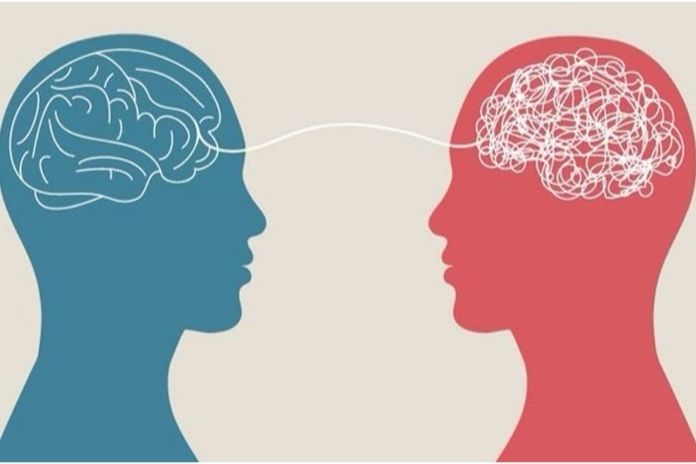 Communities, workplaces, and healthcare systems can make it easier for men to seek help.
Helpful strategies include:
- Mental health education that encourages emotional expression in boys and men through school, community, and workplace programs.
- “Male-friendly” therapeutic settings, such as men’s groups or action-oriented programs that align with men’s preferences.
- Stigma-reducing campaigns that portray seeking help as responsible and strong, not weak.
When to Seek Professional Help
Some indicators suggest it is time to seek professional support.
Consider confiding in a mental health professional if:
- Feelings of emptiness, numbness, or hopelessness persist most days for two weeks or more.
- Anger, irritability, or aggression are difficult to control and can affect relationships or work.
- You notice heavy substance use, increased risk-taking, or thoughts of self-harm or suicide.
- Asking for help is an act of strength and responsibility, never a failure.
If you or someone you know is in crisis in the United States, you can call or text 988 to reach the Suicide & Crisis Lifeline or chat at 988lifeline.org for confidential support.
Final Takeaway
By restricting emotional expression, discouraging help-seeking, and limiting available coping strategies, toxic masculinity negatively affects men’s mental health and contributes to higher rates of depression, substance abuse, and suicide.
The biggest victims of toxic masculinity are often the men who subscribe to it. Challenging these norms can support better mental health, stronger relationships, and a definition of strength that includes both resilience and vulnerability.
References
- Mokhwelepa, L. W., & Sumbane, G. O. (2025). Men’s mental health matters: The impact of traditional masculinity norms on men’s willingness to seek mental health support; A systematic review of literature. American Journal of Men’s Health. pmc.ncbi.nlm.nih
- Harris, B. (2021). Toxic masculinity: An exploration of traditional masculine norms in relation to mental health outcomes and help-seeking behaviors in college-aged males [Senior thesis, University of South Carolina]. Scholar Commons. scholarcommons.sc
- The impact of toxic masculinity on restrictive emotionality and mental health stigma. (2025). Personality and Individual Differences. sciencedirect
- The toxic masculinity scale: Development and initial validation. (2024). PMC. pmc.ncbi.nlm.nih
- Toxic masculinity, self esteem and mental health among young adult males. (2024). International Journal for Research in Applied Science & Engineering Technology. ijraset
- Adherence to masculinity norms and depression symptoms among men. (2024). PMC. pmc.ncbi.nlm.nih
- Understanding the role of masculinity in suicidal ideation. (2022). PMC. pmc.ncbi.nlm.nih
- A study on hegemonic masculinity, psychological distress and help-seeking behaviour. (n.d.). International Journal of Research Publication and Reviews. ijrpr
- Men’s experiences of mental illness stigma across the lifespan. (2022). PMC. pmc.ncbi.nlm.nih
- A systematic review of adolescent masculinities and associations with internalizing behavior problems and social support. (2021). PMC. pmc.ncbi.nlm.nih
- Staiger, T., et al. (2020). Masculinity and help-seeking among men with depression. Frontiers in Psychiatry. frontiersin
- Understanding the role of masculinity in suicidal ideation. (2022). American Journal of Men’s Health. journals.sagepub
- The impact of hegemonic masculinity & gender norms on mental health. (n.d.). ScholarWorks, San Jose State University. scholarworks.sjsu
- Wong, Y. J., et al. (2017). Masculine discrepancy stress and psychosocial maladjustment. PMC. pmc.ncbi.nlm.nih
- Men’s psychotherapy use, male role norms, and male-typical depression symptoms. (2021). PMC. pmc.ncbi.nlm.nih
- Sileo, K. M., et al. (2020). Dimensions of masculine norms, depression, and mental health service utilization. PMC. pmc.ncbi.nlm.nih
In this Article