








Do your fingers tangle with your hair whenever you attempt to style it, or are you constantly annoyed by the dryness, frizz, itching, and split ends of your hair? Fear not! You’re not by yourself.
Due to harsh, chemical-based hair products, excessive heat styling, and regular exposure to pollution, these hair problems are widespread in both men and women. These elements deprive the hair and scalp of their natural oils and moisture, which causes flakiness and brittle strands.
Most individuals focus on taking care of their skin, but they often overlook hair care. Regular nourishing of hair is also very necessary, and the easiest method to achieve this is with a proper hair mask.
A dry, itchy scalp can prove distracting, painful, and—when paired with scabbing or flaking—embarrassing. It may be tempting to take matters into your own hands by scratching or attempting to mask the issue with products, which may make matters worse.
If you are experiencing similar and sometimes overlapping symptoms, Deirdre Hooper, MD, FAAD, a board-certified dermatologist in private practice in New Orleans, says it’s important to differentiate mild dry skin or dandruff from other skin conditions so that you can get the treatment you need.
The best Ayurvedic hair mask can work wonders for your hair right away, so consider trying it if you’re spending a lot of money on pricey conditioners and shampoo, but your hair remains damaged.
This article will tell you how to produce a simple, yet powerful, do-it-yourself Ayurvedic hair mask that will smooth split ends and revitalize your scalp.
Read More: Hair Cycling Explained: The TikTok Trend That’s Changing Hair Care Routines
Why Use Ayurveda for Hair Care?
We all want what’s best for our hair, and there are many different kinds out there. After all, a person’s hair is frequently the most noticeable feature of their body, probably second only to their face. And who among us wouldn’t want shiny, healthy hair that we can style however we please?
There wouldn’t be a multibillion-dollar hair care industry selling its goods on the market if we didn’t value our hair as a collective. The issue is that many of these products contain dangerous chemicals that can seriously affect the hair as well as vital internal systems, including the brain and endocrine systems.
The majority of hair products, regrettably, only manage to treat the hair superficially, sometimes just momentarily, and frequently cause damage in the process.
Ayurvedic hair treatments are a great natural technique to achieve healthy, luscious hair if you want to improve the condition of your hair. This age-old Indian technique, rooted in Ayurvedic principles, emphasizes harmony and balance within the body to promote hair development, prevent hair loss, and maintain the overall health of hair and scalp.
People have used Ayurvedic herbs to enhance hair health organically for more than 5,000 years. In addition to promoting hair growth and scalp health, these herbs help address common issues such as dryness, split ends, breakage, and dry scalp. They do not deplete natural oils, unlike chemical treatments, and instead nourish hair from the roots.
To tackle hair problems and achieve holistic health and a shiny mane, adopting an Ayurvedic hair routine involves focusing on prevention, aligning with nature, and utilizing natural substances like herbal oils and powders.
When your hair is healthy, it is a reflection of your constitution, which is your particular balance of Vata (air), Pitta (fire), and Kapha (earth and water). Additionally, since each of us has all three doshas in our constitutions, it is quite possible—even typical—for our hair to exhibit a variety of distinct doshic traits.
By focusing on these doshas, ayurvedic hair treatments address hair problems at their source!
Key Ayurvedic Ingredients for Scalp & Hair Repair
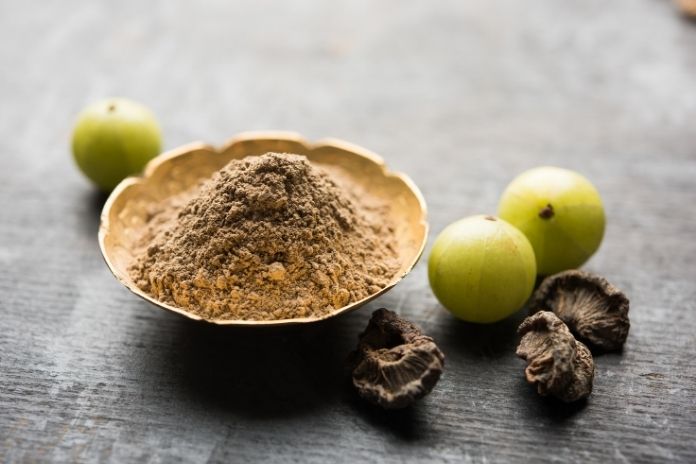
To nurture your beautiful hair and scalp, Ayurvedic hair care uses all-natural herbs and oils. With the help of these powerful substances, you can transform your hair wash into a luxurious and healthy ritual, helping you achieve silky hair. So let’s examine a few of these powerful components:
a. Amla (Indian Gooseberry): The nutrient-dense Indian gooseberry, or amla, has 20 times the amount of vitamin C found in oranges. Amla protects the hair color and shine, balances pitta, and aids in removing extra heat from the head. Rich in antioxidants, amla fortifies hair follicles, encourages hair development, and gives hair a glossy sheen.
Because of this, it plays a very crucial role in the synthesis of collagen, which is essential for keeping your hair strong and healthy. Additionally, it contains calcium, fatty acids, and tannins, which help to shield hair from environmental and heat damage.
b. Bhringraj: Known as the “king of herbs,” Bhringraj, also called fake daisy in English, strengthens the tips of your hair, lessens hair loss and thinning, and encourages the growth of new hair. Bhringaraj offers several benefits, including promoting healthy hair growth, preserving the hair’s original color and sheen, relieving mental stress, and cooling the head.
Numerous Ayurvedic remedies designed to cure hair issues contain this potent herb. It is very rich in vitamin E and minerals like calcium, magnesium, and iron. Additionally, its cooling qualities calm the scalp, reducing conditions like dandruff and inflammation.
Read More: Can Chia Seed Oil Help You Grow Your Hair Faster?
c. Fenugreek (Methi Seeds): A potent Ayurvedic herb, fenugreek aka methi, is highly regarded for its deep-conditioning, scalp-strengthening, and hair-growth stimulating attributes. It contains proteins, iron, nicotinic acid, and lecithin to promote the proper functioning of your healthy scalp, while adding natural shine and volume to your hair, and minimizing hair loss.
Those who experience hair dryness, dandruff, and hair thinning the most will benefit from it. To promote hydration, frizz reduction, and strengthen the hair, leave-in conditioners and serums can also have fenugreek mucilage, which is a naturally occurring gel-like ingredient.
d. Shikakai: Shikakai or ‘the fruit for hair’ has long been an established item in Ayurvedic hair-related products. Rich in antioxidants and vitamins A, C, D, E, and K, it is excellent for building and protecting hair. Shikakai is very rich in saponins, vitamins, and antioxidants. It easily cleans excess oil and product buildup without degrading the natural oils our scalp produces.
It is another excellent option for people with a sensitive scalp, dandruff, or those seeking a chemical-free hair wash. You can use Shikakai in liquid or powder form as a gentle sulfate-free shampoo that strengthens your hair strands while maintaining your scalp’s health.
e. Neem: With its antibacterial, antifungal, and anti-inflammatory qualities, neem is one of the most potent Ayurvedic medicines for healthy scalps. It strengthens the hair follicles and efficiently fights back dandruff, scalp infection, excessive oiliness, and scalp itching.
For people who suffer from fungal infections, hair loss, or irritation of the scalp, neem is a crucial component of Ayurvedic haircare products. An oil laced with neem helps control sebum production, reduce fungal growth, and soothe irritated scalps.
DIY Ayurvedic Hair Mask Recipe
Amla Shikakai & Rose Hair Mask
Ingredients:
- 5 ounces of Amla powder
- 5 ounces of Shikakai
- 2 oz You can swap Amla-infused coconut oil with regular coconut oil or any other carrier oil
- 5 ounces of rose water
- 5 ounces of plain water
Instructions for Mixing:
- In a bowl, first combine the Ayurvedic herbs and stir. The powders are very light, so they will fly everywhere, so stir them gently.
- Then, stir once more after adding the oil and the rose water.
- Finally, slowly pour in the water while stirring thoroughly to combine.
- The amount of water you use will depend on how thick or thin you want the mask to be. The mask should be a little thicker than the pancake batter.
Application:
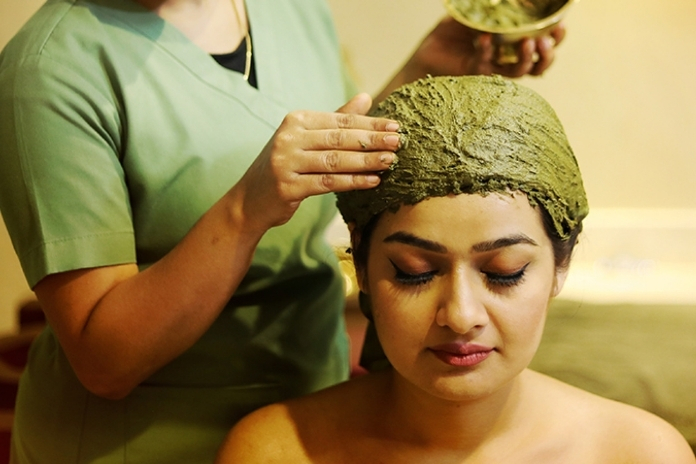
- Start by using a spray bottle to moisten the hair.
- Start by applying the mask to the ends of your hair and work your way up toward the roots.
- To keep your head warm, wrap your hair around it and cover it with a shower cap. Wear it for at least 30 mins to 1 hr.
- Co-wash your hair after rinsing off the mask.
Read More: Signs of Hard Water Damage on Hair (And How to Fix It)
What Results to Expect
To be clear, herbal hair masks are more than just calming spa treatments. They are among the most effective items in the hair repair toolbox when utilized purposefully and regularly.
They replenish the Moisture where it’s most needed: Thirsty Hair is damaged hair. Mucilaginous herbs, such as aloe or fenugreek, are added to herbal masks to help rehydrate the hair from the inside out. Without having the thick, oily sensation of synthetic conditioners, they encircle the hair shaft and seal in moisture.
They Nourish the Follicles: Vitamins, minerals, and plant chemicals found in herbs like amla, bhringraj, and brahmi promote blood flow to the scalp. When used regularly, this results in stronger roots, improved nutrient delivery, and yes, a noticeable decrease in hair loss.
They Mend Protein Bonds: Heat, dyeing, and exposure to the environment can all weaken keratin, the primary protein in our hair. Amino acids found in several Ayurvedic herbs aid in the repair of these protein connections, strengthening hair.
They Reduce Inflammation and Cleanse the Scalp: Consider your scalp to be the soil in which your hair develops; if it is irritated or clogged, it will not be able to support healthy growth. Herbal masks help to reduce irritability and foster the ideal conditions for healthy hair growth.
Precautions & Tips

Always follow the necessary safety measures to ensure your hair mask is safe and effective for your hair:
- Before applying any kind of essential oil to your scalp, always conduct a patch test, particularly if you have sensitive skin or have a history of adverse reactions.
- Unless your hairstylist agrees, never apply an ayurvedic hair mask to chemically treated or color-processed hair.
- Any remaining paste can be kept in the fridge for up to a week in an airtight container. If the texture, color, or fragrance changes, throw it away.
Read More: Important Benefit of Tea Tree Oil for Hair
Conclusion
An Ayurvedic hair mask is an all-around approach to having shiny and healthy hair. You can nourish your hair from root up by first providing a nutritious diet, then managing your stress, and finally using treatments like oil massages and herbal hair masks to improve your hair and scalp. It is important to remember that healthy hair reflects your overall health, and Ayurveda provides a path to create that shine from within.
You can achieve gorgeous hair in just 30 minutes once a week, and with repetition, your hair will become shinier, softer, and more manageable. The best part? The hair mask mixture can be changed according to your hair type and dosha (Pitta, Kapha, or Vata), making it a truly tailored treatment!
References
- https://thebeautygypsy.com/beauty-ayurveda-hair-mask/
- https://maicurls.com/mai-hair-routines/diy-henna-amla-dc/diy-ayurvedic-hair-mask-amla-shikakai-rose/
- https://www.banyanbotanicals.com/pages/ayurvedic-guide-to-healthy-hair
- https://www.centreofexcellence.com/guide-to-ayurvedic-hair-care/
- https://learncanyon.com/8-powerful-ayurvedic-ingredients-for-healthy-hair/
- https://learncanyon.com/ancient-ayurvedic-hair-masks-that-transform-damaged-hair/
- https://ayutherapy.com/news/ayurvedic-hair-care-tips
- https://www.doximity.com/pub/deirdre-hooper-md
- https://www.aad.org/public/everyday-care/hair-scalp-care/scalp/dry-scalp-conditions
In this Article