














Keeping their child in bed at night is one of the most frequent problems parents encounter when their child is a toddler. Your child’s small footsteps reverberate down the corridor just when you believe they’ve gone to bed.
Not only does this constant bedtime conflict interfere with your child’s sleep, but it also negatively impacts your own relaxation and mental health.
Research indicates that up to 20-30 percent of infants and toddlers struggle to fall asleep, even though getting enough sleep is crucial during infancy. You will understand how it can be frustrating to watch your child struggle with bedtime if you are a parent or caregiver.
Establishing a bedtime routine is one of the simplest ways to help your child get a good night’s sleep. Good news is that your child’s sleep will improve after just a few nights of adhering to a bedtime regimen. You will find solutions supported by experts in this article.
Read More: Why Do You Laugh in Your Sleep? Causes, Sleep Science & When to Worry
Understand Why Toddlers Resist Bedtime
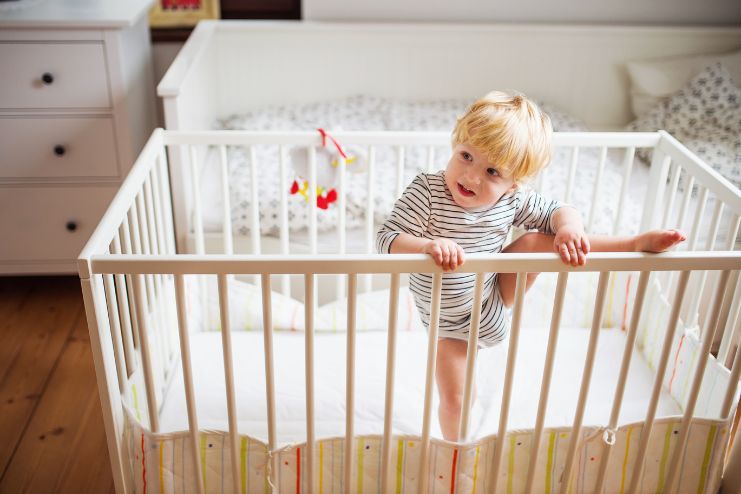
It’s crucial first to understand the reasons behind toddlers’ resistance to bedtime in order to resolve the bedtime conflict. Children are managing strong emotions and growing more independent at this age, which might make going to bed difficult rather than comfortable.
According to Sally Ibrahim, MD, director of Pediatric Sleep Medicine at the University Hospitals Rainbow Babies & Children’s Hospital, “learning independence and saying the word ‘no’ is a part of a toddler’s normal development.” Toddlers often resist going to bed or try to prolong the process as part of their development. Additionally, they would also like to get out of bed a lot.
Jason Sherman, DO, a pediatric sleep specialist, notes that children always desire to explore and interact with others. However, children’s needs and their wants are not the same thing, and sleep is what they require during the night. And lots of it. Toddlers (those between the ages of 1 and 2 years) shall sleep 11 to 14 hours every day, including naps. Three to five-year-old preschoolers should aim for 10 to 13 hours of sleep each day.
Try to establish a toddler sleep routine that includes putting away their toys, getting that last drink, etc. While preparing for bedtime, gently inform your child that it’s time for the house to wind down for the night. To reduce your child’s resistance when you begin their bedtime ritual, it is crucial to remind them of it in advance.
The phrases “I’m hungry,” “I’m thirsty,” and “I want another movie” are frequently used to argue against going to bed. Before going into the bedroom, try to attend to all of these desires. Also, make sure your child knows that the “final drink” signals the end of all eating and drinking for the night.
Establish a Consistent and Calming Bedtime Routine

A typical bedtime routine for kids usually involves three to four simple activities, like enjoying a story, changing into pajamas, brushing teeth, and having a small snack. Always complete these in the same order. As bedtime approaches, create a calming environment by dimming the lights and switching off electronic devices to make the routine more effective.
To avoid the exercise from being exhausting and losing its calming effect, restrict it to a small amount of time, no longer than 20 to 30 minutes. It must be screen-free since phones, iPads, and TVs can overstimulate the child and prolong the release of melatonin, making it harder for them to sleep.
Add relaxing activities that encourage quietness. Use a calming, soft voice, dim lights, and white noise or soft lullabies. These sensory cues reduce anxiety before bed and help establish a sleep-friendly environment.
Read More: Can Too Much Screen Time Cause Early Puberty? What Science Says
Use the “Back to Bed” Method (Without Emotion)
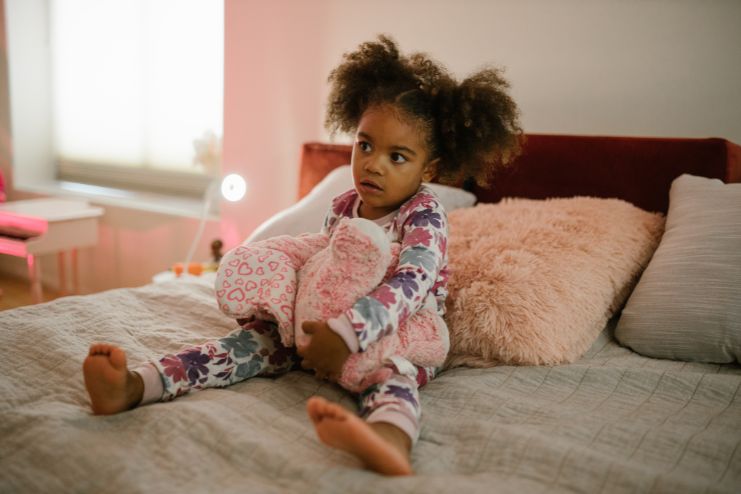
The fact that your child will get out of bed could be an additional issue if they are in a bed and not in a crib.
Every time, use the same neutral expression, such as “I love you, it’s bedtime.” Leave the room after saying it quietly. Reacting emotionally, negotiating, or providing lengthy explanations would likely encourage the behavior and offer your child more attention, which could, in turn, strengthen the habit.
Ensure that the bed rest regulation is precise and accurate. Experts advise calmly reminding your toddler that she needs to return to her bed if she does crawl out. If she doesn’t go by herself without saying anything more, put her back in bed. After that, walk out and shut the door.
Avoid displaying signs of frustration or anger. Be constant and firm. Your youngster will eventually realize that getting out of bed doesn’t lead to any fun.
Create a Sleep-Friendly Environment

A sleep-friendly setting creates the conditions for peaceful evenings. When it comes to making toddlers feel safe and prepared to calm down, the correct arrangement can make all the difference.
The first step in resolving sleep issues, increasing the duration of your toddler’s naps or nighttime sleep, and helping them form a positive relationship with sleep in general, is to create a comfortable sleeping environment. As caregivers, we aim to help create a calm and soothing atmosphere for our kids as bedtime approaches. For this reason, the design and arrangement of the room are crucial.
Ensure that the space promotes peace and relaxation, and avoid any clutter. Instead of becoming a playroom, your child’s bedroom should be a place where they want to relax and unwind. Reduce the number of toys you have and substitute them with books. Add a dimmer switch to the lights to help create a more calming atmosphere before bed.
Ensure that the bed in the room is securely fastened to the walls if your child tends to climb off it, and relocate any items that might discourage the child to stay in bed.
Read More: Sleep Solutions for Everyone: Family-Friendly Tips for Better Rest
Use Visual Cues or Reward Charts

Visual cues and consistent encouragement can make bedtime smoother and more enjoyable for toddlers. A toddler sleep clock is a helpful tool that uses visual cues like images or colored lights to signal when it’s bedtime and when it’s fine to get up. It eliminates guesswork and battles of wills by giving your child a clear, age-appropriate cue to cooperate.
Children are encouraged by rewards. If you don’t believe in the Sleep Fairy, think about implementing a sticker-based bedtime chart. The procedure is straightforward – your child receives a sticker in the morning if they go to bed and remain there for the entire night. Make it into a game in which a specific quantity of stickers results in a unique action or reward.
Strong-willed kids respond well to an incentive-based system. It helps them focus and have a goal. They will gain an understanding of the benefits of acting morally via the process.
Anticipate Needs Before Lights Out

Preparing your toddler in advance for bedtime is advisable to minimize bedtime tantrums. Taking them to the bathroom and providing a final sip of water before you put them to bed would also work. Toddlers often delay bedtime to avoid going to sleep, but you can eliminate this behavior by meeting their needs in advance.
Your child may enjoy putting her stuffed animals in bed, turning on her white noise machine, or turning off the lights. After that, give them hugs and kisses, say goodbye with a statement that is constant (such as “See you in the morning!”), and leave the room.
Toddlers are less likely to push limits or keep thinking of excuses to get out of bed when they are aware that there is a clear end in sight. A firm message is being conveyed by preparing in advance and being persistent: bedtime is bedtime.
Manage Middle-of-the-Night Wakeups
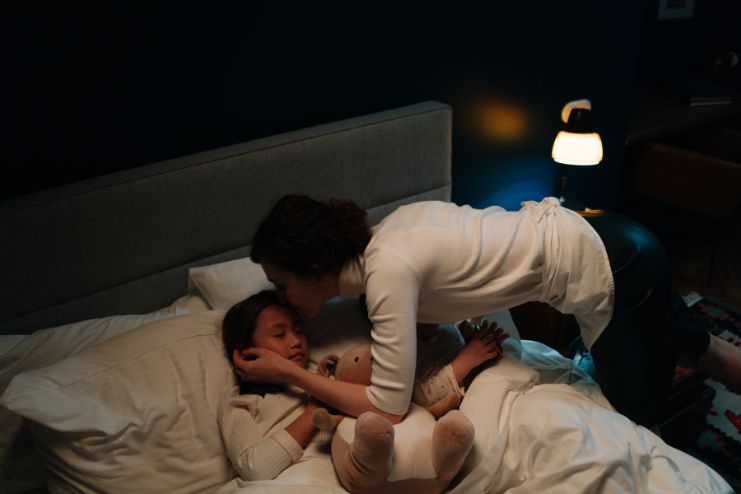
Both you and your child need to get enough sleep. It follows that frequent night awakenings might cause tension and irritability in both you and your child. Whatever the cause of your toddler’s awakening, the objective is to teach them self-control so they can go back to sleep. Wait a short while to see if your child will go back to sleep on their own if they cry out for you in the middle of the night.
Going in right away can frequently interfere with your toddler’s ability to regulate their emotions. However, check on your child and offer reassurance if they continue to show signs of distress. It can be very tempting to put your child in bed with you “for just that one night” to get some sleep when you are having trouble falling asleep at night.
Your toddler may become very confused as they attempt to understand sleep expectations and boundaries if you are not interested in co-sleeping in the long run. Maintaining a practice of offering gentle reassurance, even when it may be difficult, can ultimately pay off.
Read More: The Importance of Sleep Hygiene: Creating Your Ideal Sleep Environment
When to Set Limits (Gently but Firmly)

Rules give children a sense of security and safety regardless of their age, especially when they are applied consistently. They understand what they can and cannot accomplish, so they know what to expect. Toddlers adore and want routine, according to study after study! It gives them a sense of security and safety in their surroundings.
They must also acknowledge who controls their surroundings. It’s our duty to consistently establish clear and achievable limits. With demands like “just one more story” or “one more song,” toddlers are experts at delaying bedtime. Setting firm yet kind boundaries is just as crucial as fostering their need for connection to keep bedtime from lasting forever.
Use a timer or establish a specific number of stories or songs, such as “two books, then lights out,” to create a structured routine. It provides your child with a dependable and understandable limit. You may encourage cooperation from your toddler while maintaining a stress-free and easy sleep routine by remaining composed, clear, and consistent.
What to Do if Nothing Works
You’re not alone if your child still won’t stay in bed after you’ve tried every possible solution. Even with the greatest of intentions, sleep regressions or developmental milestones (such as potty training or language explosions) can occasionally cause brief disruptions to sleep patterns. For a child who begins to cry before you say goodnight and leave the room, try the disappearing chair method as a sleep training strategy.
As your toddler goes to sleep, begin by spending a few minutes sitting quietly by her bed. Continue doing this until you and your chair are in the hallway outside the room, but you can still hear your child, then move your chair farther from the bed the following night so that she can still see you.
According to this notion, your child will soon be able to fall asleep even if you are in a different room, since they will have grown accustomed to you being farther away. Consult your physician if sleep issues persist for several weeks or involve safety concerns, such as night terrors or a tendency to climb out of bed. They can help you find age-appropriate remedies and rule out underlying problems.
Read More: Sweet Dreams Await: 6 Weighted Blankets for Deeper, More Restful Sleep
Conclusion
Rest assured that you are not alone if bedtime is a nightly battle. Toddlers often face bedtime challenges, but you can effectively address them with the right approach. Consistency, compassion, and a clear structure are essential for success. These tools help your child develop positive sleep routines while providing a sense of comfort and safety.
Remember that change is a gradual process. Your toddler will eventually learn to remain in bed, however, and all members of the household will receive the rest they require with patience and repetition. Little victories bring significant growth.
References
- https://www.sleepfoundation.org/children-and-sleep/bedtime-routine
- https://kellymurraysleep.com/the-sleepy-times/3-tips-for-keeping-your-toddler-in-their-bed
- https://health.clevelandclinic.org/toddler-wont-sleep-tips
- https://www.uhhospitals.org/doctors/Ibrahim-Sally-1215130786
- https://takingcarababies.com/is-your-toddler-fighting-bedtime
- https://my.clevelandclinic.org/staff/25017-jason-sherman
- https://raisingchildren.net.au/toddlers/sleep/better-sleep-settling/bedtime-routines
- https://www.whattoexpect.com/toddler/sleep/sleep-training-toddler
- https://www.pampers.com/en-us/toddler/sleep/article/teaching-sleeping-habits-toddler-sleep-training
- https://www.babycenter.com/toddler/sleep/whats-the-perfect-sleep-environment-for-a-toddler_1288072
- https://www.whattoexpect.com/toddler/sleep/toddler-bedtime-routine
- https://naitreetgrandir.com/en/step/1-3-years/behaviour/setting-limits-when-should-i-start/
- https://www.livelovesleep.com/how-to-keep-toddlers-in-bed/
- https://mothercraftforbabies.com.au/toddlers-boundaries-routine-and-sleep/
- https://www.healthychildren.org/English/healthy-living/sleep/Pages/bedtime-trouble.aspx
- https://childmind.org/article/our-son-never-wants-to-go-to-bed-and-its-making-us-all-miserable-we-need-help/
In this Article