












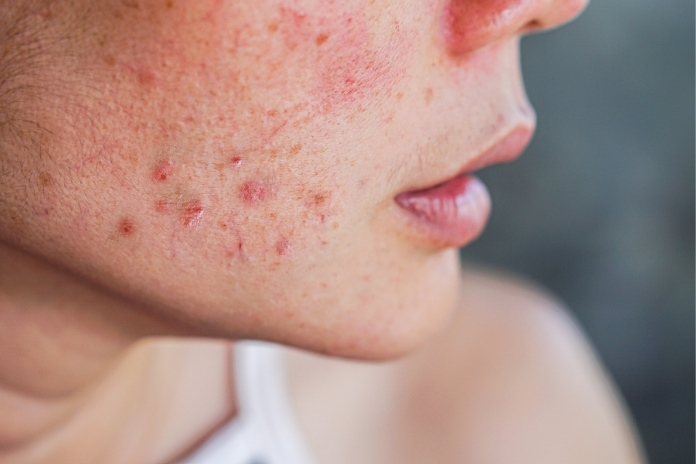
Even after a pimple has healed, the black patches it leaves behind may persist for weeks or months, giving the appearance of uneven skin.
Acne and pimples can be annoying to deal with, even after they go away. Dark spots and post-acne markings can persist even after they have cleared. There are several ways to minimize the appearance of post-acne blemishes, even when you can’t snap your fingers and get rid of them right away.
Nearly 95% of acne sufferers will experience some scarring, according to research, making acne a common yet annoying skin issue that upsets a lot of people.
The good news? Dermatologists attest that there are safe, efficient, and scientifically supported ways to hasten the fading of dark stains from pimples. This article will provide dermatologist-recommended remedies and strategies for avoiding the development of new marks.
Read More: 10 Ways to Reduce Dark Spots with Lemon Juice
Why Pimples Leave Dark Spots

Dealing with acne can be particularly frustrating because of the marks that pimples leave behind, rather than the actual breakout. Markings that remain on your skin after a breakout appears to have gone away are known as post-acne markings. There are various kinds of acne marks.
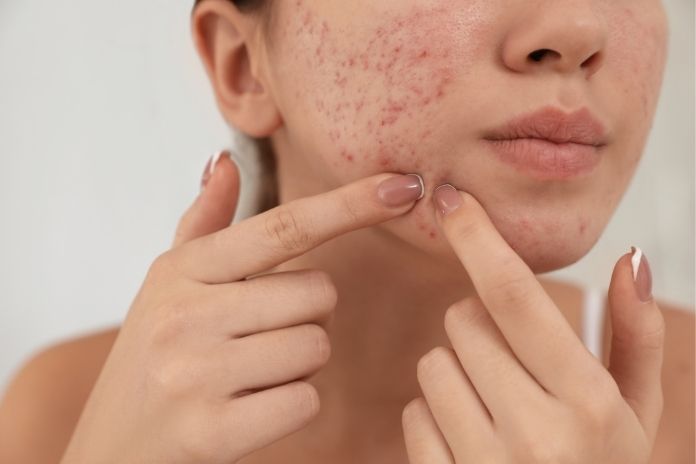
One of the most essential pieces of skin care advice is to avoid popping existing blemishes. Of course, if that irritating bump is sitting there, taunting you, it is difficult to follow that advice. And even if you try to ignore it, you are still left with a dark spot that is difficult to overlook.
Skin is our largest organ of your body. Your skin has three main layers. Starting from the outside in, they are the epidermis, dermis, and hypodermis. The layers of your skin not only help your body to produce vitamin D from the sun’s rays, but they also protect your delicate internal organs from the weather, UV rays, and bacteria. Although acne can happen anywhere there are sebaceous glands, it is the most prevalent on the face, back, and chest.
The inflammation of acne lesions causes acne scars. The wall of the pore breaks down, and the acne pore erupts outward. Some acne scars are superficial and heal quickly, while others are more pronounced and may leave minor blemishes. Deep scars can also result from the contents of the acne blemish seeping into the surrounding tissue. It stimulates the skin to produce new collagen fibers, aiding in the healing of scars.
“Basically, the buildup of excess oil, dead skin cells, and sometimes bacteria—that causes acne can trigger an inflammatory response”, Susan C. Taylor, MD, professor of dermatology at the University of Pennsylvania’s Perelman School of Medicine, tells SELF. During this process, your body releases pigment-producing melanocytes (the cells responsible for your skin’s color) to protect the affected area, Dr. Taylor says.
Methods for Handling Acne Marks
The answer to your inquiry about how to eliminate post-acne spots is that you may not be able to. Some steps you can take to reduce its appearance.
Here, we are primarily focusing on dark spots, as other types of post-acne spots require different treatments. For specific information about raised and atrophic scars, we recommend discussing this with your dermatologist. These are often more individualized.
Be consistent with your skincare routine: Before we discuss which skincare items to use specifically, it’s essential to emphasize the importance of consistency. Sticking to your skincare routine every day is just as important as finding the right cleansers, moisturizers, and other skincare products for your specific skin type. Practice makes perfect!
Be gentle with your cleanser: The last thing you want is to irritate your skin by scrubbing when you have dark spots. Choose a gentle formulation that will not strip the skin, and avoid scrubbing vigorously. Consider using a gentle cleaner explicitly created for users with acne-prone skin.
Ensure your skin is hydrated and moisturized: Sometimes, dehydrated skin can lead to pimples because your body produces more oil to compensate. Your pores may become clogged by that excess oil, which can lead to further breakouts and dark patches. One reason is that even if you have oily skin, you should still moisturize. Select a gentle moisturizer that is gentle on the skin, while nourishing and hydrating it.
To lower your risk of UV damage, use sunscreen. Although you’ve probably heard this before, it’s worth reiterating: Always wear sunscreen. Rain or shine, indoors or out, you should always wear sunscreen, reapply as needed, and take other precautions against the sun.
Try a retinol serum: Incorporating topical retinoids into your skincare regimen is one effective method to improve the appearance of post-acne blemishes. Retinol can visibly lighten dark patches.
Change takes time, so be persistent and patient. Even though we may not want to hear it when trying to conceal post-acne blemishes, it is nonetheless accurate. It’s critical to have reasonable expectations for your skincare regimen and to avoid giving up. Be aware that it could take some time, but you can lessen the appearance of dark spots if you are persistent and patient.
Read More: How to Get Rid of Black Spots on Skin
In-Office Dermatologist Treatments
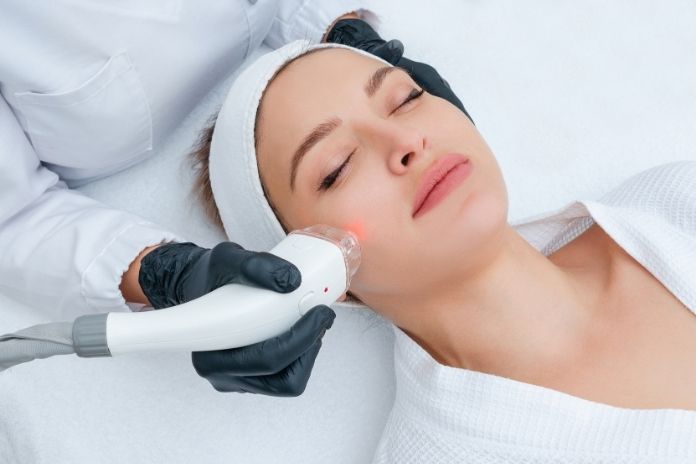
Minor acne scars may eventually fade on their own; however, professional treatment typically provides the most effective and longer-lasting results. Below are the best in-office acne scar treatments recommended by dermatologists:
Laser Resurfacing: Laser treatments utilize concentrated light energy to remove the damaged layer of the skin and stimulate collagen production, thereby improving skin tone, lightening discoloration, and smoothing out imperfections or other indented scars.
SkinPen Microneedling: The FDA-approved SkinPen microneedling tool stimulates the skin’s natural healing process with controlled micro-injuries. It improves skin texture and reduces scar depth over time.
Microneedling with PRP: A combination of microneedling with platelet-rich plasma (PRP) therapy, which accelerates the healing process and increases collagen production. Although PRP utilizes your own blood, it promotes skin rejuvenation, resulting in a more rapid and more precise improvement from scarring.
Chemical Peels: A chemical peel sloughs off the outer layer of skin, which encourages a local return of cells that help brilliantly fade post-acne scars. Deeper peels are helpful as they stimulate the production of collagen and improve the appearance of indented scarring.
Dermal Fillers: Injectable fillers can add volume and help to level out deeper, pitted scarring. Although temporary, you can add fillers as desired. Fillers provide immediate and dynamic results in enhancing the skin’s texture.
The best treatment for you will depend on the type and severity of your acne scarring. A dermatologist will help you create the best treatment plan for your skin!
Lifestyle and Prevention Tips

The first step in helping to prevent acne scars is to receive early treatment to minimize further damage to your skin. The correct treatment can also reduce scarring that has already occurred.
Early Treatment is Important: The longer the length of your outbreaks, the more likely you are to experience deep scarring. Prescription medications or professional treatments can help prevent acne before it leads to scar formation.
Avoid Picking or Popping Your Pimples: Bacteria, sebum, and debris fill a pimple. When you pop a pimple, you push the bacteria deeper into the skin, increasing your chances of inflammation and scarring.
Wear Daily Sunscreen: Sun exposure can hinder the healing process and can darken scarring more than the surrounding normal skin. You should wear a broad-spectrum SPF 30+ to protect the skin and avoid hyperpigmentation.
Promote Skin Healing: Help your skin heal with ingredients that stimulate collagen production and promote skin healing: retinoids, vitamin C, and Niacinamide.
Be Gentle to Your Skin: Avoid scrubs or harsh exfoliating agents, as they may irritate the skin and exacerbate scarring.
Read More: How to Remove Brown Spots on the Face
How Long Do Dark Spots Take to Fade?

How long does it take for a dark spot on a pimple to fade away? It is one of the most often asked questions. The answer depends on the extent of pigmentation you have and how consistently you follow your treatment. There are many possible treatments, but some general rules of thumb are as follows:
- If you are consistent with your treatment, mild hyperpigmentation may start to fade in three to six months.
- More forceful treatments, such as chemical peels, often require more treatment sessions but can produce results more quickly.
- Generally, deep melasma and other more severe types of hyperpigmentation may be permanent and may take a year or longer to fade completely.
Conclusion
Post-inflammatory hyperpigmentation (PIH) – often referred to as dark marks that remain after a pimple of any kind – is a common skin issue. Fortunately, we can treat it. The dark areas may take time to fade, but you can return to clear and even skin with just a little patience, especially if you follow the given steps.
From topicals like vitamin C, niacinamide, and retinoids to daily behaviors such as applying sunscreen and gentle exfoliation, dermatologists recommend several effective steps.
The bottom line: Patience and a routine skin care regimen yield the best results. While dark marks are unlikely to disappear ovekrnight, safe and effective treatments can gradually improve them.
Read More: How to Get Rid of Sunspots
FAQs
Can home remedies, such as lemon juice, help?
Dermatologists recommend avoiding the use of lemon juice and other strong do-it-yourself treatments because they may be irritating, increase pigmentation, and slow healing. Instead, they recommend using safer and tested ingredients.
Do pimple patches prevent dark spots?
Some acne stickers work well for shallow pimples, such as whitehead patches, but they have limitations. For deeper cystic acne, they are less effective and cannot address the underlying causes.
Which fades faster: red spots or brown spots?
Brown spots indicate excess melanin production and may take longer to subside on their own, whereas red spots typically resolve more quickly because they are often associated with chronic inflammation.
Is it safe to use multiple brightening ingredients together?
It is not safe to mix multiple brightening agents. Some products mix well together, but others can be irritating, and some combinations may even decrease their effectiveness.
References
- https://pmc.ncbi.nlm.nih.gov/articles/PMC10053888
- https://www.cerave.com/skin-smarts/skin-concerns/acne/how-to-get-rid-of-post-acne-marks
- https://www.brynmawrdermatology.com/the-best-treatments-for-acne-scars-a-dermatologists-guide
- https://www.goodrx.com/conditions/acne/how-to-get-rid-of-acne-scarring
- https://www.schweigerderm.com/skin-care-articles/spots/best-dark-spot-removal-treatments
- https://www.self.com/story/ask-a-derm-why-pimples-leave-dark-spots
- https://my.clevelandclinic.org/health/diseases/21222-acne-scars
- https://www.med.upenn.edu/apps/faculty/index.php/g275/p3754
- https://www.byrdie.com/how-to-treat-dark-spots-4686898
- https://www.drkhorasani.com/post/dermatologist-treatment-for-dark-spots-on-the-face-a-beginners-guide
In this Article