














Sweet potatoes and bananas remain in a strange place in modern nutrition advice. They are “natural,” whole foods, yet they are often blamed for blood sugar spikes. Some people remove them entirely. Others eat them freely, assuming “natural sugar is fine.” Both approaches miss the real point.
Blood sugar response is not determined by a single food in isolation. It is shaped by structure, temperature, ripeness, preparation, timing, and combination. Sweet potatoes and bananas are not problems by default. The problem is how we eat them.
This article does not repeat common lines like “pair with protein” without explanation or “it’s all about gut health.” Instead, it looks at what actually changes inside these foods when we cook, cool, ripen, or portion them, and how those changes alter glucose release in the bloodstream.
Why Sweet Potatoes and Bananas Get a Bad Rap for Blood Sugar

1. The Truth About Natural Sugars and Carbs
Natural does not mean slow-digesting. A banana contains no added sugar, yet its sugars are already broken down and ready to absorb. A sweet potato has no sugar crystals added, yet its starch can convert rapidly into glucose once cooked.
Blood sugar does not rise because food is “processed” or “unhealthy.” It rises because glucose enters the bloodstream faster than the body can manage at that moment.
2. Understanding the Glycemic Index (GI)
The glycemic index measures how fast a carbohydrate raises blood sugar compared to pure glucose. But GI is often misunderstood.
- GI is measured in isolation, not in real meals
- GI does not account for portion size
- GI does not consider temperature or storage
A food with a moderate GI can still cause a sharp spike if eaten hot, alone, and in large quantities.
3. What Causes a “Blood Sugar Spike”
A spike is not just a high number. It is a rapid rise followed by a rapid drop. This rise usually happens when:
- Carbs are easily digestible
- The fiber structure is broken down
- Food is eaten hot and soft
- There is no fat or protein slowing down digestion
Sweet potatoes and bananas often meet these conditions when eaten carelessly.
Read More: Vegetables That May Cause Inflammation: What to Know (and What to Eat Instead)
The “Cold-Prep” Hack Explained: Turning Carbs Into Resistant Starch

This is where things get interesting and where most online content stays shallow.
1. What Is Resistant Starch?
Resistant starch is a carbohydrate that resists digestion in the small intestine. Instead of turning quickly into glucose, it passes through more slowly, reducing the blood sugar impact.
Not all resistant starch is present naturally. Some of it forms after cooking and cooling.
2. How Cooling Changes the Carb Structure
When starch is cooked, it gelatinizes, making it easy to digest. When that cooked starch is cooled, some of it recrystallizes into a more compact form that digestive enzymes struggle to break.
This process is called retrogradation.
Important point:
Reheating does not fully destroy this resistant starch if done gently.
3. The Impact on Blood Sugar and Satiety
Resistant starch:
- Slows glucose release
- Reduces insulin demand
- Improves fullness per calorie
This is not a gut-health claim. It is a carbohydrate-structure effect.
Resistant starch helps if glucose handling is the main issue. It helps less if the food portion is excessive, the meal lacks protein, physical inactivity is high, and insulin resistance is advanced.
Many blogs pretend that resistant starch overrides all of this. It doesn’t.
Read More: Foods to Combine with Your Plant-Based Iron for Better Absorption
How to Prep Sweet Potatoes for Better Blood Sugar Control
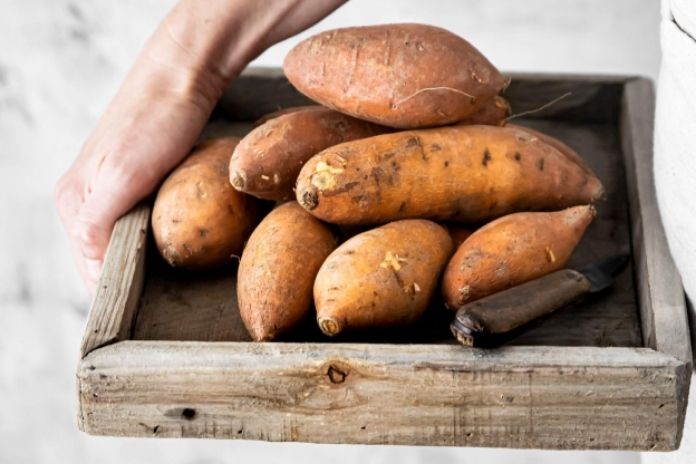
1. Cook, Cool, and Reheat for the Best Effect
The worst way to eat sweet potatoes for blood sugar is freshly boiled, mashed, and eaten hot in a large bowl. This preparation effect is not just theoretical. It is also recognized clinically. “If you have prediabetes or diabetes, choosing sweet potato over white potato can help reduce your chance of a blood sugar spike,” adds Emma Willingham, clinical dietitian.
“Just be aware that this only holds true if you’re boiling or air frying the sweet potato. Once fried or baked, the glycemic index of sweet potato becomes similar to that of a french fry.”
The better approach:
- Cook fully (boil, steam, or roast)
- Cool completely (refrigerate for a minimum 8–12 hours)
- Reheat lightly or eat at room temperature
Cold storage changes the starch behavior.
2. Why This Works
Cooling increases resistant starch and reduces the speed of glucose absorption, even if the total carbs stay the same.
This means:
- Same calories
- Same carbohydrate count
- Lower glucose spike
3. Smart Serving Ideas
Instead of asking, “How much sweet potato can I eat? ”Ask: What else is on the plate? Am I active today? Is this my main carb or a side? Sweet potato works better as:
- Chilled roasted sweet potato cubes with curd and nuts
- Lightly reheated sweet potato with paneer or lentils
- Cold mashed sweet potato mixed with seeds and oil
Avoid blending or pureeing. Texture matters.
Read More: How Eating Carrots Regularly Can Improve Your Eyesight: Nutrition-Backed Benefits & Smart Tips
How to Eat Bananas Without Spiking Blood Sugar
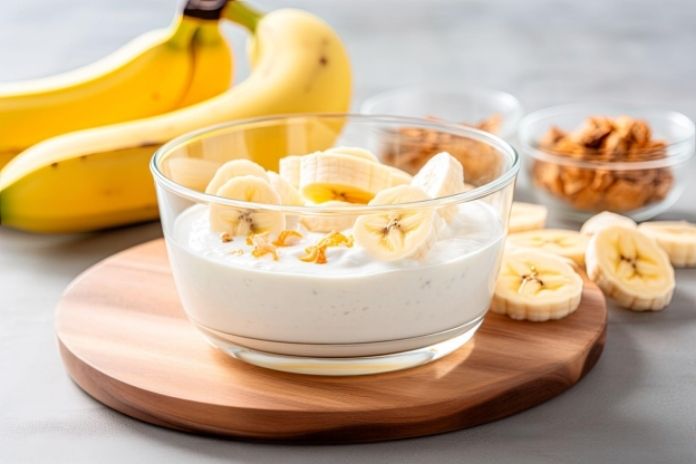
Bananas behave differently from sweet potatoes. Ripeness is the key factor.
1. Choose the Right Ripeness
As bananas ripen, starch converts into free sugar, fiber structure weakens, and GI increases. Best choice for blood sugar:
- Yellow with slight green at the ends
- Not fully brown or mushy
Very ripe bananas act almost like sugar syrup metabolically.
2. Pair with Protein or Fat
This is not about “balancing macros.” It is about slowing stomach emptying.
Better combinations:
- Banana with peanuts
- Banana with curd
- Banana after a meal, not as a standalone snack
Avoid banana smoothies. Liquids remove chewing time and fiber structure.
3. Portion Matters
One medium banana is usually fine. Two bananas back-to-back often cause a spike even in healthy people. Portion size is one of the most underestimated factors with fruit.
“Think about portion size if you’re watching your sugar intake,” recommends Beth Czerwony, a registered dietitian. “If you’re eating little bananas, that’s going to be better than if you’re choosing gigantic bananas that would qualify as two servings.”
The issue isn’t fruit sugar. It’s unintentionally turning one serving into two and removing the pause that the body relies on to manage glucose.
Read More: The Sweetest Superfood: 19 Sweet Potato Benefits, Tips & Quick Recipes
Banana vs. Sweet Potato: Which Is Better for Blood Sugar?
There is no universal winner.
Sweet potatoes have more fiber. It is slower to digest when it is cooled. It is more stable when reheated. Bananas are faster to digest. Its effectiveness is highly dependent on ripeness. It is better consumed as part of meals.
For people with insulin resistance:
- A cooled sweet potato is usually more forgiving
- Bananas require a stricter portion and pairing
Read More: The Potato Diet: Can Eating Only Potatoes Help You Lose Weight?
Additional Tips to Keep Blood Sugar Steady
- Never eat starchy foods completely alone if glucose control is poor
- Eat carbs after protein, not before
- Avoid very hot carb foods when possible
- Chew properly; texture slows digestion
- Avoid eating fruit alone on an empty stomach repeatedly
- Earlier meals are metabolically cheaper than late meals
- Do not combine bananas with fruit juices or honey
- A 10-minute walk after eating can reduce post-meal glucose spikes more than many food swaps.
Blood sugar control is cumulative across the day, not per bite.
Read More: Yam vs. Sweet Potato: What’s the Difference and Which Is Healthier?
When to Seek Professional Guidance
If you notice:
- Strong fatigue after eating
- Shakiness or hunger soon after meals
- High fasting glucose despite “clean eating”
Then a personal assessment is needed. Food tolerance varies with sleep, stress, hormones, and muscle mass.
Read More: 10 Simple Ways to Make Mashed Potatoes Healthier (Without Losing the Creamy Comfort)
Final Thoughts: Cool, Don’t Cut Carbs
Sweet potatoes and bananas expose metabolic inefficiency. They don’t create it. Removing sweet potatoes and bananas is an easy solution, but not a smart one.
Learning how food preparation methods affect metabolism is more sustainable than restricting food intake. Cooling, ripeness, pairing, and timing allow these foods to change from problematic to useful and predictable.
The goal is not to fear carbohydrates. The goal is to change how the body acquires them.
- Blood sugar spikes depend more on structure and preparation than on food labels.
- Cooling cooked carbs can significantly reduce glucose impact
- The ripeness of bananas changes metabolic response more than most people realize
- Texture and temperature matter as much as fiber content
- Long-term effects of repeated carb cooling-reheating cycles on insulin sensitivity are still understudied
FAQs
1. Are bananas better before or after exercise?
After or close to the activity is usually better tolerated.
2. Are green bananas always better for blood sugar?
Slightly unripe is ideal. Fully green may cause digestion issues for some.
3. Does reheating destroy resistant starch completely?
No, gentle reheating preserves much of it.
4. Is a banana smoothie worse than a whole banana?
Yes. Blending increases absorption speed significantly.
5. Can cooling rice or chapati have similar effects?
Yes, similar starch retrogradation occurs, though results vary.
References
- Baptista, N. T., Dessalles, R., Illner, A.-K., Ville, P., Ribet, L., Anton, P. M., & Dubief, M. D. -. (2024). Harnessing the power of resistant starch: a narrative review of its health impact and processing challenges. Frontiers in Nutrition, 11.
- Cleveland Clinic. (2023, January 13). Which Fruits Have the Most Sugar? Cleveland Clinic.
- MedlinePlus. (2022, November 3). Glycemic index and diabetes. Medlineplus.gov.
In this Article