













Folklore has long attributed significant power to the moon, linking it to mood swings, increased criminal activity, and even psychosis. But could our sleep patterns actually be disrupted by this “lunar effect”?
Scientists have long recognized that light—whether artificial, moonlight, or sunlight—plays a crucial role in human activity. However, even when accounting for artificial light sources, recent studies suggest that the moon cycle may have a noticeable impact on our ability to sleep.
According to astrologers, understanding the moon’s phase—where it stands in relation to Earth during its recurring 29.5-day cycle—is key to predicting our mood and energy levels. While the scientific jury is still out, understanding how moon cycles might influence us could help us align our daily activities with natural rhythms.
Let’s examine what research actually shows about how the moon affects human behavior.
Read More: 7 Sleep Supplements That Actually Work—And 3 That Don’t (According to Science)
The Lunar Cycle Explained
If you’ve ever glanced up at the night sky, you’ve probably noticed that the moon changes shape throughout the month. Sometimes it appears as a narrow crescent, other nights as a bright full circle, and on some nights, it’s not visible at all. These are the moon’s phases—the different shapes we observe at various times of the month.
The lunar cycle consists of eight distinct phases: new moon, waxing crescent, first quarter, waxing gibbous, full moon, waning gibbous, third quarter, and waning crescent. This cycle repeats approximately every 29.5 days.
Like Earth, the moon has a day side and a night side that shift as it rotates. As the moon moves through its orbit, the amount of the illuminated half visible to us changes, though the sun always lights up half of the moon while the other half remains dark.
The moon’s gravitational pull affects ocean tides, which is why people have long connected lunar cycles to coastal rhythms. Historically, people used moonlight to guide nighttime activities and regulate their sleep-wake cycles. Understanding these phases helps us appreciate how natural light exposure and celestial cues may have subtly influenced human behavior throughout history.
Full Moon and Sleep: What Science Says
You toss and turn, unable to sleep, then notice the full moon gleaming brightly through your curtains. It’s a common experience that might make you wonder whether a full moon really does affect sleep quality.
Scientists have long recognized that light—whether artificial, moonlight, or sunlight—is essential to human life and activity. However, even when accounting for artificial light sources, a study indicates that the moon cycle has a noticeable impact on our capacity to sleep.
Research on how moon phases affect humans is more limited, with most studies being small-scale and showing mixed results. However, there’s growing evidence that lunar cycles may interfere with sleep, with the full moon phase being the most disruptive.
A 2013 Swiss study published in Current Biology found that during full moons, participants experienced:
- 30% less deep sleep
- Taking 5 minutes longer to fall asleep
- Sleeping 20 minutes less overall
- Reduced melatonin production
Researchers remain uncertain about the exact mechanism through which the moon influences sleep patterns. The leading theory suggests that light from the full moon may impact the body’s internal clock and melatonin production—the hormone that promotes sleep—even when sleeping indoors with curtains drawn.
Read More: I Tried the “Military Sleep Hack” — Here’s What Happened in Just One Week
How Moon Phases May Influence Mood
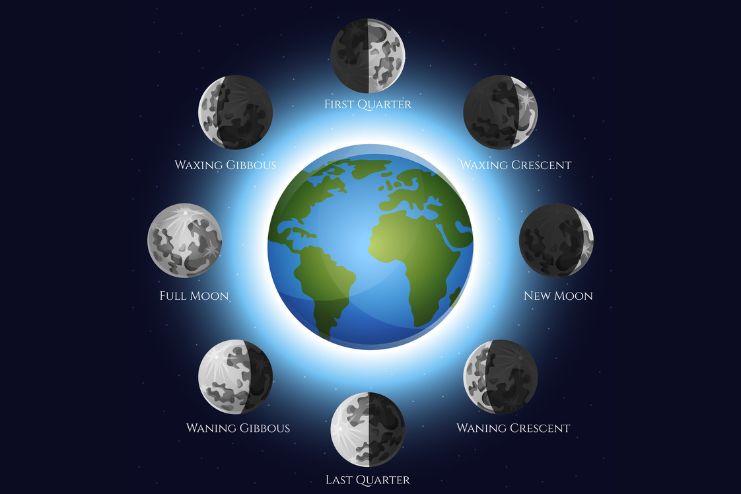
Different moon phases are associated with various emotional and energetic states:
New Moon: Often considered a fresh start, new moons are ideal for beginning new projects, learning skills, or making important decisions. During this phase, the sun and moon align on the same side of Earth, creating a sense of calm and motivation. The darkness enhances our inner perception and opens us to new possibilities.
Waxing Crescent (approximately 7 days): Following the new moon, this phase brings heightened senses and helps us build momentum on projects we’ve started. It’s an excellent time for planning and working toward future goals, with increased motivation and excitement.
First Quarter Moon: At this phase, you may encounter obstacles or frustration if your goals haven’t yet materialized. This activation period requires self-control and responsibility. It’s a time to assess progress and refine objectives.
Waxing Gibbous (approximately 5 days): This phase enhances clarity, insight, and deeper understanding. It’s ideal for using intuition and introspection to plan and execute projects. The waxing gibbous can slow progress, requiring flexibility and thoughtful adjustments to goals.
Full Moon: When the sun and moon sit on opposite sides of Earth, their opposing forces create tension and stress. Emotions run high during this period, potentially making you feel nervous, overwhelmed, angry, or irritable. Sleep patterns may be disrupted as emotions and ego peak. The key is releasing resentment or fear while cultivating patience and calm.
Waning Gibbous (approximately 5 days): This phase represents self-reflection and renewal. You’ll gain self-awareness and experience personal growth. It’s a time to channel energy toward improvement and progress by breaking negative habits and thought patterns.
Third Quarter Moon: As the lunar cycle nears its end, this phase illuminates a half-circle moon. It’s time to realize your aspirations through intention and introspection. You’ll naturally release destructive emotions to eliminate negativity from your life.
Waning Crescent (7 days): The final phase of the lunar cycle brings balance and peace as the sun and moon realign. This is a time for contemplation and integration of lessons learned throughout the cycle. The moon completes its journey and prepares to restore itself.
Read More: 8 Sleep Essentials for Heart Health: Products to Improve Your Sleep Quality
Who’s Most Sensitive to Moon Phases?
Not everyone experiences moon phase effects equally. Some people may be more sensitive than others, with symptoms typically beginning about three days before the full moon, peaking on the day of the full moon, and continuing for roughly three days afterward.
Common symptoms during full moons include:
- Dehydration and bloating
- Sinus pressure
- Feeling “foggy” or unclear mentally
- Increased disorganization or clumsiness
- Skin hypersensitivity (even soft fabrics may feel scratchy or uncomfortable)
- Low-grade fever
- Upset or sensitive stomach
- Fatigue alternating with insomnia
- Need for deeper rest
Those who may be more sensitive to lunar cycles include:
- Highly sensitive people (HSPs)
- Individuals with existing sleep disorders or mood conditions
- Children and pets (based on anecdotal reports)
- Women with irregular menstrual cycles or PMS
- People working night shifts or with disrupted circadian rhythms
The full moon has traditionally symbolized a time for letting go and release. Since humans are approximately 60% water, some believe the moon’s gravitational pull affects us similarly to how it influences ocean tides, though this theory lacks scientific confirmation.
Read More: How a Simple Mouth Tape Hack Can Improve Sleep and Reduce Snoring
The Moon and Women’s Cycles: Is There a Link?
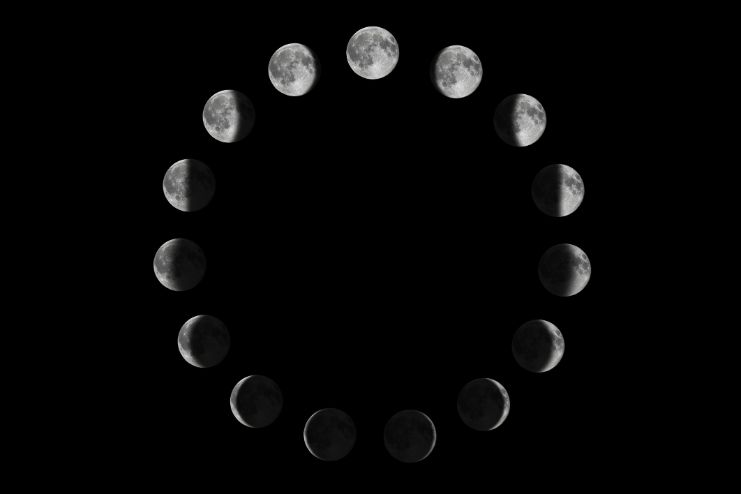
The connection between menstrual cycles (averaging 28 days) and lunar cycles (29.5 days) has fascinated researchers for decades. Some studies suggest a correlation, while others find no connection.
A recent study tracking women’s cycles over extended periods found that five of six women who kept records for 19-32 years showed periods that occasionally synchronized with lunar phases. The researchers found significant correlations between menstrual onset and full or new moons for some participants.
However, other studies, including one analyzing over 7.5 million menstrual cycles, found no connection between menstruation and lunar phases. Chronobiologist Anna Wirz-Justice notes that most studies fail to consider women’s ages or cycle lengths, and that a woman’s cycle can change significantly over decades, making patterns difficult to detect.
Two studies from the 1980s suggested that women with cycles lasting approximately 29.5 days showed menstrual onset dates that aligned with lunar phases, but the scientific consensus remains divided.
Anna Wirz-Justice, a chronobiologist at the Psychiatric Hospital of the University of Basel and who was not part of the study, remarked that most of the studies did not consider the age of the women or their cycle lengths and that a mass analysis of several women’s menstrual cycles over a specific timeframe could overlook patterns since a woman’s cycle can change significantly each decade.
What Experts Say: Moon, Sleep & Mood
Despite Earth experiencing 12-13 full moons annually, along with occasional lunar eclipses and blue moons, scientific evidence for lunar effects on human behavior remains mixed.
Interestingly, 81% of mental health workers believe that full moons may trigger psychiatric symptoms, yet controlled studies attempting to validate this belief have found no significant influence of full moons on psychiatric symptoms.
Some researchers theorize that the moon’s effects relate to our body’s water content. The brain and heart are approximately 73% water, lungs 83%, skin 64%, muscles and kidneys 79%, and bones 31%. Advocates suggest that the moon’s gravitational pull influences the water in our bodies similarly to its effect on ocean tides, though this remains scientifically unproven.
Sleep research shows more promising results. Certain studies indicate that lunar phases may interfere with the body’s circadian rhythm—our natural internal clock. Evidence suggests that during full moons, people may experience more difficulty falling asleep, with deep sleep decreasing by up to 30% and more frequent awakenings throughout the night.
Christian Cajochen, PhD, the primary author of the study and the director of the Centre for Chronobiology at the University of Basel in Switzerland, claims that people slept 20 minutes less overall, had 30% less deep sleep, and required five more minutes to fall asleep under the full moon. These results were supported by a small retrospective study that was published in 2014 and found that participants slept for an average of 25 minutes less during full moons.
Read More: 7 Best Sleep Masks for Women’s Restful Nights
How to Track Your Sensitivity to Moon Phases
If you’re curious about whether moon phases affect your energy, mood, or sleep, consider keeping a moon phase journal or using a tracking app. Apps like Moon Calendar or MyMoonPhase can help you monitor daily lunar variations alongside your personal observations.
Track the following daily for at least two to three months:
- Energy levels (1-10 scale)
- Mood and emotional state
- Sleep quality and duration
- Menstrual cycle (if applicable)
- Any physical symptoms or sensitivities
Look for patterns that emerge during specific moon phases, such as increased anxiety during full moons or lower energy during new moons. Consistent tracking over multiple cycles helps distinguish genuine patterns from random fluctuations or placebo effects.
Tips for Better Sleep During a Full Moon
The Sleep Foundation reports that research consistently shows full moons can affect sleep quality, causing more frequent awakenings, poorer sleep quality, and longer time to fall asleep. This increased restlessness occurs whether you sleep in urban areas with artificial light or in natural outdoor settings.
To improve sleep during full moons:
Limit Screen Time: Blue light from devices can keep you alert and make it harder to fall asleep. Give yourself at least an hour of screen-free time before bed.
Use an Eye Mask: Research suggests people take up to five minutes longer to fall asleep during full moons. An eye mask effectively blocks light and signals your body that it’s time to sleep.
Practice Breathing Techniques: Relaxation techniques like the 4-7-8 breathing method can help calm your nervous system before bed.
Try a Warm, Caffeine-Free Drink: Unwind with warm milk, herbal tea, or tart cherry juice (which naturally contains melatonin). Avoid sugar-sweetened beverages and stimulants like coffee, tea, or alcohol before bedtime.
Create a Darker Environment: Use blackout curtains or shades to minimize light exposure, especially during full moon phases.
Wind Down Earlier: Counter increased alertness by beginning your bedtime routine 30-60 minutes earlier than usual.
Read More: How to “Rewire” Your Sleep Schedule in Just One Weekend
Conclusion
While the moon’s influence on mood and sleep may be subtle, many people experience it as quite real. Despite mixed scientific findings, numerous individuals report noticeable differences during specific moon phases, particularly during full moons.
The effects aren’t universal—not everyone is affected, and the moon might not influence some people at all. Individual sensitivity varies greatly, and psychological factors may play a role in how we perceive and respond to lunar cycles.
If you suspect lunar cycles affect you, try keeping a detailed journal or using an app to track your patterns. Small lifestyle adjustments—such as darkening your sleeping environment, starting wind-down routines earlier, and practicing relaxing bedtime habits—can promote better sleep and emotional balance regardless of the moon’s phase.
Whether the moon’s effects are primarily physical, psychological, or a combination of both, paying attention to your body’s rhythms and responding with appropriate self-care can help you navigate these natural cycles more smoothly.
For more information about sleep science and circadian rhythms, consult with a healthcare provider or sleep specialist. Individual experiences with lunar cycles can vary significantly, and persistent sleep or mood issues should be evaluated by qualified professionals.
References
- https://www.cell.com/current-biology/fulltext/S0960-9822(13)00754-9
- https://www.sleepfoundation.org/how-sleep-works/do-moon-phases-affect-sleep
- https://www.health.harvard.edu/staying-healthy/moonlight-may-affect-sleep-cycles
- https://www.self.com/story/full-moon-sleep
- https://www.glamourmagazine.co.uk/article/moon-cycle-meaning
- https://www.theguardian.com/lifeandstyle/2021/jan/27/lunar-cycle-has-distinct-effect-on-sleep-study-suggests
- https://spaceplace.nasa.gov/moon-phases/en/
- https://www.moonconnection.com/moon_phases.phtml
- https://science.nasa.gov/moon/moon-phases/#hds-sidebar-nav-3
- https://www.planetary.org/articles/the-phases-of-the-moon-explained
- https://pubmed.ncbi.nlm.nih.gov/25266502/
- https://www.sleepfoundation.org/how-sleep-works/do-moon-phases-affect-sleep
- https://www.pureartsgroup.co.uk/journal/moon-phases
- https://thatverynight.com/the-moon-phase-how-the-moon-affect-us/
- https://isha.sadhguru.org/en/wisdom/article/how-does-the-moon-affect-humans
- https://www.healthline.com/health/full-moon-effects#about
- https://www.science.org/doi/10.1126/sciadv.abe1358
- https://www.medicalnewstoday.com/articles/menstrual-cycles-and-lunar-cycles-is-there-a-link
- https://www.the-scientist.com/moon-cycles-and-menstrual-cycles-68429
- https://pmc.ncbi.nlm.nih.gov/articles/PMC7840136/
- https://lizdoyle.net/does-the-full-moon-affect-your-mood-or-sleep/
- https://www.saturdayeveningpost.com/2025/06/our-better-nature-do-lunar-cycles-affect-humans/
- https://patient.info/news-and-features/does-the-moon-really-affect-our-bodies-and-minds
- https://yogabygillian.com/2023/03/06/16845/
- https://wyldemoon.co.uk/the-moon/stop-full-moon-affecting-sleep/
- https://sleepopolis.com/education/how-the-moon-cycles-affect-sleep/
- https://www.theguardian.com/lifeandstyle/2021/jan/27/lunar-cycle-has-distinct-effect-on-sleep-study-suggests
In this Article