














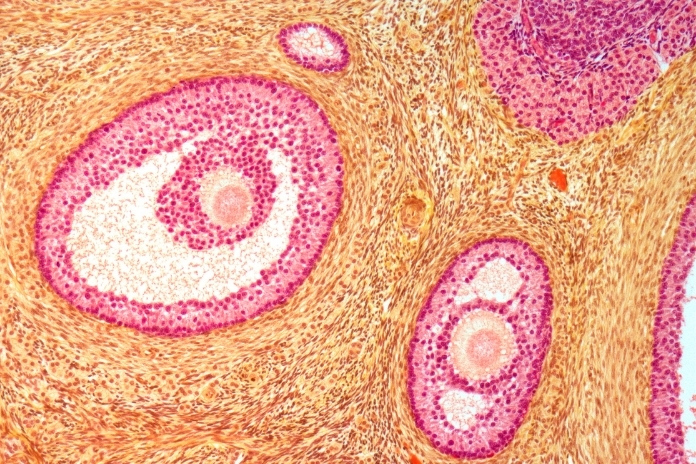
We women often hear this phrase, ‘ that our biological clock ticks with age’. By this, they mean our fertility drops. But how? The eggs in our body change with age, and so does their quality. If you’re also curious about how age affects eggs, read on!
Fertility is one of the most significant but commonly misunderstood facts about women’s health. One of the questions that often comes to mind is: how many eggs do women have at various ages?
A woman’s reproductive age span is defined by the number and quality of eggs in her ovaries, referred to as her ovarian reserve. This reserve should be understood to enable planning for a family and to make informed decisions regarding fertility preservation.
Women are born with millions of eggs, but the number tends to decrease naturally over time. Both egg quantity and egg quality are significant, and both reduce at varying rates across a woman’s life. Quantity refers to the number of eggs remaining, while quality refers to the health and chromosomal normality of the eggs, which have a direct impact on pregnancy outcomes. Fertility science provides us with insights into how this process occurs and what women can do to preserve their reproductive potential.
This article helps us understand fertility at important ages —20, 30, and 40 —by examining egg quality versus quantity, discussing how physicians quantify ovarian reserve, and addressing options for preserving fertility.
Read More: Fertility Myths Women Still Believe (and What Science Actually Says)
Egg Count at 20: Fertility at Its Peak
During your twenties, fertility is generally at its peak. Women are born with approximately 1–2 million eggs, but by puberty, they have only 300,000–400,000 remaining. Most women have 150,000–300,000 eggs by age 20, of which the majority are excellent quality. At this time, the risk of chromosomal errors is minimal, and natural conception rates are maximum.
Despite the release of a single egg in each menstrual cycle, thousands of other eggs gradually degenerate naturally every month through a process known as atresia. Since the egg quality is good, treatments for fertility such as IVF work better in younger women, and a natural pregnancy is often straightforward.
Key points about fertility at 20:
- The egg quantity is best during the reproductive lifespan.
- Chromosomal defects are uncommon, hence making conception safer.
- Egg loss is a monthly, unavoidable process, resulting in approximately 1,000 eggs lost each month.
Women who are in their twenties typically do not have to worry about preserving fertility, although egg freezing may be an option for those choosing to postpone pregnancy for professional or personal purposes.
Egg Count at 30: The Subtle Decline

At 30 years of age, the quantity of eggs starts to decline more significantly, although fertility remains largely intact. On average, there are roughly 100,000 eggs at this point. Although conception rates are still good, egg quality continues to decline slowly, resulting in a minimally increased risk of chromosomal defects and miscarriage. Women can still get pregnant naturally, but the biological clock starts to become more significant.
Tracking fertility grows more important in the thirties. An AMH test (Anti-Müllerian Hormone) provides insight into ovarian reserve, while an antral follicle count by ultrasound enables physicians to assess the number of healthy follicles. Blood tests help determine FSH and estradiol levels can also show ovarian function.
Tips for maintaining fertility in your 30s:
- Maintain a healthy weight and eat a balanced diet.
- Don’t smoke and don’t drink too much alcohol.
- Manage stress with mindfulness, exercise, or therapy.
- Freeze eggs if postponing pregnancy for personal or professional reasons.
Natural conception is still very much possible in the thirties, and assisted reproductive technology is still effective with proper planning.
Egg Count at 40: The Steep Drop

By the age of 40, there is a sudden decline in fertility. Women are left with approximately 5,000-10,000 eggs, and most of these eggs are of poor quality. All these reduce natural conception rates, raise the risk of miscarriage, and increase the chances of chromosomal abnormalities in embryos. Due to these reasons, fertility specialists suggest early preservation of fertility to women intending to conceive in their forties.
Egg quality is equally or even more crucial than the quantity of eggs. Even with an adequate number of eggs, there can be a decline in quality. IVF success also diminishes with age, and success is largely determined by the health of the eggs.
Most women who have waited until their thirties or forties to become pregnant opt for egg freezing during their twenties or early thirties, as frozen eggs are preserved in their original quality and greatly increase the chances of a successful pregnancy in later years.
Key issues at 40:
- Natural conception is feasible, but it is more uncertain.
- Greater vigilance and medical attention are usually necessary.
- Preserving fertility at an earlier age can significantly enhance chances.
Read More: How Soon Should You See a Fertility Specialist? Signs It’s Time to Get Help
Egg Quality vs. Egg Quantity
As a woman ages, both the number and quality of her eggs become important in maintaining fertility; however, by the mid-thirties, quality becomes the most crucial aspect. Younger eggs are less likely to be chromosomally abnormal, which is why pregnancies that occur in the twenties and early thirties tend to be healthier. Eggs collected in the late thirties or early forties, on the other hand, are more likely to have problems, which decreases IVF success even when multiple eggs are collected.
Whereas egg number is testable via the AMH test or antral follicle count, egg quality cannot be completely reversed. Lifestyle factors, such as diet, exercise, and stress management, can contribute to overall ovarian health, but cannot reverse the effects of age-related changes on egg quality. Fertility preservation methods like egg freezing enable women to capture high-quality eggs before they are reduced.
“As women get older, the number of eggs decreases and the quality, meaning how good the egg is, decreases as well,” Dr. Lisa Becht of HRC Orange County recently said during a video segment on age and fertility. “After 35, we definitely know that the quality of eggs quality is going down. After 37, that goes down a little bit quicker, and then definitely after 40, the quality is really on the lower side.”
How Doctors Measure Egg Reserve
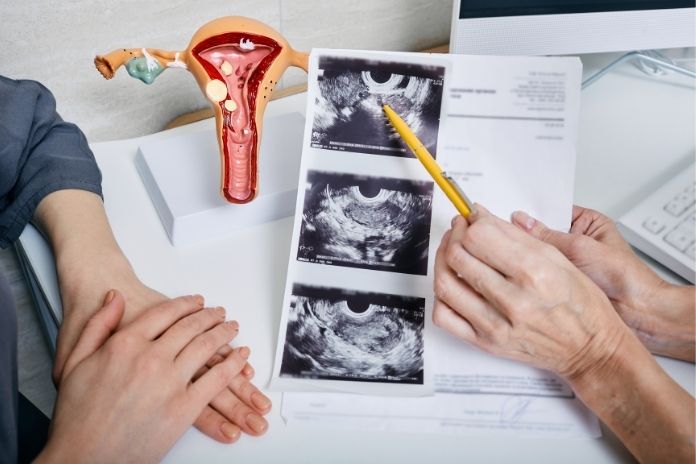
Physicians employ a variety of methods for determining a woman’s ovarian reserve. The AMH test calculates Anti-Müllerian Hormone, giving an approximation of eggs left. An antral follicle count done through ultrasound gives a direct view of healthy follicles. Supplemental blood tests for FSH and estradiol supplement these tests in gauging hormonal balance and ovarian function.
What these tests can tell you:
- Rough number of eggs left behind.
- Quality of eggs and likely reproductive age.
- Family planning and fertility treatment guidance.
Options to Preserve Fertility
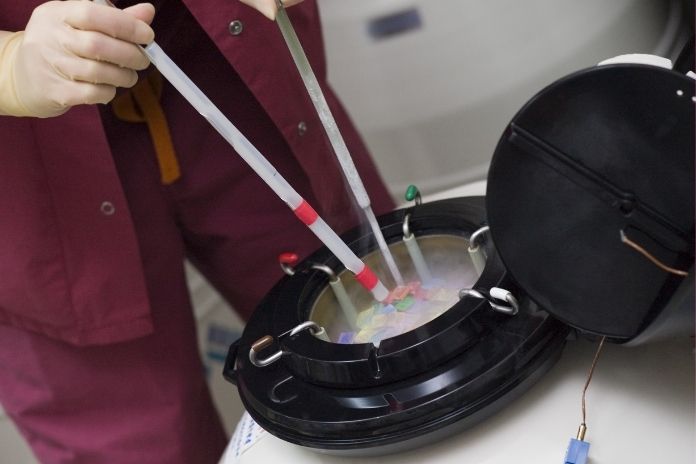
Current reproductive medicine offers a number of methods for fertility preservation. The most prevalent option is egg freezing, which allows women to freeze their eggs at a younger age when they are healthier. The frozen eggs may be used in IVF at a later time, and it has better chances of success compared to using fresh eggs at an advanced age. Egg freezing is generally advised for women in their early twenties and early thirties who desire to postpone pregnancy.
Lifestyle practices also maintain fertility. These include:
- Keep a healthy weight and well-balanced diet.
- Stay away from smoking and heavy drinking.
- Reduce stress through mindfulness, exercise, or therapy.
Consulting a gynecologist or reproductive endocrinologist early on can determine optimal preservation methods and inform decisions on when to conceive, use fertility treatments, or freeze eggs.
Read More: Fertility Nutrition: What to Eat (and Avoid) When Trying to Conceive
Frequently Asked Questions
- Do ovaries release more than one egg each month?
Usually, just one egg is discharged in a cycle, though multiple ovulations occasionally take place.
- Can supplements boost egg numbers?
No supplement can produce new eggs, although some nutrients will enhance ovarian function and egg quality.
- Can eggs be regained?
Women cannot regenerate new eggs naturally; monthly egg loss is inevitable.
- How many eggs are required for IVF success?
IVF success is largely based on egg quality and age, rather than just quantity. The retrieval of multiple eggs enhances the likelihood of producing good embryos, but it does not guarantee pregnancy.
Conclusion
Feminine fertility drops with age. During the twenties, the number and quality of eggs are highest, making it relatively easy to conceive. During the thirties, the number of eggs starts to decrease, and their quality also slowly deteriorates, implying the need to check ovarian reserve and conceive thoughtfully. During the forties, both the number and quality significantly decrease, posing more difficulty with fertility and the chances of chromosomal defects.
Although natural aging is unavoidable, being aware of the number of eggs by age, determining ovarian reserve through measurements such as AMH, and discussing fertility preservation methods like egg freezing can help women make informed decisions.
Book an appointment with your gynecologist or fertility doctor to understand and assess your fertility and discuss the best choices for your future family planning.
In this Article