














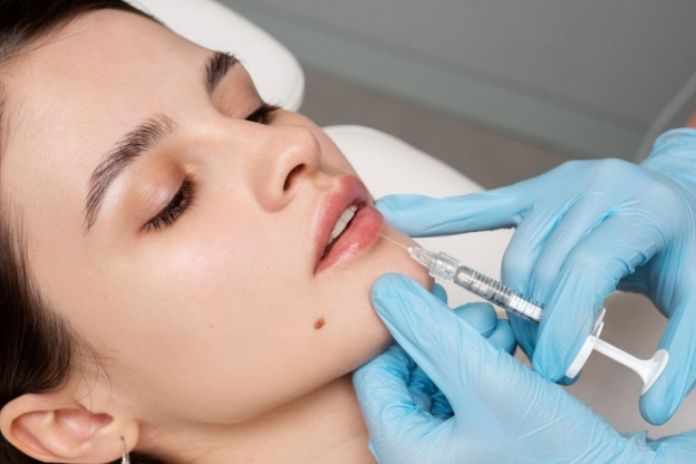
People usually ask how long lip filler lasts as if it has a fixed expiry date. Six months? One year? Until it suddenly disappears?
But lip fillers don’t behave like a product that has an expiry date. They fade unevenly, interact with your natural tissue, and can alter how your lips behave even after the gel has dissolved. That’s why two people can get the same filler, the same amount, from the same clinic, and still have completely different results at six months.
This article is not about marketing timelines or “top-up schedules.” It explains what actually happens inside the lips over time, why fillers don’t fade linearly, and how repeated treatments quietly change longevity in ways most clinics don’t explain properly.
What Are Lip Fillers Made Of?
Most modern lip fillers are made from hyaluronic acid (HA), a substance already present in your skin and connective tissue. “Generally speaking, dermal fillers fall into two main categories: hyaluronic acid filler, which is most commonly used for lip injections, and biostimulators,” explains New York City–based board-certified dermatologist Dr. Macrene Alexiades.
In fillers, HA is modified and cross-linked so it stays in place longer instead of breaking down immediately.
What matters is not just that it’s hyaluronic acid, but:
- How tightly it is cross-linked
- How soft or elastic the gel is
- How it binds water once injected
- How it integrates with the lip tissue rather than sitting as a lump
HA fillers are considered temporary and reversible for two main reasons. First, the body recognizes hyaluronic acid as a naturally occurring substance. Because HA already exists in the skin and connective tissues, enzymes called hyaluronidases gradually break it down over time, causing the filler to slowly dissolve.
Lip fillers are designed to be soft, flexible, and mobile because lips move constantly. That softness is also the reason they don’t last as long as fillers placed in the cheeks or jawline.
On Average, How Long Does Lip Filler Last?
If we remove marketing language and look at real-world outcomes:
- Most people see visible lip filler effects for 6 to 9 months
- Some retain subtle volume or shape up to 12 months
- Very few people keep noticeable fullness beyond a year from a single session
But “lasting” doesn’t mean “looking the same.”
What actually fades first is projection and sharp definition, not volume. Lips may still feel soft and hydrated even after the visible plump look reduces.
Lip Filler Timeline: What to Expect Over Time
1. First 1–2 Weeks
This phase is often misunderstood.
- Swelling, firmness, and unevenness are normal
- Lips may feel heavier than expected
- The shape can look exaggerated or stiff initially
Important point: What you see in the first week is not your final result. About 20–30% of early fullness is swelling, not filler.
By the end of two weeks, most swelling has subsided, the filler has integrated with the surrounding tissue, and the true baseline result becomes apparent. This is the point from which longevity should be judged, not day one.
2. 1–3 Months
This is the stable phase. Lips look natural but enhanced. Movement feels normal. Definition and hydration are at their best. The filler is still fully intact, but micro-breakdown has already started at a molecular level. You won’t see it yet.
During this phase, most people emotionally adapt to their new lips, which can later create the illusion that the filler “disappeared suddenly,” when in reality it’s the perception that has changed—not the filler itself.
3. 3–6 Months
This is where real fading begins. Edges soften. Cupid’s bow loses sharpness. Projection reduces before the overall volume does. Interestingly, many people still feel their lips are fuller even when photos show otherwise. That’s because HA continues holding water even as the structure degrades.
Clinics often recommend top-ups here, but medically, this is optional unless shape correction is needed.
4. 6–12 Months
By this stage, most structural filler has broken down. Some residual hydration or softness may remain. Lips may look similar to pre-filler, but not identical.
Why not identical?
Because filler doesn’t just add volume, it stretches tissue slightly and alters collagen behavior temporarily. Even when filler dissolves, the tissue doesn’t always recover fully.
Factors That Affect How Long Lip Filler Lasts
1. Type of Filler Used
Softer fillers dissolve faster. Firmer fillers last longer but may feel unnatural in the lips.
Fillers designed specifically for lips prioritize movement, not longevity, so shorter duration is intentional, not a flaw.
2. Amount of Filler Injected
More filler doesn’t always mean longer results. Larger volumes can trigger faster breakdown. Overfilling increases movement stress. The body may metabolize excess HA more quickly.
Small, well-placed amounts often last more predictably than aggressive volume.
3. Individual Metabolism
Some bodies break down fillers faster.
- High physical activity
- Faster enzymatic activity
- Younger tissue with higher turnover
These factors can shorten lip filler duration even with high-quality products.
4. Lip Movement and Facial Anatomy
People who talk a lot, smile widely, or have very expressive lips often see faster fading.
Constant movement accelerates filler metabolism compared to areas like the cheeks or jawline. This is why lip fillers never last as long as deeper facial fillers.
Do Lip Fillers Last Longer Over Time?
This is one of the most misunderstood topics. Fillers do not “train” your lips to hold product longer. However, repeated treatments can:
- Improve tissue quality temporarily
- Stretch lip skin slightly
- Create subtle structural memory
This is why second or third treatments may appear to last longer, but it’s not true permanence. Once treatments stop, lips gradually return close to baseline.
Read More: Pediatric Anemia Solutions: 5 Child-Friendly Supplements for Iron Deficiency
How Often Do People Get Lip Fillers Touched Up?
In real practice:
- Conservative users: once every 9–12 months
- Moderate users: every 6–9 months
- High-volume users: every 4–6 months
Frequent top-ups without a full breakdown increase the risk of filler migration and texture changes.
Read More: Healthy Hair, Happy You: Top 8 Hair Growth Supplements for Stronger Locks
Signs Your Lip Filler Is Wearing Off
- Loss of border definition
- Lipstick is bleeding more than before
- Lips feel less “supported” when pressed
- Smile looks flatter from the side
Dryness alone is not a sign; hydration can fluctuate for many reasons.
Can You Make Lip Fillers Last Longer?
You cannot stop natural breakdown, but you can avoid speeding it up.
Avoid excessive lip massage. Delay aggressive heat treatments near the mouth. Don’t overcorrect too frequently. Choose technique over volume. Hydration and skincare help appearance, not filler survival.
When Lip Fillers May Wear Off Faster
- First-time filler users
- Very active lifestyles
- High stress or inflammatory states
- Poor injection technique
- Overfilled lips under constant movement pressure
This is why comparing your results to someone else’s is misleading.
Read More: Natural Oils vs. Lab-Made Serums: Which Is Better for Skin Health?
Are Permanent Lip Fillers a Thing?
Technically, yes. Practically, they are avoided. Permanent fillers come with high complication risk, difficult reversibility, and long-term texture issues. Modern aesthetic medicine prefers temporary, adjustable results, especially in a dynamic area like lips.
Read More: A Saviour’s Guide To Fatty Liver Diet – One Can Do to Overcome!!
Safety Considerations When Planning Repeat Fillers
Repeated lip fillers require more judgment than first-time injections. Concerns include filler migration, tissue thinning over time, and masking early complications due to familiarity. “Clocking in at a minor danger level with a relatively common frequency are bruising, unevenness, and the pesky, but correctible, filler bumps,” says double board-certified plastic surgeon Dr. Melissa Doft.
These issues are usually temporary, but repeated treatments can make them easier to overlook, especially when patients become accustomed to post-injection changes.
Spacing treatments properly and allowing partial breakdown reduces long-term risks significantly.
Read More: Top 10 Recovery Products Every Athlete and Fitness Enthusiast Should Own
Final Thoughts
Lip fillers don’t “last” in a clean, predictable way; they fade, integrate, and change how lips behave temporarily. Longevity depends less on brand names and more on anatomy, movement, and restraint.
Understanding this helps set realistic expectations and prevents the cycle of overfilling driven by fear of fading.
- How long your Lip filler will last depends on your unique biology, and is not permanent
- Most visible results last 6–9 months, not forever
- Perception of fading is often psychological, not structural
- Repeat fillers may appear to last longer, but aren’t permanent
- Evidence on long-term tissue effects of repeated lip filler use is limited, especially beyond 5–10 years
FAQs
- Can lip filler disappear suddenly?
No. It fades gradually, but perception changes quickly once the definition softens.
- Does drinking water make filler last longer?
It improves appearance, not actual filler lifespan.
- Can filler last only 3 months?
Yes, especially in first-time users or very active individuals.
- Is it safe to top up before the filler fully dissolves?
It can be, but frequent stacking increases migration risk.
- Do lips stretch permanently from fillers?
Usually, no, but repeated overfilling can cause long-term changes.
References
- Cleveland Clinic. (2021, December 1). Lip Fillers: What to Expect, Types, Benefits & Side Effects. Cleveland Clinic.
- Cleveland Clinic. (2024, December 4). Lip Filler Aftercare: Do’s and Don’ts To Help You Heal. Cleveland Clinic.
- Czumbel, L. M., Farkasdi, S., Gede, N., Mikó, A., Csupor, D., Lukács, A., Gaál, V., Kiss, S., Hegyi, P., & Varga, G. (2021). Hyaluronic Acid Is an Effective Dermal Filler for Lip Augmentation: A Meta-Analysis. Frontiers in Surgery, 8, 681028.
In this Article