














Tattoos Have No Age Limit
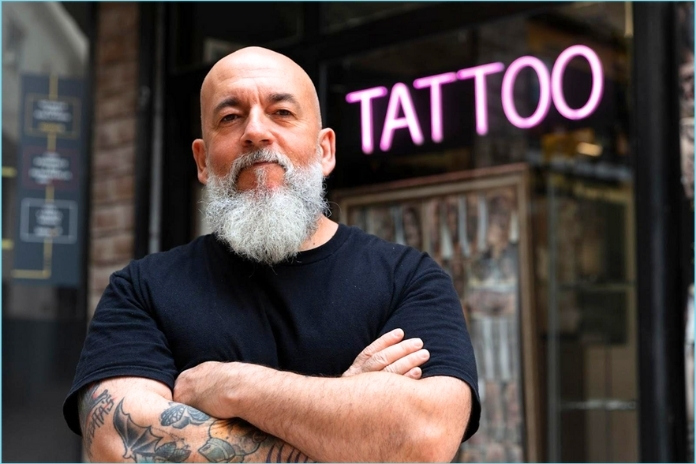
Whoever said tattoos are only for people in their twenties trying to rebel a little? These days, more and more people in their 40s, 50s, 60s – even beyond – are heading into tattoo shops. Not to make a big statement, but just to create something personal, something that lasts. Getting a tattoo later in life isn’t a midlife crisis – honestly, it’s more like a midlife celebration.
Many older adults say they finally feel free to do what they want without overthinking about other people’s judgment. So, if you’re asking yourself – “Am I too old for a tattoo?” – short answer: no. Age is not a medical barrier. What changes is how your skin behaves and heals, and that’s something you can easily manage with awareness and tattoo care on aged skin.
This guide dives into everything – from how your skin changes with age to how to choose the right artist, design, and aftercare routine so your tattoo stays stunning for years to come.
How Aging Affects Your Skin and Tattoo Experience
Let’s be honest: skin after 40 is not the same canvas it used to be. Collagen – the thing that keeps skin plump – starts reducing. Elasticity goes too. That’s where skin elasticity and tattoos become something important to think about.
According to dermatologist Dr. Matthew J. Mahlberg, tattoo ink goes into the dermis – that’s the middle layer of your skin. When you’re younger, that layer is strong and packed with collagen. But as you get older, it’s just not as firm. That can change how your tattoo settles or holds up long-term.
That doesn’t mean you can’t still get a great-looking tattoo. You totally can. You just need someone who knows what they’re doing with older skin – like, an artist who actually gets how it works.
Older skin tends to be a bit thinner, might bruise or bleed more, and doesn’t bounce back as quickly. That’s why a skilled artist will make small adjustments – like going lighter with the needle or choosing a bolder style to avoid blowouts (that’s when the ink spreads a bit under the skin).
Circulation also slows down with age, which means slower tattoo healing on older skin. But with proper aftercare and patience, it heals just fine. Your skin just likes to take its own sweet time – like it’s not in a hurry anymore.
Read More: Best Red & Near-Infrared Therapy Panels for Skin & Healing
Health and Tattoo Safety Considerations Over 60, Before Getting a Tattoo
Before you book that appointment, it’s important to think beyond just the design.
1. Check for Underlying Health Conditions
If you have diabetes, heart conditions, or immunity issues, don’t skip the “doctor discussion”. Tattoos on older adults also involve small wounds, so your healing power matters. People with blood sugar imbalances or slow wound healing need extra tattoo care on aged skin – not avoidance, just awareness.
2. Review Your Medications
Blood thinners, steroids, or immune-related medicines can make you bleed more or heal slower. Even something simple like aspirin can make a difference. But no! Never try to adjust or stop medicines on your own – just inform your doctor first.
In particular, if you’re taking immunosuppressants, extra caution is key. Dr. Matthew J. Mahlberg explains that older adults on these medications may be at a higher risk for infection during the tattooing process, since their immune response is reduced.
But, it’s not about saying no to tattoos – it’s about planning better. Inform your artist if you’re on long-term medication. A good one will appreciate the honesty.
3. Watch for Skin Conditions
Older adults often have more moles, sunspots, or scars – all part of living life fully. But don’t tattoo over them. A professional artist will avoid suspicious moles or damaged areas.
If you have eczema, psoriasis, or generally very dry skin, check with a dermatologist first. Tattooing on irritated skin is never a good idea.
Read More: 7 Morning Habits That Could Be Damaging Your Skin Without Realizing It
Choosing the Right Tattoo and Placement
Here’s the truth – not every design suits every skin type. Fine-line tattoos, which look delicate on younger skin, might fade or blur faster on mature skin. Bold, clean designs usually age better and hold their shape longer.
Best areas for tattoos for older adults:
- Upper arms and shoulders (firm skin, less movement)
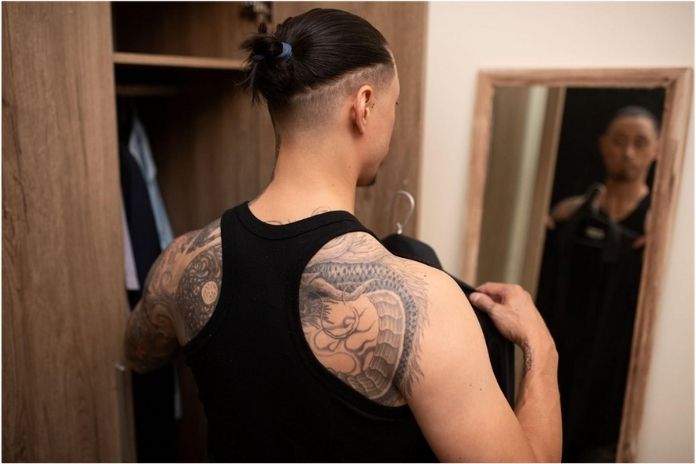
- Calves and thighs (smooth surface, less UV exposure)

Areas to avoid:
- Abdomen (stretches easily)
- Inner forearms (thin skin)
- Chest or neck (skin thins and wrinkles faster)
One smart tip: tattoos that are closer to your heart (like, literally) tend to heal up a bit faster – better blood flow helps the recovery.
Also, when you’re choosing a design, try to picture how it’ll look on your body as it changes over time. Aging skin is not a flaw – it adds texture, depth, and story to the art. A tattoo on older skin carries history; it’s art over experience.
Finding an Experienced Tattoo Artist
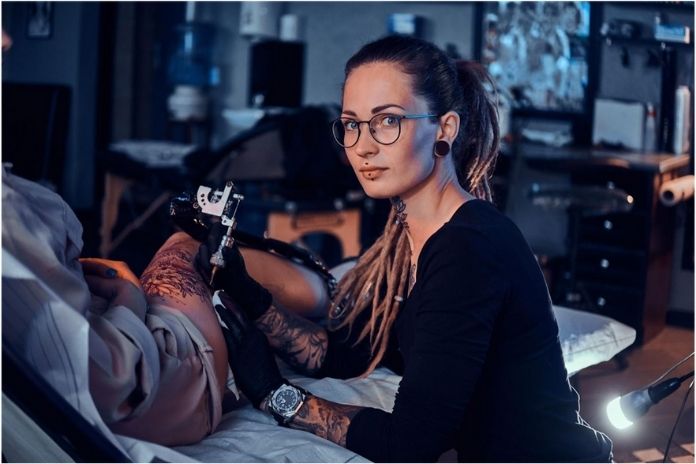
This part matters more than the design itself. Not every tattoo artist is comfortable with older skin – and that’s okay. You need to find someone who is.
Look for an artist who has worked with clients over 40. Ask for healed photos, not just fresh ones. Mature skin heals differently, and a healed tattoo tells you everything about the artist’s technique.
It’s also a good idea to check reviews on Google, some social media platforms, or even other search engines.
A good artist will:
- Use single-use, sterilized needles
- Adjust machine settings for gentler penetration
- Take breaks if your skin feels sore
- Give you specific aftercare for mature skin
- Keep his/her workspace clean and well-sanitized
- Take steps to prevent cross-contamination among clients
- Give the same results – just as good in person as it does in the photos they post online?
Never hesitate to ask questions – always ask about hygiene, ink type, or aftercare. By doing so – you’re not being difficult, you’re being smart!
Read More: Collagen vs. Gelatin – Which One Should You Take for Skin & Joints?
Tattoo Aftercare for Older Adults
Healing time for a tattoo after 50 can stretch up to 4 weeks or even a little more. That’s perfectly normal.
Here’s what helps best for aging skin tattoo care:
- Keep it clean: Use gentle and mild antibacterial soap, pat dry (never scrub).
- Moisturize smartly: Use a fragrance-free ointment or a tattoo-specific balm. Never suffocate it with heavy creams.
- Avoid soaking: No pools, no long baths – showers only.
- Stay away from tight clothes: Friction delays tattoo healing on older skin.
- Watch for signs of infection: Persistent redness, oozing, or fever – don’t “wait and see,” just call your doctor.
Pro tip: Drink more water and eat protein-rich food. Skin heals from the inside. Water and good nutrition do more than fancy creams.
Read More: 10 Best Plant-Based Foods for Glowing Skin, Backed by Science
How Tattoos Age Over Time
Here’s the honest truth – tattoos for older adults also fade, no matter your age. But mature skin adds another factor: slower cell turnover and less firmness. That means ink can look softer over the years.
Dermatologist, Dr Nicolas Kluger explains that tattoo fading on mature skin can happen because pigments break down from light exposure or because they are gradually moved through the body by the lymphatic system. With time, immune cells, which are called macrophages, can shift the ink, which is one reason – lines may appear less defined.
To keep your tattoo looking good:
- Use broad-spectrum sunscreen (SPF 30+) every time it’s exposed. UV rays are the enemy.
- Keep your skin moisturized. Dry skin dulls ink faster.
- Get touch-ups timely, every few years.
Remember, tattoos on older skin don’t “look bad.” They evolve – just like you. A faded tattoo is never a flaw; in fact, it’s a memory that’s aged gracefully.
Read More:The LED Face Mask Trend: Do Light Therapy Masks Actually Work for Your Skin?
The Emotional Side – Why Many People Get Tattoos Later in Life
Getting a tattoo at an older age isn’t about rebellion anymore. It’s about reflection.
Some get inked to honor someone – a lost loved one, a milestone, a survival story. Some do it because they finally can – without judgment, without permission.
Many older adults say their tattoos make them feel seen again. It’s an act of claiming your body back – saying, “I’m still here, and I decide how I express myself.”
At 20, a tattoo might be about being different. But tattoos after 50… it’s about being yourself.
Read More:Do I Need Therapy? 7 Subtle Signs You Shouldn’t Ignore
Key Takeaway
Getting tattoos is completely safe for seniors, even at 40, 50, or even 70 – it just needs a bit more care and patience.
To sum it up:
- Check your health and talk to your doctor first if you’re on any medication.
- Find an experienced artist who knows mature skin well.
- Follow aftercare like it’s skincare, not a chore.
Your skin has lived, stretched, healed, and transformed – that makes it an incredible canvas. A tattoo now, in older age, isn’t about following a trend; it’s about marking a moment that truly matters.
FAQs
Q1. How old is too old to get tattooed?
There’s no age limit. As long as your health allows and your skin can heal, even 80 isn’t “too old.”
Q2. Do tattoos look awful when you’re old and wrinkly?
Not really. They just look different. Wrinkles don’t ruin tattoos – they give them texture. A bold design can age beautifully.
Q3. Do tattoos take longer to heal as you age?
Yes, slightly. Slower circulation and skin renewal mean more time. But with proper tattoo care on aging skin, it heals well.
Q4. Can older adults get color tattoos?
Absolutely. Colors might appear softer because of skin tone changes, but a skilled artist can balance it perfectly.
Q5. Does tattoo pain increase with age?
Pain tolerance varies. Some say they feel it more; others say they handle it better because they know what real pain is.
References
- https://pmc.ncbi.nlm.nih.gov/articles/PMC8824545/
- https://www.nia.nih.gov/health/skin-care/skin-care-and-aging
- https://www.sciencedirect.com/science/article/pii/S0365059624000345
- https://onlinelibrary.wiley.com/doi/10.1111/ddg.14436
- https://my.clevelandclinic.org/health/treatments/22288-anticoagulants
- https://www.betterhealth.vic.gov.au/health/conditionsandtreatments/tattoos
- https://www.qld.gov.au/health/condition/skin-health/body-piercing-and-tattoos/tattooing-what-i-need-to-know-what-should
- https://city.milwaukee.gov/ImageLibrary/Groups/healthAuthors/CEH/PDFs/Tattoo_aftercare.pdf
- https://pmc.ncbi.nlm.nih.gov/articles/PMC9235347/
In this Article