











Choline usually enters nutrition conversations in an indolent way. Someone asks about memory, liver health, or pregnancy nutrition. Someone else replies, “Eat eggs.” End of discussion.
That answer works only if everyone eats eggs regularly, digests them well, and is comfortable building a nutrient strategy around one food. In reality, many people quietly reduce egg intake for preference, digestion, cost, routine, or simple boredom. And when egg intake is reduced, choline often disappears with it.
The more uncomfortable truth is this: most people don’t know where their choline is coming from. It’s not listed on food labels. Doctors rarely test for it. Diet plans rarely mention it unless pregnancy is involved.
So this is not an article about “egg substitutes.” It’s about where choline actually lives in the diet once eggs are no longer carrying the load.
What Is Choline and Why Your Body Needs It
Choline occupies an awkward position in nutrition science. It’s essential but not treated like one. Your body produces some amount, but never enough. It’s not stored efficiently. And deficiency doesn’t present with obvious symptoms.
Most people associate choline with the brain. That’s incomplete. Choline is not just a cognitive nutrient. “Choline is a methyl donor, meaning it’s required to be involved in various physiological processes including metabolism, lipid transport, methylation, and neurotransmitter synthesis,” says Kristin Hantzos, RDN.
Choline is also a part of:
- Cell membranes (not metaphorically, but structurally)
- Fat transport out of the liver
Without adequate choline, fat can accumulate inside liver cells even if calorie intake is normal. This is one reason why some people develop fatty liver changes without alcohol, obesity, or diabetes. It’s not the only reason, but it’s an ignored one.
The problem is not that choline is rare. The problem is that modern diets distribute it poorly.
Why Some People Need Choline Sources Other Than Eggs
The assumption that eggs are universal is outdated. Some people limit eggs because:
- They feel heavy after eating them
- They’re trying to control LDL cholesterol
- They don’t eat them daily, only occasionally
- They follow vegetarian or semi-vegetarian patterns
- They simply don’t enjoy them enough to rely on them
There’s also a quieter issue: people overestimate how much choline eggs actually provide in their real diet. One egg a few times a week doesn’t cover much ground.
When eggs fade from the plate, nothing automatically replaces their choline contribution. That’s where gaps form.
Foods High in Choline Other Than Eggs
This is where most articles turn into a choline foods list. Lists are easy. Understanding how these choline foods without eggs actually function in a diet is harder.
1. Organ Meats (Especially Beef and Chicken Liver)
Liver is not glamorous. That’s its biggest problem.
From a choline perspective, liver is efficient, dense, and direct. Small amounts deliver what large portions of other foods struggle to provide. This density is well recognized by clinicians who work with nutrient repletion.
“Liver is one of the highest sources of many nutrients, including choline. But it’s just not a common food these days,” notes registered dietitian Julia Zumpano. “It’s worth considering adding beef or chicken liver to your plate.”
The reason the liver works is not magic; it’s physiology. Liver tissue contains high phosphatidylcholine (phospholipid) content because it needs it to function. The limitation is frequency. Most people won’t eat liver often. That doesn’t make it useless; it makes it strategic.
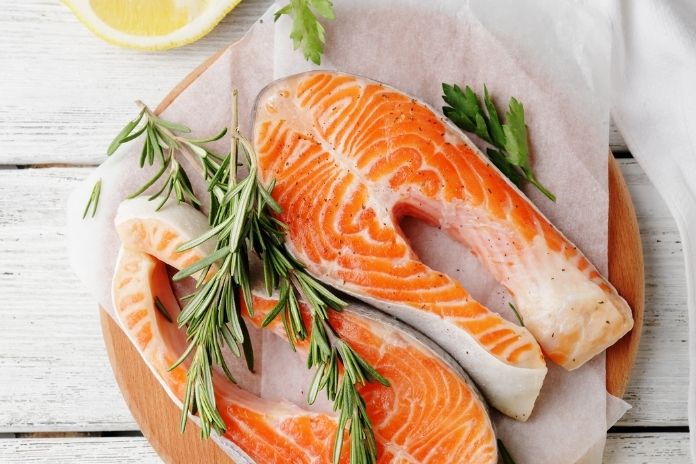
2. Fish and Seafood
Fish provides choline in a way that feels quieter but more sustainable.
Salmon, cod, tuna, and shrimp don’t dominate the choline conversation, but they show up consistently in meals. That consistency matters more than peak numbers.
There’s also a metabolic advantage here: omega-3 fats improve liver fat handling, which indirectly improves how choline does its work. This interaction rarely gets discussed, but it matters.
3. Poultry and Lean Meats
Chicken doesn’t advertise itself as a choline source. It doesn’t need to.
When eaten regularly, poultry contributes meaningful amounts over time. Not enough alone, but enough to prevent complete dependency on eggs.
This is how most nutrients actually work in real diets: accumulation, not spikes.
4. Dairy Products
Dairy is rarely credited for choline because it lacks an overt cognitive association.
Milk, curd, tofu, and cheese contribute modest but steady amounts. For people who consume dairy daily, this becomes a background supply, unnoticed but relevant.
Fermentation does not destroy choline. Overprocessing does.
5. Cruciferous Vegetables
Broccoli and cauliflower don’t compete with animal foods gram for gram. That’s not their role.
Their relevance lies in supporting liver pathways that rely on choline. Think of them as efficiency enhancers, not primary suppliers.
This distinction is important. Vegetables often support nutrients indirectly rather than replacing them.
6. Legumes and Soy Foods
This is where vegetarian diets either succeed or quietly fail.
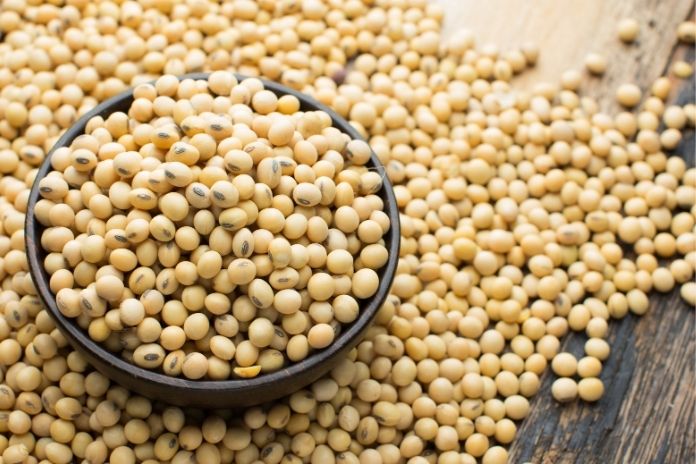
Soybeans, tofu, and tempeh contain usable forms of choline. Other legumes contribute smaller amounts but add up across meals.
Vegetarian diets that exclude soy often struggle to get enough choline without realizing it. This is not ideology; it’s chemistry.
7. Nuts and Seeds
Nuts and seeds are not overstated sources. They’re habitual ones.
Peanuts, sunflower seeds, and flaxseeds don’t protect against a deficient diet, but they prevent small gaps from becoming large ones.
They matter because people eat them without thinking.
8. Whole Grains
Refining grains strips away choline quietly.
Whole grains like quinoa, oats, brown rice, and wheat germ retain modest amounts of fiber. Again, not overwhelming, but contributory.
When refined grains dominate, choline loss happens slowly and unnoticed.
Best Choline Sources for Vegetarians and Vegans
Vegetarians can meet choline needs with other choline-rich foods:
- Dairy
- Soy foods
- Legumes
- Whole grains
- Vegetables
Vegans have fewer options. Soy becomes non-negotiable. Without it, intake often falls short unless meals are carefully structured.
The issue lies not in plant foods themselves, but in differences in nutrient bioavailability and concentration.
How Much Choline Do You Actually Need Per Day?

Official recommendations exist, but they are conservative and incomplete.
- Adult men: ~550 mg/day
- Adult women: ~425 mg/day
- Pregnancy and lactation: higher choline intake requirements
Pregnancy and early development are one of the few areas where choline receives formal attention. “Pregnant women are also encouraged to take a prenatal vitamin supplement that contains choline to prevent neural tube defects, and it is also added to infant formulas for babies,” says Gisela Bouvier, RDN.
These recommendations were designed to prevent overt deficiency, not to optimise cognition, liver health, or long-term metabolic resilience.
Needs vary by:
- Sex hormones
- Liver health
- Physical stress
- Genetic differences in choline metabolism
This is why two people can eat similarly and respond differently.
Signs You May Not Be Getting Enough Choline

Choline deficiency doesn’t feel pronounced. It feels ambiguous.
- Mental fatigue without a clear cause
- Poor exercise recovery
- Muscle aches without overuse
- Elevated liver markers without explanation
- Fat accumulation around the abdomen despite stable weight
These are not diagnostic. They’re signals worth paying attention to.
Read More: Benefits of Oily Fish: Why You Should Eat It and How to Do It…
Can You Get Enough Choline From Food Alone?
Yes, but only if the diet is intentionally diverse. That diversity becomes harder as animal foods are removed. “If you’re a vegetarian, you have a big problem. It’s almost completely impossible to get enough choline from plant foods alone,” Dr. Taylor C. Wallace, a certified food scientist, says.
Most people do not fall short because they avoid eggs. They fall short because nothing replaces them.
Read More: How Much Choline Do You Need During Pregnancy? Benefits, Sources & Expert Recommendations
Tips to Increase Choline Intake Without Eggs
- Rotate protein sources instead of repeating the same ones
- Include soy deliberately, not accidentally
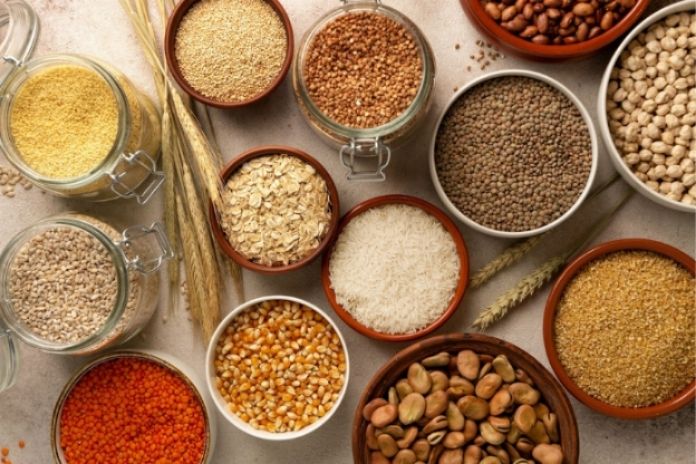
- Use whole grains as the default, not the exception
- Treat liver and fish as occasional tools, not daily rules
- Stop assuming vegetables “cover everything.”
Read More: Best Gummy Prenatal Vitamins in 2025: Tasty, Nutrient-Rich Picks for Moms-to-Be
Final Thoughts
Choline is not missing from food. It’s missing from awareness. What is rare is informed discussion around it. Choline deficiency shows up slowly, through liver changes, cognitive strain, or unmet pregnancy needs.
Eggs are convenient. They are not mandatory. But once you remove them, the diet needs structure, not assumptions. Most people don’t need extreme diets; just better distribution of nutrients across meals.
- Choline deficiency is subtle and commonly missed
- Eggs simplify intake but are not essential
- Vegetarian diets need deliberate planning for choline
- Liver and fish remain the most efficient non-egg sources of choline
- Long-term choline adequacy in egg-free diets remains under-studied outside pregnancy-focused research
FAQs
1. Can I ignore choline if my blood tests are normal?
Blood tests don’t reliably reflect choline status.
2. Is soy necessary for vegetarians?
Practically, yes, unless dairy intake is high and consistent.
3. Does cooking reduce choline?
Yes, especially prolonged high heat.
4. Is choline supplementation safe?
Prioritize vegetarian food sources of choline first. Use supplements only when dietary intake is clearly inadequate.
5. Why isn’t choline discussed more often?
Because it doesn’t align cleanly with vitamin marketing or quick diagnostics.
References
- Cleveland Clinic. (2024, April 5). Are You Eating Enough Choline-Rich Foods? Cleveland Clinic; Cleveland Clinic.
- National Institutes of Health. (2017). Office of Dietary Supplements – Choline. Nih.gov.
- Van Parys, A., Karlsson, T., Vinknes, K. J., Olsen, T., Øyen, J., Dierkes, J., Nygård, O., & Lysne, V. (2021). Food Sources Contributing to Intake of Choline and Individual Choline Forms in a Norwegian Cohort of Patients With Stable Angina Pectoris. Frontiers in Nutrition, 8
In this Article