












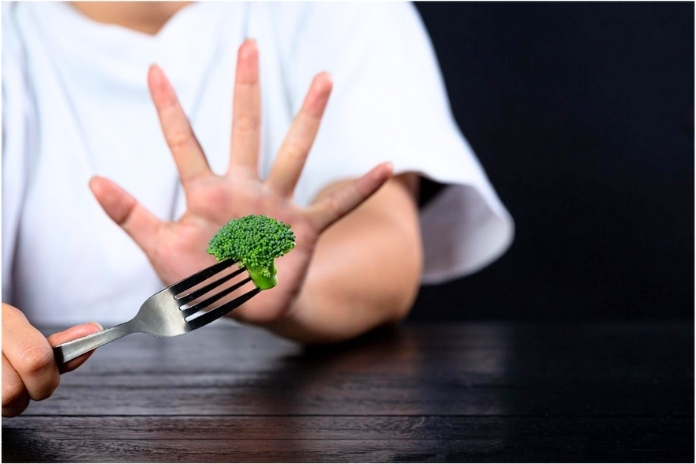
Most people assume that any reaction to food is an allergy. Bloated? Must be an allergy. Gas after milk? They casually say, “Milk and I don’t get along,” which must be a lactose allergy. Someone gets rashes after peanuts: “Same thing.”
The problem related to food allergy vs. intolerance is that not every reaction to food is an allergy, and not every intolerance is harmless. The body reacts differently depending on what’s wrong, and mixing them up often leads to either unnecessary fear or unnecessary suffering.
The severity of food allergy vs. food intolerance differs. The risks are different. Even the management approach is completely different. This topic is about the difference between food allergy and intolerance, and it isn’t complicated, but it’s commonly misunderstood because the terms sound interchangeable. But, they aren’t the same.
Let’s break it down in the simplest way possible.
Key Takeaways
- Food allergies are an immune reaction. They can be dangerous and fast.
- Food intolerance means digestive issues. Usually uncomfortable, not dangerous.
- Allergies require tests such as skin prick or IgE blood tests.
- Which reactions can be dangerous, and which just need dietary adjustments
- Intolerances often need elimination trials or enzyme tests.
- Why self-diagnosing is never helpful.
- Correct identification of the difference between food allergy and intolerance helps you respond better, not panic when unnecessary, but also not ignore a genuine allergy.
Food Allergy vs. Food Intolerance: The Core Difference
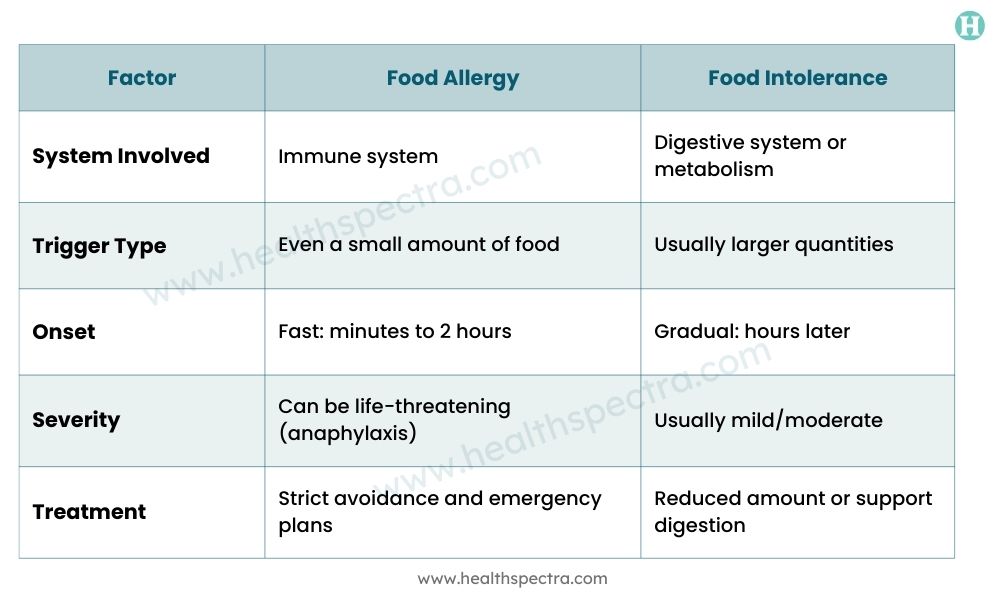
An allergy is the immune system attacking a food. An intolerance is the digestive system struggling with a food. That’s the entire difference in one sentence. One involves a defence mode. The other involves discomfort. But that one difference changes everything: symptoms, seriousness, diagnosis, even how you should deal with it.
And this isn’t a minor issue in the real world. “This disease is common, and it has a dramatic impact not only on the lives of people who have the allergy but on the lives of anyone who cares about them,” says Dr. Pamela Guerrerio, M.D., Ph.D. It’s a reminder that allergies are never just medical terms; they affect daily routines, family habits, and even social comfort.
What Happens Inside Your Body

When It’s a Food Allergy
When you have a food allergy, your immune system sees harmless food proteins as invaders. It releases antibodies (IgE) and chemicals like histamine.
Think of it like this:
- Instead of “recognising it as ordinary food,”
- Your body reacts as if it is “a harmful trigger.”
- The immune system releases IgE antibodies.
- Histamine floods the system. Then symptoms appear.
This is why allergies can show symptoms not just in the digestive system but also in the skin, respiratory system, blood pressure, heart rate, and almost anywhere else.
How Food Intolerance Works
Food intolerance is never about the immune system. It’s usually about processing difficulty.
Example:
- Not enough lactase enzyme → you have lactose intolerance
- Sensitivity to food chemicals → like caffeine or preservatives
- Irritation response → spicy foods triggering reflux or acidity
Uncomfortable? Yes. Dangerous? Usually no. Here, the body isn’t attacking anything; it’s simply struggling to break something down properly.
Common Symptoms: How to Spot the Difference

Food Allergy Symptoms
Show up fast, usually within minutes, sometimes within 2 hours:
- Hives or itching
- Skin rash
- Swelling of lips, eyelids, tongue
- Breathing difficulty
- Sudden vomiting
- Wheezing
- Dizziness
- Drop in blood pressure
- Anaphylaxis (a medical emergency)
Allergy symptoms can show even if you only ate a tiny bite or cross-contaminated food.
Food Intolerance Symptoms
- Gas, bloating
- Diarrhea
- Abdominal pain
- Nausea
- Headache in some cases
- Heartburn or discomfort after large meals
Symptoms usually depend on portion size; smaller amounts may be acceptable.
Common Examples of Each

Food Allergies
- Peanuts
- Tree nuts
- Shellfish
- Milk (casein, whey)
- Wheat/gluten
- Eggs
- Soy
Also, something Dr. Goutam Shome pointed out is really important: if you’re allergic to one thing in a group, there’s a good chance the others might harm you too. He gave a simple example: “If you have an allergy to cashews, you are most likely allergic to other tree nuts as well, so it’s important to avoid exposure to everything that would fall under that category.”
It’s one of those things people never realise until a doctor tells them. We think it’s ‘just cashew’ or ‘just walnut’, but sometimes the whole nut family can be an issue.
Read More: Foods That May Trigger Hives and What to Eat Instead
Food Intolerances
- Lactose intolerance
- Gluten sensitivity (non-celiac)
- Caffeine sensitivity
- Food additives like MSG
- FODMAP intolerance (certain carbs)
- Spicy food intolerance
Diagnosing the Issue: When to See a Doctor

Guessing based on symptoms works sometimes, but not always.
Allergy Tests
- Skin prick test
- Blood IgE test
- Oral food challenge (supervised): considered the gold standard
These allergy testing methods help confirm whether the immune system is reacting.
But doctors also caution that these tests are never perfect. They can sometimes throw up false positives, which is why, as Dr. Guerrerio explains, “it’s very important that they are interpreted within the context of the patient’s entire health picture.” In simple terms, the test result alone shouldn’t decide everything. So, your symptoms, history, and real-life reactions matter just as much.
Intolerance Tests
No single universal test. The hydrogen breath test works for lactose. Genetic testing can be helpful in some cases, such as genetic lactose intolerance. For others, the most reliable method is:
Eliminate → observe → reintroduce.
Read More: Best At-Home Food Sensitivity Test Kits to Identify Hidden Intolerances
Managing Each Condition Safely
If It’s an Allergy
General strategies:
- Avoid the trigger food completely
- Ask restaurants how food is prepared
- Check labels (sometimes allergens hide in sauces, snacks, bakery items)
- If severe, doctors may prescribe an epinephrine pen
- Inform close contacts, especially children in schools
Here, even experimenting with small amounts is risky.
If It’s an Intolerance
- Identify personal tolerance level
- Enzyme supplements are good if they help (e.g., lactase)
- Modify portion size and frequency
- Monitor pattern. Triggers are never always random
Here, the goal isn’t elimination, it’s comfort and balance.
Read More: New Study Finds Links Of Food Allergen In Red Meat As A Possible Cause…
The Overlap: Can You Have Both?
Yes, and it often creates confusion.
Example:
- Someone may have a milk protein allergy (an immune reaction to food)
- Lactose intolerance (digestive issue)
- Sometimes both: lactose intolerance vs milk allergy
This is why online lists of food allergy symptoms vs. intolerance can be misleading. Reactions vary from person to person.
Read More: Understanding and Managing Food Intolerances in Children
When to Seek Emergency Care
Get urgent help if you notice:
- Difficulty breathing
- Severe swelling
- Sudden dizziness or fainting
- Rapid heartbeat
- Multiple systems reacting at once
Dr. Guerrerio also offers a simple rule of thumb: if the reaction feels severe or affects more than one system, such as someone getting hives and vomiting, don’t wait. Use an EpiPen if you have one and call emergency services immediately.
Food intolerance almost never causes emergency symptoms, but even mild signs of a food allergy can.
- Allergies are an immune response; intolerance means a digestive response
- Even mild food allergy signs can be dangerous
- Intolerance depends on the quantity of intake
- Symptoms can overlap, but patterns help differentiate
- Proper diagnosis matters before making strict food decisions
Final Thoughts
Food reactions are increasingly discussed, but not always accurately. Many people avoid foods unnecessarily because they assume intolerance means allergy. Others ignore severe reactions, assuming that it’s “just gas”.
Both allergies and intolerances are real. Both deserve proper understanding. But they’re not the same thing, and treating them as interchangeable can lead to unnecessary restriction or missed emergencies.
If you suspect either, never just rely on internet self-diagnosis. Speak with a healthcare professional, track symptoms, and get accurate testing where needed.
And as Dr. Guerrerio points out, “it’s really only with more research into food allergy that we’re going to find better ways to diagnose, prevent, and treat the disease.” In other words, the field is still evolving, and what we understand today will only improve with time.
FAQs
1. Can food intolerance ever become an allergy?
Not typically. They involve different biological pathways. One doesn’t transform into the other.
2. Can children outgrow food allergies?
Some allergies, like milk or egg, may improve with age, but peanut or shellfish allergies often persist.
3. Does taking an antihistamine help with food intolerance?
No. Antihistamines help allergic reactions, not intolerance symptoms.
4. Can stress make Food allergy symptoms or intolerance worse?
Yes. Stress can amplify gut-related symptoms, especially in the presence of intolerances.
5. Should I avoid a specific food completely if I’m not sure what reaction I have?
If symptoms are severe or involve breathing or swelling, yes, always avoid and seek medical advice. For mild digestive symptoms, it’s important to track the pattern first.
References
- Better Health Channel. (2022). Food Allergy and Intolerance. Better Health Channel.
- Gargano, D., Appanna, R., Santonicola, A., De Bartolomeis, F., Stellato, C., Cianferoni, A., Casolaro, V., & Iovino, P. (2021). Food Allergy and Intolerance: A Narrative Review on Nutritional Concerns. Nutrients, 13(5), 1638.
- Li, J. (2024, February 28). Food allergy vs. food intolerance: What’s the difference? Mayo Clinic.
- MedlinePlus. (2019). Food Allergy. Medlineplus.gov; National Library of Medicine.
In this Article