








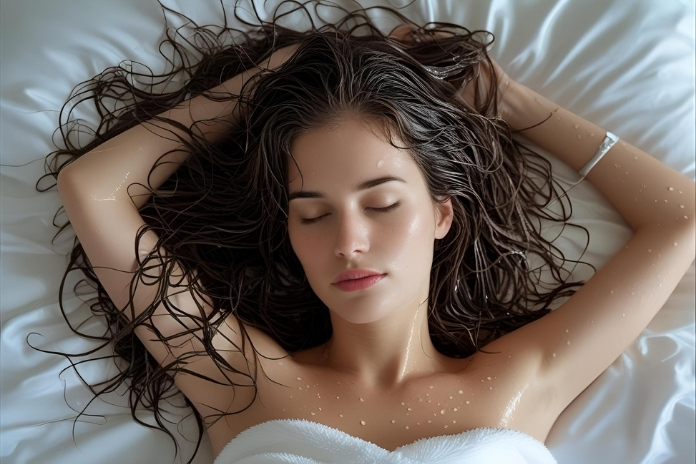
On days I sweat at the gym in late evenings, washing hair is unavoidable. What bothers me is a question: can I wash it right before my bedtime? Will sleeping on wet hair cause more harm than good? Let’s find out!
As I know, many people get home from the gym late, or perhaps prefer to have that just-washed scent before climbing into bed. Are you one of them? What if you sleep on damp hair? Is it worse for your scalp and hair, or just another myth?
Both hairstylists and dermatologists are unanimous on one point: it’s not a good idea to go to bed with wet hair. However, it is more complex than a simple “yes” or “no” answer. It depends entirely on the texture of your locks, the state of your scalp, and how you treat wet hair before bedtime. Let’s understand the science, debunk the myths, and discover what the experts recommend to keep your hair safe.
Is it bad to sleep with wet hair? What dermatologists and stylists have to say:
Hair is in its most vulnerable state when it’s wet. Water swells the shaft and lifts the cuticle, the outer protection layer, slightly. As a bonus, the hydrogen bonds between hair strands temporarily break, making them more elastic but also more susceptible to breakage.
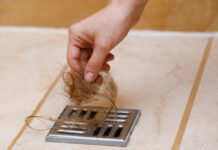
“In general, wet hair is more fragile and prone to breakage than dry hair,” says Timothy Schmidt, MD, a dermatologist at University of Utah Health. “The water weakens the hair’s protein structure, making it more elastic and easier to stretch and snap. This is why you may have noticed more hair in your brush or on your pillow after sleeping with wet hair.”
However, a night or two of sleeping with damp locks isn’t the end of the world. Its potential damage factor involves considerations such as porosity (how wet your hair gets in water), whether it’s color-treated, and generally how your hair behaves in the first place. That is, the answer isn’t a generic “yes” or “no”. But understanding what your hair is prone to.
Read More: Flaxseed Gel for Hair: Benefits, How to Make It, and How to Use It
How Sleeping With Wet Hair Can Cause Damage (Breakage, Frizz, Split Ends)
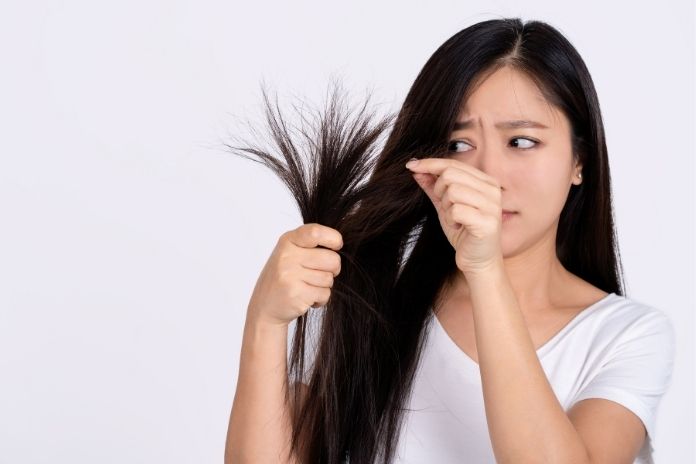
“Post-exercise, it’s advisable to ensure your hair is dry before hitting the sack,” says Alexis Stephens, DO, a dermatologist and the founder of Parkland Dermatology & Cosmetic Surgery in Coral Springs, Florida. “Wet hair is more fragile and prone to damage. Sleeping with wet hair can lead to increased friction against the pillow, causing breakage and weakening of the hair shaft. Moreover, a moist scalp can be a breeding ground for bacteria and fungus, potentially leading to scalp issues.”
One big problem with wet hair at night isn’t the moisture itself. The issue is what happens when that moisture meets movement.
- Friction and Torsion: When you move against the pillow, wet strands rub and twist. Since the cuticle is raised, that friction can lead to tiny tears that later appear as frizz, split ends, and thinning at the ends.
- Hygral Fatigue: Another lesser-known culprit is something known as Hygral fatigue. This is when hair constantly swells up with water and then shrinks as it dries. All of these cycles of swelling and shrinking over time break down the protein structure of the hair, making it brittle.
- High-Risk Groups: Fine, bleached, or porous hair is most at risk because its cuticles are already weak. The more porous your hair, the more water it will soak up, and the more damage repeated swelling will cause.
This is why some people wake up with their hair appearing the same, whereas others experience worse frizz, tangles, or more shedding when sleeping with damp hair.
Scalp Issues Caused by Sleeping With Wet Hair (Dandruff, Itch, Acne Around Hairline)
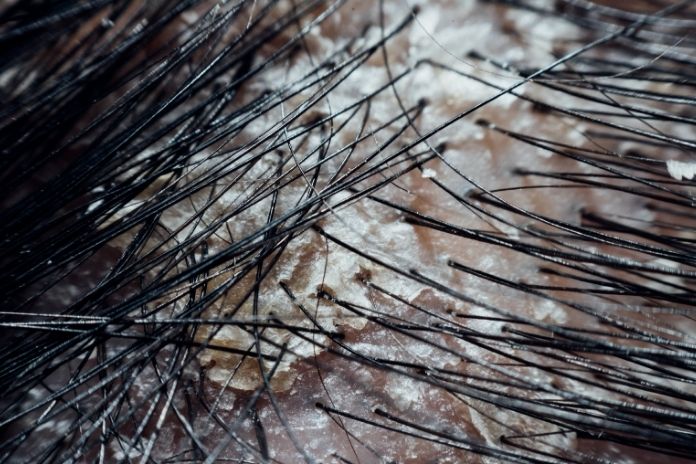
The scalp is just as critical as the strands. And, it does not like staying damp for hours.
- Flare-ups of Dandruff: The fungus Malassezia likes warm, humid places. Sleeping with damp hair basically provides that ideal breeding ground, which may increase dandruff or seborrheic dermatitis in certain individuals.
- Breakouts and Itch: Put wet hair together with heavy styling products, and the buildup can carry over onto your pillow. This combination of occlusion and moisture can clog pores, causing irritation, itch, or even acne on the neck and hairline.
- The Cold Myth: What wet hair won’t do is make you cold. Colds are brought on by viruses, not cold or dampness. You may feel chilly, but you won’t “catch” sickness just by sleeping with wet hair.
For the rest of us with healthy scalps, the occasional damp night isn’t a major issue. But for those who are sensitive to dandruff, irritation, or breakouts, the habit can cause trouble.
Read More: Top 7 Psoriasis Shampoos: Gentle Hair Care Products for Scalp Relief
Hair Types Most Vulnerable: Fine, High-Porosity, Bleached, and Curly Hair
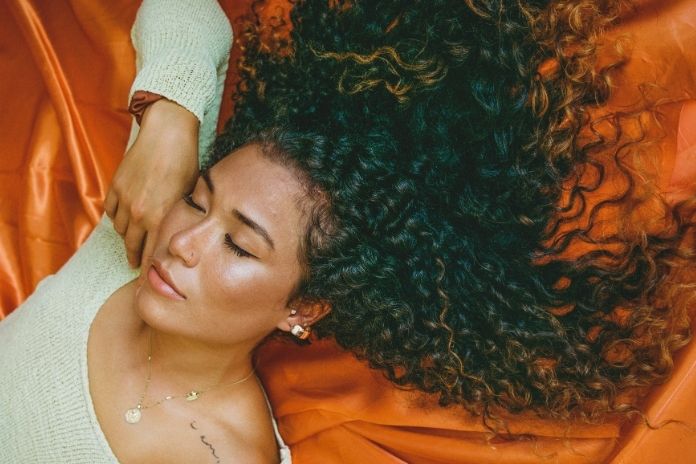
Not all hair types respond equally to sleeping with wet hair. Let’s look at it more in detail.
- Fine or Bleached Hair: These haircuts are already lacking in strength, so the additional strain of friction and swelling increases the likelihood of breakage.
- Curly or Wavy Hair: Natural texture causes the cuticle not to lie flat, so curls tend to be frizzy and tangle when pressed wet into a pillow.
- Low-Porosity Hair: This hair pushes water away, so it dries more slowly. The hair and scalp can remain moist throughout the night, extending the time spent exposed to possible scalp problems.
Understanding your hair’s makeup and weaknesses will assist you in determining if you must go the extra mile or not.
How To Sleep With Wet Hair Without Damage (Step-by-Step, Expert-Approved)
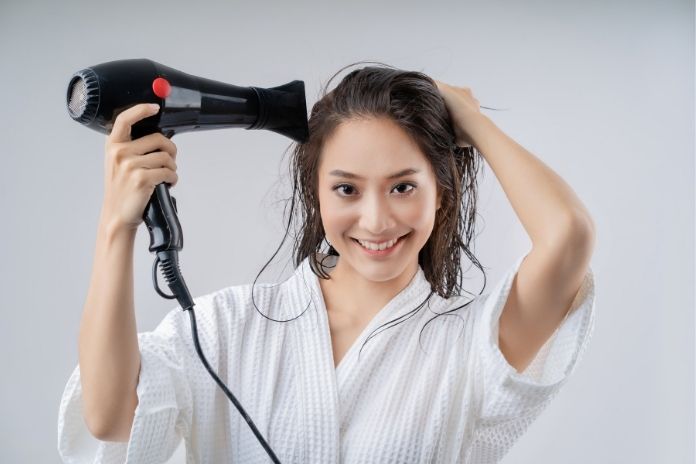
If late-night washes are unavoidable, here’s how to minimize the risk of sleeping with wet hair:
- Dry to 70–80% first. Air-dry as much as possible, or use a blow dryer on a cool setting until your hair is just slightly damp. This removes excess moisture without heat stress.
- Swap out your towel. Cotton towels rough up the cuticle. Instead, wrap your hair in a microfiber towel or even a soft cotton T-shirt to absorb water gently.
- Use the proper products. Spray or rub a lightweight leave-in conditioner or detangling spray onto strands to guard them. Stay away from heavy oils or butters near the scalp area. These can be pore-cloggers and moisture traps overnight.
- Opt for protective styles such as loose braids, two twisted relaxers, or a “pineapple” do for curls, to reduce tangling and friction and to retain shape.
- Upgrade your pillowcase to silk or satin. These significantly lower the friction than cotton. And washing your pillowcases frequently keeps scalp-irritating buildup under control.
- Avoid the tight bun as trapping hair tightly or using metal clips at night causes traction that can stress the follicles and lead to breakage.
These changes make a real difference in how hair appears and feels in the morning.
Best Products and Tools to Reduce Nighttime Hair Damage
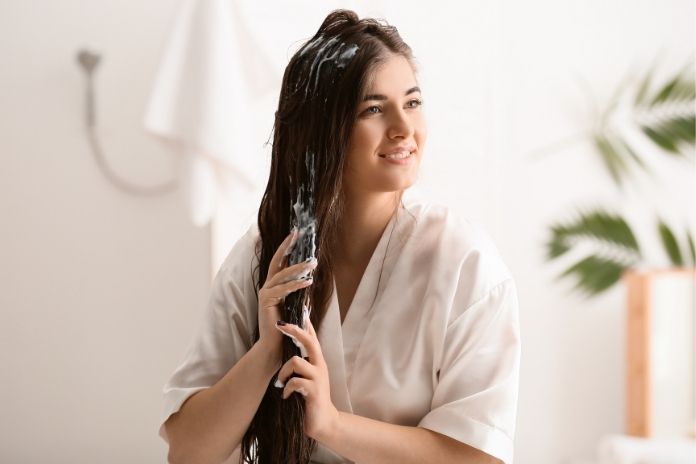 Here is a list of the best products and tools to reduce nighttime hair damage:
- For Friction Control: Silk or satin pillowcases, silk scrunchies, or a satin bonnet.
- For Strength: Bond-building treatments (like those with bis-aminopropyl diglycol dimaleate) and protein-balanced masks once or twice a month.
- For Moisture: Lightweight leave-ins or anti-frizz creams applied mid-shaft to ends. Avoid heavy oils on the scalp.
- To Dry: You can use Microfiber turbans or ionic dryers on a cool/low setting to cut down on drying time without damage.
Morning Recovery: What to Do If You Slept with Wet Hair
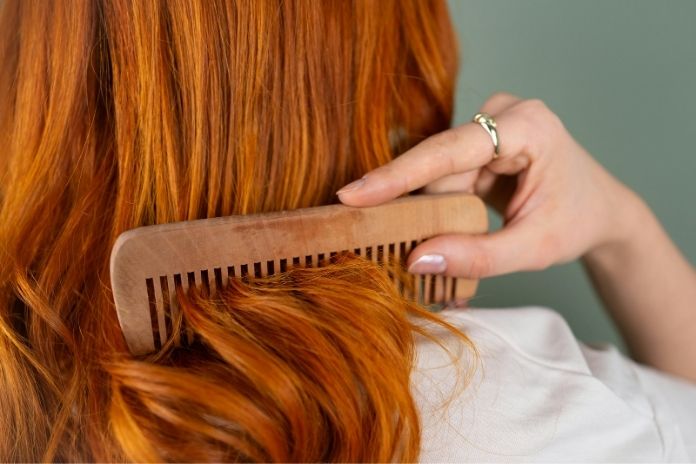
So, you slept with wet hair anyway. Here’s how to repair it:
- Detangle gently. Begin at the ends with a wide-tooth comb, applying slip with detangling spray for glide. Never pull through knots.
- Refresh your style by misting the hair lightly with water or leave-in, then reform with fingers or a diffuser on low heat.
- Seal the ends with a drop of light serum to smooth frizz and shield tips.
- Keep trims on track. To do this, do frequent dusting or trims every 8–12 weeks to prevent split ends from getting worse.
Read More: Healthy Hair, Happy You: Top 8 Hair Growth Supplements for Stronger Locks
Myths vs. Facts About Sleeping With Wet Hair
Myth: Sleeping with wet hair gives you a cold.
Fact: Viruses alone give you colds. Wet hair simply makes you cold.
Myth: Wet hair always leads to dandruff.
Fact: It doesn’t cause dandruff directly but can exacerbate it in those who are already susceptible.
Myth: Always air-drying is the healthiest.
Fact: Long-term air-drying can end up being worse than blow-drying on a cool setting to ~80% dry, because long-term swelling stresses the cuticle.
When To See a Dermatologist or Trichologist

If you experience ongoing concerns, it’s time to get help:
- Itching, scaling, or flaking that doesn’t clear up with OTC products.
- Continued breakage or thinning despite gentle handling.
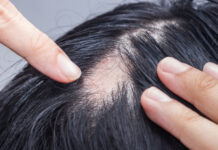
- Bald spots, abnormal shedding, or scalp infection signs.
A professional can determine if the issue is merely cosmetic or connected with an underlying scalp condition.
Bottom Line: Should You Sleep With Wet Hair?
It’s not a good idea to go to bed with wet hair. This is particularly true if you have fine, color-treated, or curly hair or are likely to have scalp issues. The combination of mechanical stress, humidity, and microbial buildup can make your hair more susceptible to frizz, breakage, and irritation.
All that being said, the occasional night won’t ruin your hair. It’s what you do to prepare your strands and scalp beforehand that counts. Dry them nearly all the way, minimize friction, apply protective products, and steer clear of tight styles. By following the proper steps, you can have your nighttime hair washes without waking up to a bad hair day!
FAQs
- Does sleeping with wet hair lead to hair loss?
No. It may enhance breakage, but it does not create actual follicle damage or permanent hair loss.
- Is it better to blow-dry at night?
Yes, if done properly. Drying your hair on a cool or low-heat setting to around 80% is less damaging than keeping it wet for hours.
- Can silk pillowcases help?
Definitely. They minimize friction, which prevents hair from being smoother and less likely to break or frizz.
References
- https://nypost.com/2025/07/05/health/expert-reveals-why-you-should-never-go-to-bed-with-wet-hair
- https://healthcare.utah.edu/healthfeed/2023/09/it-bad-sleep-wet-hair
- https://hellojupiter.com/blogs/news/how-to-sleep-with-wet-hair
- https://www.elle.com/beauty/hair/g60905803/best-protein-treatments-for-hair
- https://healthcare.utah.edu/healthfeed/2023/09/it-bad-sleep-wet-hair
- https://www.onepeloton.com/blog/is-it-bad-to-sleep-with-wet-hair?
- https://www.parklanddermatology.com/about
In this Article