











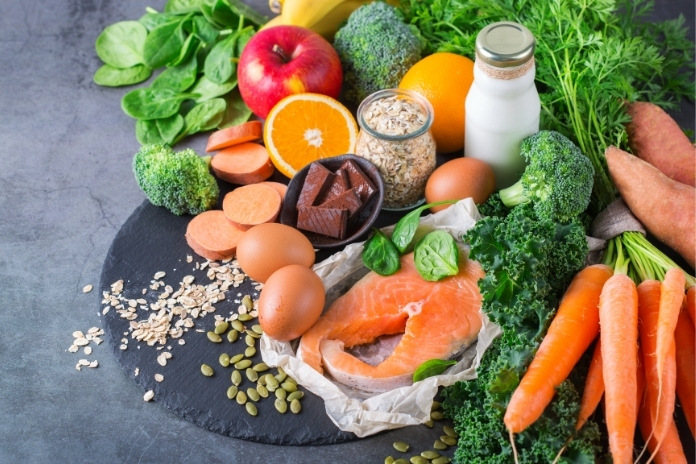

Many are curious about whether eating foods high in nutrients on an empty stomach or taking their supplements will enhance their nutrient absorption. It can be challenging to remember when to take each vitamin and supplement if you are taking multiple ones.
According to Dimitar Marinov, MD, an assistant professor at the Medical University of Varna in Bulgaria, you can take vitamins and supplements at specific times of the day depending on their effects.
Several variables affect how well your body absorbs nutrients, including the type of nutrient, the state of your digestive system, and your body’s reaction to specific substances. Particular vitamins and minerals, particularly those that are fat-soluble, are better absorbed when taken with food, whereas others might work better when taken without food.
According to New York City-based registered dietitian and nutrition expert Alana Kessler, it is recommended to take water-soluble vitamins and minerals on an empty stomach, as your body will absorb and metabolize them more readily.
This article will explain how your body absorbs nutrients, when your stomach comes into play, and which vitamins and minerals require food to function properly.
Read More: 5 Essential Nutrients for Women’s Bone Health After 40
Understanding Nutrient Absorption: How It Works
The process by which vitamins, minerals, and other vital substances from food enter your bloodstream following digestion is known as nutrient absorption.
Our bodies require food as fuel for development, repair, and energy. The digestive system breaks down foods into their most basic components, such as fatty acids (from lipids), glucose (a type of sugar), and amino acids (which form proteins). Once the small intestine absorbs the broken-down food into the bloodstream, the body subsequently transports the nutrients to every cell in the body.
The mouth is where the digestive tract starts, and the anus is where it terminates. Digestive organs are connected to a long, muscular tube that can reach approximately 10 meters in length.
Your body efficiently converts food into fuel when all its systems are functioning correctly. When stress, certain medications, aging, or an unhealthy diet cause one system to malfunction, it negatively impacts your ability to absorb nutrients. Even if you’re eating all the “right” stuff, this can still result in inadequacies.
Taking fat-soluble vitamins, such as A, D, E, and K, on an empty stomach may result in poor absorption and could cause nausea or other digestive discomfort, as these vitamins require food to be properly absorbed. Even though water-soluble vitamins like B12 and C are less reliant on food, some people may still experience stomach pain.
Even a small meal, particularly one that contains some fat, may enhance absorption and reduce adverse effects. A balanced diet, which offers a range of nutrients that work together to support overall health, is preferable to vitamins, even though the latter can help bridge nutrient gaps.
According to dietitian Lauren Manaker, R.D., from MegaFood, the ideal time to take a vitamin depends on the specific type you’re using.
Empty Stomach vs With Food: General Rule of Thumb
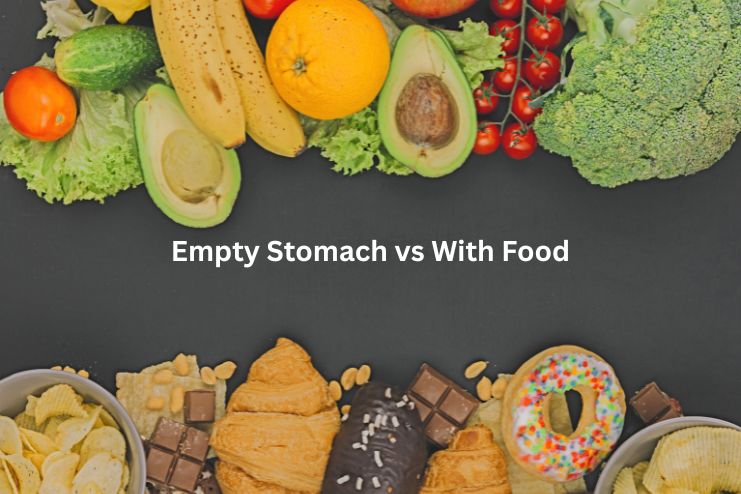
Understanding whether to take nutrients with food or on an empty stomach can significantly impact how well your body absorbs them. Whether a nutrient is a mineral, fat-soluble, or water-soluble determines the basic rule of thumb.
Fat-Soluble Vitamins: Because fat is necessary for the effective absorption of fat-soluble vitamins, such as A, D, E, and K, it can be advantageous to combine them with a meal that contains healthy fats, like avocado, nuts, or olive oil. Your body stores these vitamins after absorbing them, allowing you to gradually replenish them over time.
Vitamin D supports bone, immune, and hormone health; vitamin E is an antioxidant that promotes anti-inflammatory and skin healing; vitamin K prevents blood clotting and supports bone health; and vitamin A is essential for vision, skin, and immune health.
Water-Soluble Vitamins: Vitamins that dissolve in water, such as vitamin C and B vitamins, are rapidly absorbed. You eliminate what you don’t need through urine, and your body doesn’t store it in significant quantities. It implies that you must frequently replenish your body with water-soluble vitamins through your diet.
Energy generation, immunological response, neurological health, metabolism, and the maintenance of healthy skin and cells all depend on vitamins C, B6, B12, folate, and biotin.
Multivitamins: These are daily supplements designed to provide the body with all the necessary vitamins in a single daily dose, typically in pill or gummy form. Your routine will determine the ideal time to take a multivitamin, but consistency is essential. To form a habit, some people choose to take them with breakfast in the morning.
If it’s simpler to remember, some people might take them in the evening. If your supplement contains energy-boosting vitamins such as B12, taking it in the morning may be more beneficial. To prevent an upset stomach, many people take theirs after a meal.
Read More: The Power of Macronutrients: Understanding Proteins, Carbs, and Fats in Your Diet
Nutrients That Absorb Better on an Empty Stomach

On an empty stomach, specific nutrients are better absorbed, particularly when there aren’t any other foods vying for digestion. You can maximize the effectiveness of supplement regimen by knowing which ones benefit from fasting conditions.
Water is necessary for the optimal absorption of water-soluble vitamins. These include vitamins like B and C.
You may be surprised to learn that your body absorbs specific vitamins more effectively when you are not eating. Most individuals tolerate them well, even when taken without a meal.
On the other hand, the only vitamins that would be sensible to take on an empty stomach are those that are water-soluble. However, even if your body can absorb a specific type of vitamin more effectively without food, the difference may not be significant.
Mineral supplements often come in a ‘chelated’ form, meaning they’re bound to an amino acid that helps enhance absorption in the body. The mineral becomes more easily absorbed through the chelation process. Chelated minerals result in better absorption and fewer adverse effects, such as gastrointestinal distress.
One mineral that many people, particularly women, often use as a supplement is iron. Many people experience gastrointestinal problems when they take iron supplements on an empty stomach, despite the fact that the body can absorb iron under these conditions. If you encounter such issues, take iron with a meal.
Nutrients That Need Food for Proper Absorption
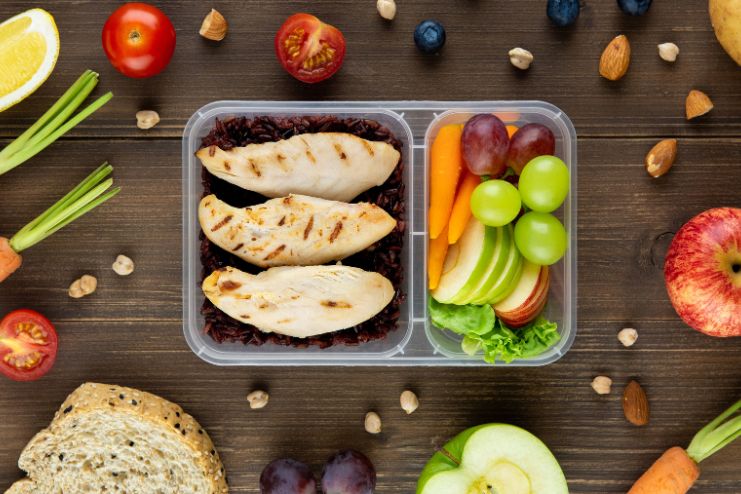
Specific nutrients require food for optimal absorption and efficacy, particularly dietary fat or stomach acid. When taken without food, they may not be well absorbed and can cause undesirable side effects, including nausea.
Elsie Koh, MD, medical director of Azura Vascular Care, advises taking probiotics, which can be the priciest vitamin of all, either before or right before meals, to help lessen the impact of stomach acid, which can destroy the probiotics.
Since your largest meal of the day is probably the one with the highest fat content, it is best to take vitamin D pills with food. Being a fat-soluble vitamin, it dissolves in fat and is better absorbed when taken with foods that contain good fats.
Be sure to take the tablets with food if you don’t eat fish, but still consume fish oil regularly. To prevent burping or vomiting of the oil, take these with meals in the morning.
Depending on the sort of calcium you’re taking—calcium carbonate or calcium citrate—food may or may not be required. Although eating is not necessary for the body to absorb calcium citrate, the stomach acid produced during meals aids in this process.
Multivitamins often contain minerals and nutrients that dissolve in both fat-soluble and water-soluble forms. In addition to enhancing nutrient absorption, taking them with meals reduces the likelihood of nausea or other stomach discomfort that may arise when taken on an empty stomach.
Read More: Plant-Based Eating and Bone Health: Are You Getting Enough Nutrients?
Common Mistakes That Can Reduce Absorption
Certain behaviors can inadvertently decrease vitamin absorption, even with a nutritious diet and frequent supplementation. By being aware of these common errors, you can prevent nutrient waste and achieve better health outcomes.
- Taking too little or too much of a supplement is one of the most frequent errors. When it comes to vitamins, the common belief that “more is better” isn’t always true. Specific nutrients can be dangerous if taken in excess, and they may have no impact at all if taken in insufficient amounts.
- Supplements are not all made equal. Your body absorbs certain types of supplements better than others. Magnesium comes in various forms, including oxide, citrate, and glycinate. Some varieties are more easily absorbed and offer better bioavailability than others.
- The effectiveness of your supplements may be impacted by when you take them. To improve absorption, certain supplements are best taken with food, while others are more effective when consumed on an empty stomach. For instance, keep iron separate from certain drugs and minerals, such as calcium. Additionally, fat-soluble vitamins, such as vitamin D, should be taken with a meal that contains fat for optimal absorption.
- It is more common than you may imagine—supplements can occasionally exacerbate other symptoms or health problems. For instance, some minerals or herbs may not be suitable for individuals with specific medical conditions, or they may interact with prescription medications or other supplements.
Should You Take Supplements on an Empty Stomach?
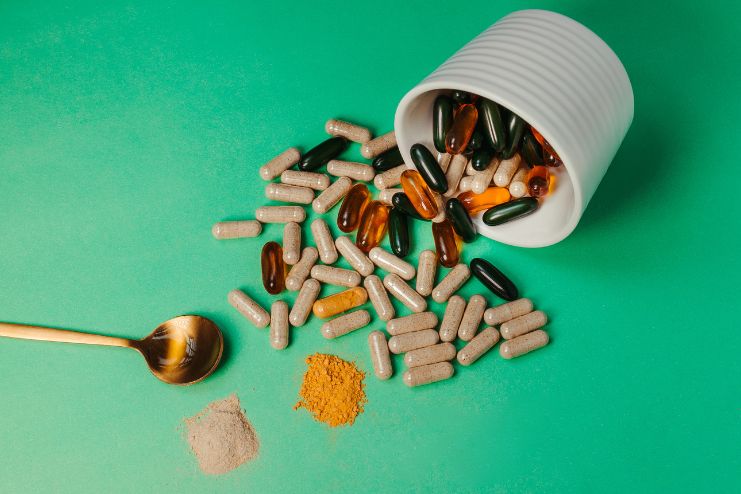
Different vitamins and minerals are absorbed and broken down by the body in various ways. Specific vitamins and minerals must be taken on an empty stomach, while others are better absorbed with food.
You can ensure that your body receives all the nutrients it needs by being aware of when to take your supplements. Remember that these are only recommendations; before taking any new vitamins, it is always advisable to consult your doctor.
Medical professionals often advise taking fat-soluble vitamins, such as A, D, E, and K, alongside a meal that includes at least a small amount of fat, such as a teaspoon. It is because these vitamins require an additional boost to be absorbed. Your system produces more stomach acid when you eat, which aids in the breakdown of vitamins.
It is frequently possible to take water-soluble vitamins, like vitamin C and B vitamins, including folate, on an empty stomach. This is because your body does not require food for absorption; instead, it uses water-soluble vitamins to meet its needs and eliminates the remainder through urine. These vitamins may be taken right after waking up, on an empty stomach, or a couple of hours following a meal.
Use these pointers to make the most of your supplements:
- For precise directions and timing recommendations, always read the label.
- If you feel uncomfortable or would like better absorption throughout the day, split the dose.
- Time-sensitive nutrients, such as magnesium or melatonin, are best taken right before bed and may help you sleep better.
Read More: Cold-Pressed vs. Centrifugal Juices – Which One Retains More Nutrients?
Tips to Maximize Nutrient Absorption Safely

It’s essential to consider how you consume your food and supplements, in addition to what you take in, to maximize their benefits. Careful timing and combination can significantly impact your body’s ability to absorb nutrients.
Iron and Vitamin C: You must eat foods high in vitamin C to absorb the non-heme iron found in plant-based diets. This is due to vitamin C’s role in facilitating the breakdown of non-heme iron, making it easier for cells to absorb and utilize.
Calcium and Vitamin D: You need the correct quantity of calcium for strong, healthy bones. Vitamin D plays a vital role in helping the body absorb calcium from both food and supplements. For effective calcium absorption in the intestines, it’s essential to pair it with vitamin D. Consume a range of foods high in calcium, such as dairy, tofu, etc., along with milk, orange juice, or cereals enriched with vitamin D.
Fat and Fat-Soluble Vitamins: Your body needs fats to absorb fat-soluble vitamins, including A, D, E, and K. This is why you should eat foods high in these vitamins along with foods that can supply healthy fats, such as olive oil, almonds, and pumpkin seeds. Because unsaturated fats are naturally healthful, it is preferable to choose foods that contain them.
Read More: 5 Nutrient Deficiencies Common in Women Over 35
Conclusion
Since nutrient absorption varies significantly from one person to the next, there is no one-size-fits-all rule of thumb for when to take supplements. While fat-soluble vitamins (A, D, E, and K) need food, especially healthy fats, to function best, other vitamins and minerals, such as iron and some B vitamins, are better absorbed if taken when the stomach is empty.
To get the most out of nutrients, you must understand how they work with your body, food, and even one another. How your body metabolizes what you consume may be primarily determined by attention to timing, meal composition, and the complementarity of food and supplements.
Reading the label and consulting a health practitioner or dietitian if you’re unsure about how or when to use a specific supplement is a good idea.
References
- https://www.businessinsider.com/guides/health/diet-nutrition/best-time-to-take-vitamins
- https://www.prevention.com/food-nutrition/a65171546/when-is-the-best-time-to-take-vitamins/
- https://www.linkedin.com/in/alana-kessler/
- https://www.nutritionnowcounseling.com/
- https://naturemed.org/what-is-nutrient-absorption-and-how-does-it-change-by-age/
- https://www.betterhealth.vic.gov.au/health/conditionsandtreatments/digestive-system
- https://www.niddk.nih.gov/health-information/digestive-diseases/digestive-system-how-it-works
- https://www.thorne.com/take-5-daily/article/taking-supplements-on-an-empty-stomach
- https://www.thehealthy.com/nutrition/vitamins/vitamins-take-with-food/
- https://newsukraine.rbc.ua/news/one-of-russia-s-largest-oil-companies-becomes-1724431954.html
- https://lauravonhagen.com/5-common-supplement-mistakes-i-see-in-my-practice-and-how-to-avoid-them/
- https://ogaenics.com/en/8-taking-failure-with-vitamins/
- https://ymcaharrisburg.org/ways-increase-nutrient-absorption/
- https://www.1mg.com/articles/5-simple-tips-to-improve-nutrient-absorption-from-foods/
In this Article