










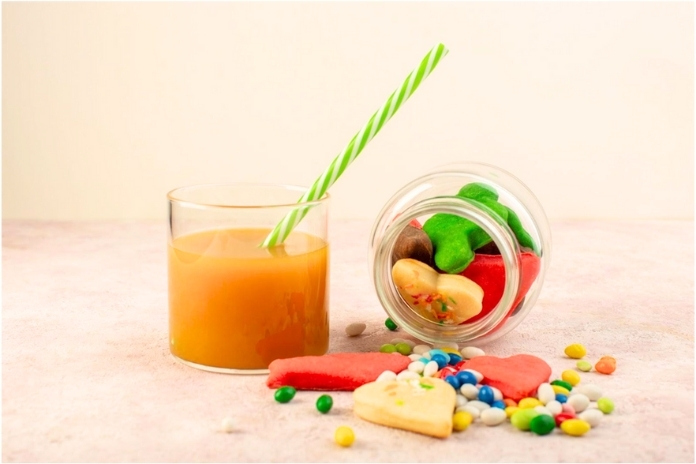
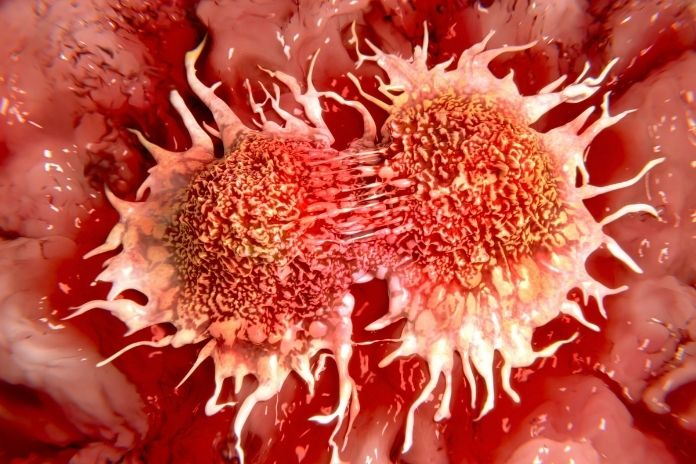
You have probably seen the headlines: Food preservatives cause cancer. You cannot help but wonder what hides in the everyday foods you will consume. From processed meats and packaged snacks, preservatives like nitrites, BHA, BHT, and sodium benzoate are everywhere. But does their presence actually translate into a measurable cancer risk?
The answer isn’t as straightforward as a “yes” or “no.” It all depends on the type of preservative, the amount consumed, and overall dietary patterns, according to scientific research.
While certain food additives, particularly nitrates and nitrites used in cured meats, have been linked to cancer in large population studies. Evidence for a direct cause-and-effect relationship between other additives, such as BHA/BHT or sodium benzoate, and cancer remains limited or inconsistent.
In this article, we examine what research actually shows about preservatives and cancer, including how cancer risk is determined, which preservatives have the strongest evidence, the role of ultra-processed foods, and some practical steps to reduce potential risk without fear.
By the end, you’ll understand why context and moderation matter far more than simply avoiding every additive.
What Are Food Preservatives, and Why Are They Used?
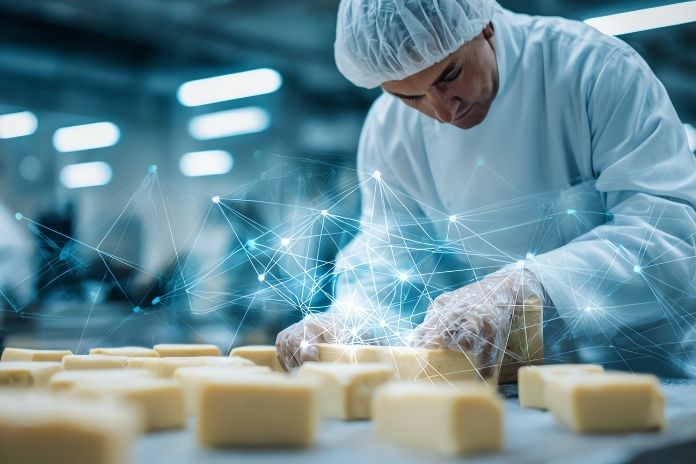
Food preservatives are added to foods to delay spoilage, reduce microbial growth, prevent rancidity, and extend shelf life. They enable industrial food distribution, helping protect consumers from foodborne illnesses such as botulism and keeping products edible long enough to reach store shelves and kitchens.
Preservatives are broadly grouped into
- Natural preservatives such as salt, vinegar, and plant extracts have been used over the years.
- Synthetic preservatives such as nitrates, nitrites, sorbates, sulfites, BHA (butylated hydroxyanisole), BHT (butylated hydroxytoluene), and sodium benzoate.
They are common in modern food systems, from processed meats to soft drinks to packaged snacks, because they maintain food safety and quality in ways that simple refrigeration cannot always achieve.
How Cancer Risk Assessments Are Viewed in Nutrition Science
To understand a possible link between diet and cancer, researchers must distinguish the causes. Observational research can point out a connection, such as the link between a high intake of a given food and a high rate of cancer, but not establish that the food is the cause of the cancer.
Several other things can complicate this: lifestyle, general dietary habits, genes, and environmental conditions, for example.
Animal and cell studies may show how a substance could damage DNA, but these results do not easily predict cancer risk in humans.
Distinction Between Observational and Experimental Studies
Observational and experimental studies complement each other in assessing cancer risk in nutrition research. In observational studies, such as cohort and case-control studies, a large number of people are observed over time, and these studies are helpful for identifying associations between diet and cancer risk, but they do not establish causation because of confounding variables such as lifestyle and genetic factors.
Experimental studies, such as randomized controlled trials, enable researchers to control variables and establish cause-and-effect relationships more accurately, but these studies are usually short-term, narrow in scope, and not feasible from an ethical standpoint in assessing cancer risk.
Equally important are dose, rate of exposure, and duration, since “ingesting a preservative in controlled doses one time is different from regularly consuming foods containing large amounts of preservatives.”
Which Food Preservatives Are Most Often Linked to Cancer Risk?
Nitrates and Nitrites in Processed Meats
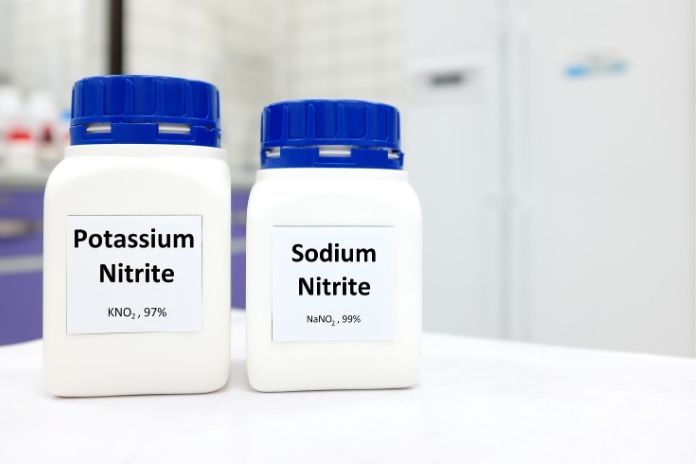
Nitrates and nitrites, such as sodium nitrite and potassium nitrate, are regularly used for preservation and giving color to cured meats, including bacon, hot dogs, ham, and other meats.
Within the body, particularly within the highly acidic stomach and intestines, these substances convert to carcinogenic nitrosamines. Laboratory studies establish a strong link between these substances and cancer.
Large population studies, like the NutriNet-Santé cohort, have reported that the consumption of nitrite/nitrate additives was associated with an increased risk of cancers like prostate and breast cancers compared to lower or no consumption.
For example, increased sodium nitrite intake was associated with a 32% increased risk of prostate cancer, and potassium nitrate with breast cancer in some studies.
Scientists say processed meats are risky not just because of preservatives, but because of several factors that come together.
Nitrites and nitrates matter because they can turn into cancer-causing compounds in the body. But they’re only part of the problem. Processed meats also contain heme iron, which can damage the gut lining, and harmful chemicals formed during smoking, curing, or high-heat cooking.
On top of that, eating these foods regularly can increase inflammation, which is linked to cancer.
In short, it’s the whole package, which includes preservatives, meat components, and cooking methods, not just any one particular thing raises the risk.
BHA and BHT (Antioxidant Preservatives)
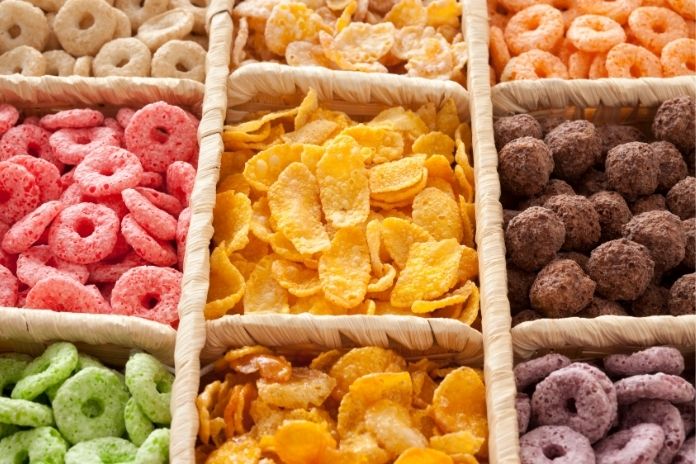
BHA and BHT are synthetic antioxidant preservatives that are commonly added to foods containing fats and oils, including cereals, snack foods, baked goods, and shelf-stable packaged products. Their primary function is to prevent oxidation so that rancidity, off-flavors, and nutrient degradation do not occur.
Animal studies have raised concerns about BHA and BHT cancer risk largely because very high doses of BHA have been associated with tumor formation in rodents, particularly in the forestomach. These findings led to further toxicological evaluation and ongoing scrutiny.
However, this amount is much higher than what a human would realistically consume through food. In toxicology, this distinction matters because real-world dietary exposure rarely reaches the extreme levels at which adverse effects are observed.
Human data on BHA and BHT related to artificial preservatives and cancer are Limited and inconsistent. No clear and consistent pattern of increased cancer risk has emerged from large epidemiological studies related to typical dietary intakes of these preservatives.
Unlike nitrates and nitrites in processed meats, there have been no strong dose-response relationships or reproducible cancer associations in human populations for BHA and BHT. This lack of consistent evidence makes it difficult to draw firm conclusions about their carcinogenic risk at normal consumption levels.
Animal studies indicate that dietary exposures have remained far below toxic levels. Therefore, BHA and BHT remain approved additives in foods when used within the established limits, with continued oversight for updated scientific information.
Sodium Benzoate and Benzene
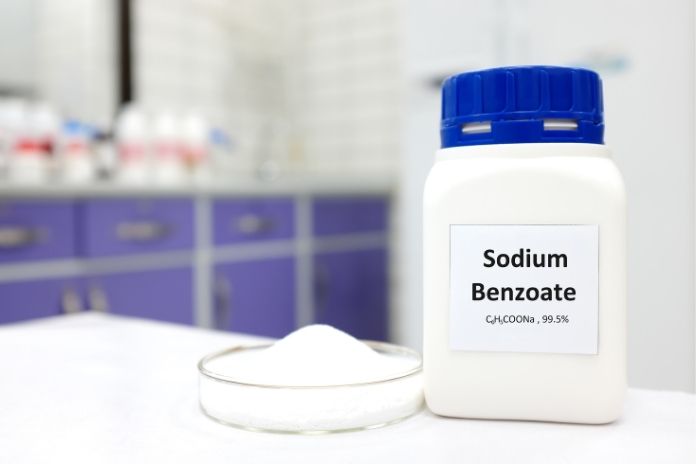
Sodium benzoate, for instance, acts as a food preservative and is commonly used in highly acidic foods, such as carbonated beverages, fruit juices, salad dressings, and sauces.
Sodium benzoate is effective at preventing the growth of bacteria, yeast, and mold.
People are concerned about the possible link to cancer because, given certain circumstances, sodium benzoate can combine with ascorbic acid, or vitamin C, to form benzene, which is known to be a carcinogen. This is especially likely when exposed to heat, light, and time.
What is significant to note about the formation of benzene is that it is not inherent to sodium benzoate. This process is formulation and environment-dependent.
When it comes to real life, the amounts of benzene found in food and beverages tend to be very low, or at least comparable to, if not lower than, those found in pollution or from smoking.
No comprehensive studies have found any risk of cancer associated specifically with common doses of sodium benzoate, which is why it is not regarded as a carcinogen when used properly.
Food safety authorities enforce stringent regulations to limit benzene formation, including restrictions on the concentration of sodium benzoate used and on how products must be stored.
Preservatives That Are Often Feared but Poorly Supported by Evidence
Certain preservatives are raising public alarm even in the absence of firm scientific support. Many preservatives are feared simply because they sound “chemical,” leading to the assumption that artificial additives are inherently harmful.
In reality, preservatives such as BHA, BHT, and sodium benzoate have not shown consistent evidence of increased cancer risk in humans at typical intake levels.
Many people believe that artificial preservatives are all cancer-causing agents. Others feel that anything which falls under the term “natural” is not a risk to one’s health.
There is no proof that the absence of harm proves safety, and the absence of human data on long-term effects doesn’t prove danger either. How a mechanism functions on a scientific scale, compared to human exposure levels and actual human health outcomes, is what’s considered in scientific analysis.
Misinformation can quickly spread when it is hyped out of proportion before it is given its proper context in reports based on laboratory studies.
Processed Foods vs. Preservatives: Where Is the Cancer Risk?
Ultra-processed foods (UPF) are defined as industrial formulations whose ingredients are numerous, often containing preservatives, sweeteners, additives, colorings, and emulsifiers. Independent studies have revealed sharp correlations between high consumption of UPF and increased cancer risks after accounting for a host of variables.
This suggests that the larger picture is that the general diet pattern of foods that are dense in energy, low in fiber and nutrients, and processed, poses a greater risk factor for cancer than most preservatives.
“It is very clear that highly processed foods, including those that contain many additives, have negative health benefits,” said Timothy Rebbeck, PhD, a professor of cancer prevention at Dana-Farber Cancer Institute and the Harvard T.H. Chan School of Public Health.
He has further added, “Limiting processed foods and eating whole foods that are less processed is always the preferred choice to minimize cancer risks and maximize health benefits for other diseases.”
What Major Health Organizations Say About Preservatives and Cancer
Global health authorities such as the World Health Organization (WHO) and the International Agency for Research on Cancer (IARC) have made important distinctions:
- Processed meats have been classified as carcinogenic to humans (Group 1) due in part to evidence linking their consumption with colorectal cancer, with nitrates/nitrites playing a contributing role.
- Many individual preservatives, such as BHA, sodium benzoate, and sulfites, are not classified as carcinogens at typical intake levels but continue to be studied.
Food safety evaluation processes used by regulatory authorities consider realistic exposure, toxicological data, and achievable dietary levels when setting safety limits.
Who May Want to Be More Cautious About Preservative Intake
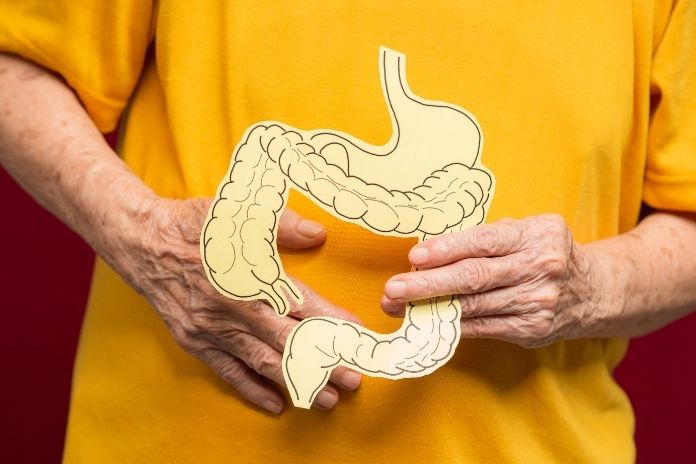
While occasional exposure to preservatives is unlikely to be a dominant cancer driver, some individuals may benefit from moderation:
- People with high processed food consumption, especially cured meats and convenience foods.
- Individuals with a family history of colorectal cancer or other hereditary cancer risks.
- People already managing metabolic or inflammatory conditions may choose to limit ultra‑processed foods as part of broader health strategies.
Moderation, not fear, is the key. Reducing the frequency of high-intake of preservative‑rich foods can help shift overall diet quality toward patterns that align with lower cancer risk.
Practical Steps to Lessen Risk Without Fear
Here are some doable and down-to-earth tips that you can apply:
- Reduce consumption of processed meats. To be on the safe side, it’s best to have processed meats only occasionally and not consider them daily meals.
- Promote eating the least-processed foods whenever possible.
- Read labels carefully. Look for packages with shorter ingredient lists, but don’t go crazy with every preservative listed.
- Simpler ingredients are generally healthier.
- Try to eat a balanced diet rich in fiber, antioxidants, and other phytonutrients that help repair DNA and fight chronic inflammation.
The science promotes pattern eating, which emphasizes meal patterns rather than pinpointing one additive as the problem.
Common Myths About Food Preservatives and Cancer
“All preservatives are carcinogenic.”
False. Only a few preservatives show associations with cancer, mainly in observational studies, not proof of direct causation.
“Natural preservatives are always safer.”
Yes, but not necessarily. There are various organic compounds that, in high dosages, can be toxic. Safety depends on the dosage and the context in which you use them.
“Avoiding preservatives eliminates cancer risk.”
No, cancer risk is due to many factors: genetics, lifestyle, smoking, obesity, alcohol, and overall dietary patterns.
Bottom Line on Food Preservatives and Cancer Risk
Some food preservatives, particularly nitrites/nitrates in processed meats, have been associated with increased cancer risk when consumed in large amounts and frequently. Not all preservatives have strong evidence of causing cancer at typical dietary levels. Overall diet quality matters far more than the presence or absence of any single preservative.
Reducing ultra‑processed foods while increasing whole, minimally processed foods has proven to be a practical approach to long‑term health.
The question of cancer risk with food preservatives is complicated. While various preservatives, particularly those used in processed meats, might pose higher risks. Preservatives individually do not serve as definitive causes of cancer if the levels are not too high.
Long‑term health is best supported by a balanced, minimally processed diet, moderation, and context‑aware choices rather than being plagued by the fear of every additive.
References
- American Cancer Society. (1999). Dietary guidelines for cancer prevention: Reducing the risk of cancer with healthy food choices and physical activity. CA: A Cancer Journal for Clinicians, 49(6), 331–362.
- European Food Information Council. (n.d.). What are preservatives and what are common examples used in food?
- Environmental Working Group. (2024, February). What is sodium benzoate?
- National Center for Biotechnology Information. (2020). Food preservatives and their adverse effects on human health. In Advances in Food and Nutrition Research.
- ScienceDirect. (2004). Butylated hydroxyanisole (BHA): Toxicological evaluation and safety considerations. Journal of Food Composition and Analysis, 17(3–4), 437–444.
- ScienceDirect. (2023). Food additives, dietary exposure, and cancer risk: Emerging evidence and challenges. Clinical Nutrition.
- U.S. Food and Drug Administration. (n.d.). Questions and answers on the occurrence of benzene in soft drinks and other beverages. U.S. Department of Health and Human Services.
In this Article