














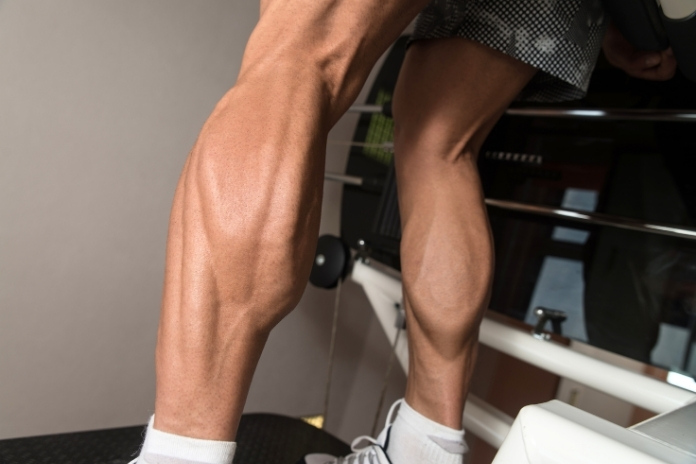
Although calves are sometimes disregarded during training, their little but strong muscles are essential for stability, balance, and explosive power.
Most workout regimens overlook your inferior calf muscles. It makes sense—you usually don’t really flaunt them on the beach.
Still, there are many reasons to cultivate them. Stronger and larger calves look fantastic. Because strong muscles are less prone to injury than weak muscles, they lower the chance of injury. They also improve your athletic ability.
Strong calf muscles improve your ability to run, change direction, swim, and exert force from the ground.
We’ll cover calf-focused WODs (workouts of the day) and efficient calf workouts in this article, which you can easily add to your regimen.
Read More: Chair Exercises: Strengthen Your Legs with These Simple At-Home Workouts
Why Calves Are So Important in Training
Knowing the structure of the calf muscles makes it easier to understand why these tiny but effective muscles are essential for training.
Calf training is a non-negotiable part of holistic strength training, according to Peloton instructor Clifford Dwenger. “Our legs are the pillars of the body. The calves are active when walking, jogging, running, cycling, rowing, standing up, sitting down, and many more movements,” he explains.
Furthermore, your calves influence the action of plantarflexion related to your ankles and feet. In other words, plantarflexion allows you to stand on your tiptoes to reach something on an upper shelf or push your foot down on your vehicle’s gas pedal. You can execute these actions as if they were second nature if you strengthen this muscle group.
Strengthening your calves will increase the fitness of your entire lower body because they serve as the basis for your legs. Because your calves are strong and engaged, strength training exercises like squats and deadlifts that aren’t specifically calf-focused will begin to seem more manageable.
Common Problems Linked to Weak Calves

Weak calves are a common issue that can lead to a range of problems, reducing performance and increasing the risk of injury.
Foot pain limits your daily activities and quality of life, so you must understand that small amounts of foot pain can be reduced throughout your day. There are many reasons for foot pain, and the status of your calf muscles may be an unexplored area. Tight and weak calves can affect your foot mechanics enough to result in multiple painful issues.
Neglecting calf muscle weakening in addition to tension can cause foot pain and foot dysfunction. Weak calves can arise from muscle imbalances, sedentary lifestyles, or a lack of physical activity. Weak calves can lead to:
Overpronation: Weakness in the calves can lead to overpronation or excessive inward rolling of the foot, as the calf muscle cannot sufficiently sustain the arch of the foot. Overpronation has risk factors associated with plantar fasciitis, bunions, and flat feet.
Shock Absorption: Strong calf muscles can aid in shock absorption during weight-bearing activity, like running or walking. Insufficient shock absorption and weak calves can lead to greater impact in the foot and lower limb, causing irritation and injury.
In addition to reducing your chances of issues relating to calf strength, specific training for weak calves can improve your success, stability, and movement quality.
Read More: 10 Lying Leg Curl Alternatives: Make Your Knees Stronger
Calf Exercises for Any WOD & Build Power

Calf exercises are ideal for enhancing your WOD and also building power with targeted strength and endurance.
Exercise #1: Standing Calf Raises
- How this exercise functions: The gastrocnemius, or visible calf muscle, is the primary target of a standing calf raise.
- With your toes pointed forward and your heels dangling off, place the balls of your feet onto a platform. Make sure your knees and legs are pointing forward. Inhale and slowly lower your heels toward the floor until your calves fully extend. After a pause, lift your heels and squeeze your calves while exhaling. One rep only. Perform the 15 reps, repeat.
- You can carry weights at your sides to make this exercise more difficult.
Exercise #2: Seated Calf Raises
- How this exercise functions: The soleus, the muscle beneath the gastrocnemius, is the primary focus of a seated calf raise.
- With your toes pointed forward and your heels dangling off, begin sitting on a bench with the ball on your feet resting on a platform. Throughout the workout, maintain a bent posture with your legs and knees. Take a deep breath and slowly lower your heels to the floor until your calves fully extend. After the pause, rise onto your toes, exhale as you squeeze your calves. Don’t bounce.
- One rep only. Finish 15 repetitions, repeat.
- You can hold dumbbells on your thighs to make this exercise more difficult.
Exercise #3: Eccentric Calf Raises
- Physiotherapists and sports rehabilitation specialists frequently utilize this exercise..
- Exaggerating the eccentric contraction—where the muscle lengthens—is how it operates. It enhances the elasticity and health of the tissue.
- Here, a full range of motion is essential, and a little extra weight can aid in increasing the muscle’s stretch.
Exercise #4: Seated Band Push
- How this technique functions: The calves are the focus of a seated band push.
- Start by extending your legs straight out in front of you while seated. Keeping one end of the resistance band in each hand, loop it around the balls of your feet. As you exhale, push the band away from you with your calves. Breathe in and slowly return to the beginning position. One rep only.
- Perform at least 20 repetitions.
Exercise #5: Farmer’s Walk on Toes
- How this maneuver functions: The calves are the focus of a farmer’s walk.
- Hold a hefty weight at your sides in both hands as you begin to stand. Once you are on the balls of your feet, lift your heels off the ground. Make sure you are tall before moving forward while maintaining a high chest and working your calves.
- To get back to where you were before, walk for at least 30 seconds in one direction, then turn around and walk for another 30 seconds. Do this three times.
Read More: How to Improve Mitochondrial Health (Backed by Science)
Tips for Training Calves Effectively

There are many types of calf raises, and the best method is the one that fits your goals and feels best for your body. Your body is strong, and there are tons of ways to perform calf raises well, so you don’t have to be particularly worried about having the perfect form to prevent injury.
Physical therapists suggest the following clues to help personalize them to your needs and to help you discover added components of the movement.
Change your Foot Position: Try keeping your toes straight ahead, turning them slightly to the midline, or turning them slightly and outward. The calf musculature is a relatively curious structure, and this position will activate a different portion of the muscle, which can focus on parts of the muscle that feel best for you.
Change your Speed: Perform the movement at a speed that feels right for you while completing the workout. While fast raises may feel invigorating, slow/controlled raises can create the necessary balance between muscular engagement and proprioceptive awareness.
Use different Surfaces: You can perform calf raises on a flat surface, stairs, or a stable step. Each option offers different modifications to keep the movement interesting by slightly modifying the range of motion.
Stretch after Exercise to improve Flexibility: Gentle stretches to your calves after exercise create range of motion, discomfort, and recovery, all of which offer ongoing benefits.
Read More: Muscle Soreness vs. Injury: Key Differences, Symptoms, and When to Seek Help
Conclusion
It will take a lot of relevant volume to develop your calves, due to their extensive workload in our lives. Your calves, although small components of muscle, are fundamental elements of your strength, balance, and mobility.
Whether they provide a platform for your sport or assist in your ability to push off when sprinting or jumping, your strong calves give you a better foundation for ALL sports.
Calf strength training can improve your aesthetics and performance, decrease injury likelihood, and encourage training for the long haul. Relevant WODs focused on the calf can help promote endurance and stability.
Now it’s your turn. Add a few specific calf exercises into your weekly leg/whole body workout schedule to proceed cautiously, and step up the intensity over time.
References
- https://www.ncbi.nlm.nih.gov/books/NBK459362/
- https://www.solepodiatry.com.au/why-tight-and-weak-calves-affect-our-feet/
- https://www.hingehealth.com/resources/articles/calf-strengthening-exercises/
- https://fitbod.me/exercises/calves
- https://www.strengthlog.com/calf-exercises/
- https://www.hingehealth.com/resources/articles/calf-raises/
In this Article