












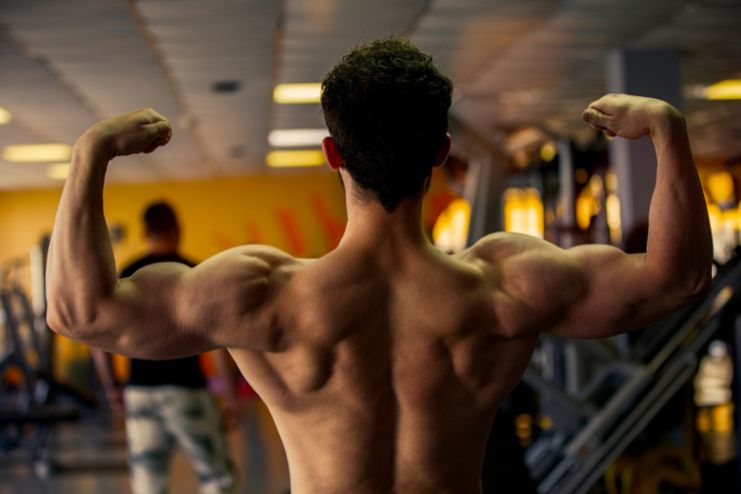
Why are people so interested in building strong, muscular arms? The answer lies in their extreme prominence and visibility. Unlike your abs or legs, which are usually covered by clothing, your arms are generally on display.
Having a clear understanding of how your arms work can make a significant difference in the effectiveness of your workouts. You’ll be able to identify areas you might be overlooking and determine how to diversify your programming.
The biceps and triceps are key muscle groups in the arm that play crucial roles in upper limb movement. Both bodybuilders and casual gym-goers share a strong desire for well-defined biceps and triceps.
This article covers the physiology, effective exercises, and training principles for building impressive biceps and triceps.
Read More: Grease the Groove: How to Build Strength Without Fatigue
Biceps and Triceps 101 – Anatomy and Function
Biceps: When people picture their biceps, they’re usually thinking of the biceps brachii muscle. It comprises two distinct parts: a short head on the inside of your arm and a long head on the outside. These two heads work together as the muscle we target through exercise.
However, most people are unaware of another important muscle that contributes significantly to arm size and strength: the brachialis muscle, located deep beneath the biceps brachii. The brachialis is your arm’s primary elbow flexor. When your hands are supinated (palms up), the biceps brachii assists this muscle. When your palms face downward (pronated position), the brachialis works more independently.
By incorporating exercises with varied hand positions, you can target different aspects of your biceps muscles simultaneously.
Primary biceps functions:
- Elbow flexion: Bringing your forearm closer to your upper arm
- Forearm supination: Turning your palm to face upward
- Shoulder flexion: Assisting in lifting your arm forward
Triceps: The triceps brachii is actually the largest muscle group in the upper arm, while the biceps tends to be smaller. The triceps consists of three heads: the medial head, lateral head, and long head. All three heads work together as the primary elbow extensors. Notably, only the long head, which attaches to the shoulder blade, assists in shoulder stability and extension.
Focusing on your triceps is crucial when you want to increase overall arm size and strength. Due to their primary role in elbow extension, the triceps are heavily involved in all upper body pushing movements. When performing exercises like shoulder presses and push-ups, you naturally target your triceps without risk of overuse.
Primary triceps functions:
- Elbow extension: Moving the forearm away from the upper arm
- Shoulder stability: Providing support during overhead movements
- Shoulder extension: Moving your arm behind your body
The triceps serve as the antagonist (opposing muscle) to the biceps.
Read More: Shadow Boxing for Weight Loss: Can You Punch Your Way to a Leaner Body?
What Makes Arms Look Bigger?

Understanding the three major muscle groups in your upper arms is essential for maximizing size and strength gains.
The biceps run along the front of the arm from the elbow to the shoulder joint, primarily responsible for elbow flexion. The triceps, located at the back of the arm, connect the elbow to the shoulder and are mainly responsible for elbow extension. Due to their larger muscle mass compared to the biceps, the triceps have greater potential for size gains.
The third group, the brachialis, is an upper arm muscle that runs beneath the biceps. This muscle significantly contributes to arm thickness when viewed from the side and is often overlooked in training programs.
Most people focus primarily on biceps training, but for truly impressive arms, you must also develop your brachialis and triceps.
Key Training Principles for Bigger Arms
To develop larger, more powerful arms, follow these essential guidelines:
- Train Arms 2-3 Times Per Week: Your arms are heavily involved in pulling and pushing exercises like bench press and lat pulldowns, making them susceptible to overtraining. Allow adequate recovery between sessions.
- Train with Intensity: Progressive overload is essential for muscle growth. Push your muscles to failure and beyond regularly, but don’t sacrifice form for ego lifting.
- Use Proper Technique: Control the weight through both the lifting and lowering phases. Ensure full range of motion to target all muscle fibers effectively and maximize growth stimulus.
Training Focus for Maximum Arm Development
Here’s a key insight: your biceps only make up about one-third of your upper arm mass. Becoming fixated solely on biceps training can compromise overall arm development.
Triceps Training
Since triceps comprise about two-thirds of your upper arm mass, they should be a primary focus for size gains. Compound movements like close-grip bench press allow you to handle heavier weights while targeting multiple muscle groups. Direct triceps exercises should include skull crushers, cable pushdowns, and triceps dips to target all three heads effectively.
Biceps Training
While smaller than the triceps, biceps provide the desired peak and shape to your arms. Stick to fundamental movements like biceps curls, hammer curls, and incline curls, ensuring you work through the complete range of motion for maximum effectiveness.
Forearm Training
The forearms consist of approximately twenty muscles extending from the elbow to the hand. Though often overlooked, strong forearms are crucial for grip strength and overall arm function. Weak forearms can limit your performance in exercises like pull-ups and deadlifts. Include wrist curls, farmer’s walks, and grip-specific exercises in your routine.
Read More: Isometric vs. Dynamic Exercises – Which One Is Better for Strength?
How to Structure Your Arm Workouts

Mecayla Froerer, an executive at iFIT, a fitness technology company, and a certified National Academy of Sports Medicine (NASM) personal trainer in North Salt Lake, Utah, recommends working all three major sections of the arms: the anterior (front), posterior (back), and shoulders.
Biceps Exercises
- Biceps Curl Stand with feet shoulder-width apart, holding weights with palms facing forward. Keep shoulders stable and elbows close to your sides as you curl the weights toward your shoulders. Control the movement with a 2-second lift and 2-second descent.
- Hammer Curl Stand with arms at your sides, palms facing your body. Lift dumbbells to shoulder height while keeping elbows tucked and maintaining the neutral grip position throughout the movement.
- Wide Curl Similar to standard curls, but rotate palms to face away from your body toward the sides. This variation targets different angles of the biceps muscle.
Triceps Exercises
- Triceps Dip Sit on a sturdy chair or bench, hands shoulder-width apart gripping the edge. Extend legs with knees at 90 degrees, then slide off the seat supporting yourself with hands and feet. Lower your body by bending elbows to 90 degrees, then press back to starting position.
Mistakes to Avoid When Training Arms

Avoid these frequent errors that can limit your progress:
- Muscle Imbalances: Focusing only on biceps while neglecting triceps, brachialis, and forearms creates imbalances that can lead to injury and limit overall development.
- Poor Form: Swinging weights or using improper posture reduces exercise effectiveness and increases injury risk. Maintain strict form throughout all movements.
- Neglecting Compound Movements: While isolation exercises have their place, compound movements like pull-ups, rows, deadlifts, and overhead presses build functional strength and contribute significantly to arm development.
- Inadequate Recovery and Nutrition: Muscle growth occurs during recovery, not just during training. Ensure adequate protein intake (lean meats, beans, dairy), proper hydration, and sufficient rest between training sessions.
Read More: Strength Training for Longevity: Best Workouts to Stay Strong and Age Gracefully
Conclusion
Balance is crucial when building impressive arms, but give your triceps extra attention if maximum size is your goal. The biceps provide the desired peak and definition, while the triceps add the bulk and thickness that make up most of your upper arm’s mass.
Progressive overload—gradually increasing resistance over time—is essential for continued muscle growth. Maintain proper form and technique to avoid injury and ensure each movement effectively targets the intended muscles. Finally, prioritize recovery by allowing adequate rest between training sessions.
FAQs
Can you grow big arms without training biceps directly? While not optimal for maximum size, it’s possible to develop larger arms without specific biceps exercises. Compound movements like pull-ups, rows, and chin-ups indirectly engage the biceps while building overall functional strength.
Are triceps easier to grow than biceps? Generally yes, triceps tend to respond well to training and make up a larger portion of upper arm mass. The triceps comprise approximately two-thirds of upper arm bulk, while biceps account for about one-third.
How often should I train arms? Training arms 2-3 times per week is ideal for most people, providing sufficient stimulus for growth while allowing proper recovery between sessions.
References
- https://www.menshealth.com/fitness/a42828713/big-arm-muscles-workout/
- https://www.healthline.com/nutrition/biceps-vs-triceps
- https://www.medicinenet.com/biceps_vs_triceps_whats_the_difference/article.htm
- https://www.menshealth.com/uk/workouts/a61812877/bigger-arms-training-plan
- https://www.muscleandstrength.com/articles/want-big-arms-triceps
- https://www.healthline.com/health/exercise-fitness/how-to-get-bigger-arms#bicep-exercises
- https://www.linkedin.com/in/mecayla-froerer/
- https://www.everydayhealth.com/fitness/the-best-exercises-for-strengthening-every-muscle-in-your-arms/
In this Article