













Vibration plates, also known as whole-body vibration platforms, have become popular in gyms and homes. Their appeal is straightforward: you work out better in less time, at least, you strengthen your muscles, increase blood flow, and develop strength with reduced pounding.
What people actually get from a vibration plate depends on intensity, session length, personal health, and whether it’s used alongside regular exercise.
To understand the real possibilities that whole-body vibration might offer, it is helpful to consider the role of these vibrating plates within the body, where the evidence is clear regarding the boundaries of their effects.
What Is a Vibration Plate and How Does It Work?
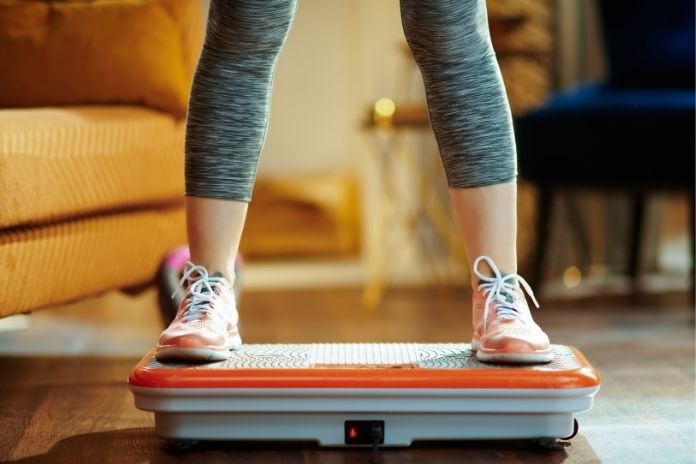
A vibration plate is a platform that offers controlled vibrations at specific intervals. When you place your feet on this platform or move your body on it, your whole body feels these vibrations.
On a physiological level, whole-body vibration (WBV) involves rapid muscle stretches and thus activates muscles via muscle spindles and the tonic vibration reflex, resulting in involuntary contractions that increase muscle activation even during basic stretches, such as standing and squatting.
However, not all vibration plates are the same. Vertical vibration plates move up and down, forcing energy straight through the body. Side-to-side oscillating or alternating vibration platforms rock from side to side, providing more realistic simulated motions that mimic those experienced during natural walking. That difference matters because it affects joint stress, spinal load, and overall comfort.
It’s not only intensity but also frequency that counts. A lower intensity level may work gently on the body, yet the effects may not be as pronounced physiologically. More intense levels drive muscle activation higher, yet also increase the risk of negative side effects. Most benefits tend to occur at moderate intensity levels.
Read More: Top 8 Fitness Recovery Tools: Recovery Equipment and Accessories for Active Lifestyles
Potential Benefits of Using a Vibration Plate
Muscle Activation and Strength Support
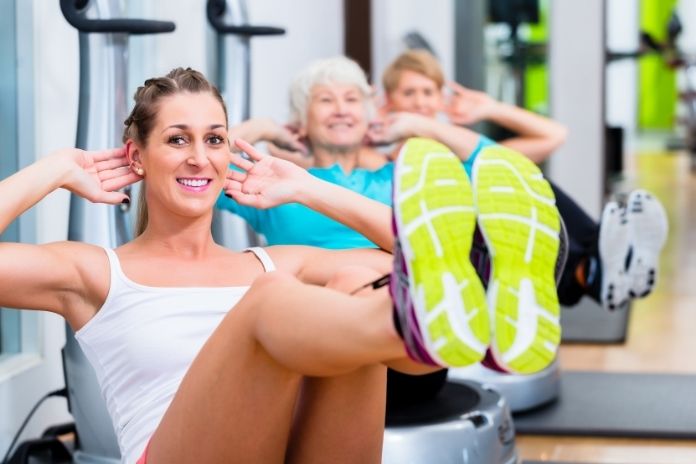
Possibly the most popular benefit of vibration plates is increased muscle activation. When the plate is in use, the rapid up-and-down motion causes a reaction in the muscles, particularly in the legs, core, and body as a whole, to tighten in an attempt to maintain balance and posture.
This is especially useful for someone who is unfit or hasn’t exercised for a while, as it helps optimize muscle activation patterns.
Improvements in muscle power and strength are most evident among new users, older individuals, or those who lack strength. In other words, this vibration kick-starts to allow one’s nervous system to function better in conjunction with muscle.
However, we must not forget that the mechanical tension experienced with such vibration plates is not exactly equal to that experienced with other forms of resistance training.
Overall, vibration plates are most effective when used alongside traditional exercise rather than on their own.
Improved Balance and Stability
The balance that results from this is a function of our sense organs, nervous system, and muscles, all of which cooperate to keep us standing on our feet. While standing on a vibration plate, the body constantly adjusts to stay upright.
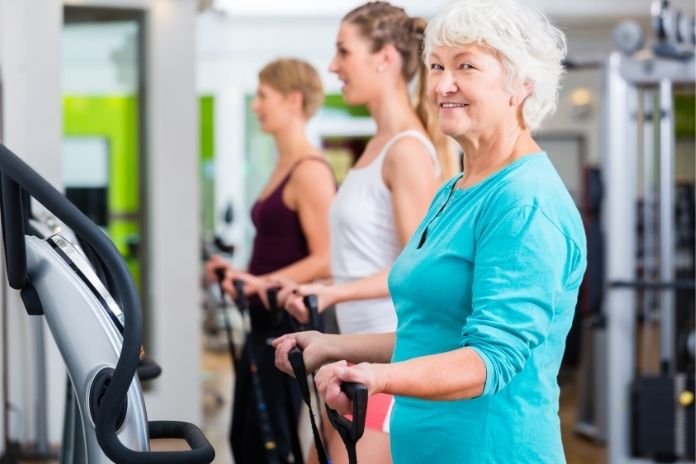
Gradually, such repeated changes can help improve our awareness of our position in space and increase muscular responsiveness to nervous stimulation. This is particularly useful for elderly people, as steadiness of postural control can significantly reduce the likelihood of falling.
Bone Health and Bone Density Support
Bone tissues can reform in relation to mechanical loading through the remodeling procedure. The vibration plates apply minimal mechanical loads that could stimulate bone cells involved in maintaining bone mineral density.
There are indications that vibration plate treatment can be beneficial for promoting bone density and may be of value for specific individuals, such as postmenopausal females or those with low bone mass.
However, these findings have been variable and certainly not as effective as weight-bearing exercise. Thus, vibration treatment is best considered a secondary method for promoting bone strength.
Circulation and Muscle Recovery
The sudden muscle spasm caused by vibration has a pumping action that gently increases blood flow and lymphatic circulation. This sudden boost can relieve a contracting muscle that may have occurred from the physical activity.
There is clinical support for increased blood flow in the short term, but for sustained healing or decreased inflammation, evidence is still very limited. Therefore, for circulation-related benefits from vibration platforms, they should be considered supplemental rather than a major therapeutic tool.
Physical Function in Rehab and Older Adults
In rehabilitation and physical therapy settings, vibration plates are sometimes used to support functional movement in individuals who cannot tolerate high-impact or high-load exercise. The low-impact nature of WBV allows for muscle activation without excessive joint stress.
This approach can be particularly useful in older adults, post-surgical patients, or those undergoing cancer-related rehabilitation, where maintaining strength and mobility is essential but conventional training may not be feasible.
Institutions such as MD Anderson Cancer Center emphasize that outcomes in these settings depend heavily on supervision and individualized protocols.
Read More: How Fascia Training Is Becoming the Next Big Thing in Recovery Fitness
Can a Vibration Plate Help With Weight Loss?
Even though marketers love to hype it, using a vibration plate alone doesn’t move the needle on weight loss. Standing on a vibrating platform doesn’t burn enough energy to equal walking or lifting weights.
The vibration plates may encourage some individuals to move more, build basic strength, or stick with a workout they would otherwise skip. But physiologically, vibration alone does not meaningfully drive fat loss.
What the Science Is Still Unclear About
Research on the benefits of vibration plates remains mixed due to substantial variability in study design. Differences in vibration frequency, amplitude, session length, and participant health status make it difficult to draw universal conclusions.
Outcomes vary widely depending on age, baseline fitness, and underlying medical conditions. This variability explains why vibration plates show promise in certain populations while offering little advantage in others.
Who May Benefit Most From a Vibration Plate
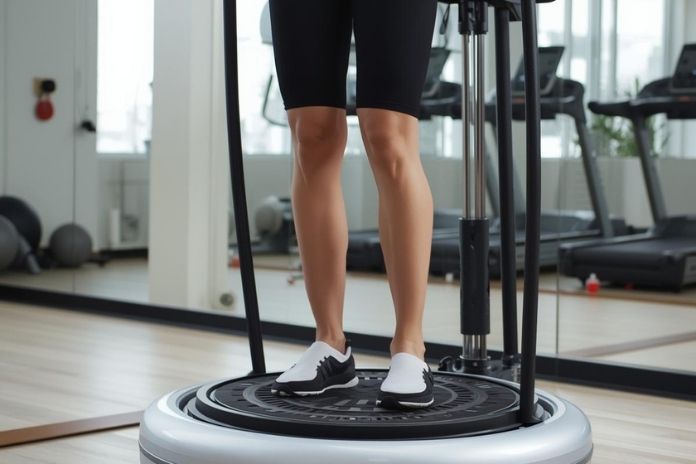
The people most likely to experience meaningful benefits from vibration plate therapy are those for whom traditional exercise presents barriers rather than advantages.
Older adults, for example, often experience age-related declines in muscle activation, balance, and neuromuscular coordination long before significant muscle loss becomes visible.
Whole-body vibration provides a way to stimulate these systems without the joint stress or cardiovascular strain that can accompany conventional workouts.
Individuals who are new to exercise or returning after long periods of inactivity may also benefit. For them, vibration plates can serve as a transitional tool, helping the nervous system relearn movement patterns, supporting early strength development, and building confidence in physical capability.
In rehabilitation and physical therapy settings, vibration plates are sometimes used under supervision to support functional movement when high-load or high-impact exercise is not appropriate.
This includes people recovering from surgery, injury, or prolonged illness. In these cases, vibration is not used as a standalone intervention but as part of a structured rehabilitation plan designed to restore mobility, strength, and coordination.
For athletic individuals, however, the added value is limited. When baseline strength, balance, and neuromuscular efficiency are already high, the incremental gains from vibration tend to be small.
Read More: 12 Best Posture Correctors and Back Support For Better Health
Possible Risks and Side Effects to Be Aware Of
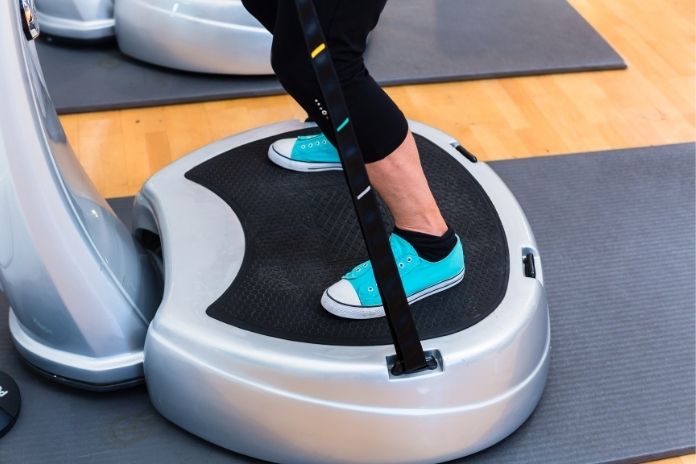
While vibration plates are generally considered safe when used appropriately, they are not risk-free. Side effects such as dizziness, headaches, nausea, or joint discomfort have been reported, particularly when vibration intensity is too high or when sessions are excessively long. These reactions are often signs of overstimulation of the nervous system rather than muscle fatigue.
Improper posture during use, such as locked knees or poor spinal alignment, can increase the transmission of vibration to sensitive joints and the lower back. This can worsen the discomfort rather than relieve it.
Overuse is another concern. Since vibration feels passive, users may underestimate its cumulative stress on the body and exceed recommended exposure times.
Certain populations should approach vibration plates with caution or avoid them unless cleared by a medical professional. This includes people with cardiovascular conditions, neurological disorders, balance impairments, recent fractures, joint replacements, or pregnant women.
How to Use a Vibration Plate Safely and Effectively
Using a vibration plate safely requires restraint rather than intensity. Short sessions, often lasting no more than 10 to 15 minutes, are typically sufficient to stimulate neuromuscular activation without overwhelming the system. Starting at low frequency and amplitude allows the body to adapt gradually, reducing the risk of adverse effects.
Posture is critical. Maintaining a slight bend in the knees, engaging the core, and keeping the spine neutral help absorb vibration through the muscles rather than transmitting it directly to the joints or the lower back. Footwear also matters; supportive shoes can reduce excessive vibration exposure to the feet and ankles.
Progression should be conservative. Increasing vibration intensity too quickly does not accelerate benefits and often leads to discomfort. In practice, consistency and correct positioning matter far more than higher settings.
This is one reason vibration plates are often more effective under professional guidance in rehabilitation or clinical settings.
Vibration Plate vs Traditional Exercise: How to Think About It
A common misconception is that vibration plates offer a shortcut to the benefits of conventional exercise. While vibration increases muscle activation and neuromuscular engagement, it does not replicate the cardiovascular demands of aerobic exercise or the mechanical tension.
Traditional strength training challenges muscles through progressive overload, while cardiovascular exercise improves heart and lung function through sustained energy demand. Vibration plates operate primarily at the level of neural stimulation and postural control. As a result, their benefits are just complementary.
The most effective use of vibration plates is as an add-on. These enhance muscle activation during simple movements, supporting balance training or providing a low-impact option on days when heavier training is not possible. Replacing traditional exercise with vibration, however, leads to gaps in fitness rather than efficiency.
The Practical Takeaway on Vibration Plate Benefits
The real benefits of using a vibration plate are specific, situational, and modest. Whole-body vibration can support muscle activation, balance, and low-impact movement, particularly in older adults, beginners, or individuals with physical limitations. It may also serve as a useful tool in supervised rehabilitation and physical therapy settings.
Vibration plates cannot bypass the fundamental requirements of health and fitness, including regular movement, progressive challenge, and metabolic demand. Users who approach vibration plates with realistic expectations tend to see the most value, while those expecting dramatic weight loss or strength gains are often disappointed.
When integrated thoughtfully, vibration plates can enhance a broader exercise routine, but they are not a replacement for it.
FAQs
Q: Do vibration plates really work?
A: Yes, vibration plates can support muscle activation, balance, and low-impact movement. It is used correctly, but its benefits are targeted.
Q: How often should you use a vibration plate?
A: For most users, two to four sessions per week are sufficient to gain benefits without overloading the nervous system.
Q: Are vibration plates safe for daily use?
A: Daily use can be appropriate at low intensity with short sessions. However, higher settings increase the risk of discomfort and overuse symptoms.
Q: Can vibration plates replace the gym?
A: No, vibration plates do not replace strength or cardiovascular training and work best as a supplemental tool, not a substitute.
References
- VEIN Treatment Clinic – Do vibration plates work for circulation & vein health
- Power Plate – How often should I use a vibration plate
- Hypervibe – Disadvantages of vibration machines
- GoodRx – 6 benefits of vibration plates
- PMC Article – Whole-Body Vibration and Peripheral Blood Flow
- PMC Article – Effects of whole-body vibration training on muscle strength
- PMC Article – Vibration and cognitive/physiological functions
In this Article