
















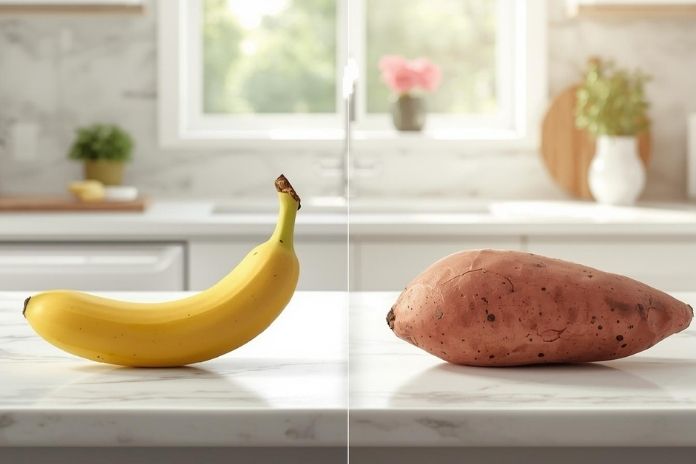
You have half an hour until kickoff or before you step into the gym. Your mind is focused, and your muscles are ready, but do you have enough energy to perform your best? The answer largely depends on what you’ve eaten beforehand.
Proper nutrition before exercise is a critical factor in achieving physical goals. Properly selecting foods before your workouts will improve your energy levels, performance, and recovery rate. The opposite occurs if you eat the wrong foods and train with little or no energy.
Pressed for time, athletes and gym-goers sometimes grab a quick-carb food for energy to get them through the session, like sweet potatoes and bananas, which are packed with nutrients for a balanced and sustained source of fuel.
However, choosing ideal pre-workout food isn’t just about eating something healthy. It is also about selecting foods your body can digest quickly and use efficiently for fuel.
In this article, we’ll compare sweet potatoes and bananas, explore the science behind the pre-workout nutrition, and also help you decide which option will best suit your training needs.
Read More: Yam vs. Sweet Potato: What’s the Difference and Which Is Healthier?
30 Minutes Before Workout—What Your Body Really Needs
When you exercise, you must keep your engine going since your body is your car. It entails providing your body with energy by consuming wholesome foods and drinking enough water. A healthy diet can improve athletic performance and recuperation.
There are no hard-and-fast restrictions, and you are not required to follow a strict schedule. However, there are a few things you should do before, during, and after your workout.
Carbohydrates should make up the majority of the nutrients in a pre-workout meal because they are macronutrients that the body uses immediately. Since protein takes longer to digest and doesn’t immediately meet your activity’s needs, you should consume a small amount rather than a large portion.
Research to date has found no clear-cut relationship between performance and the type of carbohydrate consumed. To reduce the risk of gastrointestinal distress during the activity, fat and dietary fiber should also be kept to a minimum.
“Regular foods” like a bagel with peanut butter are great. “Convenience foods” such as energy bars or replacement drinks might also be helpful to you, since you will know approximately how many calories they contain and what percentage you want to spend on carbs, protein, or fats.
Depending on their needs, those who exercise may also add a glass of low-fat chocolate milk, a piece of fruit, or another favorite carbohydrate.
“It’s like putting gasoline in a car. If there’s no gas in the car, the car doesn’t move. Your body needs food to fuel workouts,” says Natalie Rizzo, dietitian and nutrition editor.
The Quick Fuel Champion—Why a Banana Wins 30 Minutes Before Exercise
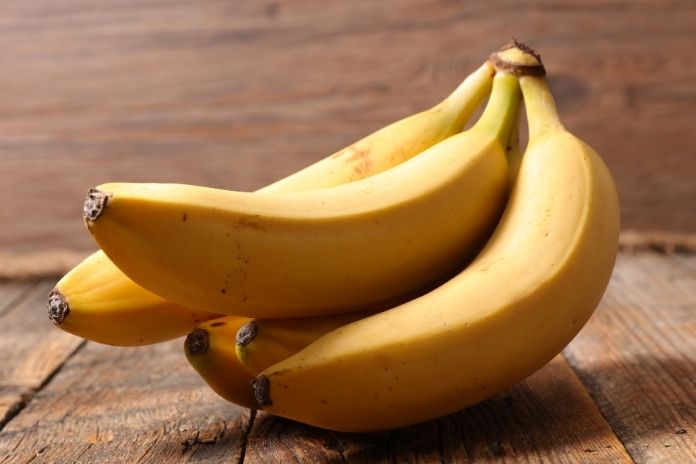
A banana serves as one of nature’s most effective energy boosters when you’re pressed for time before a workout. It’s lightweight, digestible, and precisely formulated to provide quick nourishment when your body doesn’t have much time to get ready.
Here’s why this unassuming fruit is known as a pre-workout powerhouse.
Fast-Digesting Natural Sugars for Instant Energy
Natural sugars found in bananas give you instant energy and help you work harder when you’re exercising to burn fat. Additionally, bananas help reduce mid-session fatigue, which increases the effectiveness of your workout.
When consumed properly, bananas, which are rich in fiber and resistant starch, increase satiety and metabolism. Eating a banana 30 to 45 minutes before a regular workout helps those who are always trying to lose weight.
Potassium Power to Prevent Cramps
Potassium, a necessary mineral that aids in fluid balance and permits healthy muscle contraction, is widely found in bananas. Along with sodium, potassium, calcium, and magnesium, potassium is an electrolyte.
Electrolytes, such as sodium and potassium, release an electrical charge that can cause your body to move or cause your motor neurons to react. Cramping may occur if that is disturbed or if you are deficient in potassium.
Experts point out that while research is conflicting on bananas’ ability to relieve muscle cramps, eating bananas won’t have a direct impact on cramping.
Read More: The Sweetest Superfood: 19 Sweet Potato Benefits, Tips & Quick Recipes
How to Prevent a Blood Sugar Dip
Bananas are a quick source of energy, but they can help keep blood sugar constant when combined with a small amount of fat or protein. Consider including some Greek yogurt, a few nuts, or a spoonful of peanut butter. This allows a slight slowing of energy absorption to prevent a drop in energy levels while exercising.
Ideal for
During shorter-duration activities, team sports, HIIT, and aerobic workouts, the body requires immediate and reliable energy sources to sustain performance.
The Slow Burner—When Sweet Potatoes Work Better
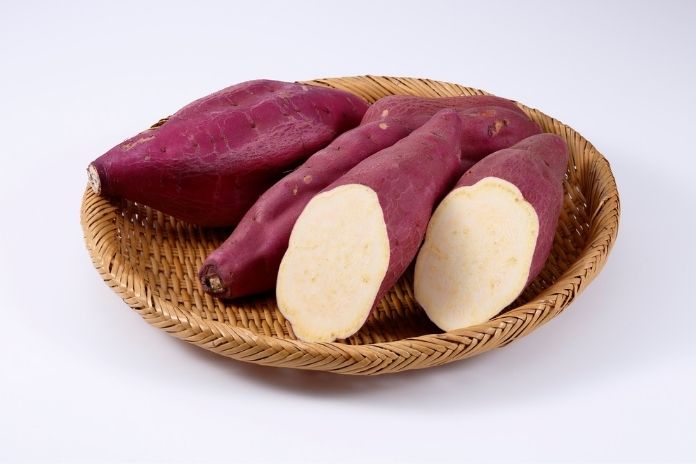
Sweet potatoes have a distinct role in performance nutrition, while bananas are excellent for rapid pre-workout nourishment. They serve as a slow-burning power source that keeps you going when workouts take longer and energy demands remain high, rather than being made for last-minute energy.
Complex Carbs for Long-Term Energy
Carbohydrates mostly fuel exercise, and sweet potatoes contain complex carbohydrates, which are long chains of sugar molecules. Complex carbohydrates in food break down gradually, providing sustained energy for your workout.
“They also have potassium and magnesium, two electrolytes lost in sweat,” says Elizabeth Shaw, registered dietitian. “The body needs to keep these electrolytes in balance during a sweat session to maintain proper hydration,” she adds.
Eating a sweet potato before a workout replenishes your electrolytes and supports proper hydration.
Timing Matters
Timing is essential since sweet potatoes digest very slowly. They are best eaten about 2 to 3 hours before your exercise, giving your body enough time to convert their starch into usable glycogen stores in the muscles and liver.
When consumed too soon before doing exercise, especially within 30 minutes, they may sit firmly in the stomach and cause bloating, fullness, or slow movement.
If You Must Eat Sweet Potatoes Close to Workout Time
If you have a workout coming up soon, planning is essential, especially if sweet potatoes are your only option. Rather than baking or roasting them, boil or steam your sweet potatoes. Softening the structure of the starch makes it more digestible, resulting in a slow to moderate glycemic response.
Ideal for
Endurance athletes, long-distance runners, or early-morning exercisers who require sustained sustenance following an overnight fast.
Read More: Does Eating a Banana Before Bed Really Help You Sleep? What the Science Says
Banana vs Sweet Potato — Head-to-Head Comparison
Here is a summary of significant nutrient differences between bananas and sweet potatoes based on the USDA and NIH research from 2020.
It provides a comparison of the nutrient amounts that exist in 100 grams of the food for both bananas and sweet potatoes (100 grams of food for each type).
- Bananas and sweet potatoes are both rich in potassium and dietary fiber.
- Bananas have 66% more sugar than sweet potatoes.
- Bananas contain more lutein + zeaxanthin and alpha-carotene than sweet potatoes, but sweet potatoes have more beta-carotene.
- Pantothenic acid and thiamin are higher in sweet potatoes.
- Vitamin A is abundant in sweet potatoes.
How to Choose Based on Your Workout Goals
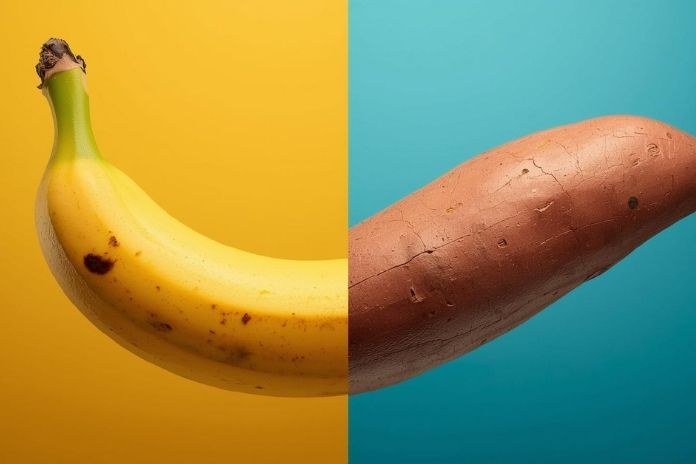
Selecting between sweet potato and banana is about matching your nourishment to your exercise regimen, not about which meal is “healthier.” Once you start moving, making the right decision can make the difference between feeling motivated and feeling burdened.
For Quick Energy (30-Minute Window)
If you’re only 30 minutes from a workout, a ripe banana is your best bet. The sugars it contains come packaged in an easily digestible style that will get into your system and give you an instant blast of glucose for hardworking muscles.
Perfect for last-minute training sessions after a tiring day, a banana is light to carry, light on your stomach, and requires no prep. For a bit more staying power, add a tiny spoonful of nut butter.
For Long Workouts (1.5–3 Hours Later)
Choose sweet potatoes if you’ve got time to eat beforehand and are in for a long workout session. A boiled or steamed sweet potato will provide complex carbs that digest slowly, allowing your muscles to store glycogen before your workout.
If you’re in for a couple of hours or a session of endurance work or sports that require ongoing stamina, this slow release of energy is ideal.
For Sensitive Digestion
Start with smaller servings of both foods if you have a sensitive stomach before working out. Overindulging in even healthful foods might cause discomfort because everyone has a different digestive tolerance.
Bonus Tip—Hydration and Electrolytes Matter Too
Appropriate carbohydrate fueling is just one aspect of performance. Electrolyte balance and hydration also play a crucial role in how effectively your body functions during exercise.
Electrolytes: Eat foods like fruits, leafy green vegetables, fatty salmon, low-fat dairy products, nuts, and seeds to replenish electrolytes. All of them provide your body with the minerals and electrolytes it needs.
Fluids: You can add some slices of lemon, lime, or cucumber to your water to enhance its flavor. Mix 100% fruit juice, such as orange juice, into your water to add carbohydrates and hydration. A hydrating and nutrient-dense snack can be made by eating whole fruits or vegetables with high water content, like melons, oranges, grapes, berries, carrots, or lettuce.
Read More: Banana at Night for Weight Loss: Good Idea or a Mistake?
Conclusion
The timing of your pre-workout nutrition is key. Both sweet potatoes and bananas offer uniquely potent benefits, just at different times depending on the specifics of your training schedule and style.
If you’re about to hit the gym in 30 minutes, a ripe banana will give you fast and easy-to-digest energy. A couple of hours before a workout, sweet potatoes provide long-burning fuel that helps you sustain a more extended training session.
You may steer clear of common pre-exercise blunders like feeling lethargic, bloated, or underfueled by being aware of how your body breaks down various carbohydrates.
References
- Caroline Kee. The no. 1 fruit to eat before a workout, according to a dietitian.
- Cope, H. (2026, January 15). Bananas vs. sweet potatoes: Which is better for blood sugar and weight management?
- American Diabetes Association. Eating tips before and after exercise.
- American Heart Association. (2024, July 31). Food as fuel before, during and after workouts.
- Yahoo Lifestyle. (2023, October 12). Why you should eat a sweet potato before you exercise.
- Souper Sage. Nutrition comparison: Sweet potatoes vs banana.
In this Article