















The past few days have been difficult for me. A constant pain in the back made my day-to-day life worse, and all I wanted was to get some rest. When I researched potential causes of back pain, it occurred to me that it might be related to the kidneys. However, it turns out that not all back pain is kidney pain. Read on to know the difference.
Back pain is one of the most common reasons for doctor visits. According to a survey, 80% of all adults have back pain at some time in their lives. For most people, it’s due to muscle strain, poor posture, or wear and tear in the spine.
However, not all back pain is caused by your muscles or bones. Occasionally, what feels like back pain might actually be kidney pain, a message from one of your body’s essential organs indicating that something is amiss.
Because lower back pain is so common, many simply ignore it. But missing the symptoms of kidney pain can postpone treatment for serious illnesses such as infections, kidney stones, or even kidney disease. That’s why it is not only helpful to know the distinction between back pain and kidney pain, but also necessary.
Where the Pain Occurs: Key Location Differences
The location of pain is the first major clue to differentiate between typical back pain and kidney pain.
Back Pain:
- Typically experienced in the lower back, particularly the lumbar spine.
- It can radiate across the buttocks or extend down either one or both legs (sciatica).
- Pain tends to move or alter with position. That is, after or during bending, twisting, or long periods of sitting, which worsens it.
- After heavy lifting, odd sleeping posture, or extended periods at a desk.
Kidney Pain:
- Usually sensed higher up, just below the rib cage, and more to the sides or flank area than to the spine.
- Often presents on one side, although both kidneys can be affected if the problem involves both (as in polycystic kidney disease).
- Ache can radiate to the lower abdomen, groin, or inner thigh, particularly with kidney stones.
- Sensed deeper within the body, not at the surface as with muscle soreness.
A quick way to check: if applying pressure to your back muscles alters the pain, it’s likely to be back-related. If not, and the pain feels internal, the kidneys may be the source of the issue.
Read More: Kidney Stones in Women: Why They’re Often Misdiagnosed as UTIs
What Kidney Pain Feels Like
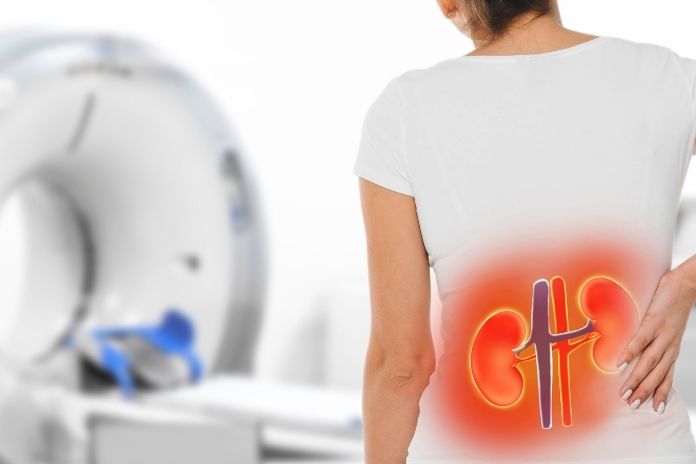
The quality of the pain is another key difference. Kidney pain will generally be:
- Dull, persistent ache, typically associated with long-term conditions such as kidney infections or cysts.
- Severe, cramping spasms, known as renal colic, occur when kidney stones travel through the urinary tract. The pain occurs in sharp bursts and is typically reported as one of the most severe pains a person can experience.
- In contrast to muscle discomfort, kidney discomfort is not typically relieved by rest, stretching, or altering position.
Frequently associated with generalized symptoms such as fever, nausea, or urinal changes.
For instance, a patient with a kidney stone may awaken at night with crushing flank pain that radiates down to the groin. This is quite a different pattern from an overstrained back muscle that improves with changing position.
Helbert Rondon, MD, MS, FACP, FASN, is an associate professor of medicine in the University of Pittsburgh School of Medicine’s Renal-Electrolyte Division and director of UPMC’s Nephrology Fellowship Training Program. He shares his views on back pain and kidney pain. “(Most) back pain is not kidney-related – it’s musculoskeletal,” says Dr. Rondon. “There’s a problem with muscle or bones or something along those lines.” He further adds,” Kidney pain is usually deeper and doesn’t get better or worse depending on whether you move.”
Read More: The Link Between Hypertension and Kidney Health: What You Need to Know
What Back Pain Feels Like

Back pain, by contrast, has a more musculoskeletal and mechanical feel:
- Stiffness and Soreness: Typically worse in the morning or after sitting for extended periods.
- Trigged by Movement: Pain worsens with lifting, bending, or twisting.
- Relieved by Rest: Heat, stretching, massage, or over-the-counter painkillers often alleviate symptoms.
- May Involve Nerves: If a herniated disc is compressing the sciatic nerve, pain radiates down a leg, perhaps accompanied by numbness or tingling.
In contrast to kidney pain, back pain is use-pattern dependent. That is, a patient might only feel it after exercise, a long car ride, or prolonged periods of slouching over a desk.
Other Symptoms That Distinguish Kidney Pain
The occurrence of other symptoms is usually the determining factor in classifying pain as kidney pain or musculoskeletal pain.
Kidney-Related Symptoms:
- Fever and chills are very suggestive of infection(pyelonephritis).
- Nausea and vomiting can be caused by kidney stones or a severe infection.
- Urinary changes
- Blood in the urine, known as hematuria
- Foamy or bubbly urine due to a potential protein spill
- Burning, frequency, or urgency in urine. These are classic UTI symptoms
- Swelling in the ankles, feet, or face. This indicates fluid retention due to inadequate kidney function.
Back-Related Symptoms:
- Localized stiffness of the lower spine.
- Muscle spasms or tightness.
- Numbness or tingling if there is nerve compression (e.g., sciatica).
- No change in urine or systemic symptoms.
If urinary symptoms co-occur with back/flank pain, the chances are greater that the kidneys, rather than the muscles, are the primary issue.
Read More: 5 Essential Exercises to Avoid When Dealing with Back Pain
Common Causes of Kidney Pain
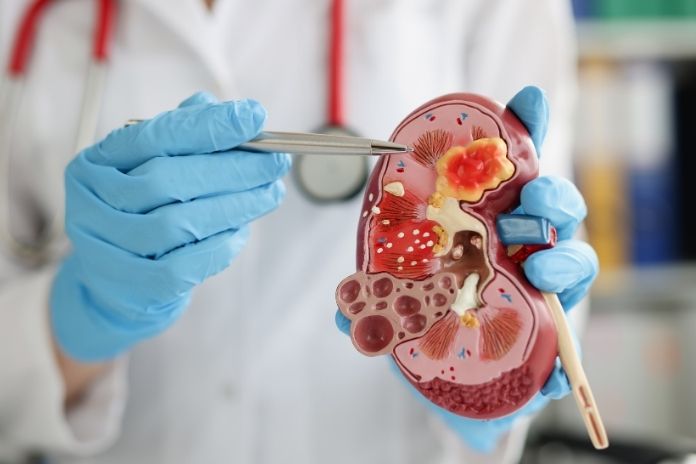
Kidney pain often indicates a medical condition that requires treatment. The most common causes are:
- Kidney Stones: Solid mineral deposits that develop within the kidneys, producing severe cramping pain as they move through.
- Kidney Infection (Pyelonephritis): A severe infection in which bacteria ascend from the bladder into the kidneys. Symptoms may include flank pain, fever, and a burning sensation during urination.
- Urinary Tract Infections (UTIs): A mild UTI, if left untreated, can travel upward to cause pain in the kidneys.
- Polycystic Kidney Disease: A hereditary condition in which groups of cysts grow in the kidneys, producing pain and swelling.
- Other Causes: Hydronephrosis (accumulation of fluid in the kidney), kidney trauma, blood clotting within kidney veins, or kidney cancer.
Common Causes of Back Pain

Lower back pain is common and usually unrelated to the kidneys. Some of the most common causes are:
- Muscle Strain or Ligament Damage: Muscle strain or due to heavy lifting, sports, or unexpected, twisted movement.
- Incorrect Posture: Sitting for long periods at a desk or slouching can overstretch the lumbar spine.
- Herniated Disc or Degenerative Disc Disease: Compression of spinal nerves may result in sharp back pain. This is a symptom of a herniated disc.
- Arthritis or Osteoporosis: Spinal changes that occur with age often lead to stiffness and long-term back aching.
- Inflammatory Conditions: Conditions like ankylosing spondylitis can cause back pain.
In most cases, back pain is temporary and improves with rest, exercise, and adjustments to one’s habits.
When to See a Doctor
Since kidney issues tend to rapidly get worse, it is important to know the red flag signs:
- Sustained or severe flank pain, particularly if it is accompanied by certain symptoms.
- Fever, chills, nausea, or vomiting in addition to pain.
- Blood in urine, painful urination, or inability to urinate.
- Sudden, intense pain not relieved by rest or position changes.
For back pain, see a doctor if:
- Pain lasts longer than a few weeks.
- It is accompanied by numbness, weakness, or loss of bladder/bowel control.
- The pain is so severe that it interferes with daily activities.
Diagnosis & Treatment Options

Here are a few ways to diagnose and treat back pain:
For Kidney Pain:
Diagnosis: Urinalysis, blood tests, and imaging procedures such as ultrasound and CT scan.
Treatment:
- Antibiotics for infection.
- Hydration, pain medication, and occasionally surgery or lithotripsy for kidney stones.
- Treatment of long-term conditions (e.g., dialysis or transplant in advanced disease).
For Back Pain:
The diagnosis for back pain includes a physical examination and, if necessary, imaging studies (X-ray, MRI).
Treatment:
- Heat/cold treatment, physical therapy, and correction of posture.
- NSAID pain relievers over the counter.
- In severe cases, steroid injections or surgery.
Conclusion: Trust Your Body’s Signals
Back pain is typically mechanical, related to posture, overuse, or spine disorders.
Kidney pain is more often higher, deeper, and one-sided, and usually accompanies urinary or systemic symptoms.
If you ever notice flank pain accompanied by fever, nausea, or changes in your urinary tract, don’t dismiss it. As the National Kidney Foundation stresses, early diagnosis can avert dangerous complications and protect long-term kidney function.
When in doubt, listen to your body and see a doctor early.
References
- https://pmc.ncbi.nlm.nih.gov/articles/PMC11993206/
- https://www.hopkinsmedicine.org/health/conditions-and-diseases/spinal-arthritis
- https://www.ncbi.nlm.nih.gov/books/NBK441822/
- https://www.ncbi.nlm.nih.gov/books/NBK441822/
- https://www.niddk.nih.gov/health-information/urologic-diseases/kidney-infection-pyelonephritis/symptoms-causes
- https://www.nanavatimaxhospital.org/blogs/is-your-back-pain-an-indication-of-kidney-stones
In this Article