















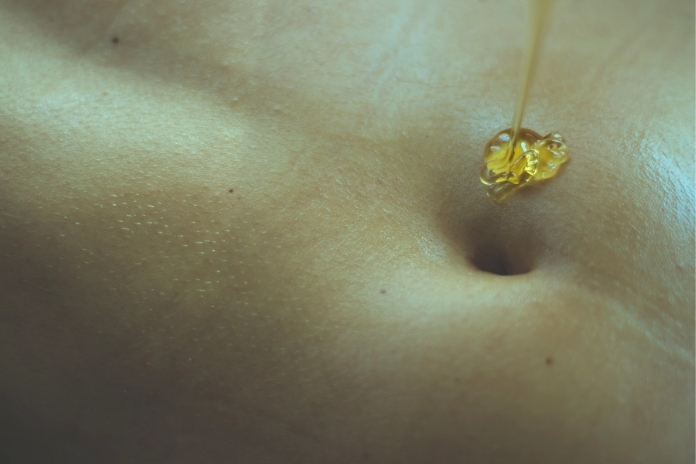
Ghee is loved by many, especially Indians. Most people cannot do without having a dollop of ghee in their everyday meals. Eating ghee has proven to be beneficial in so many ways. However, just recently, I found out a few other benefits of ghee that go beyond just digestion and good health.
Ayurveda has given us simple yet powerful practices for centuries that combine the body, mind, and soul. One of those practices that has gained popularity is massaging pure ghee on the navel during sleep time. It is also known as Nabhi Chikitsa or Ayurvedic treatment for the navel, and it is said to enhance the overall health of a person, provide the skin with a radiant appearance, and enhance digestion.
Now, in the age of wellness, when old remedies converge with new science, people are again talking about belly button oiling, holistic body care, and ghee for skin and health. Maybe you’ve heard it can moisturize dry skin, calm chapped lips, or is just one of those ancient Indian health secrets that have been whispered down the generations. Perhaps many people are asking: Can putting ghee on the belly button do anything?
In this article, let’s understand the Ayurvedic roots, how the process works, potential benefits, and what modern science has to say about this ancient tradition.
The Ayurvedic Perspective
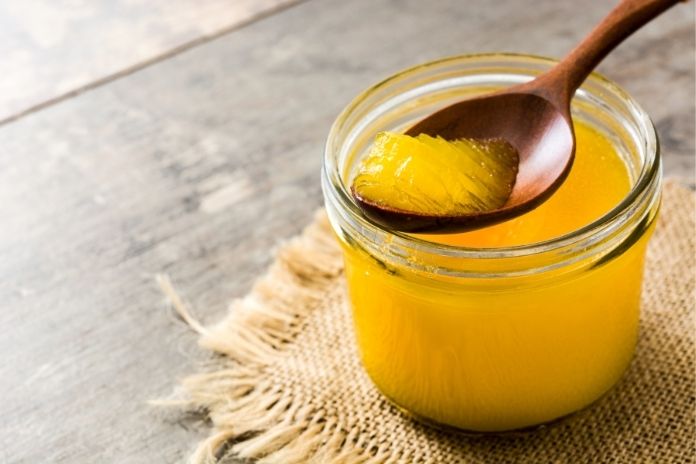
The navel or belly button (nabhi) is a primary point of energy and nutrition in Ayurveda. This form of umbilical point therapy, or Nabhi Chikitsa, relies on the theory that the belly button is a point of convergence of many organs and systems of the body.
Ancient records state that:
The nabhi is referred to as the “marma point“, a point where pathways of energy intersect. Massaging it with medicinal oils such as ghee is believed to balance the body’s doshas (Vata, Pitta, and Kapha).
Ghee, being rich, oily, and cooling in nature, is believed to calm excess heat (Pitta), feed tissues (dhatus), and grease joints.
By applying ghee on the navel, Ayurveda suggests that the body absorbs its qualities subtly through the skin, promoting wellness from within.
How to Apply Ghee on the Navel

If you wish to try this ritual, here is a simple, step-by-step way to use ghee for belly button oiling:
- Use the right kind of ghee. Select pure, organic, grass-fed cow ghee. Do not use processed or blended varieties because purity is necessary for safety as well as for efficacy.
- Warm it slightly, as lukewarm ghee is more easily absorbed and is calming.
- Lie flat on your back with your stomach exposed.
- Use a few drops. Place 2-3 drops of the melted ghee inside your navel.
- Massage lightly in a circular motion around the navel for 2–3 minutes. This stimulates the circulation.
- Let it soak; you can refrigerate overnight for optimal results. Regularly doing it is essential; do it daily or at least 3–4 times a week.
This nighttime routine is considered to be best because the body is at rest and the ghee has more time to penetrate and act on the system.
Read More: 5 Ancient Alternative Medicine Practices That Stand the Test of Time
Potential Health and Beauty Advantages
Though it is tradition-oriented, the advantages of ghee in navel therapy are generally described within five general categories:
- Maintaining Moist Skin & Lips:
Ghee is a favorite skin cream for dry skin. Applied to the navel, it is said to nourish the skin from within.
Centuries-old remedies recommend ghee for chapped lips and even suggest navel application to soften skin and moisten the lips. Its natural fatty acids can replace lost moisture and give skin a healthy-looking brightness.
- Improved Digestion:

Ayurveda identifies the belly button with digestive fire (Agni). Putting ghee on this point is believed to tickle this fire softly, which helps in digestion and relieves constipation or bloating.
The ritual can benefit the gut by calming stomach issues, but it can’t substitute for eating right.
- Joint and Bone Health:
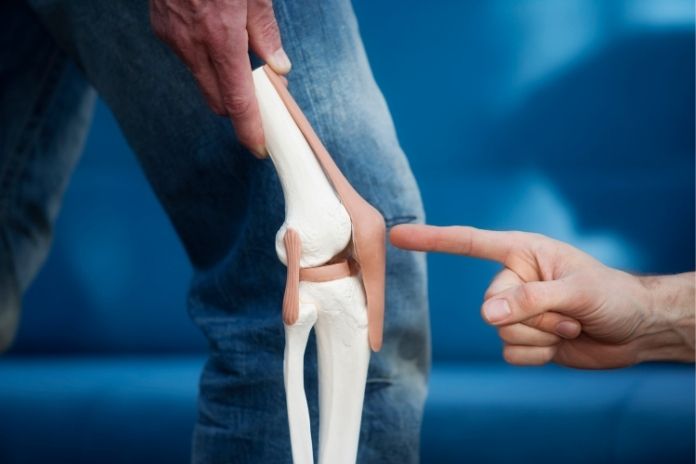
Ghee has butyrate and anti-inflammatory substances that can help joint lubrication and mobility.
Ancient tradition directs ghee belly button oiling to relieve stiffness and encourage long-term bone health.
Read More: Healing with Doshas: How to Balance Vata, Pitta, and Kapha for Better Health
- Hormonal Balance Support:

In ancient cultures, the navel was associated with reproductive well-being. Ayurvedic ghee navel therapy is said to improve fertility, menstrual well-being, and hormonal equilibrium.
In spite of the absence of scientific proof, most women in traditional households still do this ritual as part of their routine health care.
- Stress Relief:

Tummy button rubbing with warm ghee can make you extremely relaxed. Ayurveda considers this process a method of soothing the nervous system, stopping anxiety, and enabling one to sleep well.
This activity, along with the soothing aroma of ghee, can help reduce stress at bedtime or even before bath time.
Scientific Evidence – What the Studies Reveal
When referring to modern science, we find not enough evidence that suggests applying ghee can be very beneficial:
There are no substantial studies on the advantages of consuming things directly through the belly button. The belly button’s skin does not primarily help in the consumption of nutrients, such as the digestive system.
Ghee applied to the skin has been researched extensively. It contains numerous fatty acids and vitamins A, D, E, and K that can be used to feed the skin and heal it.
Research suggests that the anti-inflammatory and antimicrobial activities of ghee (shatdhaut ghrita) help with skin repair, dryness, and wound healing.
Relaxation response is more of a massage effect than absorption, which promotes circulation and engages the parasympathetic nervous system (rest-and-digest state).
In short, although ghee will not “get into the bloodstream” via the navel, it will still aid hydration, relaxation, and local nutrition of the skin.
Read More: 18 Healthy Fats To Eat For A Healthier Well Being
Precautions and Who Should Avoid

Using ghee on the navel is generally safe, but remember to be cautious in certain cases:
- Allergies: If you are allergic to dairy, avoid using ghee. You can substitute it with plant oils like coconut or almond oil.
- Skin Sensitivity: Certain individuals may be irritable or get rashes. Test first with a patch test.
- Hygiene: Clean your belly button region gently before you use it to prevent infections.
- Medical Conditions: If you have chronic digestive, hormone, or skin issues, don’t rely on this practice by itself. Consult a health professional.
Conclusion
Applying ghee to the navel prior to sleep is a tradition that ties ancient wisdom to modern health practice. Ayurveda considers this practice precious because it has numerous healing advantages, whereas science primarily acknowledges its applications in skincare, moisturizing, and relaxing.
It is, for others, a gentle bedtime ritual. It is, in fact, one of the most harmless, simple, and very comforting ones. It should not, however, serve as an alternative to medical treatment or professional advice for chronic disease. Though the benefits of applying ghee to the navel have no conclusive proof, it has still been followed for generations as a tradition.
The takeaway? If you have no allergy or skin sensitivity, use it as a complete self-care ritual: a bit of nighttime practice that is a mix of tradition and complements contemporary health.
References
- https://timesofindia.indiatimes.com/life-style/health-fitness/diet/8-reasons-indians-add-ghee-in-dal-and-why-it-should-be-added-in-soups-too/articleshow/114514246.cms
- https://rjpdft.com/HTML_Papers/Research%20Journal%20of%20Pharmaceutical%20Dosage%20Forms%20and%20Technology__PID__2025-17-1-3.html
- https://twobrothersindiashop.com/blogs/food-health/7-practical-benefits-of-ghee-for-skin
- https://www.truemeds.in/ayurveda/digestive-health-and-metabolism/ghee-61
- https://indranicosmetics.com/blog/
- https://www.easyayurveda.com/2017/06/20/nabhi-chikitsa/
In this Article