











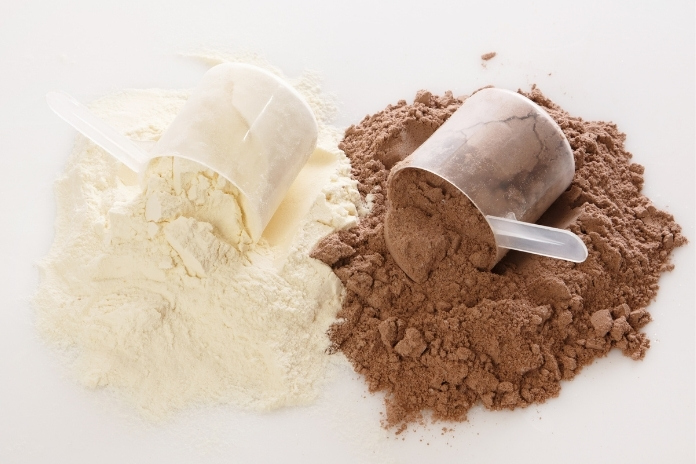
Two of the most widely used protein powders are whey and soy. Which option is better for you? The debate between whey and soy protein often goes beyond muscle-building benefits and extends into concerns about hormone health.
For a clearer understanding of the debate, let’s look at the research itself. Soy protein, according to studies, is as effective at preserving body composition as whey protein is at promoting muscle growth. Their impact largely depends on dosage, intake frequency, individual metabolism, and overall diet.
Understanding the real science behind these proteins makes it easier to make informed dietary choices without unnecessary worry. This article breaks down how whey and soy protein actually affect hormones.
Read More: Protein Powder in Coffee: How to Do It, Why It Works, and What to Watch Out For
How Protein Intake Interacts With Hormones
One essential nutrient for human health is protein. Building and repairing the muscle tissue, producing hormones, and creating new enzymes all require specific amounts of protein. Every single cell in the human body has protein. Our bones, skin, muscles, cartilage, and blood all contain significant amounts of it.
Amino acids make up protein. Long chains are formed by joining these amino acids. Building blocks are amino acids. To produce new protein structures required to carry out particular bodily functions, the body rearranges them.
Protein becomes even more crucial for people doing resistance training. Protein is essential for both muscle growth and repair. Using protein smoothies and powders is one way to ensure you’re getting enough protein.
What’s in Whey Protein That Affects Hormones?
Necessary amino acids found in whey protein, especially branched-chain amino acids (BCAAs) such as leucine, are essential for the creation of muscle protein. The insulin response is also affected by these amino acids.
Whey can help deliver nutrients into muscle cells and aid recovery from workouts by triggering a slight insulin spike. This insulin reaction is not a sign of hormonal imbalance. It is healthy and normal.
What’s in Soy Protein That Raises Hormone Questions?
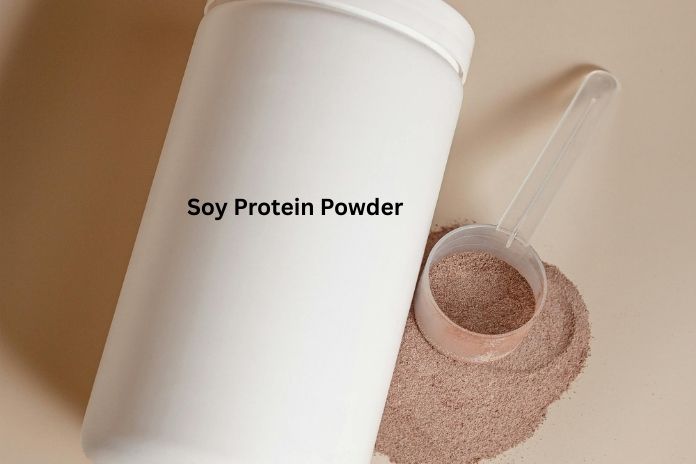
The isoflavones in soybeans are often called phytoestrogens because their structures resemble those of the human hormone estrogen (estradiol). In vitro, phytoestrogens can bind to human cell-surface estrogen receptors, producing mild estrogenic effects.
More recent studies, however, have shown that soy isoflavones did not affect endpoints known to be regulated by estrogen, such as FSH, endometrial thickness, or estradiol itself, measured in post-menopausal women. These studies cast serious doubt on the most widely held concepts of phytoestrogenic activity in humans.
Whey Protein Profile of Amino Acids
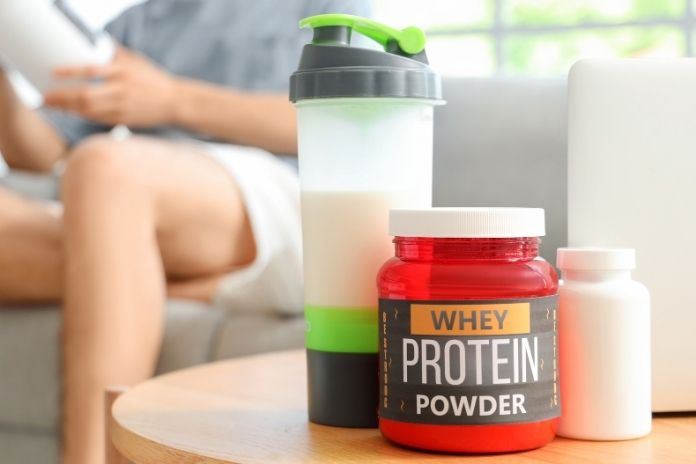
The highest proportion of necessary amino acids can be found in whey protein. Leucine, isoleucine, methionine, and lysine are abundant in whey protein.
- Leucine is a vital BCAA for muscle repair and protein synthesis. Furthermore, it stimulates the production of growth hormones, aids blood sugar regulation, and supports healing.
- Isoleucine is an additional BCAA. Isoleucine is very highly concentrated in muscle tissue and has a role in muscle metabolism. Additionally, it is critical for hemoglobin synthesis, energy balance, and immunological function.
- Methionine is essential for both proper tissue growth and metabolism. Additionally, it facilitates the absorption of zinc and selenium, two crucial elements for maintaining general health.
- Lysine is crucial for protein synthesis. It is also necessary for the synthesis of hormones and enzymes, for calcium absorption, and for energy generation.
Read More: Top PCOS-Friendly Protein Powders for Energy & Metabolism Support
Soy Protein Profile of Amino Acids
As a well-rounded protein source, soy protein performs admirably. It provides a distinct profile of amino acids. Branched-chain amino acids are present in significant amounts in soy protein.
These BCAAs can be readily used and easily converted into energy. Tryptophan, phenylalanine, and arginine are abundant in soy protein.
- Arginine is one of the body’s essential amino acids. It frequently occurs at protein and enzyme active sites. It strengthens the immune system, fights weariness, and supports cardiovascular health.
- One of the necessary amino acids is phenylalanine. The body uses it to make proteins and other vital chemicals.
- Tryptophan is critical to encourage healthy growth. Additionally, it aids in the synthesis and upkeep of muscles, proteins, enzymes, and neurotransmitters.
Soy Protein and Estrogen: What Does the Evidence Show?
The hormone estrogen affects the thyroid, brain, heart, bone, and reproductive health.
Plant substances that resemble estrogen in structure are called phytoestrogens. Many foods, such as soy products, certain nuts, seeds, fruits, and vegetables, naturally contain these substances.
Because of their estrogen-like nature, phytoestrogens can attach to estrogen receptors when they enter your body through food. Hence, phytoestrogens can replicate the effects of estrogen in the body, albeit frequently with less potent results.
The primary phytoestrogens in soy products, isoflavones, can either mimic or block estrogen when they bind to receptors. The type of estrogen receptor they bind to determines this.
Whey Protein and Testosterone: Any Direct Effects?
Whey protein is another widely used supplement, particularly among bodybuilders and other fitness buffs. It is a byproduct of the cheese-making process and is a “complete protein,” containing all nine essential amino acids and being rapidly absorbed.
Whey helps to heal muscle damage from intense workouts. Whey protein powder usually comes in concentrate, isolate, and hydrolysate varieties, with each differing in protein concentration and absorption rate.
Even if whey protein doesn’t directly increase testosterone, it may influence your testosterone levels indirectly via muscle building, which is in high demand for testosterone. It pays to look at exactly how your testosterone works in your body and how protein promotes muscle growth and repair.
Hormonal Effects in Women: Whey vs Soy
Even though soy has generated a lot of controversy over the years, there isn’t much proof that it causes cancer. Nevertheless, soy is regarded as a phytoestrogen, an estrogen produced by plants rather than one our bodies naturally produce.
Whey is one of the most popular and highly bioavailable protein sources, and manufacturers mainly use it in protein powders. While many women can occasionally tolerate soy-based proteins, excessive consumption may not be beneficial, particularly for those with endometriosis and other estrogen-driven disorders.
It is crucial to keep in mind that whey protein is still derived from dairy and often comes from animals that have been given hormone injections. For “good measure,” many of these hormone-injected cows have been given antibiotic treatments and fed grains instead of grass.
Casein is frequently abundant in whey proteins. A1 and A2 caseins are the two primary forms of casein present in dairy products. A1 protein also releases a peptide on digestion called beta-casomorphin-7 (BCM-7). In some people, it has been linked to gastrointestinal distress, causing symptoms such as gas, bloating, and diarrhea.
Read More: Replenish Your Energy: 6 Best Protein Powders for Men’s Muscle Recovery
Hormonal Effects in Men: Whey vs Soy
The majority of research indicates that whey protein does not directly increase testosterone levels in the blood. Instead, it has a more indirect effect on testosterone, promoting hormonal balance, muscle growth, and recuperation.
Testosterone levels have not been found to increase significantly following whey protein consumption. After six weeks of consistent whey protein consumption and resistance training, testosterone levels did not rise substantially in comparison to individuals who did not drink whey protein, according to a study published in the Journal of Medical Sciences. According to the study’s findings, whey protein alone does not increase testosterone synthesis.
The impact of soy on men’s testosterone levels has generated some debate. It is the most significant androgen (male sex hormone), a potent naturally occurring steroid hormone. It directly increases muscular mass and strength and stimulates growth hormone release, among other anabolic actions.
Additionally, it contributes to bone strength and density, red blood cell production, libido, heart health, reproductive health (sperm production), cognitive function, and the maintenance of a healthy body composition. It accomplishes this by improving fat metabolism to keep us leaner, in addition to aiding muscle growth and maintenance.
There is evidence that eating soy products daily may lower testosterone levels. For instance, one study discovered that young men’s testosterone levels decreased by 19% after consuming 56 g of pure soy protein powder daily for four weeks.
Thyroid Health and Soy Protein
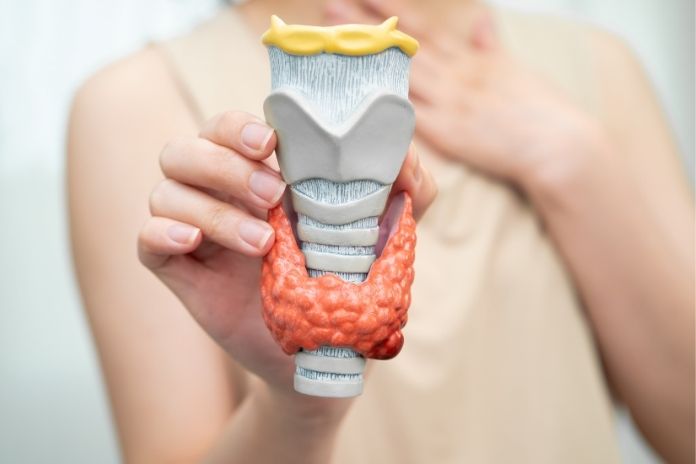
One of the most essential organs in the human body is the thyroid gland, which secretes hormones that control the body’s primary metabolic processes. Therefore, you must take good care of this organ because its significance cannot be overstated.
In this sense, eating the correct foods and maintaining a healthy diet are essential, and soybeans are one thing that deserves particular attention. Nutrients included in soybeans are suitable for the body.
Essential amino acids and isoflavones, plant-derived estrogens, or phytoestrogens have properties similar to those of proteins. In addition, it also contains minerals such as potassium and magnesium, as well as vitamins such as folic acid. Together, these provide soybeans with an excellent nutritional profile that also helps to reduce thyroid-related problems.
When Whey May Be the Better Hormonal Choice
For people whose main objective is to gain muscle, whey protein might be a better choice. Leucine and other branched-chain amino acids, which are abundant in it, directly promote the production of muscle proteins. This mechanism promotes a healthy anabolic hormone milieu, including appropriate insulin levels, and aids in development and recovery.
Those without lactose intolerance or dairy sensitivity will also benefit significantly from whey. Since whey is derived from milk, those who can tolerate dairy products can digest it effectively without pain or inflammation. Good whey isolates are even simpler on the digestive system because they include less lactose.
When Soy May Be the Better Hormonal Choice
Those sensitive to the skin, those who experience flare-ups, or individuals with lactose issues may find that soy protein is the preferable option. Whey is a dairy protein, so sensitive individuals may experience breakouts or digestive problems.
The lactose-free alternative is soy, offering high-quality protein without the possible inflammatory response that dairy products can trigger for some.
For people on plant-based or vegan diets, soy is also a perfect option. It is a complete protein source since it is one of the few plant proteins that contains all essential amino acids.
Read More: Essential Mass Gainers: Calorie-Dense Supplements for Bulking Up
Conclusion
For most people, whey and soy protein can be included in the diet with little concern about hormone disruption when consumed regularly in normal amounts. No protein supply, all on its own, is a hormone trigger. Hormone health depends most on the big picture: daily dietary choices, a weekly balance of meals, quality of sleep, stressors, and total energy consumption.
Choosing whey protein over soy protein has a much smaller effect than regularly skipping your meals, eating little food, or experiencing any long-term stress. Selecting a protein that works for your digestion, taste preferences, and lifestyle is far more crucial than worrying about hormones.
References
- InsideTracker. (2024, February 6). Soy protein vs. whey protein: Which one is better?
- Paul C. Henning, Ph.D. CSCS. Whey vs soy protein supplementation on hormonal responses to resistance exercise.
- Life Extension Magazine. (October, 2024). Whey Protein and Hormones.
- Reinagel, M., MS, LDN, CNS. (2025, August 1). The science on soy.
- Merve, Ceylan. (2025, September 18). Does soy have too much estrogen? What the latest research says.
- Time4Nutrition. (30 August, 2022). Soy versus whey: which provides a better hormone response to resistance training?
- Eurofins US Food Testing. Unlocking the science of A1 & A2 protein testing.
In this Article