














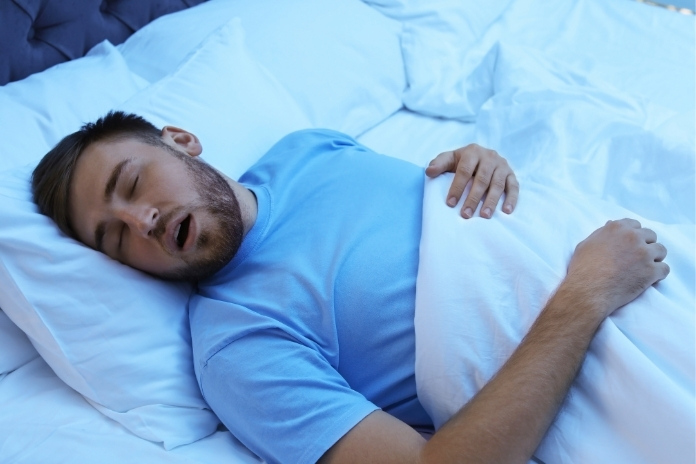
When you are just on the verge of falling asleep, your body instinctively jerks. Your leg kicks, your arms twitch, or you feel as if you are falling off a step that isn’t there. Your heart skips several beats, and before you know it, you are wide awake again.
Have you ever woken up with a jerk when you’re falling asleep, wondering, “Why does this keep happening to me?” Well, if you have, then you’re not alone, because this phenomenon is called a ‘hypnic jerk.’ Although they can sometimes be associated with several other things.
Hypnic jerks are extremely common. Usually, they are harmless. Noticing that they are affecting your sleep or if they occur every night might indicate nervous system stimulation or lifestyle factors.
This article will define what hypnic jerks are, why they happen, and why they sometimes escalate, and will provide guidance on when it is necessary to have them further examined.
What Is a Hypnic Jerk?

A hypnic jerk is a muscle spasm that happens when a person transitions into sleep and when the brain transitions from being awake to being in a state of sleep. During the short period of sleep transition, the brain’s connection with the muscle sometimes goes haywire due to the instability of the brain at the point of the transformation.
Hypnic jerks can also be called sleep starts or sleep onset myoclonus. Hypnic jerks, medically known as myoclonic jerks, come under the broader category of muscle movements, also known as myoclonus, which occur involuntarily and in sudden bursts.
What’s unusual about hypnic jerks is the timing of their occurrence, at the exact point that a person’s consciousness slips away.
Unlike some sleep disorders that involve movement throughout the sleep, a person experiencing hypnic jerks experiences them for one or two instances as he or she falls asleep.
Research suggests that up to 70% of people experience hypnic jerks at some point. Hypnic jerks are not characteristic of a disease or neurological problem in healthy people.
Read More: What Sleeping on Your Left Side Does for Heartburn Relief
What Does a Hypnic Jerk Feel Like?
Although hypnic jerks are medically benign, the sensations they produce can feel quite dramatic and alarming. Many describe a sudden jolt that runs through the entire body, a sharp kick in the legs. Other times, vivid sensations of falling, tripping, or missing a step may be present. Some also experience a brief visual image or dreamlike flash that disappears instantly.
It is also common for hypnic jerks to be accompanied by a racing heartbeat, shallow breathing, or a flash of alertness. These reactions occur because the startle reflex briefly arouses the nervous system.
The reason why hypnic jerks feel so intense is a matter of timing. The brain has already started to reduce awareness and muscle tone so that when a sudden motor signal fires, the contrast feels significant, even though the physical movement itself is minor.
Dr. Vipul Rustgi, MBBS, MD, consultant physician and diabetologist, shares, “The sudden jerk, when you feel like falling off, gives you a sudden jerk while dreaming. These are common and randomly occur within people of any age or sex. However, the causes behind these jerks are not yet clear.”
What Causes Hypnic Jerks? (What’s Happening in the Brain)

Hypnic jerks occur during a very complex physiological switch between wakefulness and sleep.
As the individual drifts off to sleep, there is a gradual decrease in the activity of the areas of the brain that handle movement and arousal, in parallel with the increase in the activity of the sleep-promoting pathways. Muscle tone will drop, the rate of breathing will slow down, and the individual will lose conscious awareness of the environment.
While in a relaxed state, when the relaxation signal to the muscles crosses with those motor signals left over from being awake, they briefly interfere with each other. As a consequence, a contracting muscle produces a sudden contraction, or what one recognizes as a hypnic jerk.
Another common explanation is based on evolution. Being quick to relax muscles, people might experience a momentary sensation of falling, causing them to involuntarily “catch” their body. Though this explanation is not scientifically proven, it explains why some people experience a sensation of falling.
Importantly, hypnic jerks are considered a benign neurological phenomenon. They are not signs of nerve damage, brain disease, or degeneration.
Read More: Blue Light vs. Red Light: Which Is Better for Sleep Hygiene?
Common Triggers That Make Hypnic Jerks Worse
Hypnic jerks can occur randomly, but certain conditions increase their frequency and intensity by overstimulating the nervous system.
Sleep Deprivation
A tired mind and body can make the nervous system unstable when falling asleep. Rather than rewinding smoothly, the brain stays awake, which may lead to incorrect signals due to the irregular way the brain shuts down. Odd sleep times, like late nights and early mornings, can trigger this issue as well.
Stress and Anxiety
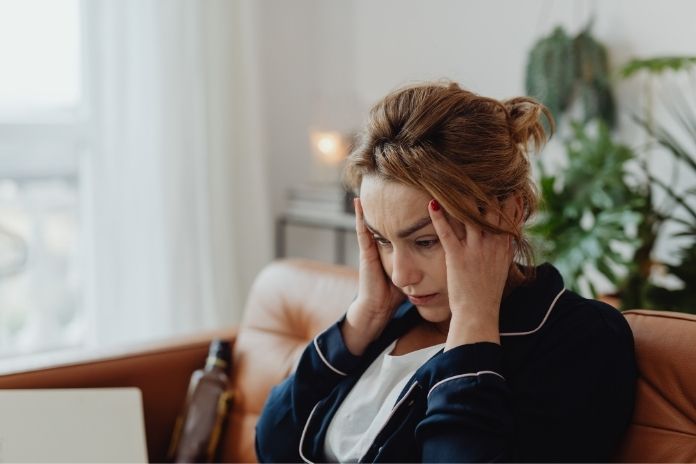
Mental stress puts the brain in a hyperaroused state. Even if you feel physically fatigued, mental worries may frustrate nervous system recovery. This condition heightens alertness, thereby triggering more hypnic jerk episodes due to the enhanced startle reactions brought about by increased alertness.
Caffeine and Stimulants
It acts directly on the central nervous system, interrupting the transition to sleep. Coffee, energizers, and pre-workout formulas, as well as the use of nicotine, can lead to increased twitching during the transition to sleep, especially if taken in the late afternoon or near bedtime itself. Some individuals can be very sensitive, and consuming caffeine in the early afternoon can disrupt their transition to sleep.
Intense Evening Screen Use

Screens emit bright light that reduces the production of melatonin and keeps the brain actively engaged. The brain is then less likely to easily disengage from the wakeful state due to the interrupted transition from wakefulness to sleep, hence increasing the chances of body jerk occurrences.
Late-Night Exercise
Exercise is beneficial for sleep overall, but intense workouts close to bedtime raise adrenaline, heart rate, and core body temperature. This delays muscle relaxation and nervous system downshifting, increasing hypnic jerk frequency in some individuals.
Are Hypnic Jerks Dangerous?
Hypnic jerks in most people do not cause serious problems or need medical attention.
They do not affect the brain, are harmless in the long run, and are also not a symptom of epilepsy or neurodegenerative diseases. Repeated hypnic jerks can be harmless, even if they may be annoying or disturbing in nature.
Moreover, the crucial aspect of hypnic jerk attacks is whether the incidence of hypnic jerks is only an occasional nuisance or whether the issue is causing a substantial impairment of sleep efficiency and wakefulness.
Hypnic Jerks vs Other Sleep-Related Movements
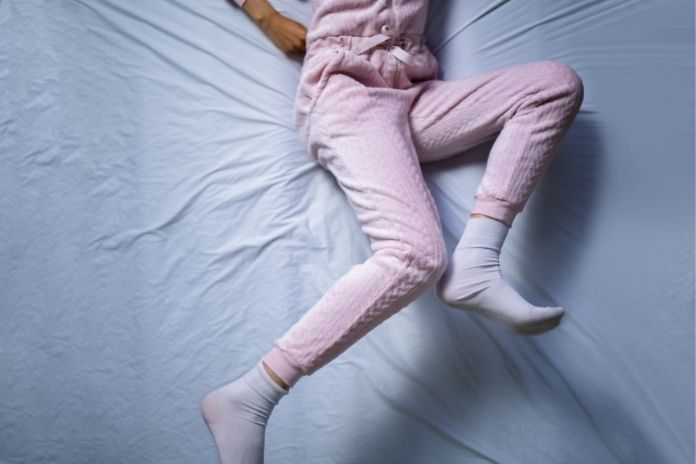
Hypnic jerk can be confused with other sleep-related disorders involving movements, which makes correct differentiation essential.
Unlike restless leg syndrome, hypnic jerks do not entail any unpleasant sensations or urges to move the legs. This is because, in restless leg syndrome, unpleasant sensations worsen at rest but get relieved with movement, which is not the case with hypnic jerks.
Hypnic jerks, however, also differ from other disorders of chronic sleep myoclonus, in which muscle spasms occur repeatedly throughout the sleeping period.
These seizures also differ from nocturnal seizures, which can involve impaired awareness, confusion following the seizure, or other neurological symptoms. Hypnic jerks do not involve loss of memory, biting the tongue, or post-event confusion.
When Hypnic Jerks Might Signal Something Else
Although uncommon, further examination may be necessary if hypnic jerks occur many times per night, lead to constant insomnia, or are accompanied by unusual symptoms.
Warning signs include repeated episodes that prevent sleep altogether, jerks accompanied by confusion or loss of awareness, or a personal history of neurological conditions. In these situations, a clinician may recommend a sleep study or neurological assessment to rule out other causes.
Read More: Circadian Eating for Better Sleep and Digestive Health
How to Reduce Hypnic Jerks Naturally

Hypnic jerks can be reduced in most people by focusing on smoother transitions into sleep rather than trying to stop the movements themselves. Here are a few effective ways to do that:
- Improving regularity of sleep is one of the most helpful approaches. Sleeping and waking up at regular times each day helps stabilize nervous system oscillations.
- Cutting back on coffee, particularly in the latter part of the day, is an extremely effective way to eliminate sleeping twitches.
- A gradual wind-down routine before bedtime can help. This can involve dimming the lights, turning off stimulating material, and practicing relaxation techniques such as deep breathing exercises or light stretches.
- Controlling stress responses later in the evening and preparing a sleep-conducive environment that is cool, dark, and quiet reduces sleep onset instability as well.
Do You Need Treatment for Hypnic Jerks?
In most cases, individuals don’t have to take any medication or undergo any form of medical treatment for hypnic jerks. In most instances, a physician won’t prescribe medication because of this symptom unless it’s accompanied by a diagnosed sleep or nervous disorder.
Furthermore, the therapy is directed towards the underlying causes, such as insomnia, anxiety, and lack of sleep, among others, rather than the jerking episodes themselves.
Final Takeaway
Hypnic jerks are a common and usually harmless part of the transition from wakefulness to sleep. While they can feel sudden and unsettling, they are typically a sign of nervous system overstimulation rather than a medical problem.
When hypnic jerks become frequent or disruptive, they often reflect modifiable factors such as stress, poor sleep habits, caffeine intake, or irregular schedules. With targeted changes and improved sleep hygiene, most people experience fewer episodes and more restful sleep, without medical intervention.
References
- Times of India. (n.d.). This common falling dream could be a health warning: Understanding how hypnic jerks affect your sleep and nervous system. Times of India.
- National Center for Biotechnology Information. (n.d.). Hypnic jerks. In StatPearls.
- Hening, W. A., & Guilleminault, C. (1992). Caffeine and sleep: Individual sensitivity. Sleep, 15(3), 231–237.
- Mahowald, M. W., & Schenck, C. H. (2005). Insights from studying human sleep disorders. Nature, 437, 1279–1285.
- NHS Borders. (n.d.). Hypnic jerk. Right Decisions.
- Sleep Foundation. (n.d.). Hypnic jerks: Causes, prevention, and treatment.
In this Article