













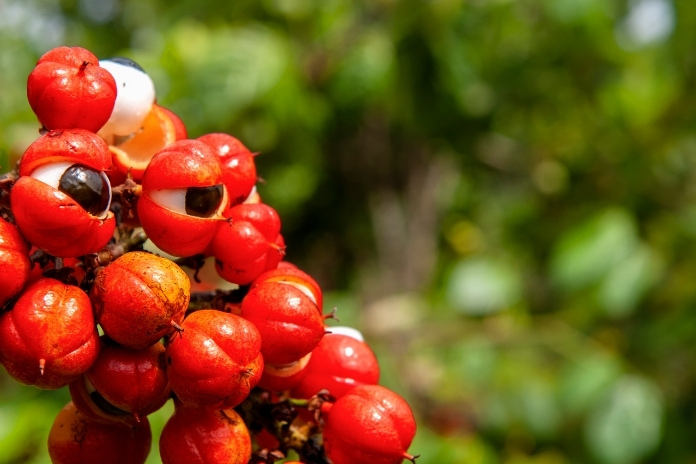
Energy supplements love the word guarana. It sounds exotic, natural, and somehow smarter than plain caffeine. Many products quietly replace the word “caffeine” with “guarana extract” as if that changes how your body reacts.
It does, but not in the way most labels suggest.
Guarana is not a mysterious energy molecule. It is a very concentrated caffeine source, wrapped in plant compounds that slow down how that caffeine hits your system. That difference in delivery is why some people feel “clean energy,” while others feel overstimulated without realizing why.
This article breaks guarana down without hype. No wellness clichés. No miracle claims. Just what it is, how it works, where it helps, where it doesn’t, and why many people misuse it without knowing.
What Is Guarana?
Guarana comes from the seeds of Paullinia cupana, a climbing plant native to the Amazon basin. Indigenous communities in South America used crushed guarana seeds for centuries, not for instant energy, but for staying alert during long periods of physical work, hunting, and travel.
It was also used as a tonic and mild diuretic to quell thirst and hunger and to increase wakefulness. Guarana was also used to treat digestive disorders, painful menses, and headaches.
Traditionally, guarana was:
- Ground into a paste
- Dried into sticks or powders
- Mixed with water in small amounts
It was never meant to be consumed in modern “energy drink” doses. What separates guarana from most stimulant plants is concentration. The seed naturally contains a very high level of caffeine, along with smaller amounts of theobromine and theophylline, compounds also found in tea and cocoa.
That distinction between the plant and its modern use matters. As registered dietitian Beth Czerwony explains, “The guarana seed itself is a natural food that could have some health benefits. But when it’s processed, packaged, and mixed with sugar and other additives, it loses its integrity.”
Today, guarana shows up in:
- Energy drinks
- Fat-burner supplements
- Pre-workouts
- Productivity and focus blends
Its appeal is simple: it contains more caffeine per gram than coffee beans.
How Guarana Works in the Body
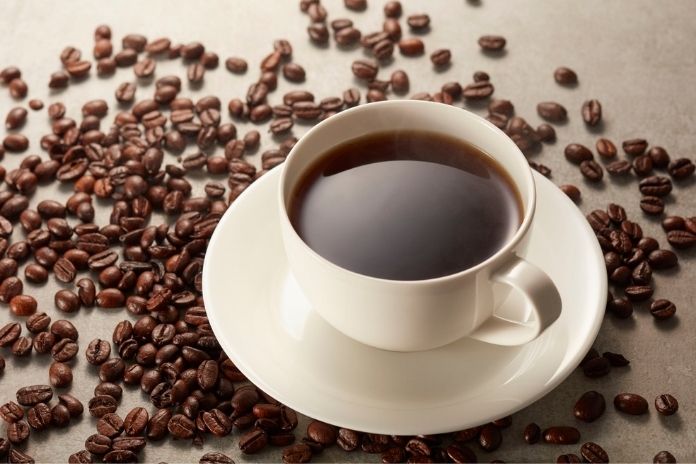
Guarana’s effects are mostly explained by caffeine, but not all caffeine behaves the same way.
1. Caffeine Content, Naturally Bound
Guarana seeds contain caffeine that is bound to
tannins. These plant compounds slow down how quickly caffeine is released and absorbed in the gut.
That’s why:
- Coffee hits fast and peaks quickly
- Guarana often feels slower, steadier, and longer-lasting
2. Supporting Compounds
Guarana also contains small amounts of:
- Theobromine (also found in cocoa; milder stimulant)
- Theophylline (affects airways and alertness)
- Polyphenols (antioxidant compounds)
These do not replace caffeine. They modify how the stimulant experience feels. As Dr. Professor Stephen Myers, Director of NatMed-Research at Southern Cross University, explains:
“Guaraná also contains a whole mix of other compounds that act together to stimulate you over and above its caffeine content.”
That “over and above” effect does not mean increased energy production or a different biological pathway. It means altered timing, intensity, and nervous system response. Caffeine remains the dominant driver.
This is why some people describe guarana as “less crashy,” “more focused,” and “smoother energy.” And others feel:
- Restless hours later
- Unexpected sleep disruption
- Heart pounding without a clear “boost”
The key point: guarana alters perception, not capacity. Muscles do not produce more energy. The brain simply tolerates tiredness for longer. Same mechanism. Different nervous systems.
How Much Caffeine Does Guarana Contain?

This is where most confusion and marketing games happen.
On average, Guarana seeds contain 2–8% caffeine by weight. Coffee beans contain ~1–3%. That means guarana can be 2–4 times more concentrated than coffee. However, supplements rarely use whole seed powder. They use extracts, which may be standardized anywhere from 10% to 22% caffeine or sometimes not declared at all.
Why Labels Can Be Misleading
Many supplements list “Guarana extract – 300 mg.” But do not list: How much caffeine the extract actually provides.
Depending on standardization, that could mean 30 mg caffeine or 90 mg caffeine. “Natural caffeine” is still caffeine. Your heart, brain, and sleep cycles do not care where it came from.
Potential Benefits of Guarana (What Evidence Supports)

When guarana does help, it does so in a narrow, predictable way. Its benefits show up most clearly in short-term alertness and fatigue resistance, driven almost entirely by its caffeine content rather than any unique plant effect.
1. Increased Alertness and Reduced Fatigue
This is guarana’s most reliable effect, and it’s entirely caffeine-driven.
Guarana may help when:
- Sleep is mildly restricted
- Mental fatigue is setting in
- Tasks require sustained attention
It will not help when:
- Sleep debt is severe
- Burnout is emotional rather than neurological
- Nutrition is inadequate
Guarana cannot replace rest. It only delays fatigue signals.
2. Physical Performance and Endurance
Some trials show reduced perception of effort during endurance activities. Others show no meaningful difference once caffeine is matched.
Guarana does not make muscles stronger. It may make fatigue easier to tolerate for short periods. For most people, the effect is subtle, inconsistent, and highly individual.
Calling guarana a performance enhancer is a stretch.
3. Cognitive Function and Mood
Short-term improvements have been seen in reaction time, attention span, and subjective feeling of energy.
There is no strong evidence for:
- Long-term memory enhancement
- Neuroprotection
- Intelligence or learning gains
Any mood lift is temporary and tied to stimulant response, not brain adaptation.
Read More: Top PCOS-Friendly Protein Powders for Energy & Metabolism Support
Common Uses of Guarana Today
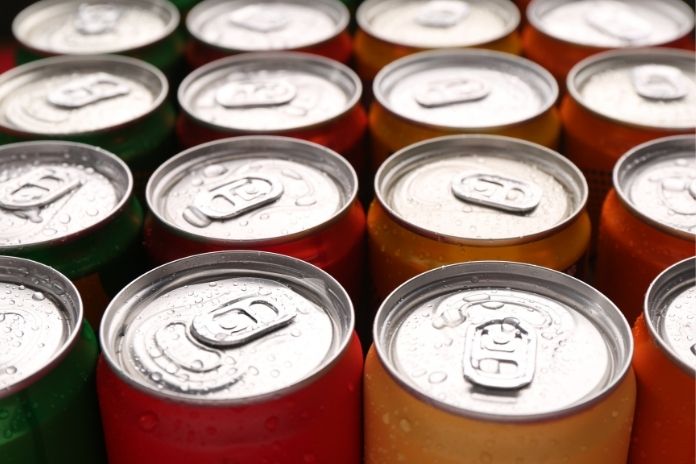
Guarana is rarely used alone anymore. It’s commonly stacked into:
- Energy drinks (often combined with sugar and taurine)
- Weight-loss supplements (appetite suppression via stimulation)
- Productivity blends (with L-theanine, B vitamins, or nootropics)
- “Natural focus” capsules
- Weight-loss teas and powders
The problem is not guarana itself. The problem is stacking multiple stimulants without tracking total caffeine.
Read More: Best NAD+ Supplements for Energy, Aging, and Cellular Health [2025 Edition]
Guarana vs Coffee vs Green Tea

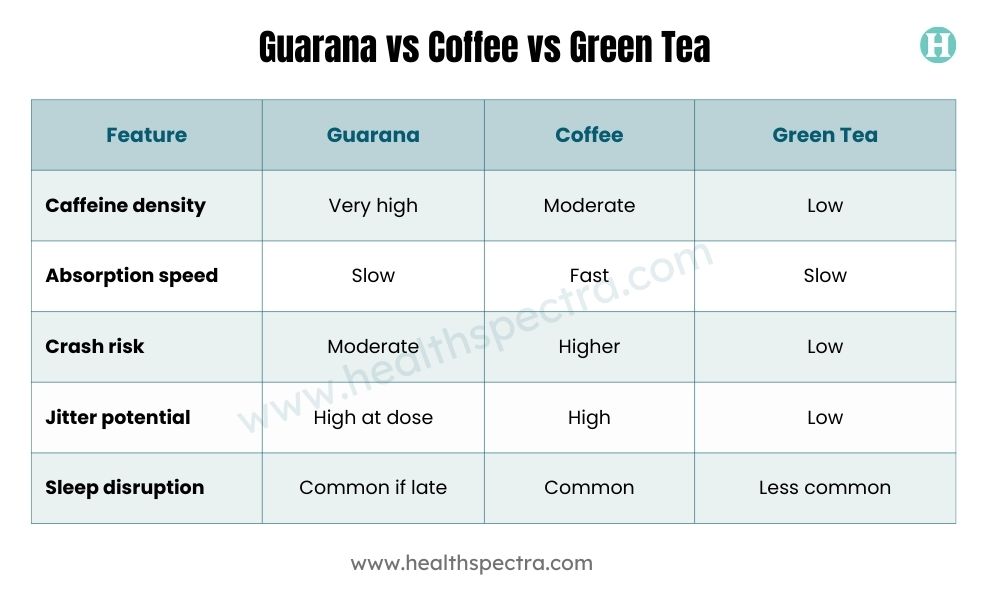 There is no universally “better” option. Individual metabolism and sensitivity matter more than the source.
Read More: 5 Mistakes to Avoid When Trying to Boost Your Energy Levels
Possible Side Effects of Guarana

Side effects are dose-dependent, not moral failings or “detox issues.”
Common ones include:
- Increased heart rate or palpitations
- Anxiety or internal restlessness
- Headaches
- Digestive discomfort
- Delayed sleep onset
- Tremors
- Confusion
- Dehydration
Because guarana is marketed as “natural,” these effects are often dismissed or misattributed. Nature does not reduce pharmacological impact.
Read More: What Is Sleep Chronotype — and How It Affects Your Energy, Productivity & Weight
Who Should Be Careful With Guarana
Extra caution is needed if you:
- Are sensitive to caffeine
- Have anxiety or panic tendencies
- Have heart rhythm issues
- Are pregnant or breastfeeding
- Combine guarana with coffee, pre-workouts, or fat burners
“Natural” does not equal gentle.
Read More: Feeling Tired This Winter? Common Causes and How to Boost Your Energy Naturally
Is Guarana Safe for Daily Use?
Short-term use within safe caffeine limits appears acceptable for healthy adults.
What we don’t have:
- Strong long-term safety data on daily guarana-specific intake
- Clear interaction data with other modern stimulants
The safest rule remains boring but effective: Total daily caffeine matters more than the source. If a substance is required daily to function normally, that is not a performance tool. That is dependency.
Read More: Are Energy Drinks Worse Than Coffee? A Nutritionist Weighs In
How to Use Guarana More Safely
- Always calculate total caffeine, not ingredient names
- Avoid stacking with coffee or energy drinks
- Use earlier in the day; delayed absorption can ruin sleep
- Start with low doses if new
- Take breaks to avoid tolerance buildup
Guarana’s delayed effect is what makes it easy to misuse.
Read More: Best Energy Supplements for C hronic Fatigue: What the Science Shows and How to Choose
Final Thoughts
Guarana is best understood as a concentrated caffeine delivery system, not a unique energy compound. Its slower absorption can feel smoother, but that same property increases the risk of accidental overuse.
Used deliberately, it can support alertness. Used casually, it often explains unexplained anxiety, poor sleep, and racing thoughts. The plant is not the problem. Expectations are.
- Guarana’s effects come primarily from caffeine, not mysterious plant energy.
- Slower absorption can feel smoother, but increases delayed side effects
- “Natural caffeine” is metabolised the same as synthetic caffeine
- Most benefits are short-term; long-term cognitive claims lack evidence
- Research gaps remain on chronic daily use and multi-stimulant stacking
References
- Hack, B., Penna, E. M., Talik, T., Chandrashekhar, R., & Millard-Stafford, M. (2023). Effect of Guarana (Paullinia cupana) on Cognitive Performance: A Systematic Review and Meta-Analysis. Nutrients, 15(2), 434.
- Kennedy, D. O., & Wightman, E. L. (2022). Mental Performance and Sport: Caffeine and Co-consumed Bioactive Ingredients. Sports Medicine, 52(S1), 69–90.
- NIH. (2012). Guarana. PubMed; National Institute of Diabetes and Digestive and Kidney Diseases.
In this Article