












Carpal Tunnel Syndrome (CTS) has always been seen as a “hand overuse problem,” but when you look a little closer, one detail stands out consistently: women experience CTS more often than men. This gap isn’t minor. It’s a strong signal that something deeper is going on, not just work habits or lifestyle choices.
Understanding this imbalance matters because early symptoms of CTS are very easy to dismiss as “tired hands” or “normal numbness.” For women, however, the underlying reasons are far more layered. Once we recognise these layers, anatomical, hormonal, occupational, and medical, prevention becomes more practical, diagnosis becomes faster, and even long-term outcomes improve.
This article breaks down why women are biologically and socially more vulnerable, what research shows, and what steps genuinely help.
Anatomy and Biological Differences – Why Female Physiology Matters

When it comes to CTS, structural and physiological differences between men and women matter more than most people think. These are not “defects” or “weaknesses”; they are natural variations that influence how the median nerve behaves inside the carpal tunnel.
1. Narrower Carpal Tunnel/Smaller Wrist Structure
A lesser-known fact is that women generally have a smaller carpal tunnel area, even when their overall height or body size is similar to that of men. The median nerve and flexor tendons pass through the same tight space, so a few millimeters of difference can decide how easily compression happens.
A smaller space means:
- Any swelling inside the tunnel has a stronger impact
- Mechanical pressure builds faster during repetitive work
- Symptoms may start earlier and show more sensitivity
Clinicians working with hand and nerve disorders often mention that even mild inflammation, which men may tolerate without symptoms, becomes symptomatic in women because the “extra space” simply doesn’t exist.
Some anatomical studies have even suggested that women tend to have a different shape of the carpal tunnel, slightly flatter or elliptical, which influences pressure distribution. These nuances are rarely discussed, but they account for a large part of the gender difference.
2. Hormonal and Physiological Factors
Hormones influence soft tissues more than most people realise, especially in areas where swelling can change nerve pressure.
Key hormonal influences include:
- Estrogen and progesterone fluctuations: These can cause subtle fluid retention or tissue swelling. In a spacious area, this would not matter. In the carpal tunnel, even small changes can increase pressure around the median nerve.
- Pregnancy: Many women develop CTS during pregnancy around the second or third trimester. The reason is not typing or lifting; it’s primarily fluid shifts and increased tissue sensitivity influenced by hormones.
As hand surgeon Dr. Robert C. Kramer explains, pregnancy is a very common, known cause. It’s a nonsurgical cause. It’s usually acute and temporary, but some women retain enough water after pregnancy that it can actually get worse. So, occasionally it’s surgical, but during pregnancy it’s not.
- Perimenopause: Another phase where CTS complaints rise. Lower estrogen levels affect tendons and connective tissues, increasing irritation or inflammation around the nerve.
Hand surgeon Dr. Peter C. Amadio says this problem is more common in women once they’ve stopped having their menstrual periods. He points out that carpal tunnel syndrome typically shows up in women toward the end of menopause, around ages 45 to 55, when their periods have stopped.
So while CTS is often blamed on devices, work, or posture, a large portion of female-specific risk is rooted in biological rhythms.
Read More: How to Prevent DOMS (Delayed Onset Muscle Soreness) Without Skipping Gains
Lifestyle, Occupation, and Social Roles

Physiology sets the root, but lifestyle and daily responsibilities push the condition forward.
Women, across cultures and settings, tend to engage in tasks that require:
- Long hours of fine motor movements (texting, typing, crafting)
- Gripping with force but short breaks (kitchen work, childcare, garment work, packaging roles)
- Repetitive wrist actions (household routines, beauty services, healthcare work)
These tasks are not “heavy”, but they are continuous, and continuous stress is a significant CTS driver. Low-force, repetitive hand motions done for long periods contribute the same mechanical stress that leads to nerve compression.
Another point: women often multitask more with their hands. Switching between a phone, utensils, a laptop, grooming tools, or office equipment might seem harmless, but it keeps the wrist in constant low-grade strain.
In many workplaces, tools and equipment are still designed around male hand dimensions. A slightly larger handle, slightly more force needed to press something, or a keyboard shape that doesn’t fit narrower wrists, these minor mismatches add up over the years.
The result? Higher stress per square millimeter of wrist space.
Read More: Why Your Hands Go Numb at Night — and How to Fix It
Health-Related Risk Factors
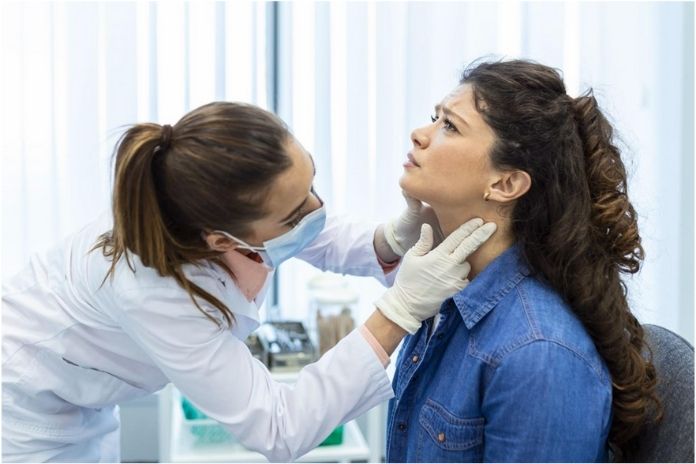
Women also face certain health conditions more frequently, and these conditions indirectly increase CTS risk.
Some examples:
- Hypothyroidism: More common in women. It can cause tissue swelling and slower nerve conduction.
- Autoimmune disorders (e.g., rheumatoid arthritis): These inflame joints and tendons, adding pressure inside the tunnel.
- Diabetes: Slightly shifts nerve sensitivity and tendon health, raising the risk of CTS symptoms.
- Vitamin deficiencies: For example, B12 deficiency is widely seen in women and affects nerve function.
These conditions do not “cause” CTS alone, but they create an environment in which even minor wrist strain leads to quicker symptom onset.
Read More: 12 Home Remedies For Carpal Tunnel – Get Rid Of The Numbness!
Research and Data: What Studies Show
Across clinical studies, the gender gap is consistent.
Some striking findings from various research papers:
- Women are 2 to 3 times more likely to develop CTS than men.
- Pregnancy-related CTS affects 30%–60% of expectant mothers, depending on the study.
- Women undergoing menopausal transitions show a noticeable uptick in nerve compression
- Occupation-based studies report higher CTS rates in sectors dominated by women (assembly, textile, clerical work, design, nursing, beauty services).
Researchers in an earlier study on wrist mechanics found that women’s carpal tunnels tend to be less “stretchy” or compliant. In simple terms, the tunnel doesn’t expand as easily under load. So even small amounts of swelling or everyday hand use can create a sharper rise in pressure. It’s not that women start with higher resting pressure; it’s that their anatomy leaves less room for error once daily activities begin.
One uncommon but insightful finding:
Some EMG analyses have shown that women report symptoms earlier and more accurately, meaning the nerve’s warning signals are picked up sooner. This is not hypersensitivity; this is better biological feedback.
Read More: Trigger Finger vs. Carpal Tunnel: How to Tell the Difference
What It Means for Women – Prevention, Early Warning, and Care
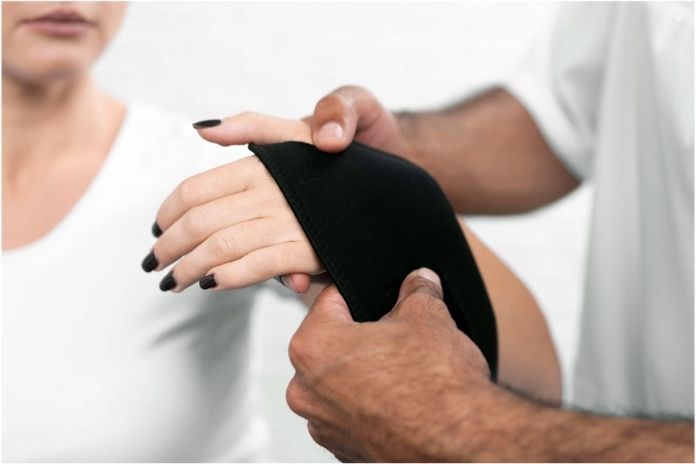
Understanding the “why” behind the higher risk is useful only when it translates into better self-care and earlier response.
1. Prevention and Risk Mitigation
You do not need fancy tools for prevention. Simple adjustments make a big difference:
- Neutral wrist position: Keeping the wrist straight reduces pressure on the median nerve instantly.
- Avoid a long static grip: Whether it is a phone, spatula, pen, or hairbrush, loosen grip or switch hands.
- Micro-breaks: Thirty seconds every 20–30 minutes is enough to reset tendon tension.
- Warm-water relaxation: A 3–5 minute warm soak at the end of repetitive work helps reduce micro-swelling.
- Softer grip tools: Cushioning or slightly thicker handles reduce strain for smaller hands.
- Nighttime wrist splint: Many women bend their wrists unconsciously during sleep. A neutral splint helps more than daytime use in early cases.
2. Early Detection and Early Intervention
CTS does not become severe overnight. It gives signals, and women often notice them but ignore them, thinking it’s temporary.
Early warning signs:
- Tingling or light numbness while holding the phone
- Thumb weakness while opening jars or pressing buttons
- Burning sensation in the palm at night
- Wrist fatigue after even simple tasks
When noticed early:
- Tendon gliding exercises strengthen movement without pressure
- Workstation adjustments reduce flare-ups
- Early splint use prevents progression
- Treating underlying issues (thyroid, inflammation, B12 deficiency) improves nerve health
The key is not waiting for the pain stage. Pain indicates nerve compression has already intensified.
Read More: Tingling in Hands at Night: Carpal Tunnel or Vitamin Deficiency?
Final Thoughts
The higher rate of CTS in women is not a mystery or a matter of lifestyle alone. It is a combination of anatomical size, hormonal patterns, health conditions, daily responsibilities, and equipment design that rarely accounts for smaller wrists.
Acknowledging these differences helps shift the conversation from “women should avoid repetitive work” to “women need ergonomics that suit their physiology.”
CTS is manageable when understood early, but preventable when the real causes are recognised.
FAQs
1. Does pregnancy-related CTS go away after delivery?
Often yes, but not always. If symptoms continue 2–3 months postpartum, evaluation is recommended.
2. Is CTS only from typing?
No. Typing is only one of many repetitive actions. Household tasks or continuous gripping are equally impactful.
3. Why do symptoms worsen at night?
Most people bend their wrists during sleep, increasing pressure on the median nerve.
4. Can CTS be prevented without medical treatment?
In the early stages, ergonomic corrections and wrist splints at night help significantly.
5. Do women need a different ergonomic setup than men?
Yes. Even small design adjustments can reduce strain for smaller wrists and hands.
References
- Abbas, G., Ahmed, M. B., Almohannadi, F. S., Elzawawi, K. E., Ahmed, A. B., & Alsherawi, A. (2024). Prevalence and Risk Factors Associated With Carpal Tunnel Syndrome Among Sudanese Females: A Cross-Sectional Study. Cureus.
- Eros, F. R., Demers, P. A., & Sritharan, J. (2024). Sex-differences in the risk of carpal tunnel syndrome: results from a large Ontario, Canada worker cohort. BMC Musculoskeletal Disorders, 25(1).
- John, T., & Mathew, A. (2021). A clinical and neurophysiological analysis of idiopathic carpal tunnel syndrome with respect to gender and occupation. Annals of Indian Academy of Neurology, 0(0), 0.
- Li, Z.-M. (2005). GENDER DIFFERENCE IN CARPAL TUNNEL COMPLIANCE. Journal of Musculoskeletal Research, 09(03), 153–159.
- Rodríguez, P., Casado, A., & Potau, J. M. (2022). Quantitative anatomical analysis of the carpal tunnel in women and men. Annals of Anatomy – Anatomischer Anzeiger, 243, 151956.
- Siddique, Dr. T., Kaleem, Dr. A., Jabeen, Dr. N., Sehar, Dr. T., Rasheed, Dr. T., & Asim Iqbal Qureshi, Dr. M. (2025). PREVALENCE OF CARPAL TUNNEL SYNDROME IN MULTIGRAVIDA PREGNANT WOMEN: A CROSS-SECTIONAL STUDY. Journal of Population Therapeutics and Clinical Pharmacology.
- Starlinger, J., Schrier, V. J. M. M., Smith, C. Y., Song, J., Stewart, E. A., Gazzuola Rocca, L., Amadio, P. C., & Rocca, W. A. (2021). Risk of de novo severe carpal tunnel syndrome after bilateral oophorectomy: a population-based cohort study. Menopause, 28(9), 1026–1036.
In this Article