











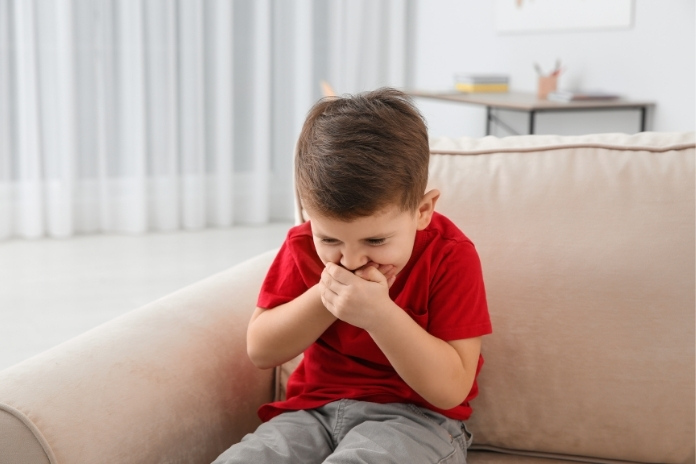
A child who vomits at night but seems fine during the day is one of the most concerning situations for parents. Seeing your child throw up can be frightening for parents, particularly if there are no other clear signs like a fever.
Children who don’t have a fever may vomit for several reasons; some are minor and go away on their own, while others may need medical help. Seeing your child wake up from sleep can be frightening, but as daylight arrives, they are completely normal and playful.
Usually, it’s a temporary problem, and your child may recover after vomiting, cleaning up, and returning to sleep. Vomiting at night is frequently associated with very minor but recurrent illnesses, such as nasal discharge, food allergies, or acid reflux.
On the other hand, nighttime vomiting might occasionally indicate more serious issues that need to be treated by a doctor. This article examines the potential reasons why children throw up at night but not during the day, when to be concerned, what doctors often look for, and useful home care advice for parents.
Read More: Zinc on an Empty Stomach: Why It Makes You Nauseous (and What to Do)
How Nighttime Vomiting Differs From Daytime Episodes
Nighttime vomiting commonly confuses parents because their child seems perfectly normal during the day and then vomits nearly as soon as they are asleep. The main reason for it is that the body works differently at night. When a child is lying down, gravity is no longer keeping food and stomach acid in their appropriate spots.
This orientation can exacerbate acid reflux or indigestion, potentially leading to nausea or vomiting during sleep. Digestively, food stays in the stomach longer at night, as digestion is naturally slower during this time. The delayed process can lead to discomfort, especially for kids who have had a large meal or late-night snacks.
A factor in this is post-nasal drip; when lying down, mucus from allergies, colds, or sinus issues can accumulate in the back of the throat, irritating the area and potentially leading to nausea or vomiting.
During the day, children are much more active and upright. Mucus drains better, digestion is faster, and gravity is less likely to promote reflux. That is why a child who is fine during the day and vomits at night is symptom-free while awake.
Common Causes of Nighttime Vomiting in Children
A violent release of the stomach’s contents, known as vomiting, can happen at any time of day. Sometimes, though, it only occurs in the middle of the night. The following are the most typical reasons why kids throw up at night:
Food Poisoning: Consuming contaminated food can lead to food poisoning, often resulting in vomiting and diarrhea. This often leads to diarrhea and vomiting. Fever is not always a symptom, though it might occasionally be present. A few hours to a day after consuming damaged or incorrectly prepared food, food poisoning may develop. Symptoms may not appear for hours after ingesting bacteria like Salmonella. Therefore, symptoms such as vomiting may occur at night.
Stomach Flu (Viral Gastroenteritis): While fever is a typical sign of stomach flu, vomiting may be the main or only symptom for some kids. Nausea and vomiting may result from viral gastroenteritis that irritates the stomach lining. Although these symptoms can vary, diarrhea or abdominal pain are frequently associated with this illness.
Intestinal Obstruction: Your child may experience frequent vomiting due to an intestinal blockage. In addition to symptoms like a large abdomen, excruciating stomach pain, and difficulty passing gas or stool, this illness is more prevalent in newborns and young children. Get emergency care right away if you think you may have an intestinal blockage.
Acid Reflux: When the body remains horizontal during rest, it can cause acid reflux, a condition where stomach acid rises. This may manifest as uncomfortable symptoms, including dyspnea, heartburn, and shortness of breath, which may ultimately result in vomiting at midnight.
Food Allergies: Even in the absence of fever symptoms, a food allergy may cause vomiting. It’s possible that your child’s body is reacting to a new food they’ve recently eaten or a common allergen, such as milk, eggs, peanuts, or shellfish. Food allergies can also cause rashes, itching, swelling, or trouble breathing, all of which need to be treated right away.
Dehydration: Even in children without a fever, thirst can occasionally result in vomiting. Children can become dehydrated if they don’t drink water due to illness, heat, or lack of appetite. Early symptoms of dehydration include tiredness, dark urine, dry lips, and decreased urination frequency.
In severe cases, the body begins vomiting as a way to try and remain stable. It’s essential to replenish the fluids lost to prevent symptoms from worsening. While you begin replacing fluids, you can try offering ice chips, sips of water, or an electrolyte solution such as Pedialyte.
“Often we don’t determine the cause of vomiting, and symptoms resolve on their own,” says Dawn Rosenberg, M.D., a primary care pediatrician, associate clinical professor at the University of California, San Francisco, and member of the BabyCenter Advisory Board.
Read More: Is Your Child’s Hyperactivity Actually a Food Sensitivity?
When to Call a Doctor
Regardless of your child’s age, keep an eye out for these warning signs and contact your pediatrician right away if they appear:
Vomit that seems to contain anything resembling coffee grounds or vomit that contains blood or bile (a green substance).
- Severe pain in the stomach
- Serious and persistent vomiting
- Swelling or enlargement of the abdomen
- Laziness or an excessive form of restlessness
- Yellowing of skin or eyes
- Signs or symptoms of dehydration, such as a dry mouth, absent tears, “soft spot” sadness, and reduced urination
- The inability to take in adequate fluids
- Vomiting as soon as waking up
- Vomiting lasts longer than a day or two
How Doctors Diagnose the Cause
When a child vomits repeatedly in the middle of the night, the first thing a doctor will do is take a detailed history and perform a physical exam. Typically, parents are asked a number of questions about the child’s diet, the timing of vomiting, and whether there are other associated symptoms, such as whether the child had snored, experienced a headache, or had a cough. Stomach viruses, difficulty with digestion, or allergic symptoms can usually be eliminated on a physical exam.
If a pattern suggests a specific trigger and the doctor chooses to investigate it further, he or she may recommend testing. For instance, allergy testing can be useful for establishing what types of food sensitivities children have or other environmental causes of vomiting.
In very rare cases, sleep loss is suspected to actually be part of the vomiting, and a sleep study would be recommended, typically to rule out obstructive sleep apnea or other sleep disorders.
Additionally, parents are encouraged to keep a log of symptoms. Recording what the child ate prior, the time they vomited, and any other symptoms can give helpful clues. A physician can better assess and reach an appropriate diagnosis if they are able to see patterns from a parent’s diary.
Read More: Glucose Absorption in Children vs. Adults with Diabetes
Home Remedies and Supportive Care
Relax your stomach: After vomiting, wait 30 to 60 minutes before allowing your youngster to eat or drink anything. This allows your child’s stomach to heal.
Changing the fluids: Dehydration may be an issue if your child is throwing up. After your child has not vomited for 30 to 60 minutes, begin replenishing fluids. To accomplish this:
- Give your youngster small amounts of fluid (less than 1/2 ounce) every 5 to 10 minutes to start. When administering fluids, use a teaspoon rather than a glass.
- Use water or another clear, non-carbonated beverage, such as an oral rehydration solution. If your child is nursing, you can give them breast milk. You can attempt to breastfeed for shorter periods more frequently.
- Wait at least half an hour more if your youngster throws up the liquid. Every five to ten minutes after that, start over with a very tiny amount of fluid.
- Offer ice chips or frozen juice bars (without fruit pieces) to your child if they are having difficulty swallowing.
Solid food: Try giving your child modest portions of bland food if they are begging for food and are hungry. This comprises rice, noodles, crackers, and dry cereal. As your child heals, refrain from feeding them hot, fatty, or oily meals for a few days.
Medications: Ask your doctor if you can give your child an over-the-counter medicine, like acetaminophen, if they have a fever. Ask your pharmacist about getting the medication in suppository form if your child is having trouble keeping it down.
Conclusion
When children vomit at night, parents may feel confused and anxious, especially if their child has seemed well during the day. The reason for the vomiting is usually not anything serious (less likely to be due to underlying health conditions such as allergies, reflux, or postnasal drip), but night vomiting should always warrant attention.
Keeping track of how often your child vomits, what they ate or drank just before vomiting, and if they are experiencing any other additional symptoms (for example, headaches, snoring, and coughing) may provide important clues.
When it comes to frequency, tracking trends, and changes in overall health, parents are the experts. The doctor will consider movement over a short symptoms diary before considering any underlying issue.
If your child’s night vomiting worsens, continues, or is associated with concerning symptoms, an appointment with a community pediatrician should be present and prompt.
Read More: Understanding and Managing Food Intolerances in Children
FAQs
Can teething cause night vomiting?
Nighttime vomiting is not a direct outcome of teething, but rather is more likely related to a bacterial or viral infection or another illness that should be managed by a physician.
Is it normal for vomiting to stop in the morning?
Children often vomit during the day or early the next day after an event, particularly when they have a viral illness such as gastroenteritis, as their stomach often empties itself while they sleep.
Can anxiety cause vomiting at bedtime?
It is also possible that children suffering from anxiety can vomit at night, since the physiological “fight-or-flight” response to emotion or worry can cause digestive symptoms such as nausea or upset stomach, which can then lead to vomiting.
References
- https://parenting.firstcry.com/articles/child-vomiting-at-night-causes-symptoms-and-treatment/
- https://completechildrenshealth.com/my-child-is-vomiting-when-to-go-to-er-for-vomiting/
- https://patientser.com/child-vomiting-with-no-fever/
- https://www.saintlukeskc.org/health-library/what-do-when-your-child-vomiting
- https://www.jscimedcentral.com/public/assets/articles/article-pdf-1616830418-1847.pdf
- https://www.medicalnewstoday.com/articles/child-vomiting-at-night#causes
- https://centreforgastrointestinalhealth.com.au/resources/vomiting-at-night/
- https://www.healthshots.com/preventive-care/family-care/child-vomiting-at-night-causes/
- https://www.seattlechildrens.org/conditions/a-z/vomiting-without-diarrhea/
- https://www.healthychildren.org/English/health-issues/conditions/abdominal/Pages/Infant-Vomiting.aspx
- https://www.babycenter.com/health/conditions/vomiting-in-toddlers-and-children_11395
- https://www.babycenter.com/doctor-dawn-rosenberg
In this Article