













Taking care of our mental health is very crucial at all times, but it’s more critical when you’re under stress from job, family, money, or personal difficulties. Your physical and emotional well-being may suffer if you experience acute stress in addition to chronic stress and worry.
Stress is a condition of anxiety brought on by a challenging circumstance. It’s a normal human reaction that everyone goes through occasionally. Your body releases chemicals in response to stress, which sets off your “fight or flight” reaction. Usually, after the perceived threat has passed, your body returns to normal.
Chronic stress, however, causes your body to remain hypervigilant even when you are not in danger. Chronic stress can lead to a wide range of mental and physical health problems, such as anxiety, insomnia, muscle pain, high blood pressure, and weakened immunity.
Americans are under more stress than ever before, according to a survey conducted by the American Psychological Association.
This article will discuss the most typical signs of elevated cortisol and present natural, scientifically supported methods to lower cortisol and restore hormonal balance for better overall health.
Read More: Movement That Soothes: Exercises That Lower Cortisol Naturally
What Is Cortisol?
When you hear the word “cortisol,” it might be a source of concern. Despite being referred to as the “stress hormone,” cortisol is essential for several vital body processes.
Cortisol, often called the ‘stress hormone,’ is a steroid hormone made by the adrenal glands. These two glands sit above your kidneys and release increased amounts of cortisol into your bloodstream when you experience stress. Your health depends on having the proper balance of cortisol. Health issues arise from either too much or too little cortisol production.
“It’s very common for our cortisol levels to rise and fall,” said Cedars-Sinai endocrinologist Natasha Malkani, MD. “For the vast majority of us, the most direct and impactful way to even it out is to get our stress under control.”
Although most people recognize cortisol for controlling the body’s stress response, it also serves as a multifunctional hormone that affects several critical bodily functions, including:
Metabolism: Cortisol regulates how your body uses blood sugar as fuel.
Immunological function: By reducing inflammation, cortisol, in trace levels, can help manage immunological responses. On the other hand, persistently elevated cortisol levels might result in immunological compromise and inflammation.
Blood pressure: According to experts, cortisol plays a role in managing blood pressure. Continuously high cortisol levels can contribute to hypertension, whereas low levels might cause hypotension.
Signs Your Cortisol Levels Are Too High

Stress affects our minds, as we all know, but did you realize that it can also have a devastating effect on our bodies? However, excessive cortisol can lead to several health issues, even while it might be beneficial in brief doses.
a. Persistent Fatigue with “Tired but Wired” Feeling: Cortisol is a stress hormone that keeps our brain alert for danger, which may be quite draining if you’re in that condition for too long.According to Erica Armstrong, M.D., IFMCP, “Elevated cortisol can make you feel mentally alert even when you’re physically exhausted,”
However, likely, your brain isn’t functioning at its peak, even if you feel highly stimulated. Long-term elevated cortisol levels reduce cognitive performance and disrupt sleep, which further impairs mental processes like memory and focus.
b. Weight Gain (Especially Belly Fat): The regulation of your metabolism is one of cortisol’s functions. Weight gain can result from high cortisol levels because they can alter your metabolic rate, or the equilibrium between the energy you consume from food and the energy you utilize.
Even if they don’t alter their eating habits, those with high cortisol levels may have a slow metabolism and put on weight. Increased hunger is another effect of high cortisol. You can also notice fat deposits in your face, upper back, chest, or abdomen.
c. Anxiety, Irritability, or Mood Swings: Experts are unsure of the precise mechanism by which elevated cortisol leads to mental disorders, although anxiety, despair, and mood swings are common signs. Cortisol likely influences the brain alterations that cause anxiety, depression, and even insomnia.
Because of the stress and uncertainty that come with having a major condition like Cushing’s syndrome, mood might also suffer. Major depressive illness is present in at least half of those with Cushing’s syndrome.
Read More: Balance Your Stress: The Top 6 At-Home Cortisol Tests for Stress Management
d. Brain Fog or Trouble Concentrating: Having trouble concentrating? Elevated cortisol levels may be the cause. Prolonged stress raises the cortisol levels, which can disrupt the part of the brain involved in memory, concentration, and judgment. You may therefore have trouble focusing, remembering details, or thinking coherently.
However, it doesn’t end there. In addition to compromising cognitive performance, elevated cortisol can also upset the balance of other important neurotransmitters, such as serotonin and dopamine, leaving you feeling overwhelmed and intellectually disoriented.
e. Effects on Reproduction: Elevated cortisol levels may impact testicular and ovarian function. Low sperm count, low sex drive, and erectile dysfunction are all possible in men. Pregnancy can be challenging for women who experience irregular or nonexistent periods.
Cushing’s syndrome during pregnancy further increases the likelihood of problems. Women may still experience decreased ovarian function, while men in remission are likely to experience a reversal of these side effects.
f. High Blood Pressure or Blood Sugar Spikes: Your body’s stress response, which increases blood pressure and blood sugar to get you ready for danger, is mainly regulated by cortisol. However, persistently high cortisol levels might result in insulin resistance and hypertension.
Your chance of developing diabetes and cardiovascular issues increases as a result. Your cortisol levels may be out of balance if you observe frequent fluctuations in your blood sugar, particularly after meals, when you experience energy slumps.
g. Irritable Bowel Syndrome (IBS): Several intestinal disorders, including the irritable bowel syndrome, inflammatory bowel disease, colitis, bloating, gas, and abdominal pain, as well as stomach and intestinal ulcers, have been linked to cortisol. Althoughresearchers are still studyingthe precise process, they believe elevated cortisol levels impair intestinal lining regeneration and increase intestinal permeability.
h. Sleep Disruptions (Especially Waking at 2–4 AM): Your stress hormones may be the cause of your difficulty falling asleep at night or your propensity to wake up during the night and not be able to fall asleep. Cortisol should be low at night, but it can wake you up in the middle of the night if it’s rising because of stress or blood sugar fluctuations.
One study of healthy people found a link between higher pre-sleep cortisol levels and shorter, lower-quality sleep compared to lower pre-sleep cortisol levels. A similar association was observed in individuals with type 2 diabetes as well.
Read More: 22 Ways To Lower Cortisol Levels For A Healthier Life
What Causes Chronically High Cortisol?
Chronic stress is a major contributor to elevated cortisol levels. Constant stress keeps your body in a hypervigilant condition, which causes it to produce cortisol continuously. The sympathetic nervous system goes into overdrive in this condition with no respite. People frequently experience what is typically referred to as burnout as a result.
Elevated cortisol levels can also result from some medical illnesses, such as Cushing’s syndrome or abnormalities of the adrenal glands. Because these illnesses are rare, a doctor can best identify them.
Your lifestyle has a significant impact on how much cortisol you produce. A diet high in processed foods, irregular exercise, and inadequate sleep can increase cortisol levels. Additionally, a sedentary lifestyle can increase stress, which can result in a vicious cycle of elevated cortisol.
Some drugs, especially steroids like prednisone, can raise cortisol levels. Although people often use these medications to treat inflammatory diseases, prolonged use may cause adverse effects such as hypercortisolism.
How to Lower Cortisol Levels Naturally

Stress and cortisol levels are inversely correlated; lowering cortisol also lowers stress, and vice versa. You can reduce your cortisol levels by following these measures.
Make Sleep and Rest a Priority: Researchers have discovered a link between poor sleep and elevated cortisol levels. Most individuals should strive for 7 to 9 hours of sound sleep each night to help control the body’s release of cortisol and enhance general health. It could be beneficial to establish a nightly routine if you have trouble falling asleep. Before bed, for instance, turn off devices early, have some warm herbal tea, and listen to relaxing music.
Cut back on your Caffeine Consumption: Chronic stress can cause adrenal dysfunction, which can result in cortisol imbalance. You can feel quite exhausted and need coffee to get through the day if your cortisol levels are out of range. The caffeine wears off and fatigue returns, creating a vicious cycle. Caffeine can increase cortisol levels, but it doesn’t deal with the underlying issue of hormone balance.
Mindful Eating and a Healthy Diet: By stabilizing blood sugar and promoting adrenal health, a well-balanced diet full of complete foods—like fruits, vegetables, whole grains, and healthy fats—can lower the production of cortisol.
While the occasional milk tea or sponge cake might be a lovely treat, excessive use of sugar, caffeine, and refined carbohydrates can raise cortisol levels and cause systemic inflammation.
Engage in Regular Exercise: The American College of Lifestyle Medicine recommends exercising for 30 to 50 minutes a day. Don’t count walking your dog; you should force yourself to talk, not sing.
Put Connection First: Constantly monitoring work emails, social media, or the news can cause disengagement and increase ongoing stress. Connecting with others is among the most effective methods for relieving stress. Strong social support networks have been linked to healthier cortisol rhythms, according to research.
Keep a Journal: Sometimes it helps just to put ideas on paper. If the ideas are joyful, you can revisit them; if they are stressful, you can get rid of them so you don’t keep thinking about them.
Consider Taking Supplements: The best way to obtain vital, mood-enhancing nutrients that can aid in stress management is through a balanced diet, although some supplements can also be helpful.
For instance, omega-3 fatty acids—healthy fats found in chia seeds, flaxseeds, and fatty fish like salmon—can lower cortisol levels. Omega-3 fatty acids can be obtained through fish oil supplement. Vitamin D, also available as a supplement, has been associated with lower cortisol levels.
Read More: 6 Unconventional Stress-Relief Techniques You Haven’t Tried Yet
When to Get Tested
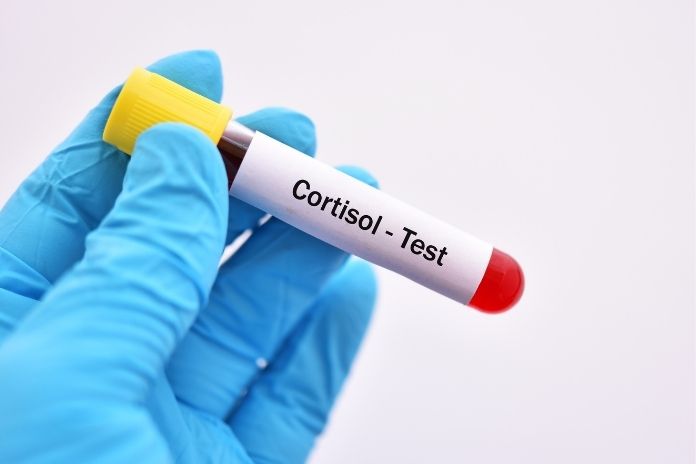
It could be time to have cortisol levels checked if, despite changing your lifestyle, you still suffer from symptoms such as worry, weariness, gaining more belly fat, cognitive fog, or having sleep issues. Testing should guide a more focused treatment strategy by determining whether a cortisol imbalance is causing the symptoms.
Determining if you have Cushing’s syndrome can be difficult, says Dr. Stuart Weinerman, M.D., fellowship director in the endocrinology section at Northwell Health in New York City, since symptoms tend to be nonspecific to the disease—like gaining more belly fat, for example.
However, he adds, if you exhibit any symptoms, it would be worthwhile to speak to a physician and have a screening test to determine the level of cortisol in saliva or through your urine. He says you might also need additional endocrine testing if the tests show elevated cortisol levels.
Read More: How Chronic Stress Shrinks Your Brain (and What to Do About It)
Final Thoughts
Cortisol is a vital hormone that supports our energy levels, focus, and the body’s response to stress. But if it stays high for a prolonged period, it can interfere with almost every bodily system, affecting the immune system, emotions, sleep, and metabolism. Such changes are usually minor and can go unnoticed until they start interfering with daily routines.
Fortunately, there are things you can do to bring your balance back naturally. You can control cortisol levels by listening to your body, managing stress, getting enough sleep, eating healthy, and moving mindfully. Over time, little, regular improvements frequently have the most significant effects.
References
- https://my.clevelandclinic.org/health/articles/22187-cortisol
- https://www.apa.org/news/press/releases/stress/2023/collective-trauma-recovery
- https://www.healthdirect.gov.au/the-role-of-cortisol-in-the-body
- https://www.cedars-sinai.org/provider/natasha-malkani-4097222.html
- https://thriva.co/hub/mental-health/high-cortisol-levels-causes-symptoms
- https://www.health.com/high-cortisol-signs-7554053
- https://www.philiprabitomd.com/signs-and-symptoms-of-high-cortisol/
- https://nypost.com/2025/01/17/health/10-ways-that-high-stress-levels-could-be-affecting-your-body/
- https://rootfunctionalmedicine.com/about
- https://www.healthcentral.com/article/signs-your-cortisol-levels-may-be-too-high
- https://pubmed.ncbi.nlm.nih.gov/22314561/
- https://www.rupahealth.com/post/understanding-high-cortisol-causes-symptoms-and-treatments
- https://my.clevelandclinic.org/health/diseases/5497-cushing-syndrome
- https://pubmed.ncbi.nlm.nih.gov/27189781/
- https://europepmc.org/article/med/16459757
- https://www.cbwchc.org/news/how-to-manage-stress-lower-cortisol-naturally
- https://www.northwell.edu/find-care/find-a-doctor/dr-stuart-alan-weinerman-md-1376698159
In this Article