
















The way the tummy feels at different periods is one of the most obvious and fantastic changes that a woman’s body undergoes during pregnancy. It might be tight and rigid at times or gentle and relaxing at others. Being aware why these changes occur can help you achieve a more seamless pregnancy experience.
The expanding uterus stretches the abdominal muscles to accommodate the fetus. This stretching may result in stomach constriction, which frequently varies in severity.
Throughout all stages of pregnancy, a firm belly is a familiar sensation that can occur for various reasons. By recognizing and monitoring additional symptoms, you can often pinpoint the source of your abdominal discomfort.
This article covers the common causes of a soft or hard belly during pregnancy, when these changes are likely to occur, what is typical, and when you might want to see your doctor.
Read More: 6 High-Quality Maternity Products Every Expecting Mother Needs
What Determines Belly Firmness During Pregnancy?
Your abdomen will change in a variety of ways during pregnancy. You often feel a firm abdomen when you palpate the stomach or apply pressure to it. Usually, there are two primary causes of this rigidity:
Braxton Hicks Contractions: Are basically “practice” contractions that are frequently confused with labor contractions. Between thirty seconds and two minutes, your uterus thickens. It usually begins in the second trimester and is a typical aspect of pregnancy.
Baby’s Position: As your baby becomes bigger, some parts of your belly may feel hard. This becomes especially noticeable during the final stages of pregnancy.
According to Brigham Faulkner Ob/Gyn Associates ob-gyn Shannon Smith, M.D., a member of the BabyCenter Medical Advisory Board, “women start to experience a hardness of the abdomen at different stages of pregnancy.” “For some, this is barely a blip on their radar, and for others, it can feel uncomfortable.”
In actuality, there is no standard to which you can measure yourself. Belly size, shape, and stiffness can vary during pregnancy. Some women never have a noticeable, basketball-shaped pregnancy belly, while others have a more minor bump or appear more pregnant or show sooner.
Common Reasons for a Hard Pregnant Belly
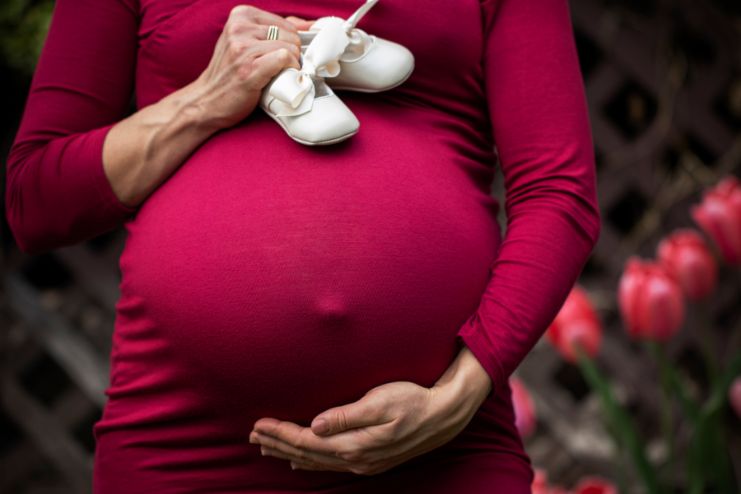
So, what causes pregnancy-related abdominal tightness? The trimester you’re in may affect the response.
Tightening of the stomach during the first trimester
During the first trimester, everything is new and thrilling. However, you also feel anxious as you begin to feel some strange bodily sensations, such as constriction of the stomach. According to Sarasota, Florida, ob-gyn Shelly Chvotzkin, DO, here are several explanations for why you may experience tightness in your abdomen during the first trimester.
- Your uterus is enlarging: It stretches to make room for your developing baby.
- Bloating, Gas, and Constipation: According to Chvotzkin, hormonal changes during pregnancy can impact digestion, leading to bloating, gas, and constipation.
Tightness of the Stomach during the Second Trimester
You may have more tightness in your tummy as your bump expands throughout the second trimester. The following are some potential explanations:
- Round ligament pain: The round ligaments that support your uterus will stretch as it expands. This can lead to a mild pulling sensation in the pelvic area, and at times, it may feel like abdominal tightening.
- Where the baby is positioned: You may have a little more tightness in your abdomen, depending on the baby’s current position. It is because as a baby shifts positions, it may press against a different part of your uterus or adjacent organs.
Tightness of the Stomach during the Third Trimester
The time has come to meet your little bundle of happiness! Both you and the baby are growing rapidly during the final stages of pregnancy, and tummy tightness is quite common.
- Round Ligament Pain: As your uterus continues to enlarge, the pain associated with it may worsen.
- Braxton Hicks Contractions: Similar to the second trimester, the third trimester may also experience abdominal discomfort due to Braxton Hicks contractions. It’s very normal for your body to be preparing for labor!
- Your Moving Child: By the third trimester, there is less wiggle room in the uterus. You will therefore feel it more strongly as the baby shifts positions. It may be the cause of stomach tightness.
Read More: Pregnancy Wellness Kits: 5 All-in-One Packages for Supporting Mom-to-Be Health
Why Your Belly Might Feel Soft at Times
When your usually hard and firm pregnant belly suddenly softens during pregnancy, this may surprise you. Fear not, however; a change usually is normal and has a range of harmless reasons.
Gas, Bloating, and Constipation: Your digestion may be slower due to hormonal changes, which can result in gas, bloating, or constipation. Your stomach may feel soft and hard when the changes occur and disappear, as these sensations are periodic.
Abdominal Muscle Changes: Women often report that their bellies feel softer in the morning and harder later in the day. It might be due to the abdominal muscles relaxing and then loosening throughout the day.
Baby’s Position: During the second and third trimesters of your pregnancy, you can feel the baby kicking around a lot inside the womb. As a result, various areas of your abdomen will have different sensations based on where and in what position the baby lies.
The baby’s head falls into the pelvis as the pregnancy goes closer to the end in preparation for birth. Your tummy may be heavier at the bottom and softer towards the top due to the change.
How to Tell If It’s Braxton Hicks or True Labor

“Like any other muscle in the body, the uterus has a thick layer of muscles that can contract, which is why you might feel the uterus tightening,” Dr. Joseph Bouganim says. “The lower abdomen or the low back can experience both Braxton Hicks and true contractions, but only the latter will result in labor.”
The cervix must be checked for dilation, which your doctor can do, to distinguish between Braxton Hicks contractions and actual labor properly. Nonetheless, you can identify the type of contraction you are having with the aid of a few crucial distinctions.
Contractions caused by Braxton Hicks:
- They are painful contractions that lack a clear pattern and occur irregularly.
- Generally, not exceeding one or two occurrences per hour.
- It could run anywhere from 15 seconds to a few minutes.
- May be felt momentarily at the top or front of the uterus.
- Usually alleviated by relaxing and/or drinking water.
Contractions During Labor:
- They are more severe, and they usually become more frequent and unpleasant over time.
- Should follow a clear pattern—starting, peaking, and ending—and typically last from 30 to 70 seconds.
- There is a discomfort that can prevent you from moving while you wait for it to go away.
- The top of the belly is where the pain begins, and it radiates down into the pelvis.
- It may not go away even with rest and/or water.
Read More: Can You Get Pregnant During Your Period? What You Need to Know
When to Worry: Red Flags to Watch For
Pregnancy-related changes in belly firmness are frequently benign, but some symptoms could indicate a more significant problem. You should recognize red flags and seek medical help if they appear.
Although it’s usually accepted that stomach tightening during pregnancy is normal, there are situations when it’s better to get medical help. There are specific instances when you should reach out to your healthcare provider immediately, advises Ellen Smead, CNM, a certified nurse-midwife with the Pediatrix Medical Group in Atlanta, Georgia.
- Over time, the tightness in the stomach has become very severe.
- You have tightness in your stomach and back pain.
- You are preterm (before 37 weeks) and your tummy tightens every five or six mins.
It’s always wise to prioritize caution for both your well-being as well for your baby. Contact your doctor if you’re experiencing any of the symptoms listed above.
However, you can be confident that the baby will only experience a gentle, enormous hug if you’re concerned that stomach constriction could cause them pain.
Tips to Soothe a Hard Belly

If you do sometimes get random tightening of the abdomen:
- Drink a large glass of water to keep yourself hydrated.
- Adjust your body position to see if a change in position alleviates your stomach discomfort.
- Avoid sitting up in bed or other positions suddenly.
- To relax tense muscles, have a pregnancy massage.
- Take a warm shower or bath, or apply a heat pad or hot water bottle.
See your doctor or midwife if these home treatments do not relieve your stomach cramps or if you have any other concerns.
Read More: What No One Tells You About Your First Period After Pregnancy
Conclusion
One of the usual and completely harmless characteristics of pregnancy is varying firmness of the belly. Softening, hardening, or a texture somewhere in between is often a natural response to factors such as contractions, digestion, or baby movement. Your body continuously transforms to fit your developing baby.
But do listen to your body. You’ll gain a better understanding of what is normal for you by monitoring when your tummy is soft or hard, how long it stays that way, and whether other symptoms accompany it.
Generally, there is no cause for concern. But don’t be afraid to seek aid if something doesn’t seem right, isn’t enjoyable, or quite simply doesn’t “feel right”. Your body will know if something’s not quite right, so listen to your instincts.
References
- https://yourdoctors.online/why-is-my-pregnant-belly-sometimes-hard-and-sometimes-soft/
- https://www.tuasaude.com/en/can-a-hard-abdomen-be-a-contraction-sign/
- https://www.babycenter.com/pregnancy/your-body/stomach-tightening-during-pregnancy_40009094
- https://www.babycenter.com/expert-shannon-smith
- https://obgynhighdesert.com/obgyn-news/hard-belly-during-pregnancy-safe
- https://lamaze.org/Giving-Birth-with-Confidence/GBWC-Post/what-causes-my-belly-to-feel-hard-and-tight
- https://www.thebump.com/a/abdominal-tightening-during-pregnancy
- https://getcaremd.com/why-pregnant-belly-sometimes-hard-and-sometimes-soft/
- https://www.healthline.com/health/pregnancy/braxton-hicks-contractions-vs-real-contractions
- https://health.usnews.com/doctors/joseph-bouganim-1419610
- https://www.hackensackmeridianhealth.org/en/healthu/2023/01/11/braxton-hicks-or-labor-contractions-a-quick-guide-to-spot-the-difference
- https://www.nhs.uk/pregnancy/related-conditions/common-symptoms/stomach-pain/
- https://www.healthline.com/health/pregnancy/stomach-tightening-during-pregnancy#treatment
In this Article