















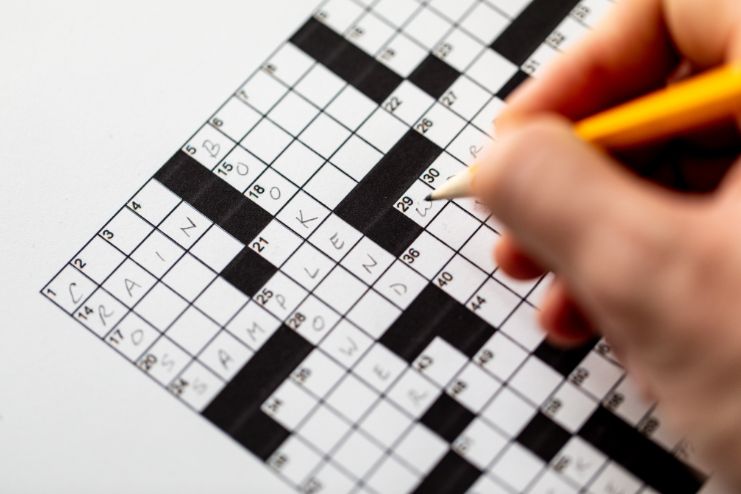
Puzzles, especially crossword puzzles, are something that I have loved playing since I was young. They have long held a reputation as the gold standard of brain teasers. They’re portable, engaging, and offer a satisfying challenge—but are they the most effective way to boost brain power?
While crosswords may improve vocabulary and memory, newer studies indicate that some brain exercises cut deeper. These mental exercises stretch your mind beyond what crosswords are capable of, with more powerful effects in domains such as working memory enhancement, focus and attention, and even fluid intelligence.
Here are three science-proven brain exercises that surpass crossword puzzles, particularly in developing long-term cognitive toughness and transparency.
Read More: The Dopamine Detox: Can Resetting Your Brain Supercharge Motivation?
Why Brain Training Matters (at Any Age)
Your brain is not a fixed organ—it loves to be stimulated. Due to a phenomenon known as neuroplasticity, your brain has the extraordinary capacity to rewire itself, create new neural pathways, and adjust to new demands throughout life.
This plasticity is particularly significant as we grow older. Cognitive decline, memory loss, and a decreased attention span can occur if the brain is not actively stimulated. As physical exercise strengthens the body, consistent mental training is essential for maintaining cognitive health and performance.
Some of the most prominent advantages of regular exercise for brain function include:
- Improved memory and recall
- Improved focus and decision-making
- Improved ability to multitask
- Decreased risk of age-related cognitive disorders
- Increased emotional control and mental flexibility
But here’s the surprise: your brain craves variety. Repeating games like crosswords often depend on similar sets of skills, chiefly vocabulary recall and pattern recognition. For genuinely revolutionary results, you require brain exercises that constantly change, challenge, and push your mental boundaries.
Let’s discuss the top three.
Brain Workout #1: Dual N-Back Training
At first glance, Dual N-Back might sound like something out of science fiction, but it’s actually a powerful cognitive training tool used by researchers to enhance working memory and fluid intelligence.
What It Is:
Dual N-Back is a cognitive task that simultaneously challenges your auditory and visual memory. During the game, you’re shown a sequence of spatial positions on a grid while hearing letters through audio. Your task is to recall whether the current audio-visual stimulus matches the one shown in the steps earlier in the sequence.
For instance, during a “2-back” round, you have to recognize whether what you currently see/hear is similar to what happened two turns earlier. The harder it gets, the better you become—challenging your brain to retain, process, and update info in real-time.
Per the N-Back Challenge, Dual N-Back is among the best-researched mind-stimulating methods, proven to enhance memory, attention, and multitasking.
Why It Beats Crossword Puzzles:
- Uses working memory, rather than long-term recall
- Promotes fluid intelligence (the capacity to reason and solve novel problems)
- Adapts to become harder to prevent plateaus
- Activates both auditory and visual processing, as opposed to static text-based problems
Where to Try It:
A few of the most well-known apps that provide Dual N-Back training are:
- Brain Workshop (free and open-source)
- Lumosity(has an N-Back version in their cognitive suite)
- Peak(provides similar memory games for working memory)
Read More: Mental Agility Exercises: Keeping Your Mind Sharp as You Grow Older
Brain Workout #2: Learning a New Skill (Especially Physical or Musical)

Crosswords engage individual areas of the brain, but acquiring a whole new skill, particularly a physical or musical one, involves several brain systems at once.
Brain-Boosting Skills Examples:
- Playing a musical instrument (drums, piano, guitar)
- Acquiring a new language
- Martial arts or dancing
- Sculpture or painting
- Juggling or fine motor skills tasks
These activities test coordination, memory, timing, creativity, and emotional expression—all at once. Musical training in children, as reported in a 2016 study at the University of Southern California, resulted in faster brain maturation in regions associated with language learning, reading ability, and sound processing.
- Adults also gain the same advantages. Learning to play music, for instance, can:
- Build long-term memory
- Enhance concentration and executive function
- Develop motor coordination and timing
- Engage both halves of the brain
Why It Beats Crossword Puzzles:
- Activates motor and sensory areas, not only verbal ones
- Fosters neuroplasticity with the learning of new skills
- Constructs long-term memory networks
- Facilitates real-world application of cognitive development
Bonus Tip:
Combining body movement with mental processes, such as dancing to choreography or practicing Tai Chi, can double the benefits by combining mind-body coordination.
Brain Workout #3: Strategic Games Such as Chess or Sudoku (With a Twist)
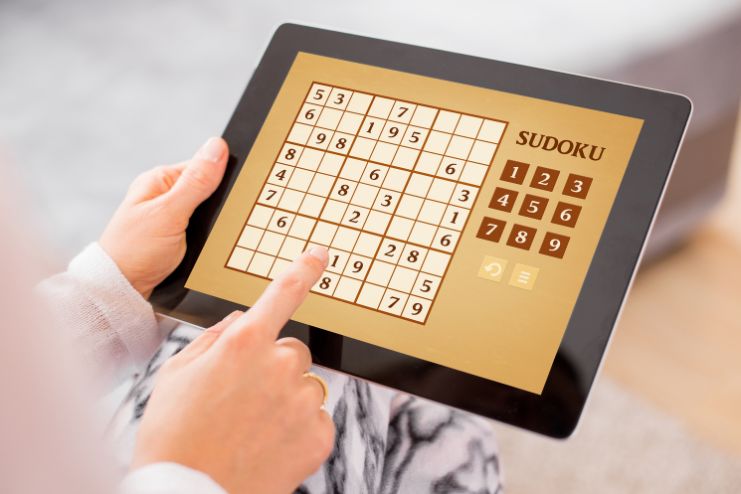
Whereas Sudoku and chess are favorite thinking games, most of us play them in a cozy, habitual fashion. To make them stimulating mental exercises for adults, introduce a twist: make them harder, cut your time, or alter your approach midway.
Cognitive Strategy Games to Try:
- Blindfold Chess: Plan the entire board from memory
- Speed Sudoku: Use a timer and lower it gradually
- Go or Shogi: More sophisticated than classic chess, demanding planning
- Real-time Strategy Video Games: Demands multitasking, flexibility, and pressure decision-making
These games exercise your brain function, planning, and cognitive flexibility in real time. They also require emotional regulation—an aspect of mental performance that is often ignored.
Why It Beats Crossword Puzzles:
- Works on problem-solving and reasoning instead of repetition of patterns
- Promotes flexibility and pressure decision-making
- Develops strategic foresight and mental stamina
- Continuously changes to avoid cognitive stagnation
Pro Tip:
Play against humans, not computers. The human element of unpredictability makes your brain stronger and more capable of adapting and switching directions, a primary sign of mental flexibility.
Want to diversify your brain training methods further? Add these tools to the mix:
- Meditation with Visualization: Prolongs attention span and mental acuity
- Memory Palace Technique: Tried-and-tested mnemonic device to enhance memory
- Stroop Tasks and Timed Reaction Games: Promote processing speed and impulse control
These exercises can be used as daily attention and focus boosters.
Read More: Stanford Psychologists Find A Brain Region For Pokémon Characters, New Study Suggests
How to Build a kWeely Brain Fitness Routine
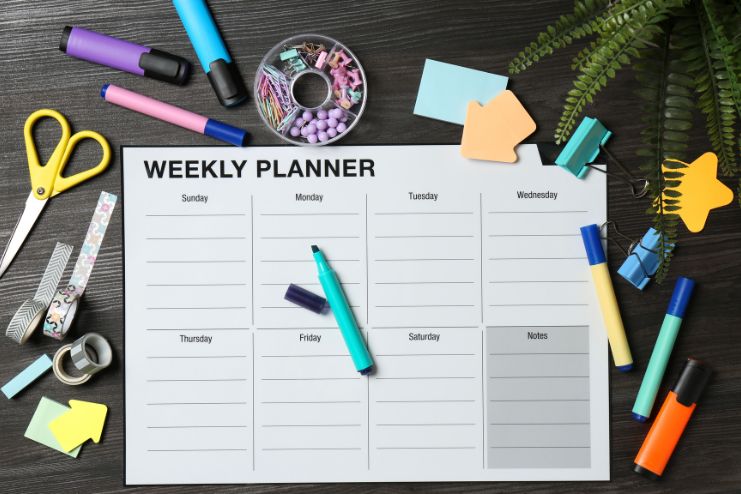
Similar to an optimal workout schedule for your body, a brain exercise program requires consistency, progression, and variety.
The following ways help develop a balanced mental fitness routine:
Alternate Exercises:
- Monday/Wednesday/Friday: Dual N-Back or games of memory
- Tuesday/Thursday: Learn a new skill (guitar, dancing, etc.)
- Weekend: Strategic games or group problem-solving games
Stick to Brief Sessions:
- Aim for 15–30 minutes per day
- Make it engaging but not too tiring
- Monitor progress (most apps now include performance metrics)
Pair Physical and Mental Activity:
- Alternate physical activity (walking, yoga) with mental activities
- Walk and listen to an audiobook, or learn a new language
- Perform coordination-based exercises such as ping-pong or dancing
Intermittently Switch Tasks:
Avoid plateaus by switching to new games, difficulty levels, or types of challenges. Neuroplasticity loves novelty.
Final Thoughts
Crossword puzzles are enjoyable and intellectually challenging, but they scratch only the surface of your brain’s capabilities.To naturally enhance memory and concentration, avoid brain fog, and acquire permanent mental acuity, you require more adaptive and dynamic brain exercises.
So next time you reach for a crossword puzzle, let this be the question in your mind: Is your brain due for something more?
Because now you can truly charge your brain by going an extra mile (beyond the grid)!
References
- https://www.betterup.com/blog/brain-games-for-adults
- https://theconversation.com/music-training-speeds-up-brain-development-in-children-61491
- https://www.betterup.com/blog/brain-games-for-adults
- https://timesofindia.indiatimes.com/education/news/brain-boosters-5-powerful-exercises-to-enhance-memory-and-creativity-in-students/articleshow/121466113.cms
- https://www.nature.com/articles/s41598-020-77310-9
In this Article